68% of creators say unclear briefs are the number one reason campaigns underperform, yet most brands still approach creative briefs as afterthoughts — vague one-pagers filled with brand guidelines but devoid of the strategic direction creators actually need to produce content that converts.
This guide is part of our Creator Content Strategy: Building a Scalable Creative Program for Your Brand — a comprehensive resource for brands looking to build effective creator partnerships at scale.
A well-crafted creative brief is the single highest-leverage document in any creator campaign. It aligns brand objectives with creator expertise, sets clear expectations without stifling authenticity, and provides the guardrails that allow creative freedom to flourish within strategic boundaries.
The brands producing the most effective creator content in 2026 have moved beyond template-based briefs to strategic documents that balance direction with creative latitude. This guide shows you exactly how to build briefs that get results — whether you’re running your first creator campaign or optimizing an established program. For the broader framework of building a scalable creator content program, explore our complete creator content strategy guide.
In this guide, you’ll learn:
- The essential components every creative brief needs
- How to balance brand direction with creator authenticity
- Brief templates for different content formats and platforms
- Common briefing mistakes and how to avoid them
- How to iterate briefs based on performance data
- The approval process that keeps campaigns on track
Table of Contents
- Why Creative Briefs Make or Break Creator Campaigns
- The Essential Components of an Effective Brief
- Balancing Brand Direction With Creator Authenticity
- Platform-Specific Brief Considerations
- Iterating Briefs Based on Performance
- Frequently Asked Questions
Why Creative Briefs Make or Break Creator Campaigns
The creative brief is where strategy meets execution. Without one, creators guess at your objectives. With a bad one, they produce technically compliant content that misses the strategic mark entirely. With a great one, they bring their creative expertise to bear on your specific business goals — and the results speak for themselves.
The Cost of Vague Briefs
Vague briefs create a cascade of problems. Creators waste time on revision cycles that could have been avoided with clear direction upfront. Brand teams spend hours providing ad hoc feedback that should have been in the brief. Content ends up feeling generic because creators default to safe, middle-of-the-road approaches when they’re unsure what the brand actually wants.
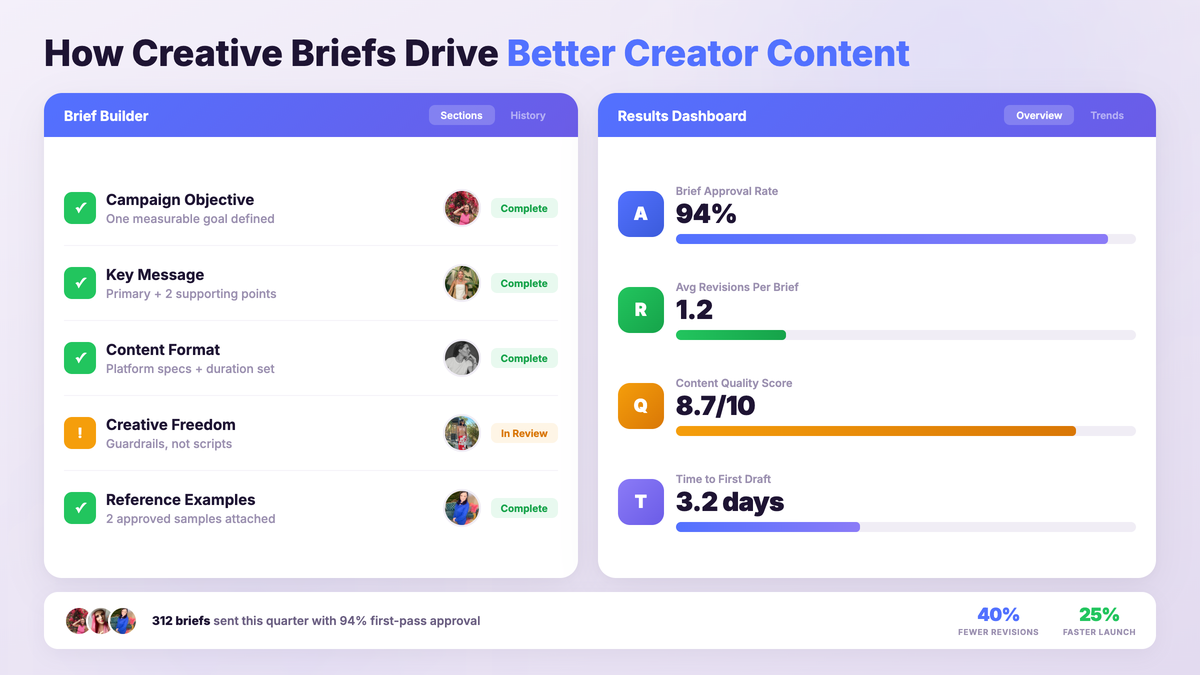
Quantifiably, campaigns with well-structured briefs see 40% fewer revision rounds, 25% faster time-to-publish, and significantly higher creator satisfaction scores — which directly impacts whether top creators want to work with your brand again.
The Cost of Over-Prescriptive Briefs
The opposite extreme is equally damaging. Briefs that script every word, dictate exact camera angles, and leave zero creative latitude produce content that looks and feels like advertising — which is exactly what audiences are trained to scroll past. Creators are experts at communicating with their specific audience. When you override that expertise with rigid scripts, you’re paying creator rates for commercial production quality.
The sweet spot is a brief that’s strategically clear and creatively open. It tells the creator exactly what business outcome you need and exactly what constraints are non-negotiable, then trusts them to figure out the best way to deliver within those boundaries.
The Essential Components of an Effective Creative Brief
Every effective creative brief for creator campaigns needs these core elements. Missing any one of them creates ambiguity that will surface — usually at the worst possible time. For more on this topic, explore our AI-powered creator matching.
1. Campaign Objective (One Sentence)
State the primary business objective in a single, measurable sentence. Not “increase brand awareness” (too vague) but “drive 500 product page visits from creator content this month” or “generate 50 purchases through affiliate links at a target CPA of $25.” When creators understand the exact metric you’re optimizing for, they make better creative decisions. For more on this topic, explore our Brand Sponsorships & Creator Partnerships playbook.
2. Target Audience Description
Go beyond demographics. Describe the audience’s mindset, pain points, and current behavior. Example: “Marketing managers at mid-market DTC brands (50-500 employees) who currently manage influencer relationships manually and are frustrated by the time it takes to find, vet, and coordinate creators.” This level of specificity helps creators craft messaging that resonates with real people, not demographic segments. For more on this topic, explore our State of Influencer Marketing 2026 report.
3. Key Message (One Primary, Two Supporting)
Identify one key message the content must communicate. Not three equal messages — one primary message with up to two supporting points. Cognitive research shows that audiences retain one clear takeaway from a piece of content. Trying to communicate multiple messages with equal weight results in audiences remembering none of them.
Example: Primary message — “partnrUP’s AI matching saves brands 10+ hours per week on creator discovery.” Supporting points — “The platform matches based on audience data, not just follower count” and “Brands can launch creator programs in days, not months.”
4. Mandatory Inclusions and Exclusions
List non-negotiable requirements: FTC disclosure requirements, specific product claims that are approved (or prohibited), competitor mentions to avoid, branded hashtags, and any legal or regulatory constraints. Be exhaustive here — this is not the place for creative flexibility.
Equally important: list what the creator should NOT do. “Don’t make medical claims,” “Don’t compare directly to [competitor] by name,” “Don’t use our product in these contexts.” Exclusions prevent costly reshoots and legal exposure.
5. Content Format and Platform Specifications
Specify the deliverable precisely: platform, format (Reel, TikTok, YouTube short, long-form), aspect ratio, minimum and maximum duration, and any platform-specific requirements like product tags or shopping links. Include whether the content will be used for paid amplification (this affects how creators approach production quality and rights).
6. Product Information and Talking Points
Provide everything a creator needs to speak knowledgeably about your product: key features and benefits, competitive differentiators, common customer objections and how to address them, pricing information, and any current promotions. Don’t assume creators will research your product independently — make it easy for them to be experts.
7. Timeline and Deliverables
Map out the complete timeline: draft submission date, review period (be specific — “2 business days”), revision window, final approval deadline, and go-live date. Build in buffer for revisions. If your timeline is tight, say so upfront — creators can adjust their workflow when they know the constraints, but they can’t recover from surprise rush requests.
8. Compensation and Usage Rights
Be transparent about compensation structure (flat fee, performance-based, hybrid), payment timeline, and content usage rights. If you plan to use creator content in paid ads, on your website, or in other channels beyond the creator’s organic post, specify this in the brief. Usage rights significantly impact creator pricing and should be discussed upfront rather than negotiated after content is produced.
Tools like partnrUP streamline the entire briefing and approval workflow, ensuring creators receive comprehensive briefs and brands maintain visibility into content production at every stage.
Balancing Brand Direction With Creator Authenticity
The tension between brand control and creator authenticity is the central challenge of every creative brief. Lean too far toward control and you get content that feels like advertising. Lean too far toward freedom and you risk off-brand messaging. The best briefs navigate this tension deliberately.
The “Guardrails, Not Scripts” Approach
Define clear guardrails — the boundaries within which the creator must operate — then leave everything else open. Guardrails include: key message, mandatory disclosures, product claims that are approved or prohibited, brand tone parameters (“professional but conversational” rather than word-for-word scripts), and any visual constraints (don’t show product in these contexts).
Within those guardrails, let creators make every creative decision: hook strategy, storytelling approach, visual style, editing pace, music choice, and personality. This is what you’re paying for — their ability to communicate with their audience in a way your brand never could on its own.
When to Tighten Direction
Some situations warrant more prescriptive briefs: regulated industries (pharma, financial services) where specific claims are legally required or prohibited; product launches where messaging consistency across multiple creators matters; comparison content where accuracy about competitor features is critical; and crisis response or sensitive topics where brand safety is paramount.
When to Loosen Direction
Give creators more latitude when: you’re working with proven partners who understand your brand; the objective is awareness or engagement rather than direct response; the content format rewards authenticity (GRWM, day-in-the-life, honest reviews); and you’re testing new creative approaches to identify what resonates.
The Creative Reference Sheet
Instead of scripting content, provide a “creative reference sheet” — 3-5 examples of creator content (from any brand) that demonstrates the tone, format, or approach you’re looking for. Visual references communicate creative direction far more effectively than written descriptions. Include both positive references (“content like this”) and negative references (“not like this”) to bracket the creative space.
Platform-Specific Brief Considerations
Different platforms demand different briefing approaches. A brief that works for a YouTube review won’t work for a TikTok and vice versa.
TikTok Briefs
Emphasize the hook. TikTok’s format demands that the first 1-2 seconds are compelling enough to stop the scroll. Your brief should provide guidance on the opening moment — but let the creator execute it their way. Suggest 2-3 hook concepts and let them choose or create their own. Specify optimal video length (30-60 seconds for most campaign content) and note whether the creator should use trending audio or original sound.
Instagram Reels and Stories Briefs
Instagram audiences skew slightly older and respond to more polished aesthetics than TikTok. Briefs should address visual quality expectations, whether to use text overlays, and whether to include shopping tags. For Stories, specify the number of frames, whether to include swipe-up links, and how to structure the narrative across multiple 15-second segments.
YouTube Briefs
YouTube content tends to be longer and more detailed. Briefs should include a suggested content outline (not script), key points to cover in sequence, ideal video length range, thumbnail guidance, and description/tags SEO elements. YouTube creators often add significant value through their own research — brief them on your key messages but encourage them to supplement with independent insights.
Multi-Platform Briefs
When a campaign spans multiple platforms, create a core brief with platform-specific addenda rather than separate briefs per platform. The core strategic direction (objective, audience, key message) stays consistent; the format specifications and creative approaches adapt per platform. This approach ensures message consistency while allowing platform-native execution. Tools like partnrUP’s platform help brands automate this at scale.
Ready to streamline your creator briefing process and scale campaigns efficiently? Book a demo with partnrUP to see how brands manage creator workflows from brief to publish.
Iterating Briefs Based on Performance
The best creative briefs aren’t static documents — they’re living frameworks that improve with each campaign based on performance data.
Build a Brief Performance Database
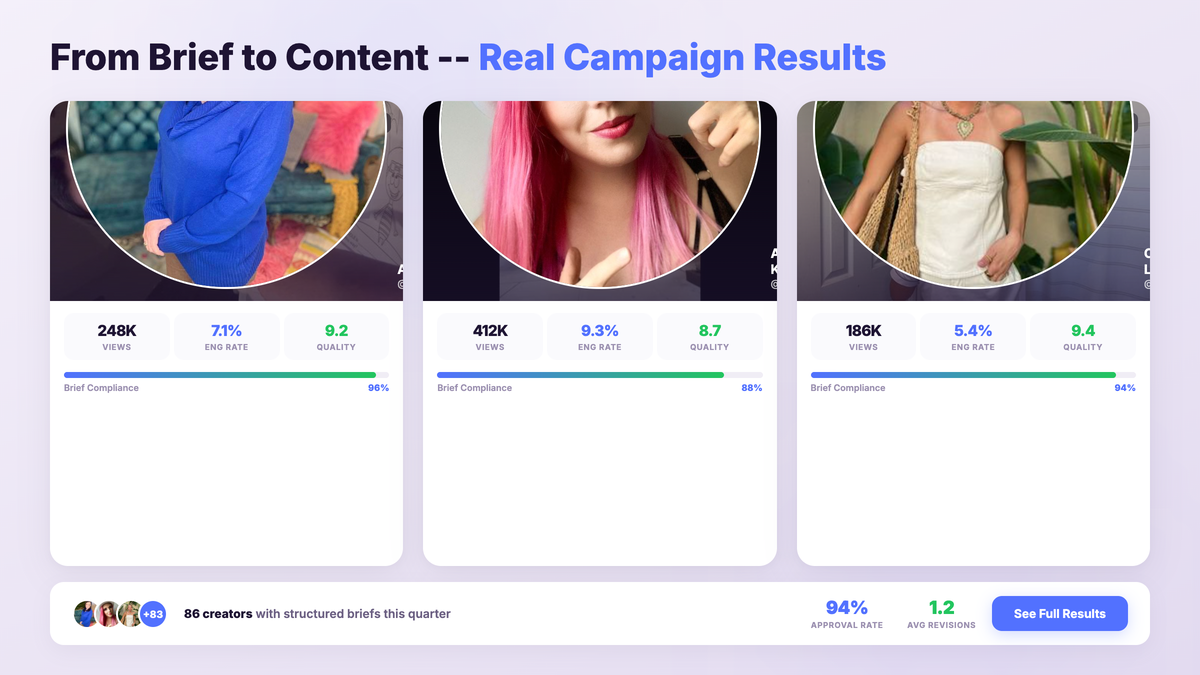
After every campaign, record which brief elements correlated with high-performing content. Did a specific hook format outperform others? Did creators who received product samples produce better content than those who received only product information? Did tighter direction on one platform outperform looser direction on another? Over time, this data builds a proprietary briefing playbook unique to your brand.
A/B Test Brief Variables
When working with multiple creators on the same campaign, deliberately vary brief elements. Give half the creators a detailed hook direction and half an open brief. Provide different key messages to different creators. Then measure which brief approach generated better content performance. This systematic approach to brief optimization compounds over time.
Creator Feedback Loops
After each campaign, ask creators what was most and least helpful in the brief. Creators have unique insight into what information helps them produce better content. The brands that consistently produce the best creator campaigns are the ones that treat briefing as a collaborative process rather than a one-directional mandate.
Frequently Asked Questions
How long should a creative brief for creators be?
Aim for 1-2 pages of strategic direction plus a separate reference document with product details, FAQs, and brand guidelines. Creators rarely read briefs longer than 2 pages thoroughly. Front-load the most critical information (objective, key message, mandatory requirements) and put reference material in an appendix or separate document.
Should I provide a script or let creators use their own words?
Almost never provide a word-for-word script. Scripts produce content that sounds like advertising and strips away the authentic voice that makes creator content effective. Instead, provide key talking points, mandatory phrases (like required disclosures), and the one message you need communicated — then let creators translate that into their natural voice.
How far in advance should I send briefs to creators?
Send briefs a minimum of 7-10 business days before content is due, ideally 2-3 weeks for complex campaigns. Creators often batch their content production and need time to plan, source props, and integrate your product into their content calendar. Rush timelines consistently produce lower-quality content.
What should I do if a creator’s content doesn’t match the brief?
First, evaluate whether the brief was clear enough. Most “off-brief” content results from ambiguous direction, not creator negligence. Provide specific, constructive feedback referencing exact brief sections. If the core message is intact but the execution differs from what you envisioned, consider whether the creator’s approach might actually perform better with their audience.
How many revision rounds should I allow?
Plan for one round of revisions in your timeline and budget. If content consistently requires multiple revision rounds, the brief needs improvement — not more revisions. Two or more revision rounds signal a disconnect between brief clarity and creative expectations that should be addressed at the briefing stage.
Should briefs differ for micro-creators versus macro-influencers?
Yes. Micro-creators typically benefit from more detailed briefs because they may have less experience with brand collaborations. Macro-influencers and established creators often prefer less prescriptive briefs that trust their expertise. Adjust detail level based on the creator’s experience with branded content and their familiarity with your product category.
How do I brief for shoppable content specifically?
Shoppable content briefs need additional elements: product tag placement guidance, call-to-action language for shopping links, any discount codes or exclusive offers to mention, and specific conversion metrics you’re targeting. Emphasize that the content should drive action, not just awareness — this fundamentally changes how creators approach storytelling and CTA placement.