





Marketing budgets have flatlined at 7.7% of overall company revenue, according to Gartner's 2025 CMO Spend Survey — the same share as the year before. The survey also found that 59% of CMOs report insufficient budget to execute their strategy. If that describes your situation, the useful question is not "how much should we spend on influencer marketing?" It is "what return do we need, and what spend does that imply?"
This guide is part of our Influencer Marketing ROI: The Complete Guide to Measuring, Tracking & Proving Results pillar. The pillar covers how to measure return after a campaign runs. This guide covers the step before that: deciding the number you are willing to spend, before anything is committed.
Most budget advice runs forward. Take last year's spend, add or subtract a percentage, split it across channels, and hope the return justifies it. That method produces a number you cannot defend in a budget review, because its only logic is the previous number.
Running the math backward is harder but defensible. You start from the return the business needs, divide by the efficiency you can actually evidence, and arrive at a spend ceiling. If the ceiling is too small to run a real program, that is useful information — it tells you to fix the economics or pick a different channel, rather than discovering the problem four months in.
Table of Contents
- Why Forward Budgeting Fails
- The Backsolve: From Target Return to Spend Ceiling
- Step 1: Establish Your Efficiency Number
- Step 2: Define What Counts as Return
- Step 3: Calculate the Spend Ceiling
- Step 4: Allocate Across Creator Tiers
- Step 5: Size the Pilot Before the Program
- Step 6: Hold a Reserve You Actually Intend to Spend
- Step 7: Set Reallocation Triggers in Advance
- What to Do With No Historical Data
- Common Pitfalls
- Frequently Asked Questions
Why Forward Budgeting Fails
Forward budgeting sets the spend first and treats the return as an outcome to be discovered. It fails for a specific reason: it gives you nothing to compare the result against. If you allocate $120,000 and generate $300,000 in tracked revenue, is that good? You cannot answer without a target you set beforehand, and a target invented after the fact is not a target.
The second failure is subtler. A budget set by incrementing last year's number inherits last year's mistakes. If half the prior spend went to creators who produced nothing, a 10% increase funds that same distribution at a slightly larger scale.
The Percentage-of-Revenue Trap
Gartner's figure — marketing at 7.7% of company revenue — is a useful benchmark for the marketing function overall, but it is a description of what companies do, not a prescription for what any single channel should receive. The survey covered 402 CMOs and marketing leaders in North America, the UK and Europe, with the vast majority at companies reporting over $1 billion in annual revenue. If you are a $20 million brand, that cohort is not your comparison set.
Percentage benchmarks also say nothing about your margin structure. Two brands with identical revenue and different gross margins can afford very different customer acquisition costs, so they should not be spending the same proportion on acquisition channels.
Where the Forward Method Is Fine
If you are spending a genuinely small amount — a few thousand dollars of product seeding — the modelling overhead is not worth it. Send product, see what happens, and build the baseline you will need later. The backsolve becomes worth doing once the number is large enough that being wrong about it matters.
The Backsolve: From Target Return to Spend Ceiling
The whole method reduces to one rearrangement. The standard return calculation is:
ROI = (Return − Spend) ÷ Spend
Solve that for spend instead of for ROI, and you get:
Maximum Spend = Target Return ÷ (1 + Target ROI)
If the business needs $500,000 in attributable revenue and you have committed to a 3:1 return — meaning a target ROI of 2.0, since 3:1 return-on-spend is a 200% return on investment — the ceiling is $500,000 ÷ 3.0, or about $167,000. Spend more than that and you miss the commitment even if the campaign "works."
The arithmetic is trivial. The difficulty is that the formula needs two inputs most teams cannot state with confidence: the return the business actually requires, and the efficiency you can realistically deliver. The rest of this guide is about sourcing those two numbers honestly.
Return-on-Spend Versus ROI
These get conflated constantly and the gap between them is large enough to break a budget. A 3:1 return on spend means every dollar produces three dollars of revenue. A 3.0 ROI, strictly defined, means every dollar produces three dollars of profit above the dollar spent — four dollars of revenue. Pick one convention, write it down, and make sure finance is using the same one. Our step-by-step ROI formula guide works through the calculation mechanics in detail.
Step 1: Establish Your Efficiency Number
Your efficiency number is the return you have evidence of producing, not the return you hope for. It is the denominator of the backsolve, and inflating it is the single fastest way to set a budget you cannot hit.
If You Have Run Campaigns Before
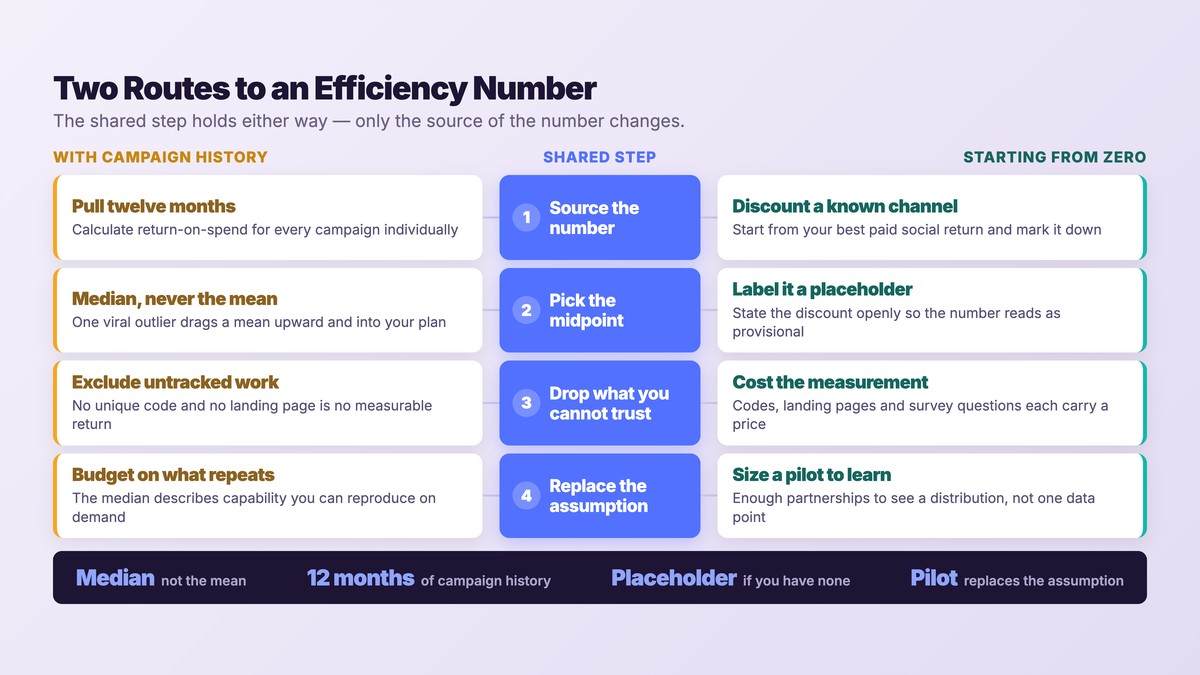
Pull every campaign from the last twelve months and calculate return-on-spend for each one individually. Then take the median, not the mean. One viral outlier drags a mean upward and encodes a result you cannot reproduce on demand into your planning assumption.
Exclude campaigns whose tracking you do not trust. A campaign with no unique code and no landing page did not produce a measurable return, and including a guess at its performance corrupts the only number that matters here.
If You Are Starting From Zero
Use a conservative placeholder and label it as one. Taking your best-performing paid social return-on-spend and applying a discount is defensible as a starting assumption, because influencer content typically carries longer attribution windows and messier tracking than paid placements. State the discount openly in your plan so the number is understood as provisional.
Then treat the first campaign as the thing that replaces the placeholder. See the pilot sizing section below.
Why the Median Matters
Consider five campaigns returning 1.2:1, 1.8:1, 2.1:1, 2.4:1 and 11:1. The mean is 3.7:1. The median is 2.1:1. Budgeting on 3.7:1 assumes you can summon the eleven-times campaign at will, and that campaign was almost certainly driven by factors you did not control. The median describes your repeatable capability, which is what a budget needs to rest on. The gap is not academic: against a $400,000 revenue target, budgeting on the 3.7:1 mean sets a ceiling of about $108,000, while the 2.1:1 median supports about $190,000. The inflated efficiency number does not just overstate performance — it quietly shrinks the budget you are allowed to ask for.

Step 2: Define What Counts as Return
The target return in the numerator has to be a number finance recognizes. This is where budget conversations usually break down — marketing counts impressions and earned media value, finance counts revenue, and the two sides never reconcile.
Anchor on Revenue or Contribution Margin
Pick one of two numerators and be explicit about it:
- Attributable revenue — simpler to measure, but ignores whether the sales were profitable.
- Contribution margin — revenue minus cost of goods and variable costs. Harder to pull, but it is the number that tells you whether the channel actually funds itself.
Contribution margin is the better anchor for most brands, because a channel generating revenue at negative margin is a channel losing money efficiently. If gross margin is 40%, a 3:1 revenue return is roughly a 1.2:1 margin return — thinner than it sounds.
Awareness Goals Need a Separate Budget Line
Upper-funnel objectives are legitimate but they do not belong in a revenue backsolve. Mixing them produces a target that cannot be hit or evaluated, because part of the spend was never aimed at revenue.
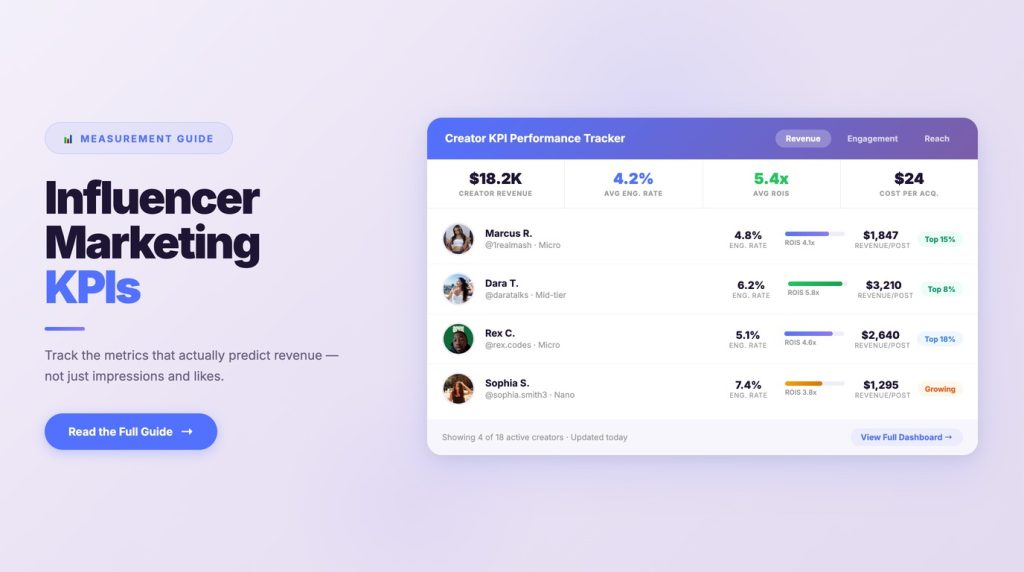
Split the budget into a performance line with a return target and an awareness line with a different success measure, then size them separately. Our guides on brand lift studies and influencer marketing KPIs cover how to evaluate the awareness line on its own terms.
Agree the Attribution Method Before You Set the Number
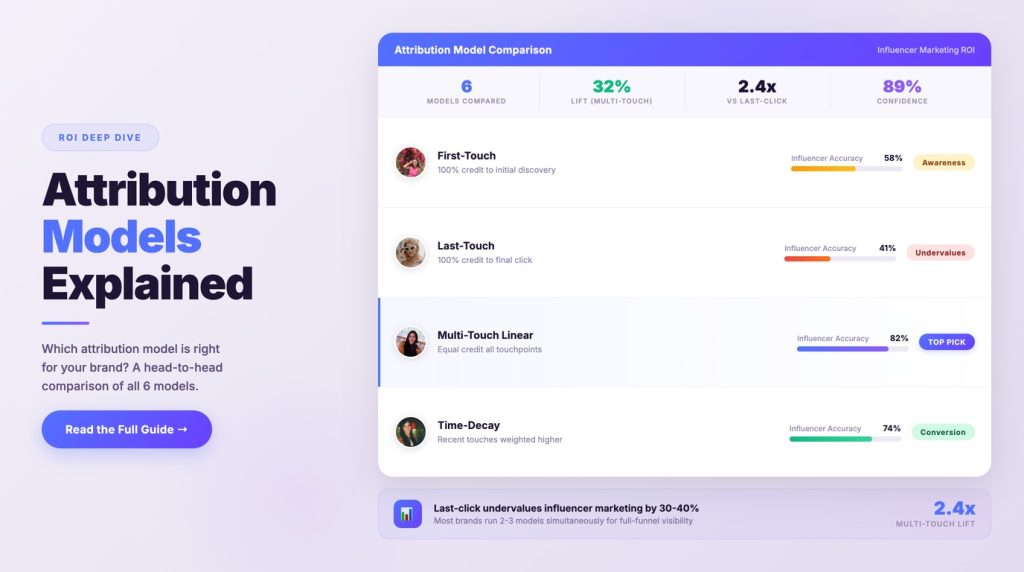
A last-touch model and a multi-touch model will credit the same campaign with materially different revenue, which means they imply different budgets. Settle the model first; otherwise the target moves whenever someone changes the report. Our attribution models guide walks through the tradeoffs.
Step 3: Calculate the Spend Ceiling
With both inputs established, run the division. A worked example, using illustrative figures:
Suppose the business needs $400,000 in attributable revenue from the channel this year. Your median historical return-on-spend across trusted campaigns is 2.4:1. The ceiling is $400,000 ÷ 2.4, or roughly $167,000.
That is a ceiling, not a plan. Two adjustments come next.
How the Ceiling Moves With the Target
The same $400,000 revenue target implies very different budgets depending on what return you commit to. Holding the target constant and varying the commitment:
- At a 1.5:1 return, the ceiling is about $267,000
- At 2:1, about $200,000
- At 2.4:1, about $167,000
- At 3:1, about $133,000
- At 4:1, about $100,000
The practical consequence is that a return commitment made casually in a planning meeting silently sets the budget. Promising 4:1 rather than 2:1 halves what you can spend, which may leave too little to run the program that was supposed to produce the return.
Subtract Non-Working Spend
The ceiling covers everything the channel consumes, not just creator fees. Before committing, subtract:
- Product cost for gifted or seeded items, at cost rather than retail
- Platform or tooling fees
- Paid amplification of creator content, if you intend to boost
- Agency or freelance management fees
- Shipping and fulfilment
If those total $35,000 of a $167,000 ceiling, your actual creator-fee budget is $132,000. Teams that skip this step consistently overcommit, because the fee budget was quietly funding four other line items.
Sanity-Check Against Unit Economics
Divide the working budget by your target number of new customers. If that per-customer figure exceeds what you can afford to pay to acquire a customer, the plan fails regardless of what the return math said. A channel can clear a revenue target and still acquire customers at a loss, which is why the unit check runs alongside the return check rather than after it.
Step 4: Allocate Across Creator Tiers
A single budget number still has to be divided among creators of different sizes, and the split determines how much variance you are exposed to. Our metrics guide covers how to evaluate individual creators; this section is about the shape of the portfolio.
Treat It as a Portfolio, Not a Pick
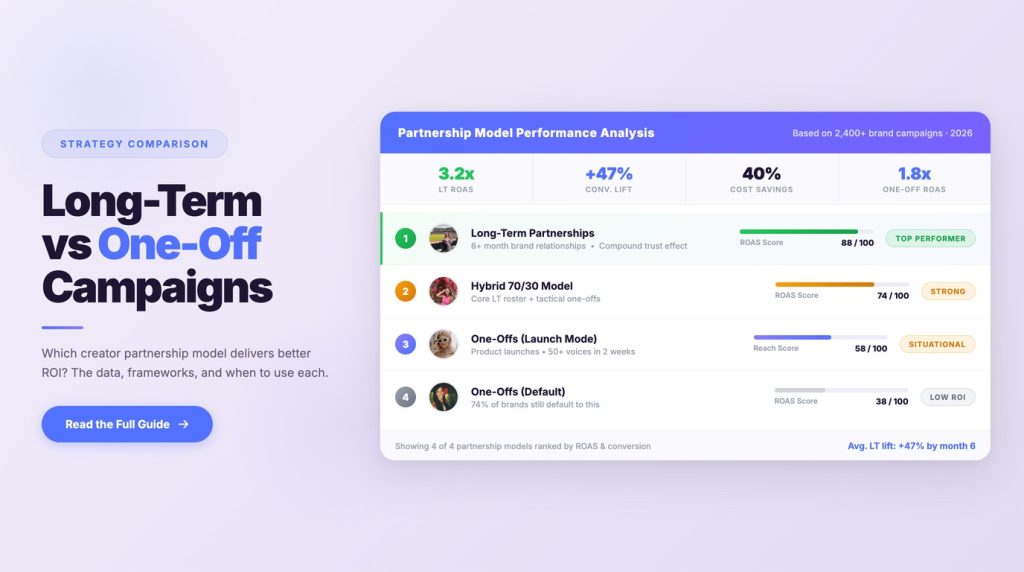
Concentrating budget in a few large creators raises both the ceiling and the floor of possible outcomes. Spreading it across many smaller creators narrows the range. Neither is correct in the abstract — the right answer depends on whether your situation tolerates a miss.
A practical default for a team without a reliable baseline is to weight toward the smaller end, where the per-creator cost is low enough that individual misses do not threaten the target, and the larger sample produces a usable efficiency number faster.
Reserve Budget for Re-Signing Winners
The most common allocation mistake is committing the entire budget to first-time partnerships. Creators who have already performed for you are the lowest-variance spend available, and a budget with no room to renew them forces you back to cold sourcing every cycle.
Carve out a defined share for repeat partnerships before the first campaign launches. Performance-based and affiliate structures are also worth considering for a portion of the budget, since they move some of the risk onto the return itself.
Step 5: Size the Pilot Before the Program
If your efficiency number is a placeholder rather than a measurement, the first allocation should be sized to produce a measurement — not to hit the annual target.
Buy Information, Not Reach
A pilot's job is to replace your assumed return with a real one. That means enough separate partnerships to see a distribution rather than a single data point, each with its own trackable link or code, run long enough to cover your actual purchase cycle.
A pilot with three creators tells you almost nothing, because three results cannot distinguish a working channel from luck. A pilot that consumes most of the annual budget defeats its own purpose, since there is nothing left to act on once you have learned something.
Decide the Decision Rule First
Write down, before launch, what result causes you to scale, iterate, or stop. "We will scale if median return-on-spend across the cohort exceeds 2:1" is a decision rule. "We will see how it goes" is not, and in practice it resolves into continuing regardless of outcome.
Cost the Measurement Itself
Unique codes, dedicated landing pages, and post-purchase survey questions all cost something. Budget them explicitly into the pilot. Running a pilot you cannot measure spends the money and leaves the placeholder in place.
Step 6: Hold a Reserve You Actually Intend to Spend
Allocating every available dollar at planning time leaves nothing to respond with when something works. A reserve is not a safety buffer against overspending; it is capital held back to double down.
Name the Reserve's Purpose
An unnamed reserve gets absorbed into general spend by the second month. Define what it is for — amplifying content that outperforms, re-signing a creator who converted well, replacing a partner who dropped out — and define who approves its release.
Gartner's finding that 39% of CMOs plan to cut back on agency budgets, and the same survey's warning about in-year budget cuts, both point the same direction: budgets get revisited mid-year. A reserve you can point to is easier to defend than a fully committed plan with no flexibility.
Do Not Reserve Against Measurement
Tracking infrastructure is not a contingency item. If the budget is tight enough that measurement is the thing being cut, the program will produce no efficiency number, and next year's budget will be set by the same guesswork as this year's.
Step 7: Set Reallocation Triggers in Advance
Budgets set once and reviewed at year end waste the information the campaign generates along the way.
Define the Trigger, the Threshold, and the Action
A usable trigger has all three parts: what you are watching, the level that prompts action, and what you do. "If a creator's tracked return-on-spend is below 0.5:1 after the full attribution window, we do not renew and the budget moves to the reserve pool" is actionable. "We will monitor performance" is not.
Wait for the Attribution Window to Close
Cutting a creator before their attribution window has elapsed means acting on partial data, and influencer purchases often land well after the post. Set the review point after the window you agreed in Step 2, not at a convenient calendar date. Judging week-two numbers against a target built on a thirty-day window will consistently make working partnerships look like failures.
Review on a Schedule, Not on Vibes
Put the reallocation review in the calendar at planning time. Reviews that happen when someone remembers to ask tend to happen after a disappointing result and not after a good one, which biases every decision toward cutting.
What to Do With No Historical Data
Most teams reading this do not have twelve months of clean campaign data, and the backsolve appears to require it. The sequence for starting cold:
- Set the return target first. This comes from the business, not from the channel, so you can state it on day one.
- Use a labelled placeholder for efficiency. A discounted version of your best measurable channel, explicitly marked provisional.
- Size a pilot to replace the placeholder, with the decision rule written down.
- Re-run the backsolve with the real number once the pilot's attribution window closes.
- Only then commit the annual figure.
This sequence takes one purchase cycle longer than guessing. It replaces an annual commitment resting on an assumption with one resting on a measurement.
Common Pitfalls
Budgeting on the Best Campaign Instead of the Median
Covered above, and worth repeating because it is the most frequent error. Your best result is the one most likely to involve circumstances you did not create and cannot repeat.
Counting Earned Media Value as Return
Earned media value estimates what equivalent paid placement would have cost. It does not represent money received, so it cannot sit in the numerator of a budget calculation that finance will review. Report it separately if it is useful internally; keep it out of the backsolve.
Forgetting That Product Cost Is Real Spend
Gifted product is frequently excluded from budget math on the grounds that no invoice was raised. The cost of goods is real, and at scale a seeding program's product cost can rival its fee budget. Count it at cost.
Setting One Target Across Mismatched Objectives
A single return target applied to a budget that includes awareness work guarantees the number is wrong. Split the lines.
Ignoring the Time Cost of Management
Internal hours spent sourcing, briefing, chasing deliverables and reconciling payments are a real input. A program that clears its return target while consuming a third of a marketer's year may not be the best use of that year, and the comparison is invisible if the hours were never costed.
Where the Operational Load Actually Falls
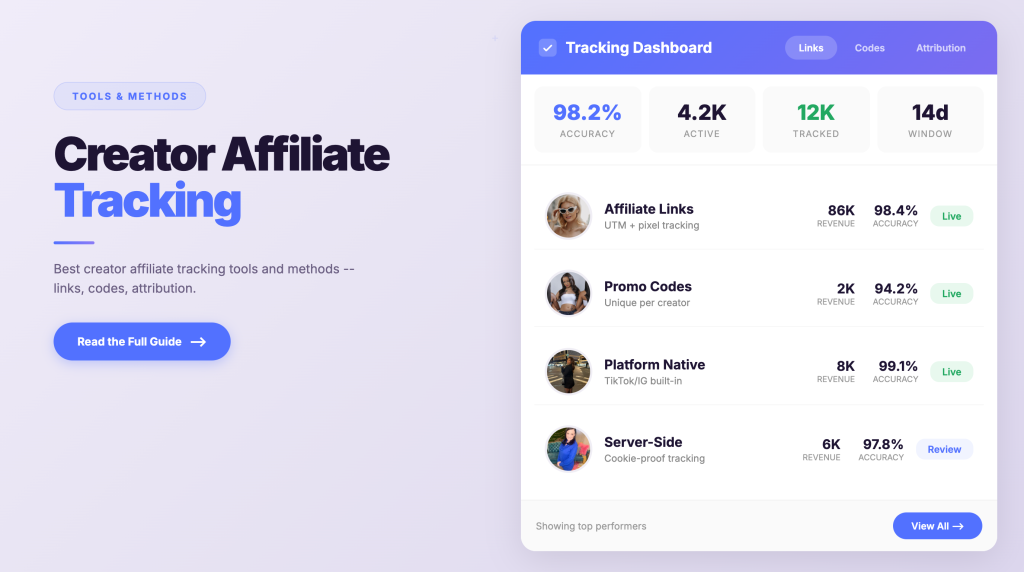
The budgeting method above assumes you can measure what you spent and what came back, per creator, cleanly enough to compute a median. That assumption is where most programs break. The arithmetic is not hard; keeping accurate per-creator records of fees, product cost, tracked conversions and attribution windows across dozens of partnerships is.
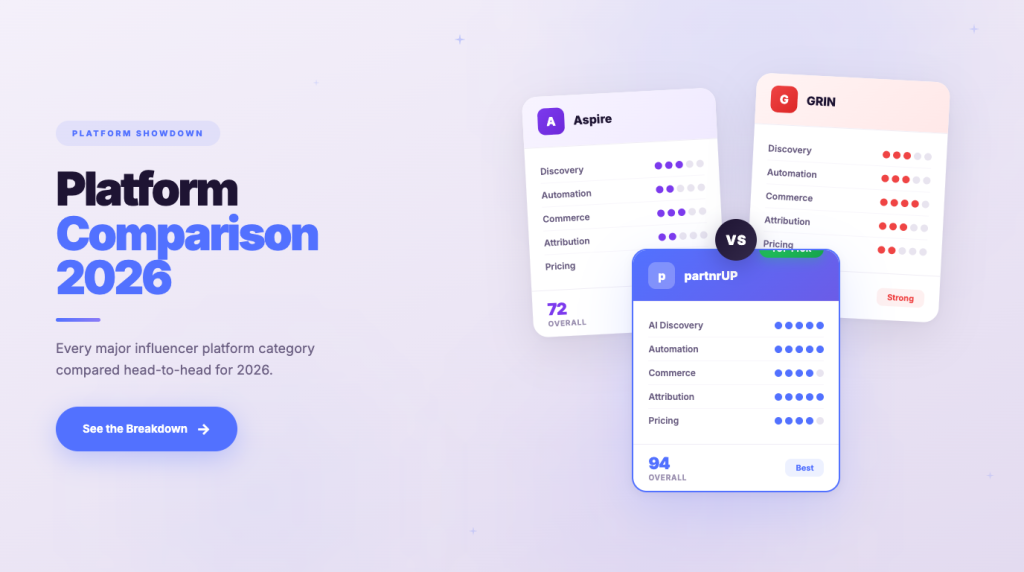
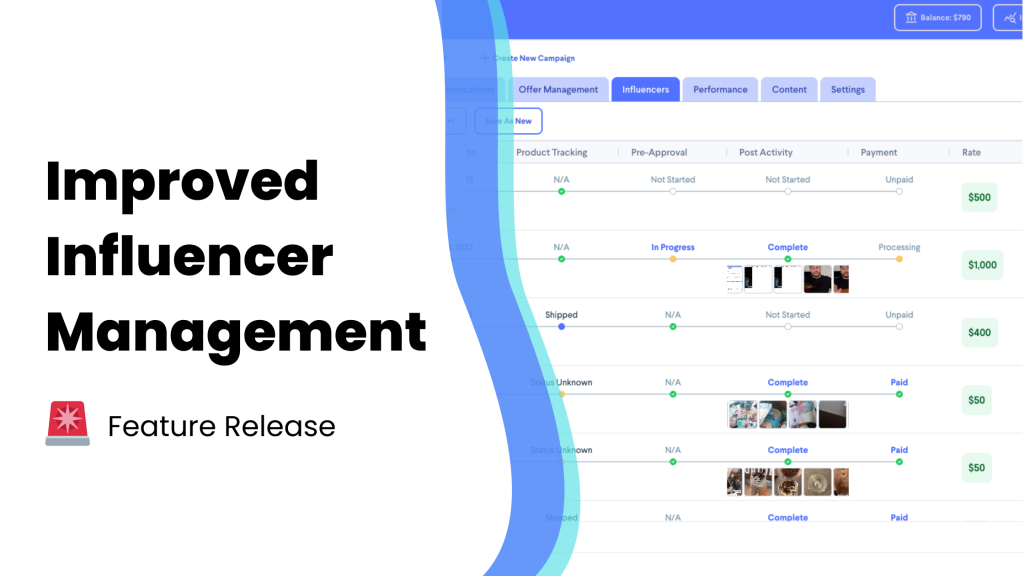
partnrUP is built around that operational layer. Its platform page describes managing "search, outreach, content, contracts, paid, retail, and analytics—in a single, powerful dashboard," with campaign management that shows "who's accepted invitations, which deliverables are pending approval, and what's been completed." The relevance to budgeting is that per-creator spend and performance live in the same place, so the efficiency number you need for next cycle's backsolve is a record rather than a reconstruction.
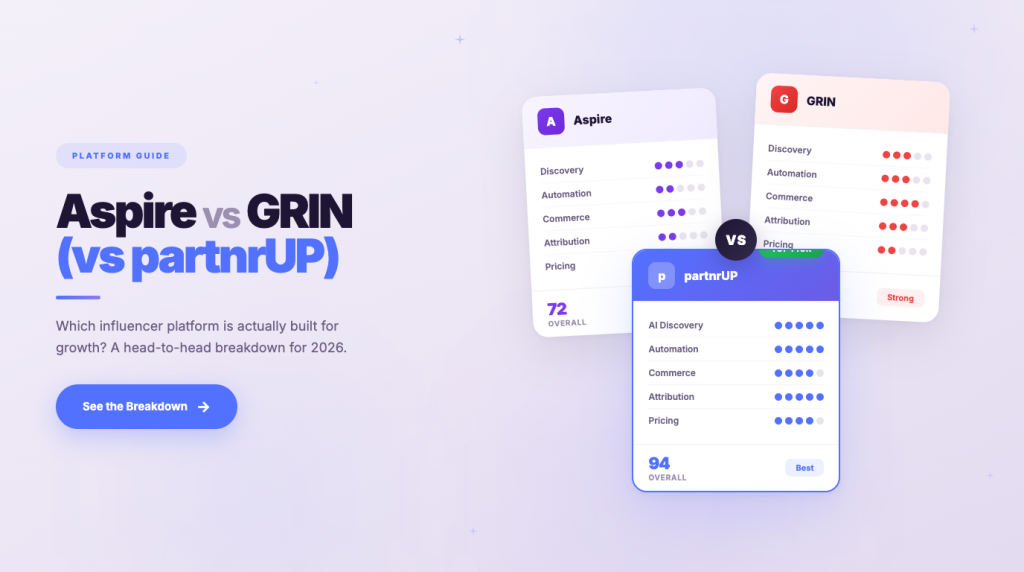
If you are evaluating tooling for this, our platform comparison guide covers how the options differ.
Frequently Asked Questions
What percentage of my marketing budget should go to influencer marketing?
There is no defensible universal percentage. Gartner's 2025 CMO Spend Survey found marketing overall sitting at 7.7% of company revenue, but that is a description of the marketing function across 402 largely enterprise-scale organizations, not a per-channel prescription. The backsolve in this guide replaces the percentage question with a return question, which produces a number you can defend.
What return should I target?
That comes from your margin structure and what the business needs the channel to do, not from a benchmark. Work out what you can afford to pay to acquire a customer given your contribution margin, then set a return target consistent with it. A target copied from an industry average may be unreachable or unambitious for your economics.
How do I set a budget with no past campaign data?
Set the return target from the business, use an explicitly labelled placeholder for efficiency, and size a pilot whose job is to replace that placeholder with a measurement. Re-run the calculation with the real number before committing the annual figure. The section above lays out the sequence.
Should gifted product count toward the budget?
Yes, at cost of goods rather than retail value. No invoice is raised, but the product has a real cost, and omitting it understates spend and overstates return. At seeding scale the product line can approach the fee line.
Is it better to spend on a few large creators or many small ones?
Concentration widens the range of outcomes in both directions; distribution narrows it. If you lack a reliable efficiency number, weighting toward smaller creators generally produces a usable baseline faster and limits the damage from any single miss. Treat it as a portfolio decision about variance tolerance.
How much should I hold in reserve?
Enough to act on something that works — amplifying a strong piece of content, or re-signing a creator who converted. The amount matters less than naming its purpose and its approver in advance, because an unnamed reserve reliably gets absorbed into general spend.
When should I move budget away from an underperforming creator?
After their attribution window has closed, against a threshold you set before launch. Influencer-driven purchases often land well after the post, so cutting on week-two numbers judged against a thirty-day target will make working partnerships look like failures.
Conclusion
Forward budgeting produces a number whose only justification is last year's number. Running it backward — from required return, through an efficiency figure you can evidence, to a spend ceiling — produces a number you can defend in a budget review and evaluate honestly afterward.
Two inputs carry the whole method, and both are easy to get wrong in a flattering direction. Use the median of your trusted campaigns rather than the best one, and define return as something finance recognizes. If you do not have the data yet, size a pilot to get it rather than guessing at the annual figure.
For the measurement side of this — attribution models, metrics, and proving the result after the fact — start with our complete guide to influencer marketing ROI. If the per-creator record-keeping is the bottleneck, see how partnrUP handles the operational side.