
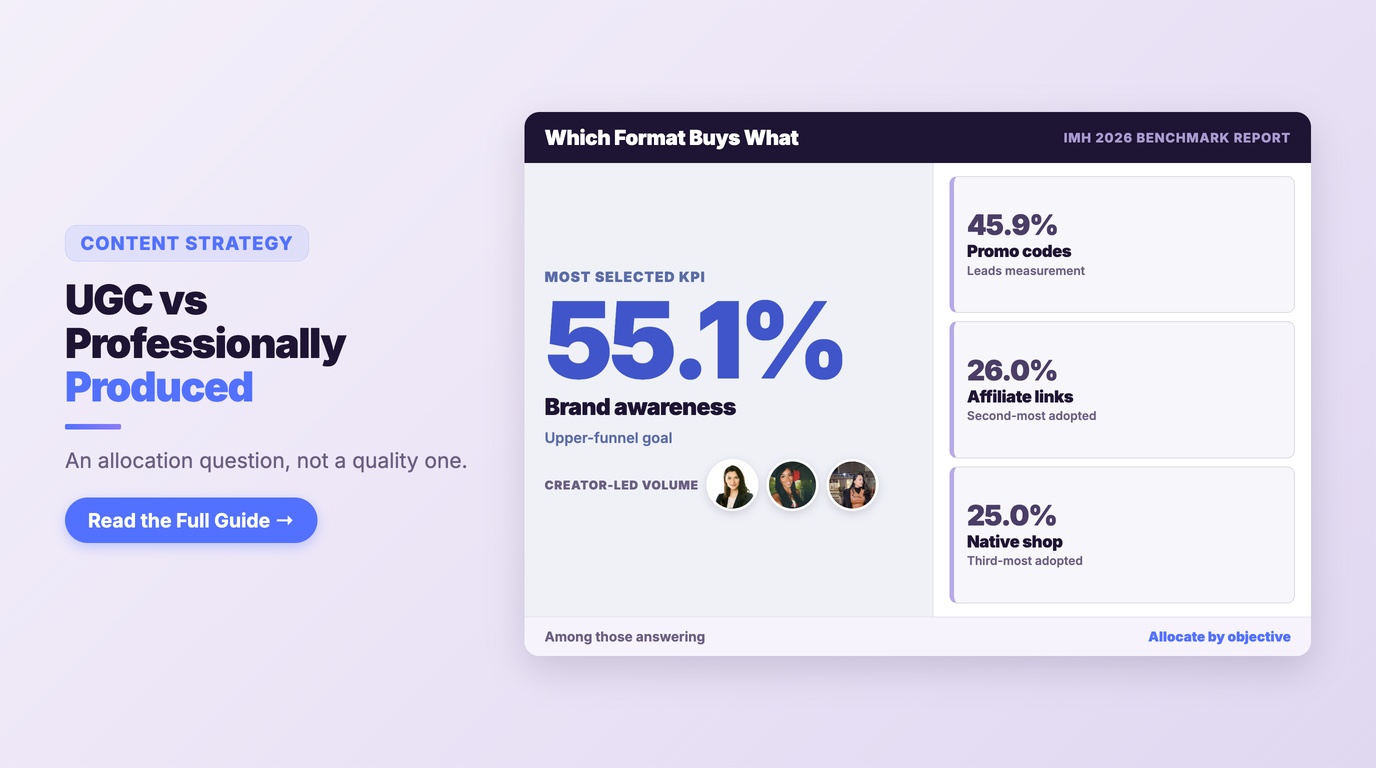




Among marketers answering Influencer Marketing Hub's 2026 Benchmark Report, brand awareness is the most selected KPI at 55.1%, while revenue and sales KPIs are selected less frequently. That single data point explains most of the confusion around the UGC-versus-produced-content debate. Teams are buying two different outcomes with the same budget line, then comparing the results as if they were the same purchase.
UGC and professionally produced content are not competing answers to one question. They are answers to different questions. One buys volume, speed, and testable variation. The other buys control, longevity, and a brand asset you can still use in eighteen months. Most brands do not have a content-quality problem. They have an allocation problem.
This guide gives you the decision framework: which format to use by campaign type, platform, and objective, what each one actually costs in time and money, and how to run both without the hybrid model collapsing into mush.
What This Guide Covers
- What separates UGC from professionally produced content
- The economics: cost per asset, and the number that actually matters
- Iteration speed and the creative testing argument
- Shelf life, brand equity, and what survives the quarter
- The decision framework: when to use each
- Matching format to objective
- Matching format to platform
- The hybrid model: running both without losing coherence
- Usage rights, licensing, and the cost nobody budgets for
- Five allocation mistakes that waste content budget
- Frequently asked questions
What Separates UGC From Professionally Produced Content
The distinction people reach for first is production value, and that is the wrong axis. Plenty of creator-shot content is technically excellent, and plenty of agency work looks cheap. The real difference is who controls the creative decisions and how the content is intended to be read by the person seeing it.
Professionally produced content is brand-directed. A brand or agency sets the concept, the script, the shot list, and the final cut. The viewer understands they are looking at advertising, and the content is built to survive that understanding — it earns attention through craft, clarity, or storytelling.
UGC, in the marketing sense of the term, is creator-directed content made to a brief. The creator makes the format decisions: how to open, what to say, what the thing looks like in their actual kitchen or gym or car. The viewer reads it as a person talking, not a brand talking. That reading is the entire asset. Direct it too tightly and you have paid creator rates for something that now looks like a low-budget ad.
Worth separating out: true organic UGC — content customers post with no brief and no payment — is a third category. It is free, unpredictable, and legally murky to repurpose. Most of what the industry calls UGC is paid, briefed creator content. This guide uses the term that way. For the broader production taxonomy, our guide to branded content creation from strategy to distribution covers formats beyond the two discussed here.
The thing that actually changes with format
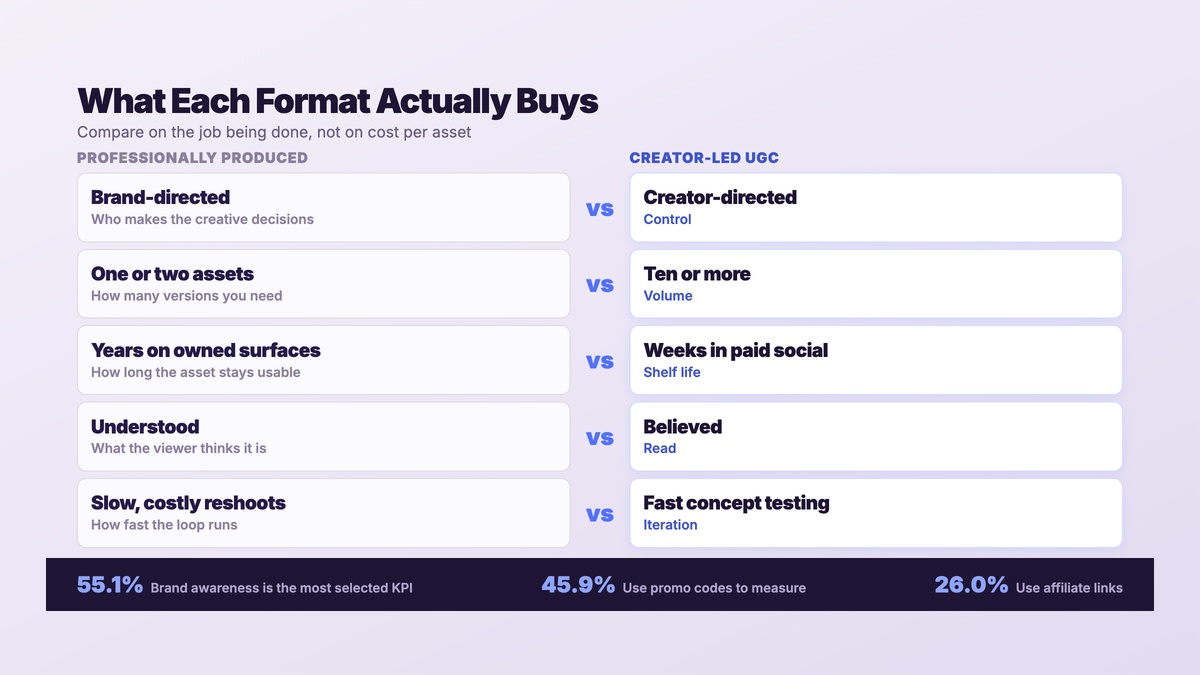
Switching formats changes four things at once: who holds creative control, how fast you can produce the next version, how long the asset stays usable, and what the viewer believes about why it exists. Every allocation decision below comes back to those four.
The Economics: Cost Per Asset, and the Number That Actually Matters
Cost per asset is the number most teams anchor on, and it is the number most likely to mislead them. A produced shoot carries fixed costs — concept development, crew, location, direction, post — that do not scale down when you only need one video. Creator content carries a per-creator fee that scales close to linearly.
So on a spreadsheet, creator content wins on cost per asset almost every time. That comparison is only meaningful if the two assets do the same job. They usually do not.
The number that actually matters is cost per asset that still works. A produced hero video that anchors a product page for two years and a creator video that burns out as paid creative after six weeks have wildly different effective costs, even when the creator video looked ten times cheaper at the point of purchase.
Where the budget actually goes
Three cost lines get consistently underestimated on both sides:
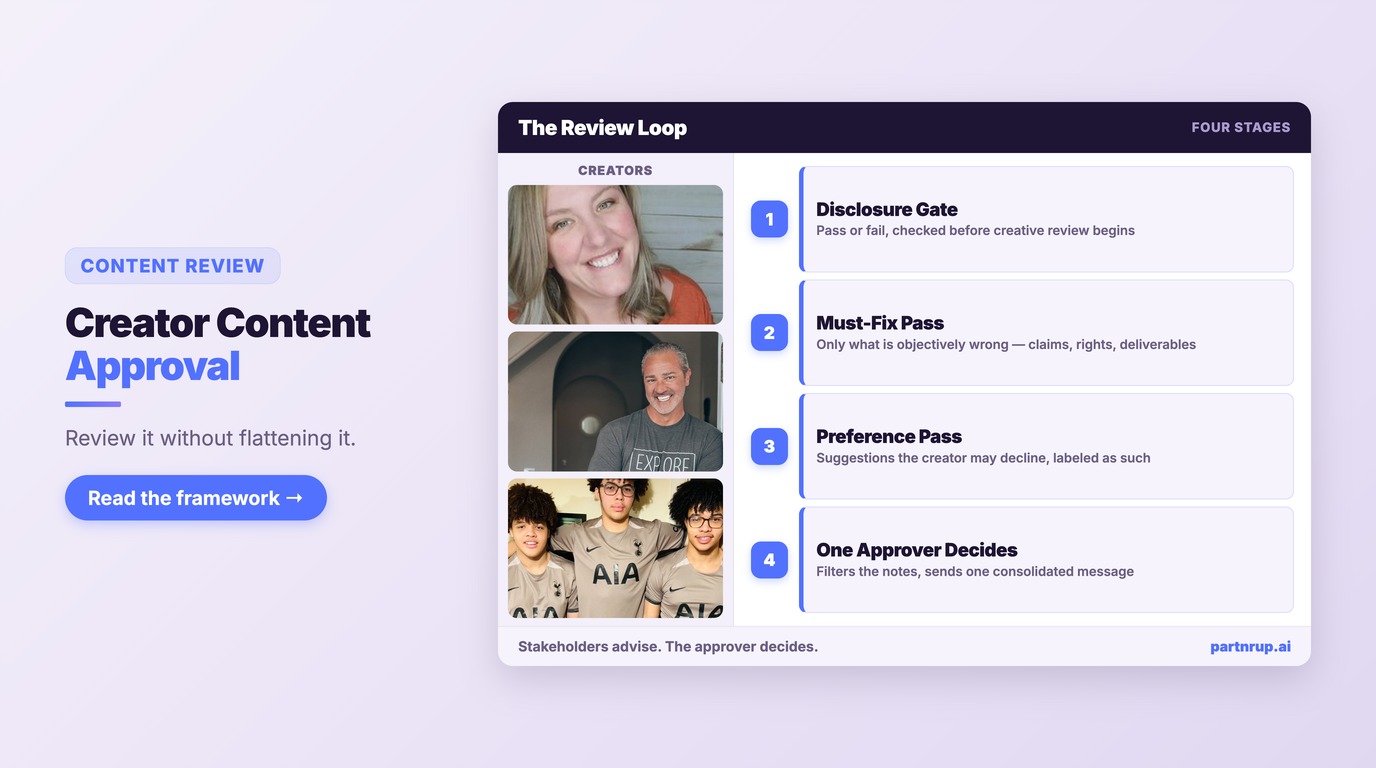
- Briefing and review time. Creator content shifts cost from production to coordination. Twenty creators means twenty briefs, twenty rounds of feedback, and twenty approval cycles. Teams that budget only the creator fees discover the labor cost in month two. Our creator content approval process guide covers how to keep that review load from scaling linearly with volume.
- Usage rights. Covered in detail below, but the headline is that the fee to make a creator video and the fee to run it as a paid ad are different fees.
- Revision cycles on produced work. Reshooting produced content is expensive enough that teams ship the version they have rather than the version that tested best. That constraint is a real cost even though it never appears on an invoice.
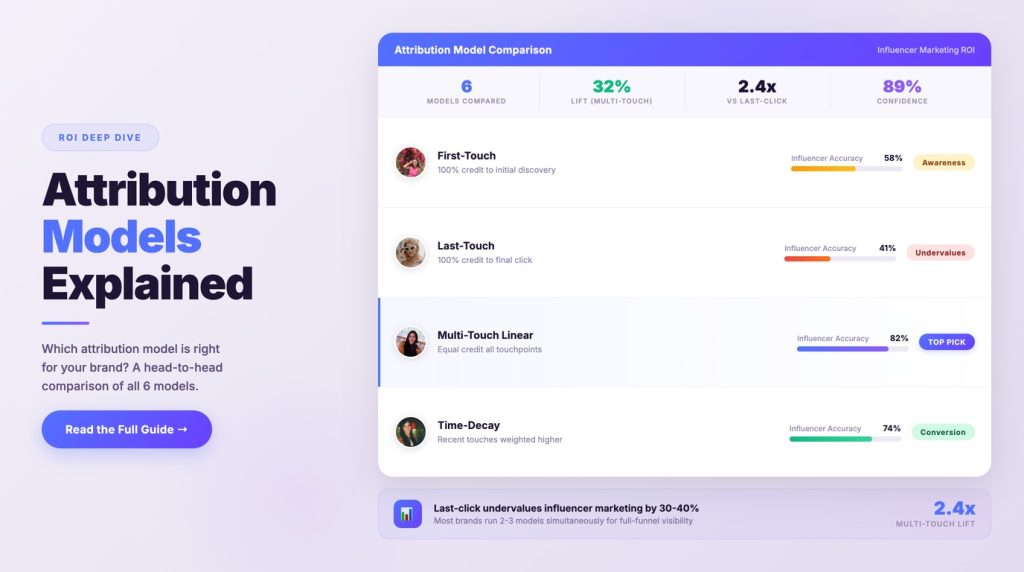
For a full treatment of attributing spend to outcome, see our guide to influencer marketing ROI attribution.
Iteration Speed and the Creative Testing Argument
This is the strongest practical argument for creator content, and it has nothing to do with authenticity.
Paid social rewards creative volume. Performance on any given asset decays as the audience sees it repeatedly, so the constraint on a paid program is usually not budget — it is how fast you can feed fresh variations into the account. A team that can ship fifteen distinct creative concepts a month will out-perform a team shipping two, even if those two are better crafted.
Creator content is structurally suited to that. Each creator produces a genuinely different opening, framing, and argument, which means you are testing concepts rather than testing whether a blue button beats a green one. Produced content is structurally unsuited to it: the same budget buys one excellent asset and a handful of cutdowns of that same asset.
The Benchmark Report frames 2026 as rewarding teams that treat influencers as an operating system, with repeatable creative iteration named as one of the components. That is the capability being described — not better content, but a faster loop.
When iteration speed stops mattering
If you are not running meaningful paid spend, the testing argument mostly evaporates. Fifteen variations with no budget behind them is not a testing program, it is fifteen posts. Organic-first brands should weight toward fewer, better assets, because reach is not something you can buy your way into with volume.
Shelf Life, Brand Equity, and What Survives the Quarter
Creator content is usually built for a moment. It references a trend, a format, a sound, or a seasonal context, and that specificity is part of why it performs. It is also why it ages badly. A creator video that worked brilliantly in March often looks dated by September.
Produced content is built to resist that. A well-made brand film, product demo, or founder story keeps working on a homepage, a sales deck, a retail screen, and a trade show loop for years. It is also the only one of the two formats that reliably builds brand equity, because it is the only one where every frame reflects a decision someone made on behalf of the brand.
This is where the allocation question gets genuinely strategic rather than tactical. If your entire content library is creator-shot, you have a library with no center — hundreds of assets that each represent one creator's interpretation, and nothing that represents the brand's own position. That shows up slowly, in brand tracking rather than in campaign dashboards, which is exactly why it goes unnoticed until it is expensive to fix.
The reverse failure is just as real. A brand with only produced assets has a beautiful library it cannot feed into paid social at the volume paid social demands.
The Decision Framework: When to Use Each
Four questions, in order. The first one that returns a clear answer decides the format.
1. Does the content need to be believed, or understood?
Content whose job is credibility — does this actually work, is it worth the money, what is it like to own — belongs to creators. Content whose job is comprehension — what this product is, how it works, why the category exists — belongs to produced work. A demonstration of a complex feature set is not made more persuasive by being filmed on a phone.
2. How many versions of this will you need?
One or two, used for a long time: produce it. Ten or more, used fast: creators. This question alone resolves most ambiguous cases, and it resolves them on operational grounds rather than aesthetic preference.
3. Where will it live, and for how long?
Owned surfaces that persist — homepage, product pages, retail, sales enablement — favor produced content. Feed and paid placements that refresh constantly favor creator content.
4. What happens if it is wrong?
High-stakes claims, regulated categories, and anything involving safety, efficacy, or financial outcomes need the control that produced content gives you. You can brief a creator carefully, but you cannot guarantee the phrasing of an improvised sentence. In a regulated category, that gap is the whole risk.
Matching Format to Objective
Given that brand awareness is the most selected KPI at 55.1% of those answering while revenue and sales KPIs are selected less frequently, most teams are running programs whose primary goal is upper-funnel. That has a direct allocation consequence: awareness work rewards reach and frequency, which rewards volume, which favors creator content — with produced anchor assets carrying the brand position that the creator volume is building awareness for.
- Awareness. Creator-weighted. Volume and variety of voices beat a single polished execution for reach.
- Consideration. Mixed. Creator content for social proof, produced content for the explanation that social proof cannot carry.
- Conversion. Creator-weighted for paid social; produced for on-site and product-page content where the shopper has already arrived.
- Launch. Produced-anchored. A launch needs one definitive statement of what the thing is, then creator volume around it.
- Retention and community. Creator-weighted, heavily. Nothing produced reads as community.
- Brand building. Produced. This is the objective creator content structurally cannot deliver on its own.
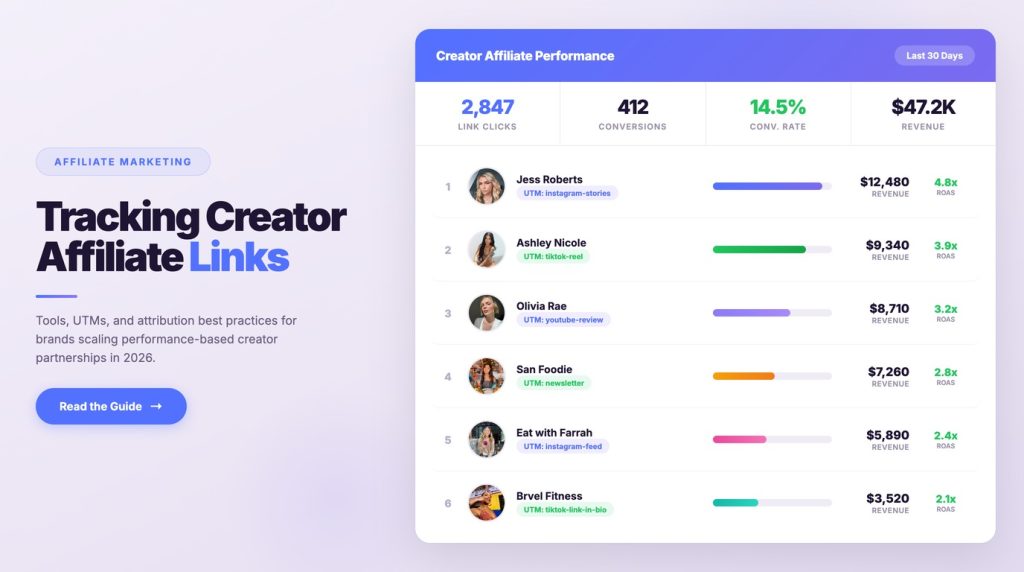
Since measurement adoption skews toward promo and discount codes at 45.9% of those answering, followed by affiliate links at 26.0% and native shop features at 25.0%, it is worth noting that these methods only count buyers who opted into a trackable path. Format comparisons built purely on code redemption will systematically under-credit upper-funnel creator work.
Matching Format to Platform
Platform norms override brand preference. Content that violates the native grammar of a feed gets skipped regardless of how good it is.
- TikTok. Creator-native, almost without exception. Produced content reads as an interruption here. The Benchmark Report describes the TikTok approach as building a repeatable operating system around creator sourcing, creative testing, amplification, measurement, and iteration.
- Instagram Reels. Creator-weighted, with more tolerance for polish than TikTok. Produced content works if it is paced like social, not like broadcast.
- Instagram feed and Stories. Mixed. Feed carries produced product imagery well; Stories is creator territory.
- YouTube. Both, in different formats. Long-form integrations are creator-led; pre-roll and brand channel content is produced.
- Paid social across platforms. Creator-weighted for the iteration reasons above, with produced assets used as the control you test against.
- Owned web and email. Produced-weighted, with creator content used as embedded social proof rather than as the primary asset.
- Retail, OOH, and broadcast. Produced. These surfaces have no native creator grammar to match.
The Hybrid Model: Running Both Without Losing Coherence
Most mature programs run both. The common failure is treating that as a budget split rather than as a structure, which produces a library where neither format is doing its job properly.
The structure that works is anchor-and-volume. Produced content establishes the brand's own position: what the product is, what the company believes, what the thing looks like at its best. Creator content then operates in volume around that anchor, and the anchor is what keeps the volume coherent.
Three practices keep the model from degrading:
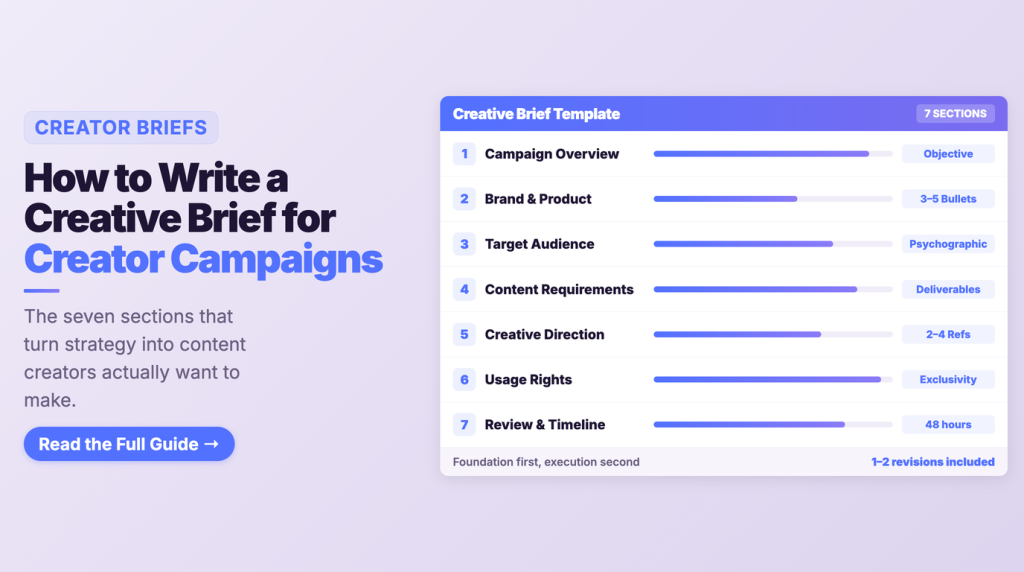
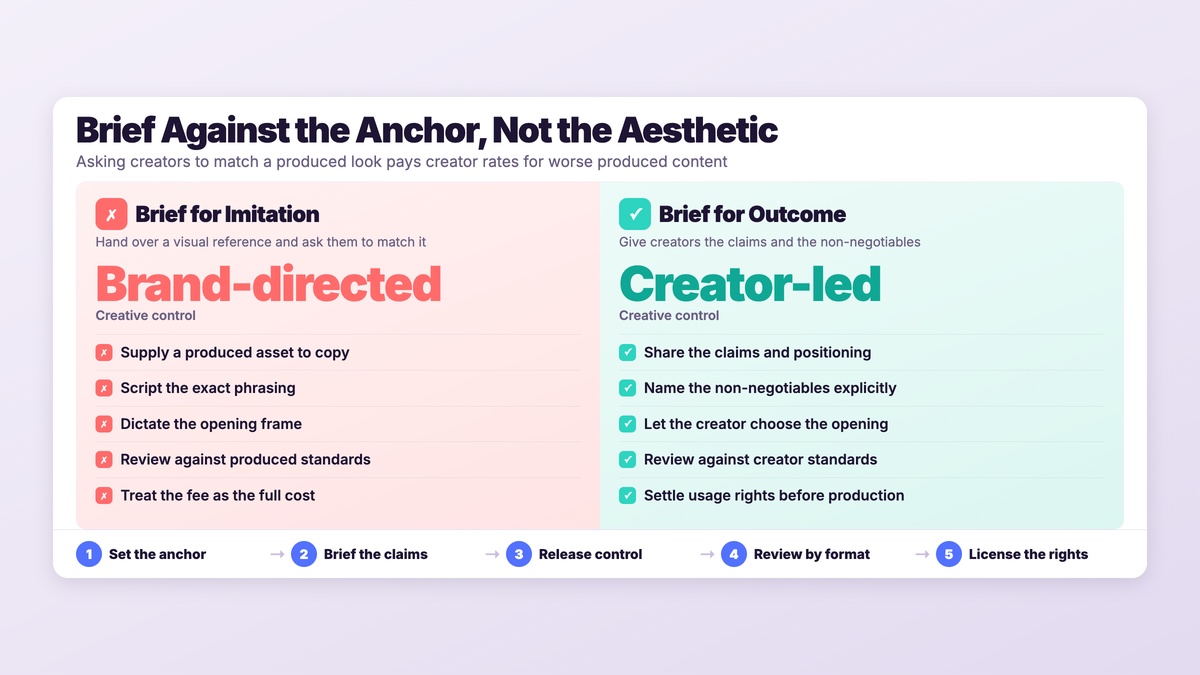
- Brief creators against the anchor, not against the aesthetic. Give creators the claims, the positioning, and the non-negotiables — not a visual reference to imitate. Asking creators to match a produced look is paying creator rates for worse produced content. Our creative brief guide for creator campaigns covers how to brief for outcome rather than execution.
- Refresh the anchor on a slower clock. Produced assets should be reviewed annually, not quarterly. Rebuilding them on a campaign cadence destroys the longevity you paid for.
- Keep the review standards different. Reviewing creator content against produced-content standards is how hybrid programs die — you end up rejecting exactly the roughness that makes the format work.
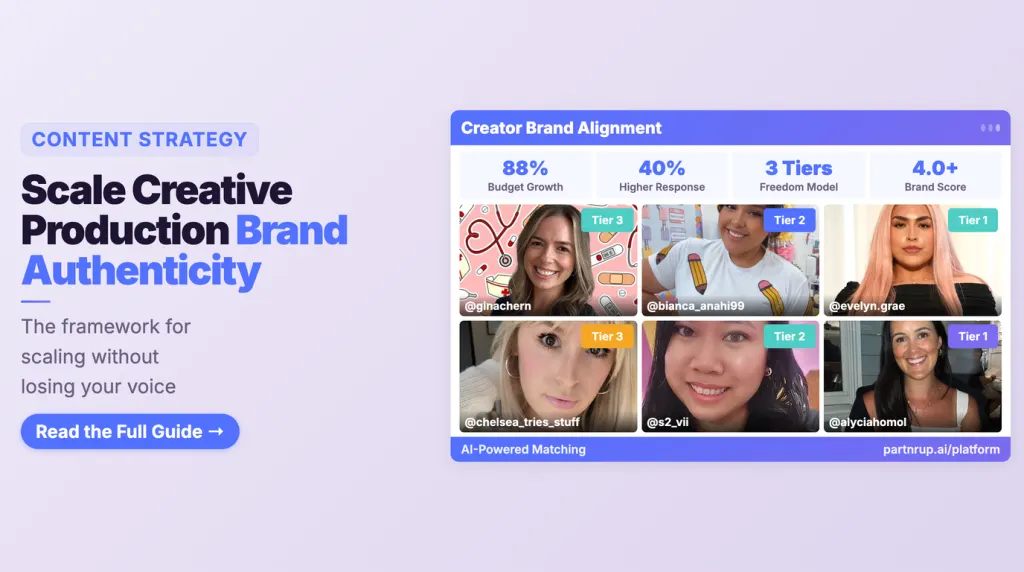
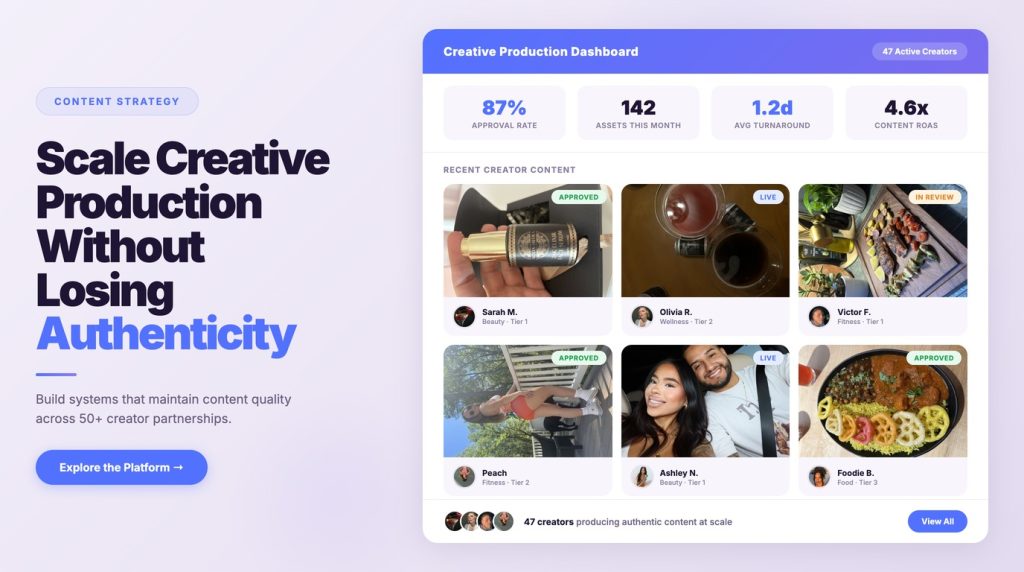
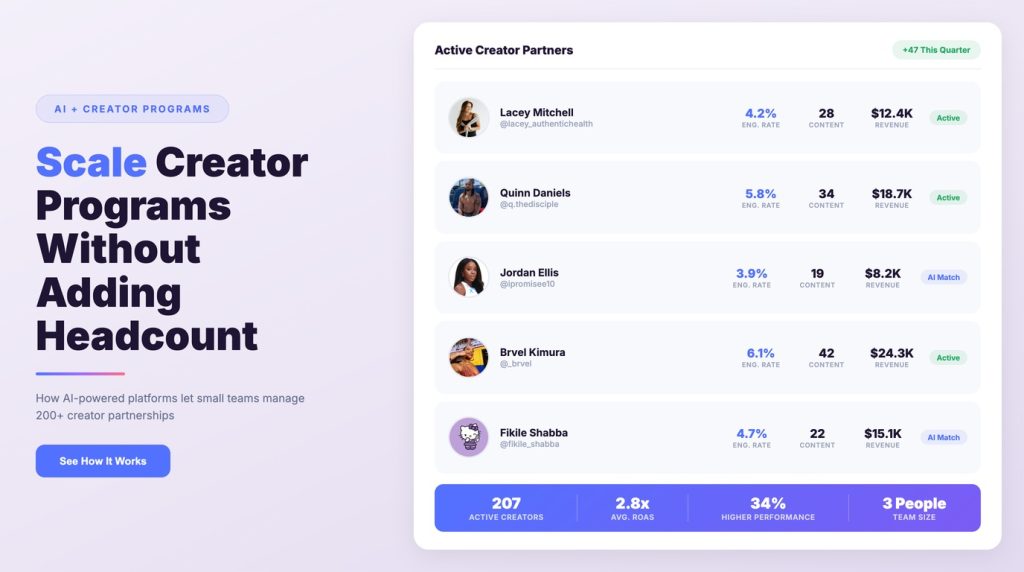
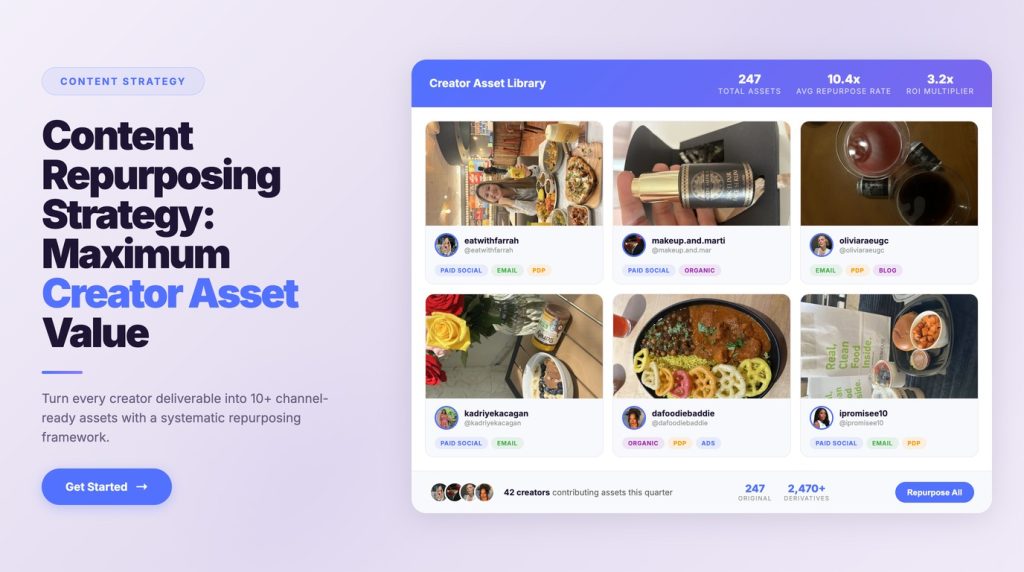
As volume grows, coordination becomes the binding constraint rather than production. Our guide to scaling creative production without losing authenticity addresses that directly, and content repurposing strategy covers extracting more value from assets you already own.
Usage Rights, Licensing, and the Cost Nobody Budgets For
The single most common budgeting error in creator content is treating the creation fee as the total cost. It is not. Creating a video and licensing that video for paid distribution are separate commercial arrangements, and the second one is where programs blow their budgets.
Three things to settle before production, not after:
- Term. How long you can run the asset. Perpetual rights cost meaningfully more than a six-month window, and a six-month window on an asset you planned to run for two years means re-negotiating from a weak position.
- Channels. Organic posting on the creator's own account, paid amplification through your ad account, and use on your owned properties are three different permissions. Running creator content as a paid ad without the right to do so is the most frequent version of this mistake.
- Exclusivity. Whether the creator can work with competitors, and for how long. This is a real cost driver and is frequently requested without being priced.
Produced content does not escape this entirely — talent, music, and stock licensing carry their own terms — but the rights structure is usually handled once by people who do it professionally, rather than negotiated twenty times by a marketing coordinator.
Five Allocation Mistakes That Waste Content Budget
- Comparing formats on cost per asset. The comparison is only valid if both assets do the same job for the same duration. They rarely do.
- Briefing creators to match a produced aesthetic. This pays creator rates for a worse version of produced content, and removes the one quality that made the format worth buying.
- Running a creator-only library. It performs well quarter to quarter and leaves no asset that represents the brand's own position. The cost shows up in brand tracking, long after the decision.
- Treating the creation fee as the full cost. Usage rights, paid amplification permissions, and exclusivity are separate line items that frequently exceed the production fee.
- Judging both formats with one measurement model. With promo codes at 45.9% leading measurement adoption among those answering, a code-based comparison credits whichever format sits closest to the purchase. That is an artifact of the measurement method, not a finding about the content.
Frequently Asked Questions
Is UGC always cheaper than professionally produced content?
Per asset, usually yes. Per asset that still works in two years, often no. A produced anchor asset amortized across a long usable life can cost less in practice than a stream of creator assets that each burn out in weeks. Compare total cost over the period you actually need the content for.
Can creator content work for B2B or regulated categories?
Yes, with tighter constraints. The limiting factor is not the audience but the claim risk — anything involving efficacy, financial outcomes, or regulated language needs control over exact phrasing, which creator-directed content cannot guarantee. Many regulated brands use creator content for awareness and category education while keeping claim-bearing content produced.
What split between UGC and produced content should we run?
There is no universal ratio, and any specific number you see quoted is someone's program, not a benchmark. Derive it from your own mix: how much paid social you run, how many owned surfaces need persistent assets, and whether your category is explanation-heavy. Heavy paid social and light owned surfaces push toward creator volume; the reverse pushes toward produced.
Does produced content still perform on social?
It performs when it is paced and framed for the platform rather than repurposed from broadcast. A produced asset cut for a feed can work well. A thirty-second TV spot posted unchanged generally does not, because it violates the native grammar of the placement.
How do we measure the two formats fairly?
Measure them against the objective each was bought for. Judging a brand film on code redemptions and a creator video on brand lift will produce two wrong conclusions. Since measurement adoption skews toward promo codes at 45.9%, affiliate links at 26.0%, and native shop features at 25.0% among those answering, most teams' default stack is biased toward lower-funnel attribution — correct for that before comparing.
Can we repurpose organic customer content for free?
Not safely. Content a customer posts organically is still their copyright, and a public post is not a license. Reposting to your own organic feed with credit is common practice; running it as a paid ad without explicit written permission is a real legal exposure.
When should a brand with a small budget choose one over the other?
Start with one produced anchor asset that explains what you are and why it matters, then put everything remaining into creator volume. The anchor is what keeps a small, scrappy content program from looking like it has no point of view.
The Allocation, Not the Argument
The UGC-versus-produced debate stays unresolved because it is framed as a quality question when it is an allocation question. One format buys speed, volume, and credibility. The other buys control, longevity, and a brand position. A content program needs both, in a ratio determined by where you spend, what you sell, and how long your assets need to last.
Run the four questions in the framework above against your next three briefs. In most cases the answer will be obvious within one question, and the disagreements your team keeps having about content style will turn out to be disagreements about what the content is for.
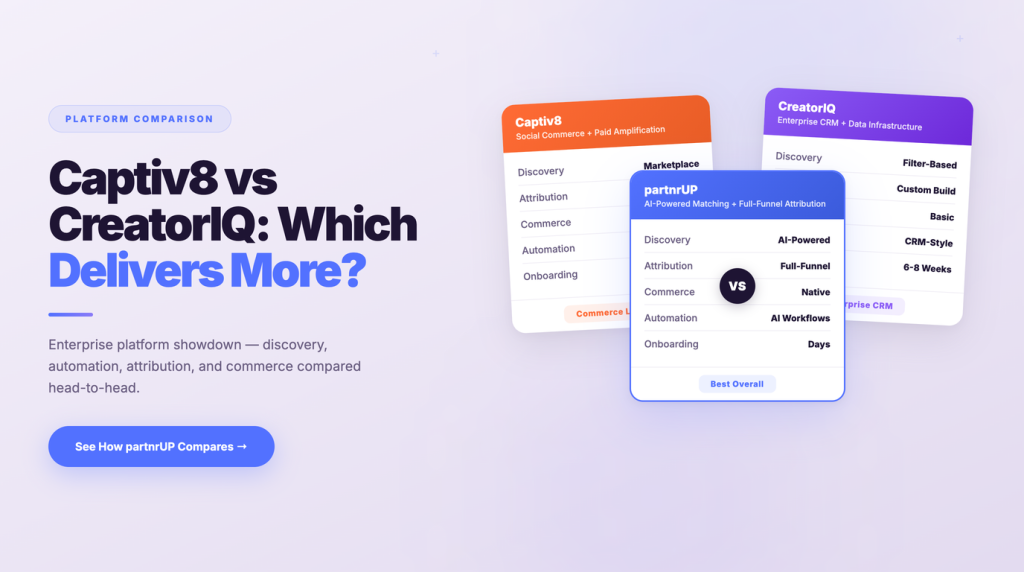
For the wider strategic picture, our pillar guide on creator content strategy and building a scalable creative program covers how both formats fit into a full content operation. If coordination is what is slowing you down rather than production, partnrUP handles creator discovery, briefing, and campaign workflow in one place.