



If you are evaluating Captiv8 in 2026, the first thing you need to know is not a feature or a price. It is that the company's own homepage now opens with a single line: "Captiv8 has been integrated into Influential."
That sentence changes what this review can be. Captiv8 is no longer a software company you buy from. Publicis Groupe acquired it in May 2025, positioned it inside Publicis Connected Media, and merged it with Influential — an agency Publicis had bought the year before. The technology still exists and still wins awards. But the route to it now runs through a holding company's agency arm, and captiv8.io has no pricing page, no product pages, and no self-serve signup that works independently of that arm.
So this is a review of what Captiv8 has become, who it now fits, and how to think about it against platforms you can still buy directly. If you came here expecting a standalone SaaS evaluation, the honest answer is that the thing you were going to evaluate was absorbed, and the question has shifted from "is this tool good?" to "do I want my influencer stack to come from a holding company?"
Table of Contents
- What Actually Happened to Captiv8
- What You Are Actually Buying in 2026
- The Capabilities That Survived the Merge
- Pricing: Why There Isn't a Number
- Who Captiv8 Genuinely Fits Now
- Who Should Look Elsewhere
- The Holding Company Question
- The Alternative: A Platform You Can Actually Buy
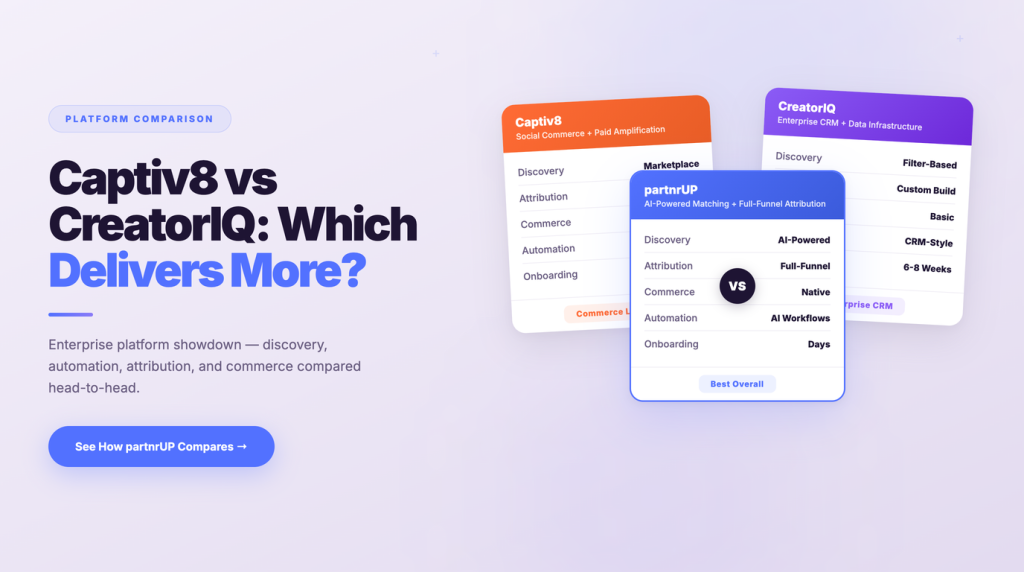
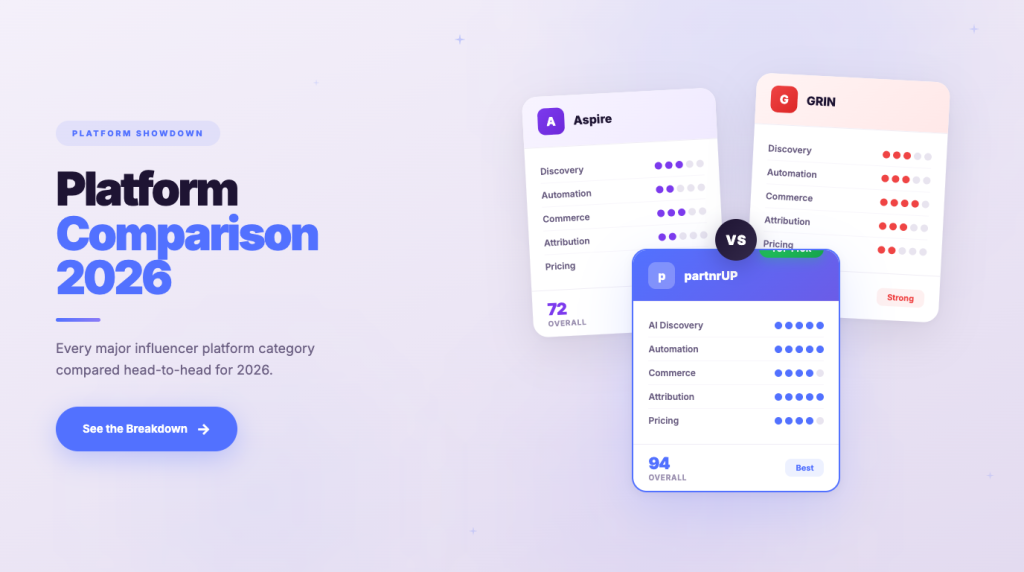
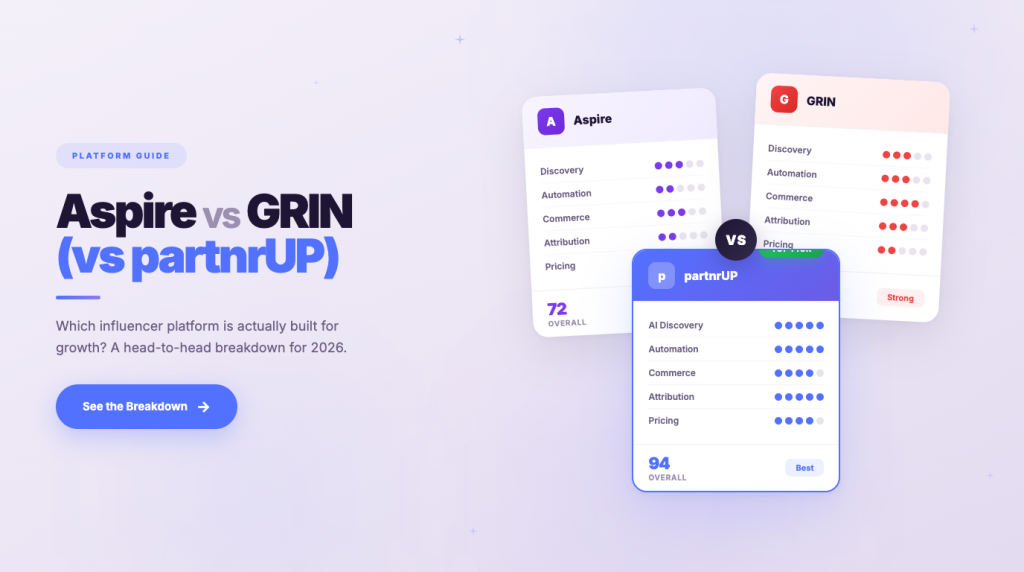
- Captiv8 vs partnrUP: Side by Side
- How to Evaluate an Absorbed Platform
- Frequently Asked Questions
What Actually Happened to Captiv8
The sequence matters, because most write-ups get the direction of the acquisitions backwards.
Publicis Groupe acquired Influential first, in 2024, in a deal Marketing Dive reported at around $500 million citing The Wall Street Journal. Influential was, at that point, the largest influencer marketing platform by revenue, built around client services — sourcing creators for brands through a marketplace and extending campaign reach.
Then on May 21, 2025, Publicis announced it was acquiring Captiv8. The press release describes Captiv8 as "the world's most advanced end-to-end influencer marketing platform," and states plainly where it would land: "Captiv8 will be positioned within Publicis Connected Media and integrated with Influential to power Publicis Groupe's global Influencer offering worldwide." Marketing Dive, citing The Wall Street Journal, pegged that deal at roughly $150 million.
Two separate purchases, by the same parent, eighteen months apart. Captiv8 did not acquire Influential and Influential did not acquire Captiv8. They are sibling assets under Publicis, which is why you now see the combined brand written as "Influential Powered by Captiv8."
The 2026 state of the brand
Both CEOs stayed. Marketing Dive's May 22, 2025 update noted that "the Captiv8 brand will remain following its integration with Influential, while the company's global team is moving into Publicis," with Captiv8 CEO Krishna Subramanian and Influential CEO Ryan Detert retaining their roles.
The brand did remain — but as a technology layer inside a larger offering, not as a product you shop for. Visit captiv8.io today and the integration notice is the main content on the page. The contact address listed is info@influential.co. The pricing, about, products, and resources paths all return "Nothing here."
That is the single most useful signal in this entire review, and it costs one click to verify. A platform you can buy has a pricing page. Captiv8's homepage is now a redirect notice with a contact form attached to someone else's domain.
What You Are Actually Buying in 2026
You are buying an engagement with Influential, delivered on Captiv8's technology, inside Publicis Connected Media.
That is a meaningfully different purchase from a software subscription, and the difference shows up in four places:
The sales motion. Influential's site has no signup flow. The primary call to action is "Let's set up a 30-minute call," and the contact addresses published are sales@, info@, and press@influential.co. You are entering an agency conversation, not a trial.
The unit of delivery. Influential describes itself on its About page as "the world's largest influencer marketing company" and leads with services language — matching audiences with creators, delivering ROI and measurable business outcomes. The platform is the instrument; the engagement is the product.
The data layer. Publicis's announcement is explicit that Captiv8's platform would be "powered by Epsilon's CoreID." Epsilon is Publicis's data arm. That identity graph is a genuine capability, and it is also a dependency on the parent company's infrastructure.
The account relationship. You become a client of a holding company's connected media unit. For some brands that is exactly the point. For others it is the reason to walk.
The Capabilities That Survived the Merge
The technology is not in question. The figures below come from Publicis's own acquisition announcement and describe Captiv8 as of May 2025.
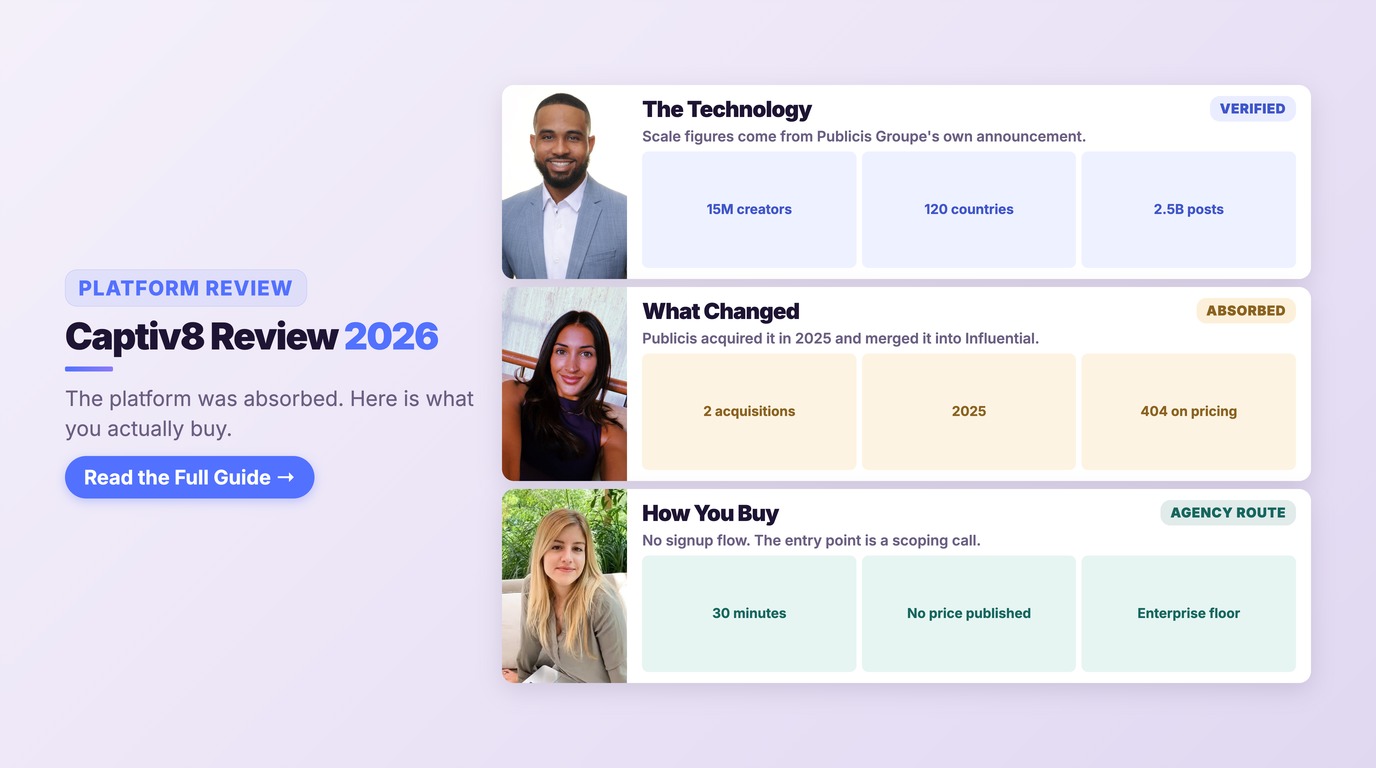
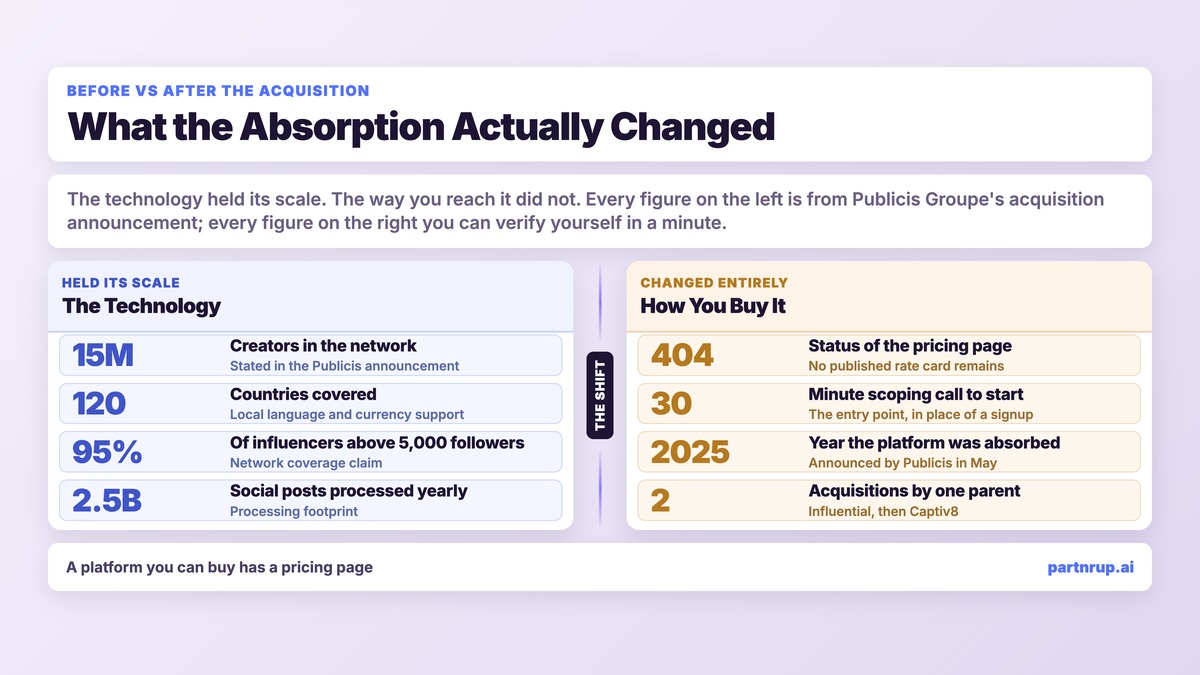
Creator network scale. Publicis states Captiv8 "has a network of 15M creators globally, covering 95% of all influencers with +5000 followers." The combined entity is described as connecting brands to "more than 15 million creators, covering both 95% of influencers with 5000+ followers and 90% of influencers with +1millon followers."
Geographic and processing footprint. Per the same release, Captiv8 is "active in 120 countries, adapted to local language and currencies, and processes over 2.5 billion social posts every year."
Social commerce. Publicis calls out "industry-leading Branded Storefronts solutions, which connect influencer, commerce and affiliate channels in a single platform." Marketing Dive's reporting adds TikTok Shop partnerships to that picture. If creator-driven commerce is your use case, this is the strongest part of the offering.
Measurement. The release frames the combination as enabling "transparent, real time, full-funnel measurement of the business impact of creator marketing across platforms and media channels," by aggregating identity, influencer and transaction data.
Category standing. Influential's own December 2025 announcement states that "Influential Powered by Captiv8" was named #1 Enterprise Influencer Marketing Software by G2 in the Winter 2026 reports, marking twelve consecutive quarters. Influential's news index currently promotes a fifteen-consecutive-quarter version of the same claim, which implies the streak continued through 2026.
Note what that last point tells you about the brand: G2's recognition now attaches to the combined name, not to Captiv8 alone. Even the awards have moved.
Captiv8 by the numbers
Every figure below is drawn from Publicis Groupe's own acquisition announcement, so you can hold us to it:
- 15M creators in the global network.
- 120 countries covered, adapted to local language and currency.
- 95% of influencers with more than 5,000 followers reachable through that network.
- 2.5B social posts processed every year.
And the figures that describe how you now reach it, each verifiable in under a minute:
- 404 — the HTTP status of captiv8.io/pricing.
- 30 minutes — the length of the call that is now the entry point.
- 2025 — the year the platform was absorbed.
- 2 separate acquisitions by one parent, eighteen months apart.
Pricing: Why There Isn't a Number
There is no published Captiv8 price in 2026, and the reason is structural rather than coy.
captiv8.io/pricing returns a 404. Influential publishes no pricing either. The entry point is a 30-minute call with a form that asks for your job title, company name, and what you are looking for — which is how agency scoping conversations begin, not how software is sold.
Anyone quoting you a specific Captiv8 subscription figure for 2026 is working from pre-acquisition data or from aggregator guesswork. We are not going to add to that. What you can reasonably infer from the structure:
- Pricing will be scoped to an engagement, not a seat count.
- Enterprise procurement cycles apply — expect a call, a scoping conversation, and a proposal.
- The reference clientele skews very large. Influential's homepage claims it is "trusted by over 60% of the Fortune 500," and Marketing Dive lists Unilever, Kraft Heinz, American Express and the NBA among brands that have used Captiv8's solutions.
If your evaluation depends on comparing a monthly number against alternatives, you cannot run that comparison here. partnrUP publishes its tiers — $0, $299 and $699 per month with a custom Scale option — so that comparison is one page away.
Who Captiv8 Genuinely Fits Now
The absorption narrowed the fit, but it did not eliminate it. There is a real buyer here.
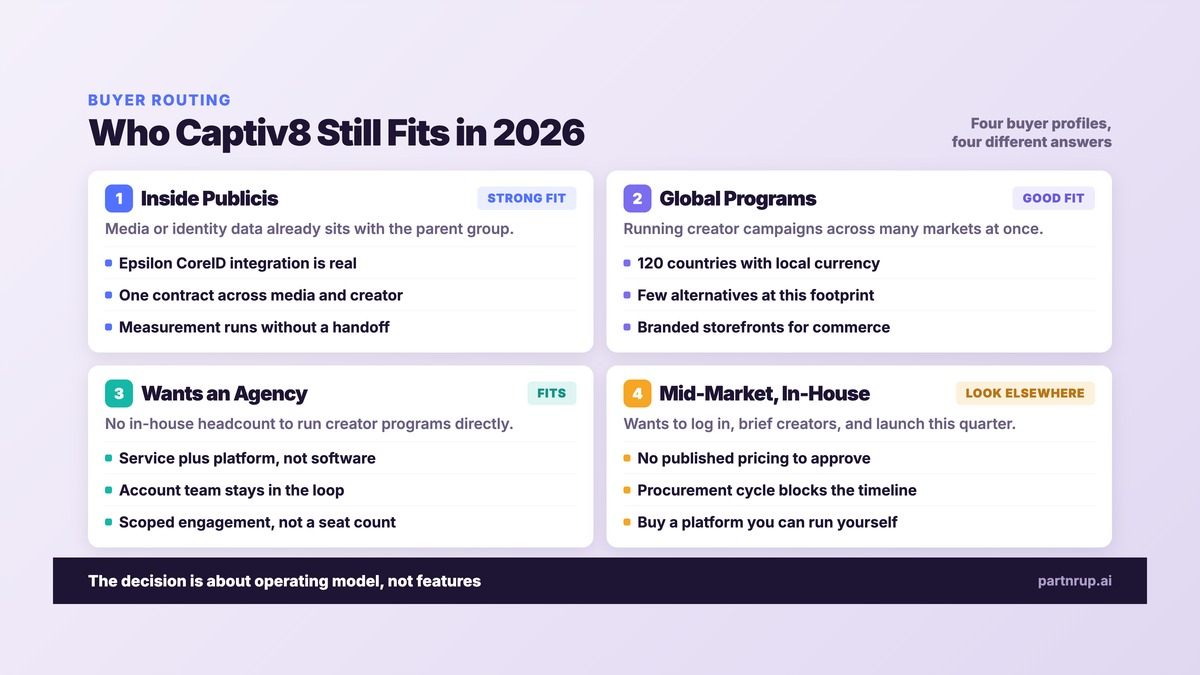
Brands already inside the Publicis ecosystem. If Epsilon handles your identity data or a Publicis agency handles your media, the connected-identity story is not marketing language — it is an integration you will actually feel. This is the strongest case for the platform.
Global programs across many markets. 120 countries with local language and currency support is not trivial to replicate. A brand running creator programs across a dozen markets simultaneously has fewer alternatives than it might assume.
Organizations that want an agency, not software. Some marketing teams do not have the headcount to run creator programs in-house and do not want to. The service-plus-platform model is a legitimate answer to that, and pretending otherwise would be dishonest.
Creator commerce at genuine scale. Branded storefronts connecting influencer, commerce and affiliate channels in one environment is a real differentiator when transaction volume justifies the overhead.
Who Should Look Elsewhere
Anyone who needs to start this quarter. The path begins with a scoping call. If you need creators briefed and posting in three weeks, the procurement timeline alone disqualifies this option.
Teams that want to run campaigns themselves. The offering is structured around a service relationship. If your team wants to log in, search, brief, and launch without an account manager in the loop, you are buying the wrong shape of thing.
Mid-market brands without enterprise budget. No published pricing plus Fortune 500 reference clients plus an agency sales motion is a reliable signal about where the floor sits.
Brands with agency-conflict concerns. If your media is with a competing holding company, or you have a policy about concentrating data and execution inside one group, that is a procurement conversation worth having before the demo rather than after.
Anyone who needs pricing transparency to get internal approval. Some finance teams simply will not sign off on an unpublished number from a category where published alternatives exist.
The Holding Company Question
This is the part of the evaluation that no feature matrix captures, and it is the real decision.
Publicis CEO Arthur Sadoun described the combination as "a one-stop-shop for our clients' influencer marketing initiatives." Read that from the buyer's side: consolidation is the value proposition, and consolidation is also the risk.
The upside is genuine. One contract, one identity graph, creator data sitting next to media data, measurement that runs from impression to transaction without a handoff. For a brand already spending with Publicis, that is real friction removed.
The cost is also genuine. Your creator program, your audience data, and increasingly your measurement all sit with one group. Switching later is not a matter of exporting a creator list — it means unwinding an engagement. And the independence a software vendor has when reporting on campaign performance is structurally different from the independence of a partner who also sold you the media.
Neither position is automatically right. But it should be an explicit decision made by someone senior, not a conclusion you back into because the demo went well. If your organization has a view about holding-company consolidation, that view should settle this evaluation before the feature comparison starts.
The Alternative: A Platform You Can Actually Buy
If the agency route is not what you want, the question becomes simple: which platforms still let you sign up, log in, and run a campaign yourself this week?
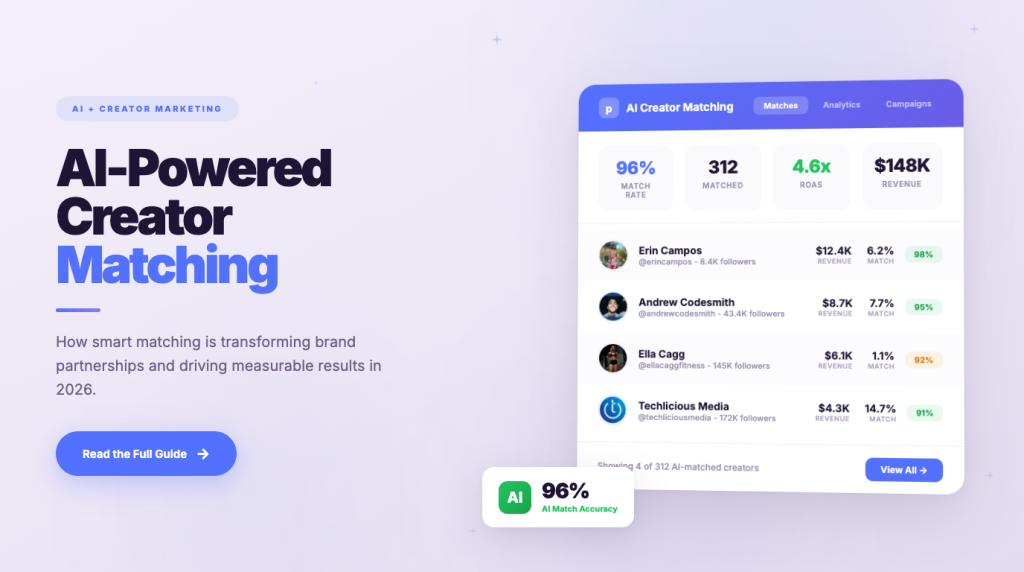
That is the gap the Captiv8 absorption opened, and it is the gap partnrUP was built for. Where Publicis consolidated creator marketing into a holding-company engagement, partnrUP went the other direction: AI agents handle the slow work, and your team keeps control of the strategy. The platform's own description is that it "puts AI Agents by your side to cut down discovery time, automate outreach and streamline workflows — so you stay in control while campaigns run smarter, faster, better."
No scoping call, no unpublished price
The two friction points that define the Captiv8 purchase in 2026 are the ones partnrUP removes outright.
Pricing is published on the page: a Free tier at $0/mo covering the creator marketplace and management tools, Pro at $299/mo, Growth at $699/mo, and a custom-priced Scale tier for brands that want campaign execution done for them. You can read those numbers before you talk to anyone, which is the opposite of a 404 on /pricing.
And the entry point is a signup, not a 30-minute call. partnrUP's homepage CTA is "Launch a Campaign," with "No credit card required" printed directly beneath it. The finance-approval problem described earlier in this review — an unpublished number from a category where published alternatives exist — does not arise.
AI agents instead of an account team
Captiv8's answer to campaign workload is people: an account relationship inside Publicis Connected Media. partnrUP's answer is a named set of AI agents that take over the repetitive parts of the workflow.
- Kyle handles discovery, sourcing creators directly from social media rather than from a fixed database of profiles every competitor also queries.
- Lilly runs recruitment, evaluating creators on fit, reach and engagement, then sending personalized invites that are "timed, tailored, and managed automatically."
- Aaron covers management and support — the coordination and admin layer.
- Rachel works on creative, turning campaign intent into briefs.
The practical difference is where the work sits. In an agency model, your campaign moves at the speed of someone else's queue. With agents doing the sourcing and outreach, it moves at the speed of your own approvals — and you are not limited to a pre-indexed creator pool.
The capability set, published
partnrUP's feature list is on the site rather than behind a scoping conversation: AI creative briefs, AI influencer discovery, influencer recruitment, creator management, influencer gifting, campaign management, and content management — search, outreach, content, contracts, paid, retail, and analytics in one dashboard. For agencies, the platform supports multiple brand workspaces under one account.
That is a genuinely different trade from the one Publicis is offering. A global CPG with media already inside Publicis may well want the connected-identity route. A brand that wants to own its creator relationships, see what it costs, and start this month should not be buying an engagement.
Captiv8 vs partnrUP: Side by Side
Every Captiv8 cell below reflects the platform's buyer-facing state in 2026, after the Publicis integration. Where a value is not disclosed, that is the finding — not a gap in our research.
| Captiv8 (via Influential) | partnrUP | |
|---|---|---|
| What you buy | An agency engagement inside Publicis Connected Media | Software you subscribe to and operate yourself |
| Published pricing | None — /pricing returns 404 | $0 Free, $299/mo Pro, $699/mo Growth, custom Scale |
| Entry point | 30-minute scoping call | Self-serve signup, no credit card required |
| Free tier | None | Yes — $0/mo with marketplace and management tools |
| Self-serve signup | No | Yes |
| Who operates campaigns | Account team, as a service | Your team, with AI agents on the busy work |
| Creator sourcing | Network of 15M creators, 120 countries | AI agents source from social media per campaign |
| AI agents | Not the delivery model | Kyle, Lilly, Aaron and Rachel across the lifecycle |
| Contract shape | Scoped engagement, enterprise procurement | Monthly plans, upgrade when you scale |
| Time to first campaign | Procurement cycle | Same day you sign up |
| Data layer | Epsilon CoreID — parent-company identity graph | Your campaign data in your workspace |
| Agency support | You are the agency's client | Multiple brand workspaces under one account |
| Best fit | Global brands already spending with Publicis | Teams that want to run creator programs in-house |
The rows that decide most evaluations are the first three. One platform cannot be priced without a meeting; the other publishes its numbers and lets you start free.
How to Evaluate an Absorbed Platform
Captiv8 will not be the last platform in this category to get acquired. The consolidation is ongoing, and the evaluation method generalizes. Four checks, each cheap:
1. Read the vendor's own homepage before anything else. An integration notice at the top of a product site is the loudest possible signal and takes one click. Captiv8's says what happened in a single sentence.
2. Check whether the pricing page still exists. A 404 on /pricing for a company that previously sold software tells you the sales motion changed. So does a contact address on a different company's domain.
3. Find out who the contract is actually with. The brand on the login screen and the entity on the agreement are frequently different after an acquisition. Ask directly, early.
4. Ask what happens to your data if you leave. Portability questions are easy to answer before signing and expensive afterwards — particularly when an identity graph belonging to the parent company is part of the value proposition.
None of this means an acquired platform is a bad choice. It means the thing you are buying is not the thing the old review said it was, and the research you did six months ago has expired.
Frequently Asked Questions
Is Captiv8 still available in 2026?
The technology is, but not as a standalone purchase. Captiv8's homepage states it "has been integrated into Influential," and the combined offering sits inside Publicis Connected Media. You engage through Influential rather than buying Captiv8 directly.
Who owns Captiv8?
Publicis Groupe, which announced the acquisition on May 21, 2025. Publicis separately acquired Influential in 2024. The two are sibling companies under the same parent — neither acquired the other.
How much does Captiv8 cost?
No price is published. The pricing page returns a 404 and Influential does not publish rates either. The entry point is a 30-minute scoping call. Any specific 2026 subscription figure you find online is pre-acquisition data or guesswork.
What happened to the Captiv8 brand?
It was retained but repositioned. Marketing Dive reported that the brand would remain following the integration while the global team moved into Publicis. In practice it now appears as "Influential Powered by Captiv8" — a technology layer within a larger offering.
How big is Captiv8's creator network?
Per Publicis's acquisition announcement, 15 million creators globally, covering 95% of influencers with more than 5,000 followers. The platform is active in 120 countries and processes over 2.5 billion social posts annually.
Is Captiv8 good for small and mid-sized brands?
Generally no. Unpublished pricing, an agency-led sales motion, and a reference list weighted toward Fortune 500 brands all point to an enterprise floor. Mid-market teams will find better fit on a platform that publishes pricing and supports self-serve onboarding — partnrUP starts at $0/mo with no credit card required.
What should I use instead if I want to run campaigns in-house?
You want software built for direct operation rather than service delivery. That is what partnrUP is: AI agents handle discovery, outreach and coordination while your team keeps control of strategy, with a free tier to test it before committing budget.
The Verdict
Captiv8 in 2026 is strong technology inside an agency relationship, and you should evaluate it as the latter.
If you are a global brand already working with Publicis, the connected-identity story is real and the scale figures are verified by the parent company's own announcement. If you want software you can buy, log into, and run without an account team, Captiv8 is no longer that, and the pricing 404 is the quickest way to confirm it yourself.
The question that decides this is not about features. It is whether you want your creator program, your audience data, and your measurement to sit with one holding company. Answer that first, and the rest of the evaluation gets much shorter.
If the answer is no — if you want to own your creator relationships, see the price before the meeting, and have a campaign live this week — that is the case for running it yourself. Start free with partnrUP (no credit card required), or book a demo if you want to see the AI agents work before you commit. Worth reading first: how measurement differs across platforms.