



Most creator launch plans treat the creator as a distribution channel: brief them, ship product, hope the content lands near launch day. That works when the only goal is awareness. It breaks the moment the launch has to convert, because the mechanics that decide whether creator content sells on launch day are set up weeks before the post goes out — and most of them are platform rules, not creative choices.
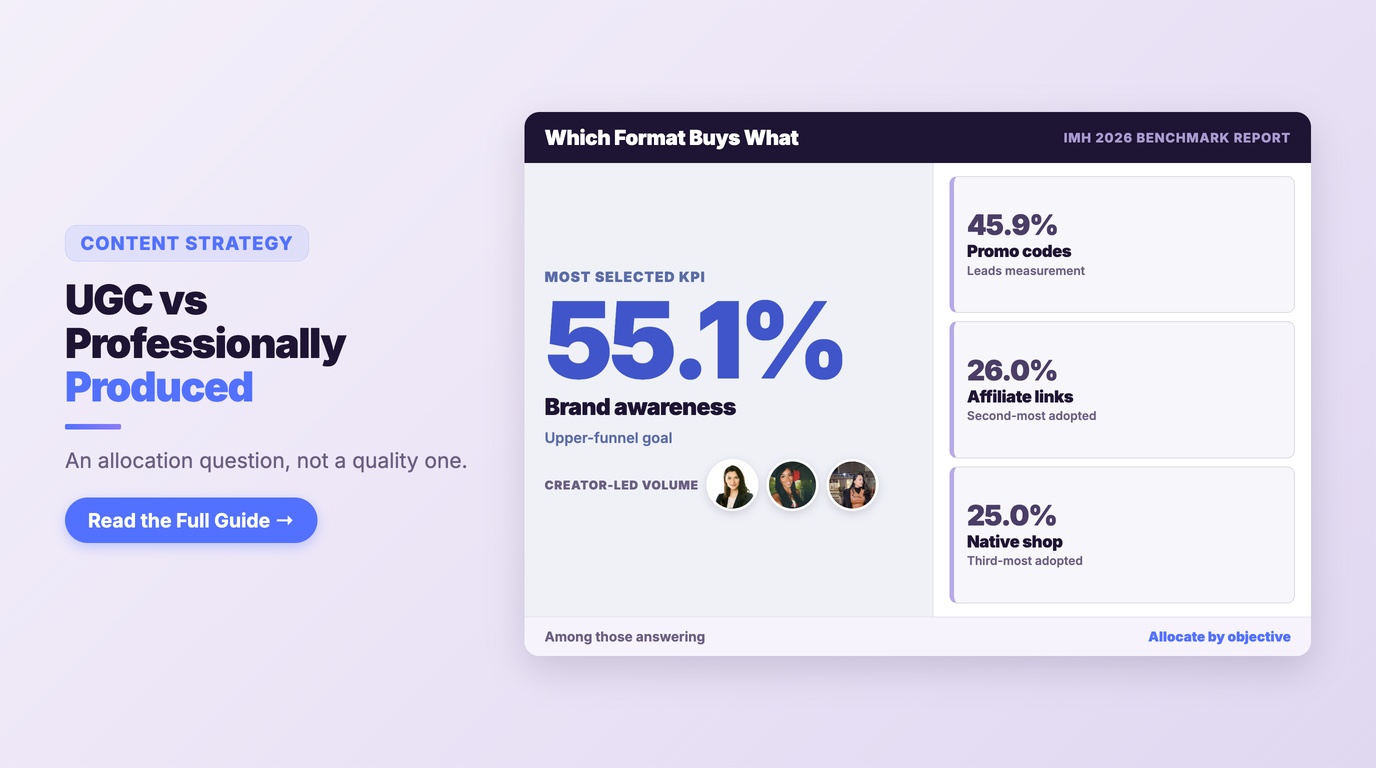
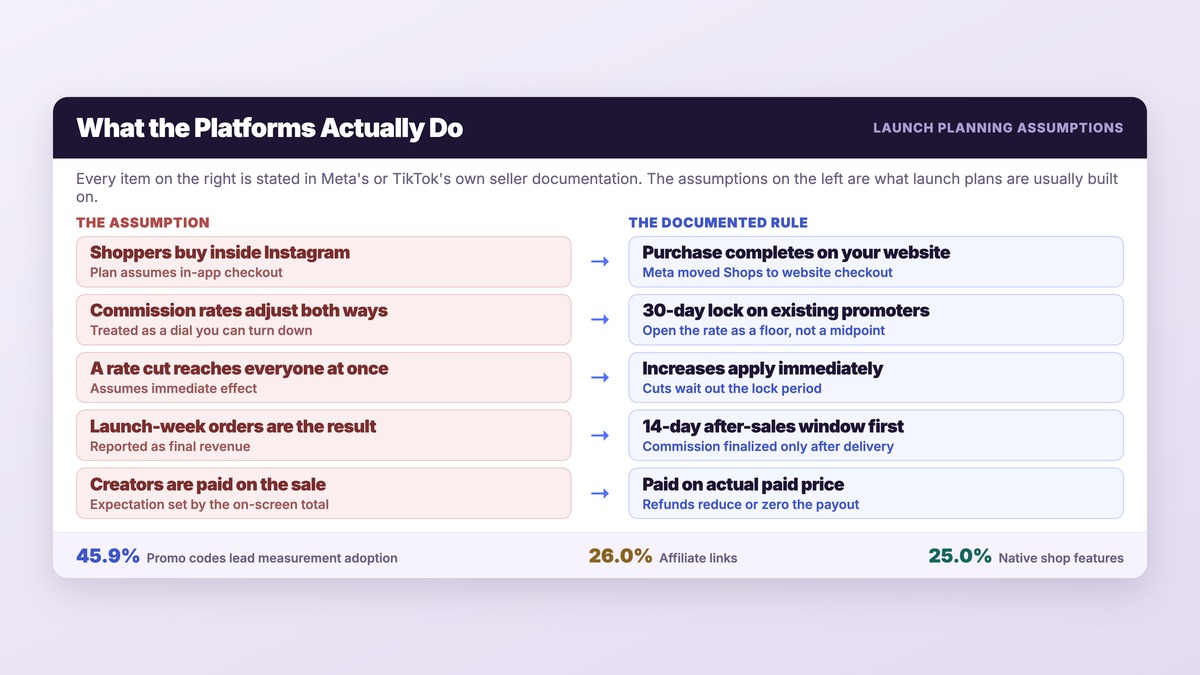
The Influencer Marketing Hub 2026 Benchmark Report found that promo and discount codes lead measurement-tool adoption at 45.9% of marketers who answered, with affiliate links at 26.0% and native shop features at 25.0%. Read that as a launch problem rather than a measurement one: the majority of brands are still identifying launch sales through a code the customer types, while the commerce surfaces that attribute automatically are used by about a quarter of the market.
This guide covers the part of creator-led launches that the strategy decks skip — launch sequencing, the commission and after-sales rules that govern when a creator actually gets paid, and what changed about where the purchase completes.
Table of Contents
- What a Creator-Led Launch Actually Changes
- Where the Purchase Completes in 2026
- The Launch Sequence: Three Windows, Not One Date
- Commission Mechanics Decide Who Shows Up
- The Payout Lag Nobody Plans For
- Measuring a Launch Without Fooling Yourself
- Five Pitfalls That Derail Creator Launches
- Running This at Scale
- Frequently Asked Questions
What a Creator-Led Launch Actually Changes
In a conventional launch, the brand builds demand and owns the storefront. Creators get added near the end as reach. In a creator-led launch, the creator's content is the product page for most of the audience — the demo, the objection handling, and the social proof all happen inside someone else's feed, before the shopper ever sees your site.
That shift has a practical consequence that catches teams off guard: you no longer control the pacing. A brand-owned launch goes live when you press the button. A creator-led launch goes live across dozens of individual publishing calendars, each with its own posting rhythm, and the aggregate curve is something you influence rather than set.
So the work moves upstream. Instead of optimizing the launch-day asset, you are designing the conditions — who has product in hand, what rate they are locked into, which surface the purchase completes on, and how long you are willing to wait before calling the result.
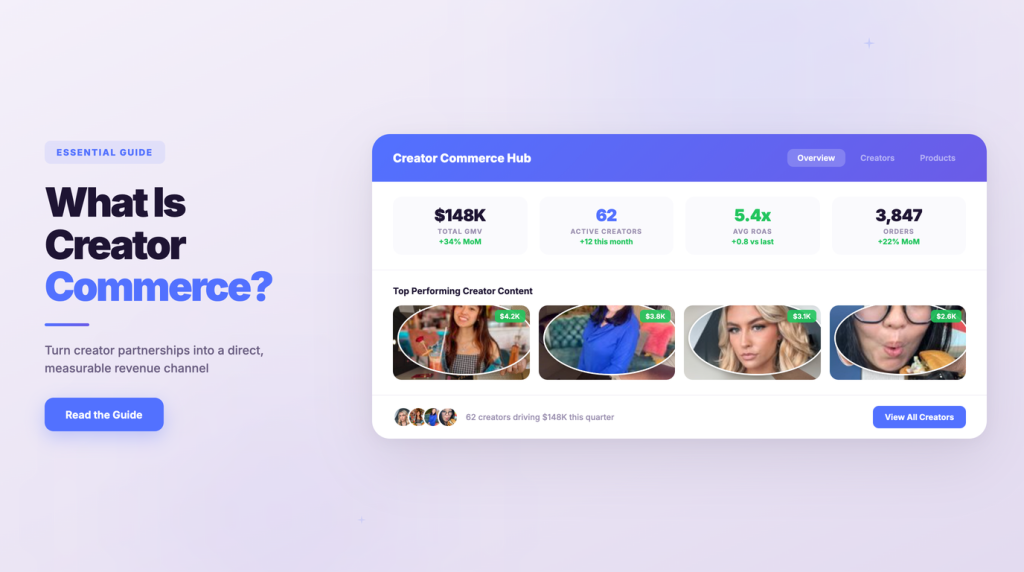
If you are building the underlying program rather than a single launch, start with our creator commerce strategy guide, and treat this article as the launch-specific layer on top of it.
Where the Purchase Completes in 2026
This is the premise most launch plans get wrong, and it is worth stating flatly because it changes the funnel design.
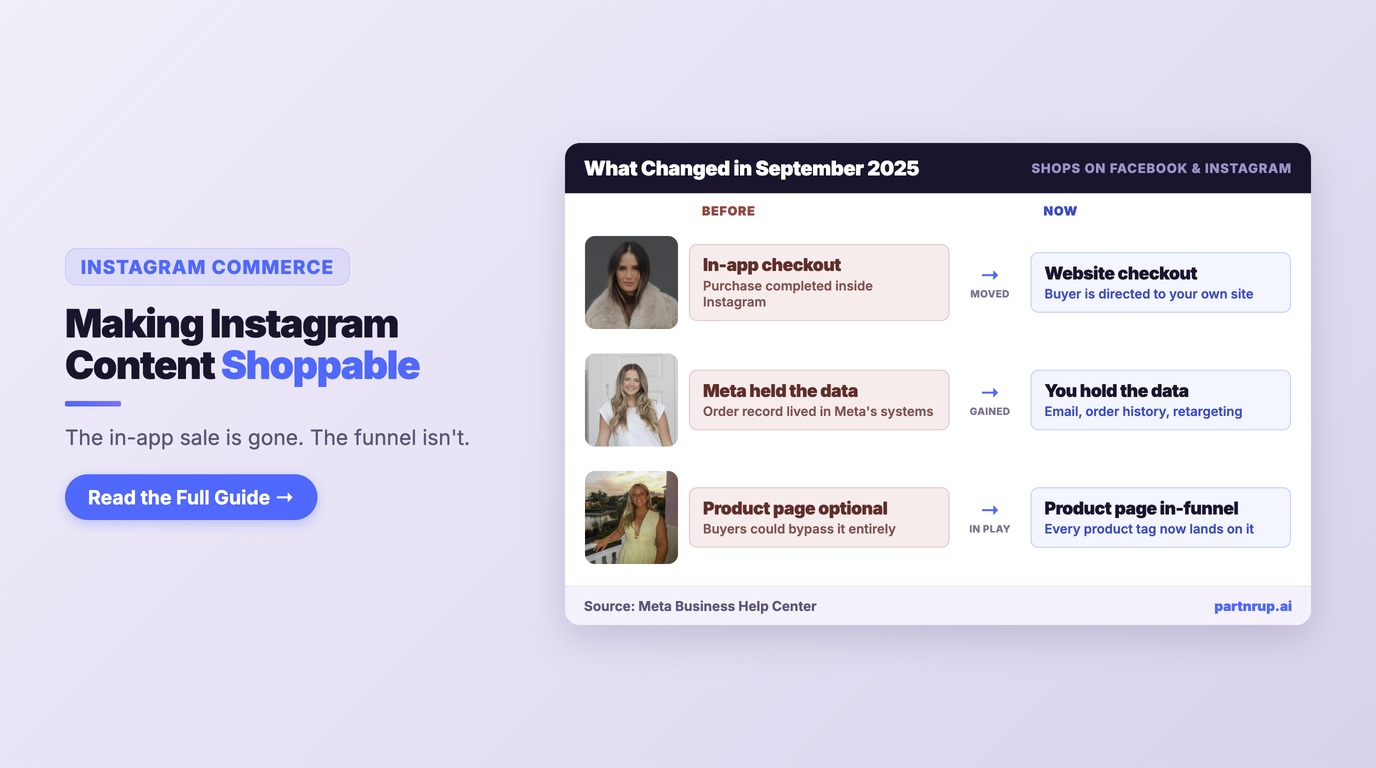
As of September 2025, Shops on Facebook and Instagram use website checkout. Meta's own business help documentation states that shops which used checkout on Facebook or Instagram had the checkout method updated, and that customers "are now directed to your own website to complete the purchase." Meta describes the shop as retaining "rich discovery and consideration surfaces like the home page, collections and product pages" — discovery and consideration, not transaction.
Two things follow. First, any launch plan that assumes in-app purchase on Instagram is planning against a surface that no longer exists; the handoff to your site is mandatory, which means your product page and mobile load time are now launch-critical infrastructure. Second, you keep the customer record, because the order happens on your domain. That is a genuine upside for a launch — email capture, post-purchase sequencing, and lifetime value tracking all stay in your systems rather than the platform's.
TikTok Shop is the counterexample: the purchase completes natively, and the affiliate relationship between seller and creator is governed by TikTok's own commission rules. Those rules are specific enough to plan around, which is the next section.
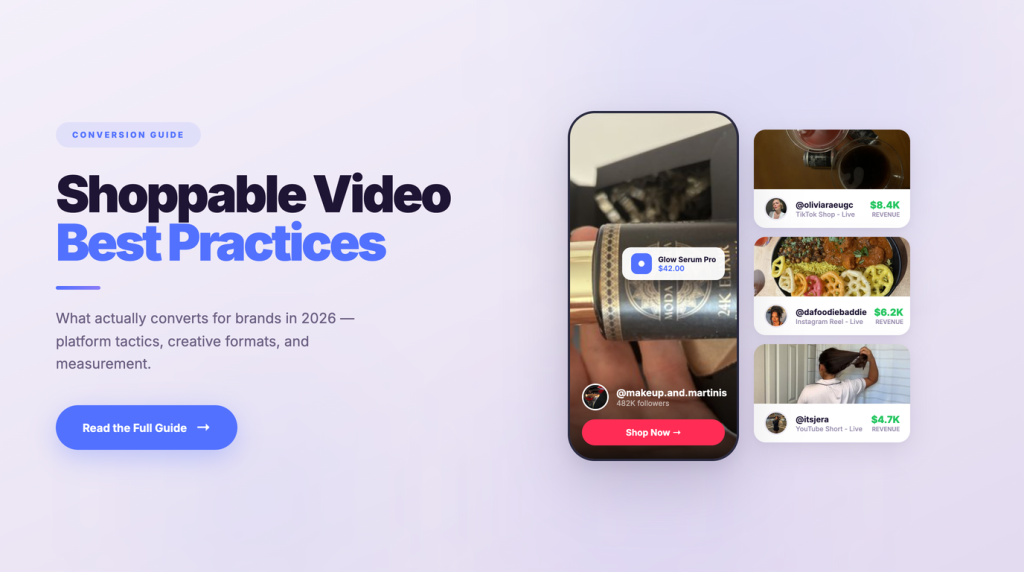
For the platform-by-platform detail on making the content itself shoppable, our Instagram shoppable content guide and the complete shoppable video and social commerce guide go deeper than this launch-focused piece does.
The Launch Sequence: Three Windows, Not One Date
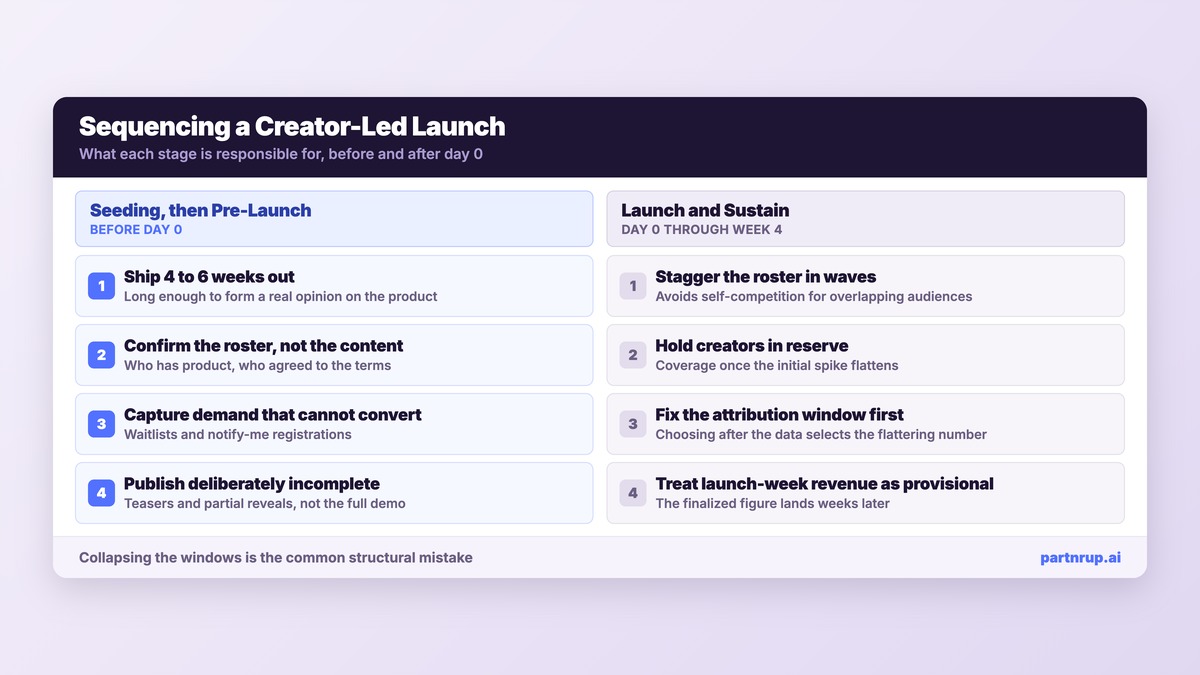
Treat a creator launch as three distinct windows with different success criteria. Collapsing them into a single launch date is the most common structural mistake.
Window 1: Seeding (4-6 weeks out)
Product has to be in creators' hands long enough for them to form a real opinion and shoot something that is not a first-impression unboxing. The shipping logistics alone — address collection, customs for international creators, replacement units for damaged shipments — routinely consume two weeks that teams did not budget. Our influencer seeding primer covers the mechanics of this stage.
The deliverable from Window 1 is not content. It is a confirmed roster of creators who have the product, understand the launch date, and have agreed to the commercial terms.
Window 2: Pre-Launch (1-2 weeks out)
This is where creator-led launches earn their advantage, and where most of them leave money on the table. The goal is capturing demand that cannot convert yet — waitlists, email signups, "notify me" registrations, follows. Content in this window should be deliberately incomplete: the teaser, the hint, the partial reveal.
The reason to run this window at all is that it converts your launch day from a discovery problem into a notification problem. You are no longer hoping the algorithm serves your content to cold audiences on the right day; you are emailing people who already asked.
Window 3: Launch and Sustain (day 0 through week 4)
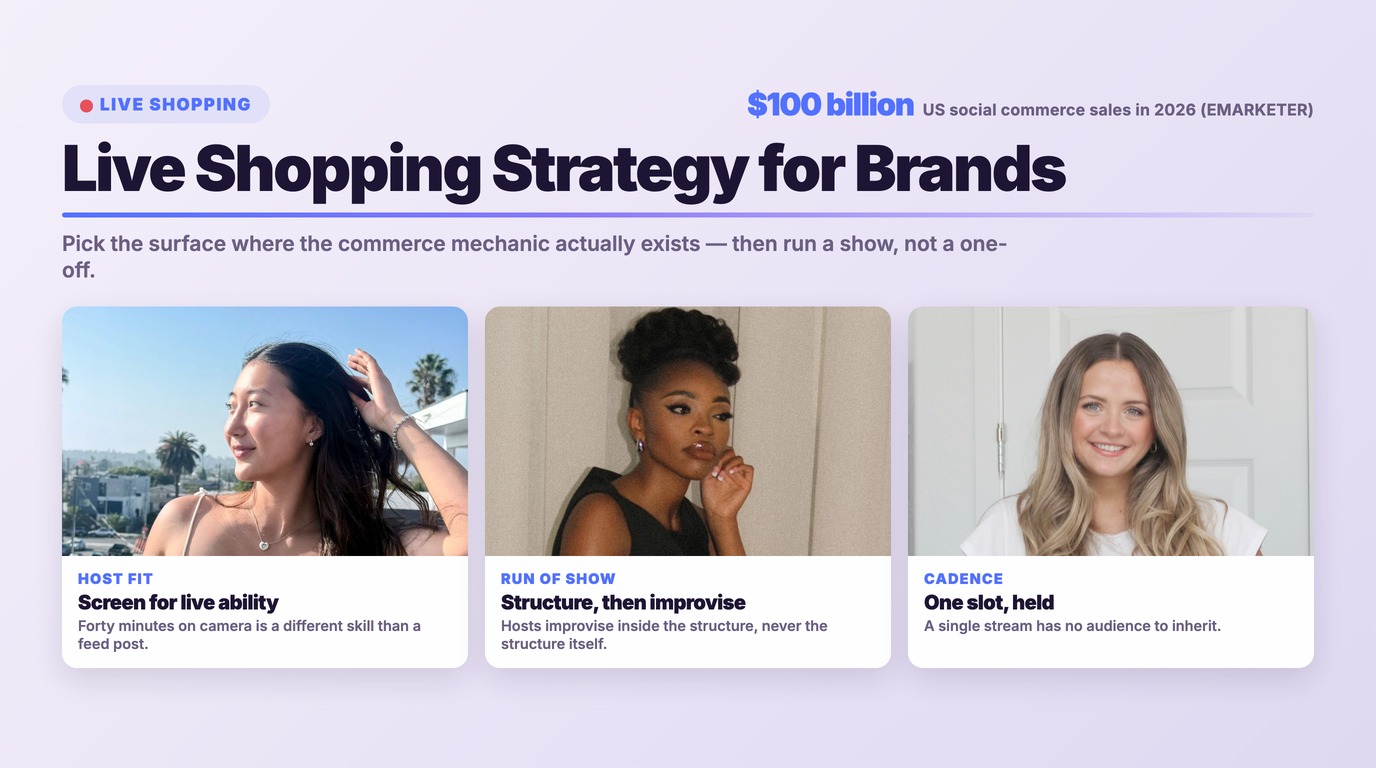
Concentrating every creator post on launch day feels right and usually underperforms. It competes against itself for the same audiences, and it wastes the content's shelf life. Stagger the roster in waves across the first two to three weeks, keeping a reserve of creators for week three and four when the initial spike flattens.
The content from all three windows stays useful well past the launch. Our content repurposing guide covers extracting that value, and digital shelf optimization explains how launch content keeps earning discovery months later.
Commission Mechanics Decide Who Shows Up
On TikTok Shop, the commission rate is not just a cost line — it is the recruiting mechanism, and it comes with rules that are worth knowing before you set a number.
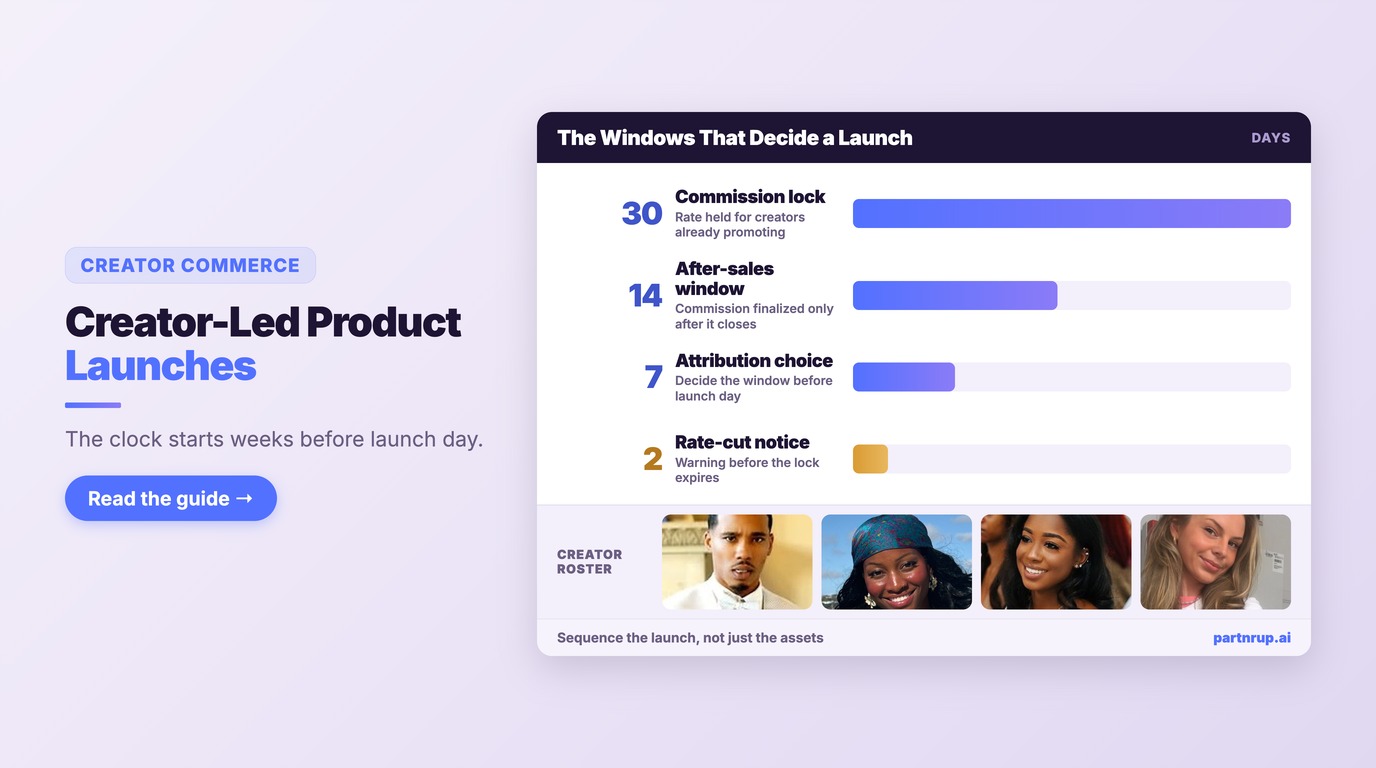
When a seller sets up an open collaboration commission rate, TikTok's seller documentation states that creators promoting that product "can enjoy a locked commission rate for at least 30 days." The lock is asymmetric by design:
- Raise the rate, and it applies immediately. TikTok's documentation states that when sellers raise a product's commission rate, creators already promoting that product "will immediately receive the higher commission rate."
- Lower the rate, and existing promoters keep theirs. Creators "keep their initial commission and be notified that their commission rate will be lowered," with the notification sent two days before the 30-day lock period expires.
The launch implication is direct: a mid-launch rate increase is a lever you can pull that reaches your existing roster instantly, while a rate cut takes up to 30 days to reach the creators already promoting. Plan the opening rate as a floor you can raise, not a midpoint you can adjust in both directions.
On setting the opening number, TikTok now surfaces recommended rates for Open Collaboration products, described in its seller documentation as "using the top 30% of category performers from the last 30 days as a benchmark." That is a competitive benchmark rather than a profitability calculation — useful for understanding what creators are being offered elsewhere in your category, but it says nothing about your margin.
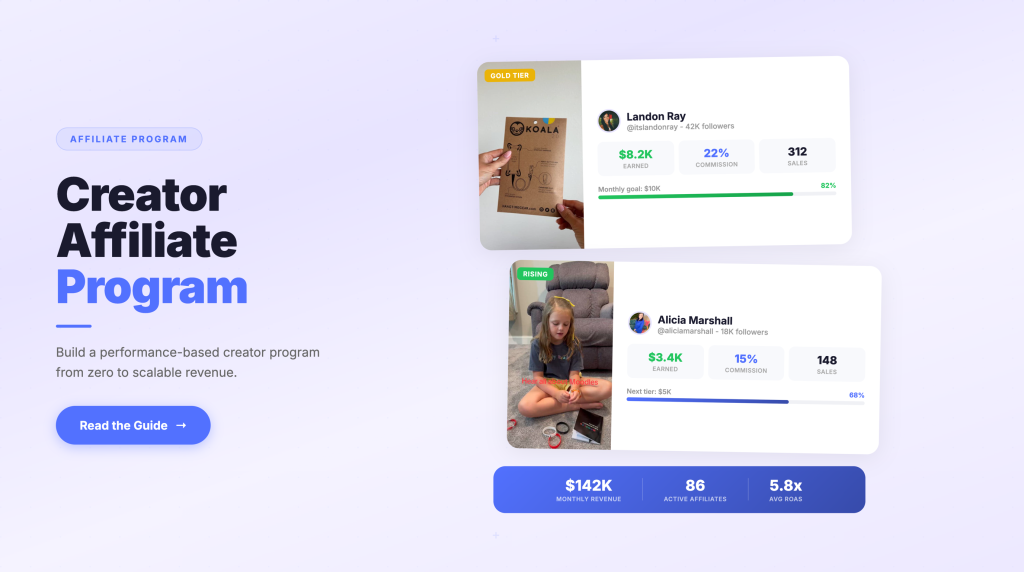
For the broader program design around rates, tiers, and creator recruitment, see our guide on building a creator affiliate program from zero to scale.
The Payout Lag Nobody Plans For
Commission is earned at the sale and finalized considerably later. TikTok's documentation describes affiliate commission as based on "actual paid price × commission rate, not the marketplace list price," and states that commission is only finalized after delivery and the 14-day US after-sales period. Full refunds pay zero, partial refunds reduce the payout, and orders cancelled before receipt do not qualify at all.
Two consequences for how you run a launch:
Your launch-week revenue number is provisional. Delivery plus a 14-day after-sales window means the real figure is not knowable until roughly three weeks after the sale. Teams that report a final launch number on day seven are reporting gross orders and calling it revenue.
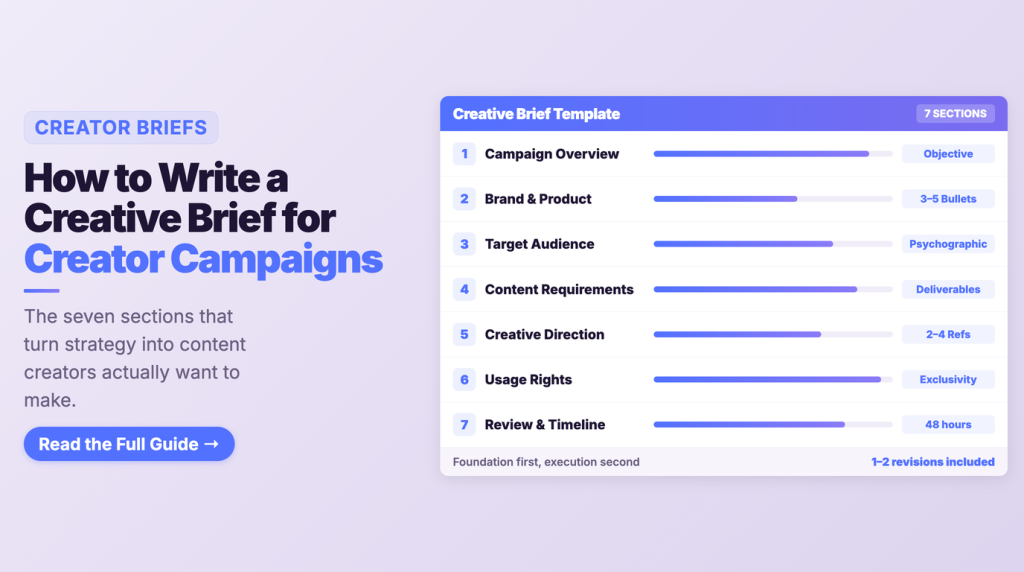
Creator expectations need managing at brief time. A creator whose video sells well on launch day will not see that money for weeks, and the amount will be lower than the on-screen total if returns come in. Setting that expectation in the brief prevents the mid-launch conversation where a top performer believes they have been underpaid. Our creative brief guide covers what belongs in writing.
Products with high return rates — apparel and footwear especially — feel this most acutely, because the gap between gross launch orders and finalized commission is widest exactly where sizing drives returns.
Measuring a Launch Without Fooling Yourself
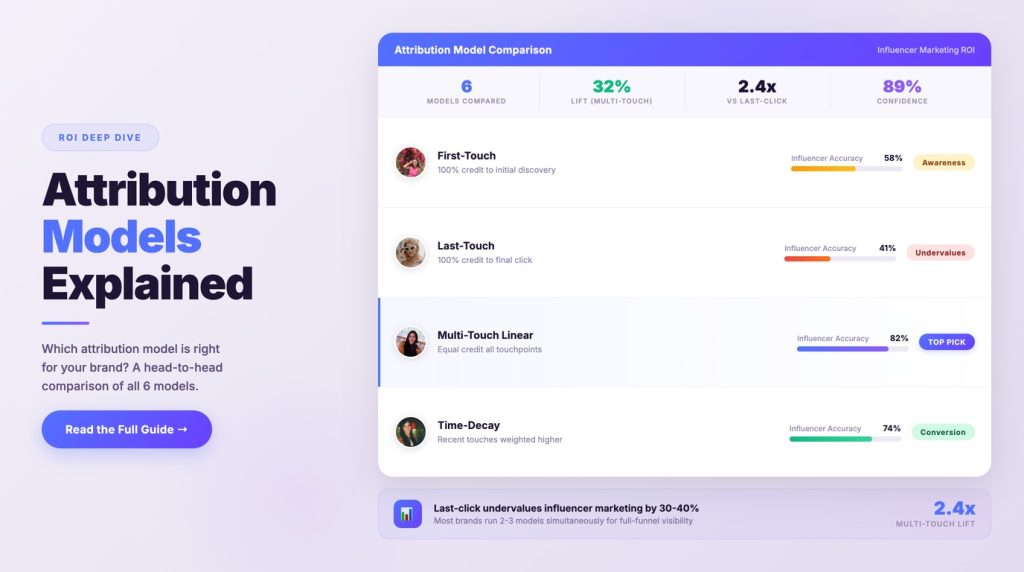
A launch is the single hardest thing to attribute in creator marketing, because it is the one moment when everything runs simultaneously. Paid, email, organic, PR, and twenty creators all fire in the same week, and every channel's dashboard will claim the same orders.
Three practices keep the number honest:
Separate the pre-launch signal from the launch result. Waitlist signups attributable to specific creators in Window 2 are a clean read, because nothing else was driving registrations for an unreleased product. That is often your best creator-specific evidence of the entire launch.
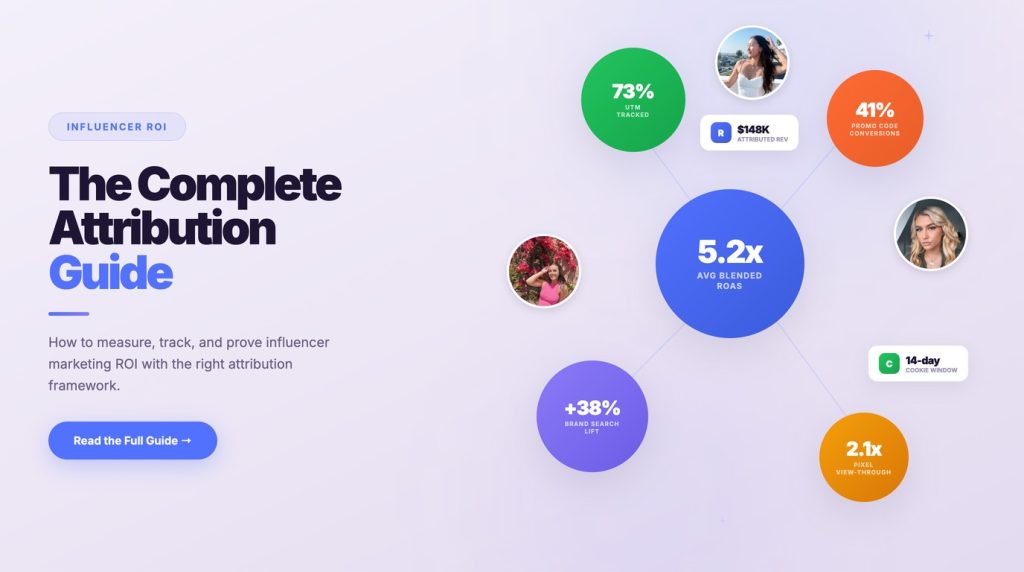
Decide the attribution window before launch day. Creator content keeps converting for weeks, so a 7-day window and a 30-day window produce materially different pictures of the same launch. Pick one in advance; choosing after you see the data is how teams accidentally select the flattering number. Our attribution guide and the practical guide to tracking creator links with UTMs cover the setup.
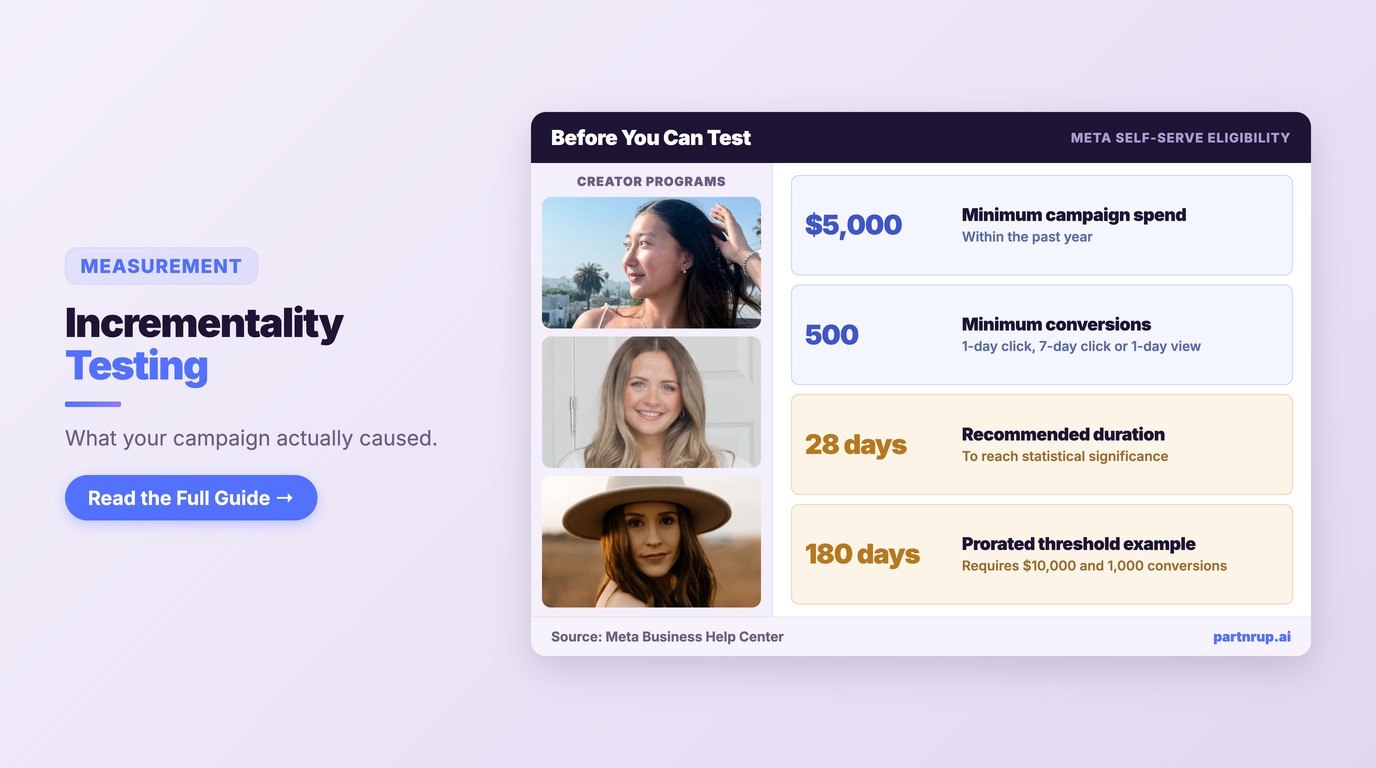
Hold something back to measure against. A launch where every channel fires everywhere cannot tell you what creators contributed. Geographic or audience holdouts are the only reliable answer — see our incrementality testing guide. For the metric set itself, which influencer metrics actually matter is the companion piece.
Five Pitfalls That Derail Creator Launches
1. Seeding too late. Product arriving a week before launch produces first-impression content from creators who have not used the thing. It reads as unfamiliar, and audiences notice.
2. Stacking everything on day one. Simultaneous posting creates one spike, overlapping audiences, and no coverage for the weeks when the launch actually needs sustaining.
3. Setting the opening commission rate as a midpoint. Given that increases apply immediately and decreases wait out a 30-day lock, the opening rate should be a floor.
4. Reporting gross launch orders as revenue. Delivery plus the 14-day after-sales period means the finalized figure lands weeks later, lower.
5. Assuming in-app checkout on Meta surfaces. Since September 2025 the purchase completes on your website, which makes your own product page part of the launch-day critical path.
Running This at Scale
Everything above is tractable for one launch and one roster. It stops being tractable at four launches a quarter, because the work is not creative — it is operational state tracking. Who has product. Who confirmed terms. Which rate each creator is locked into and when that lock expires. Whose content has posted, in which wave, against which attribution window.
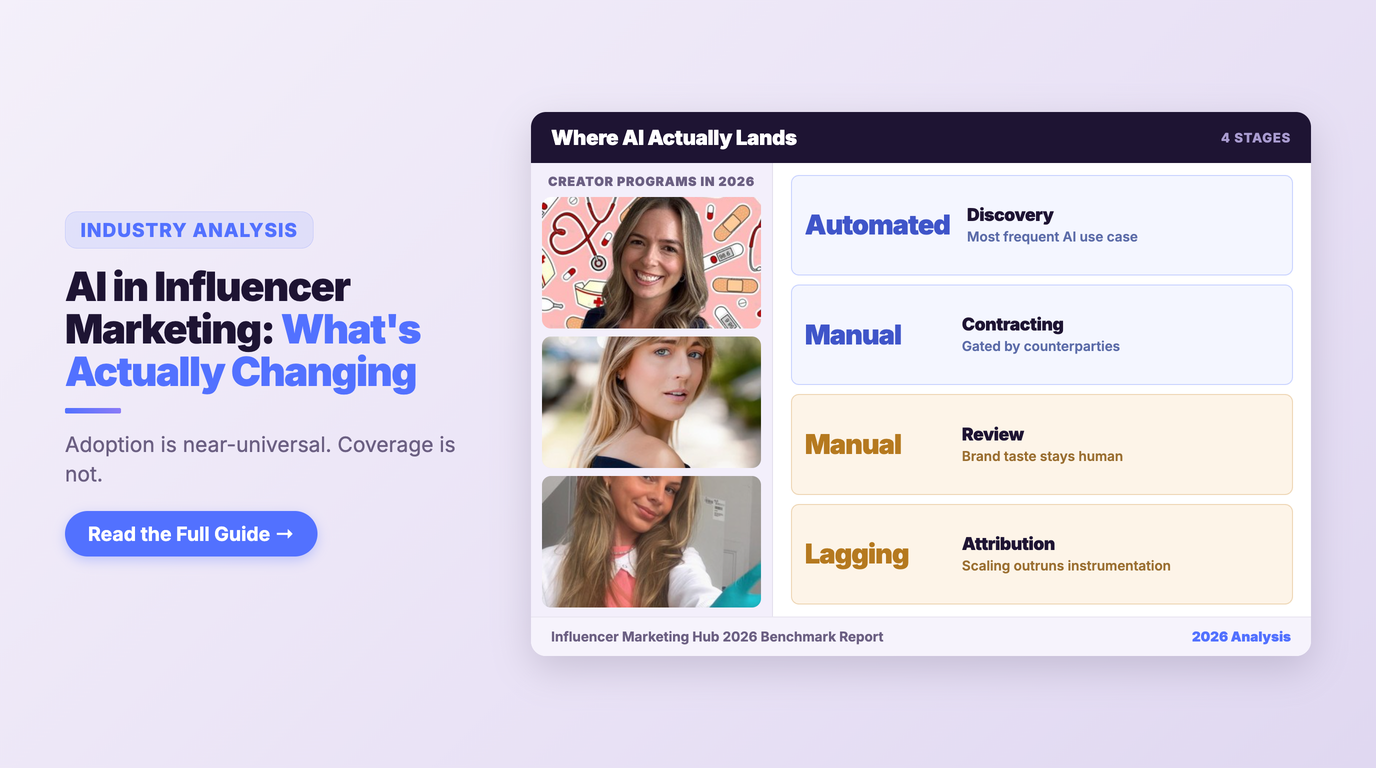
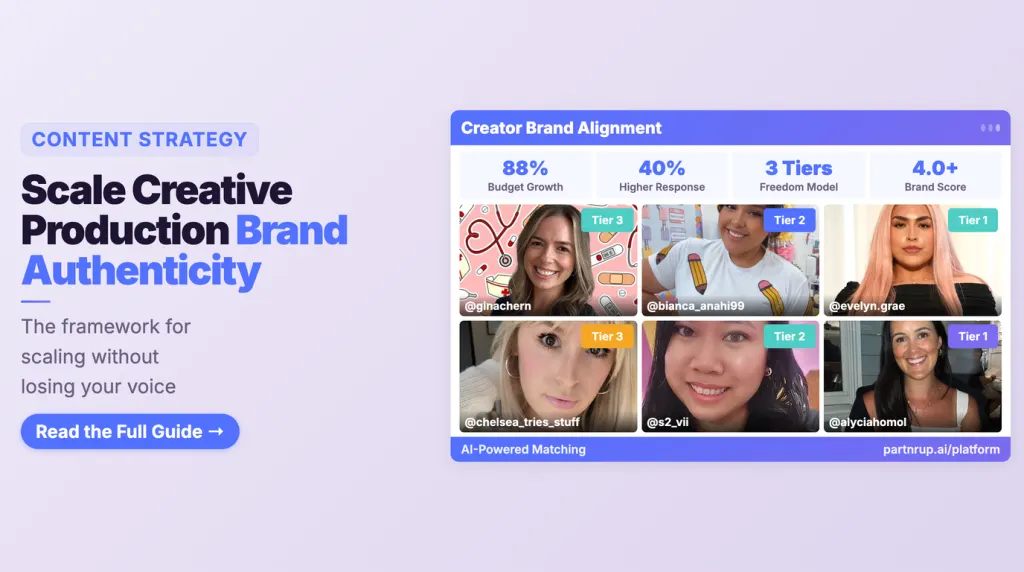
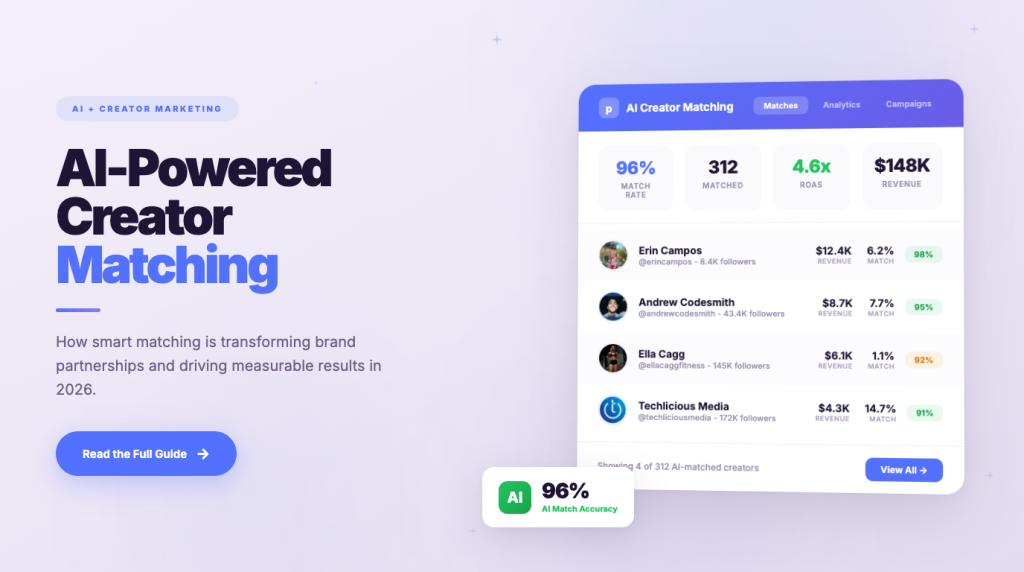
That is the complexity partnrUP is built to absorb. AI-powered creator matching handles roster building against your actual product category and audience rather than follower count, and automated tracking maintains the per-creator attribution record through the launch and the weeks of sustain that follow — so the team spends its time on launch strategy instead of reconstructing who posted when from a spreadsheet.
If you are planning a creator-led launch and the operational load is the thing standing in the way, book a demo and we will walk through the specific sequence for your category.
Frequently Asked Questions
How far in advance should creators receive product for a launch?
Four to six weeks before launch day. That allows genuine use before filming and absorbs the shipping, address-collection, and replacement-unit delays that routinely eat two weeks of the schedule.
Can customers still buy directly inside Instagram?
No. Meta's business help documentation states that as of September 2025, Shops on Facebook and Instagram use website checkout, and customers are directed to your own website to complete the purchase. Instagram remains a discovery and consideration surface.
Can I lower a TikTok Shop commission rate during a launch?
You can change the rate, but it does not reach existing promoters immediately. TikTok's seller documentation states creators keep their initial commission and are notified that the rate will be lowered, with notification sent two days before the 30-day lock period expires. Rate increases, by contrast, apply immediately.
When is affiliate commission actually finalized?
After delivery and the 14-day US after-sales period, per TikTok's seller documentation. Commission is calculated on actual paid price rather than list price; full refunds pay nothing and partial refunds reduce the payout.
Should all creators post on launch day?
No. Staggering the roster in waves across the first two to three weeks avoids self-competition for overlapping audiences and keeps content flowing into the period after the initial spike flattens.
What is the cleanest creator-specific metric for a launch?
Pre-launch waitlist or notify-me signups attributed to individual creators. During that window nothing else is driving registrations for an unreleased product, so the signal is unusually clean compared with launch-week orders.
How long should the attribution window be?
Decide before launch day rather than after. Creator content converts for weeks, so 7-day and 30-day windows describe the same launch very differently — picking once the data is visible is how teams end up selecting the most flattering number.