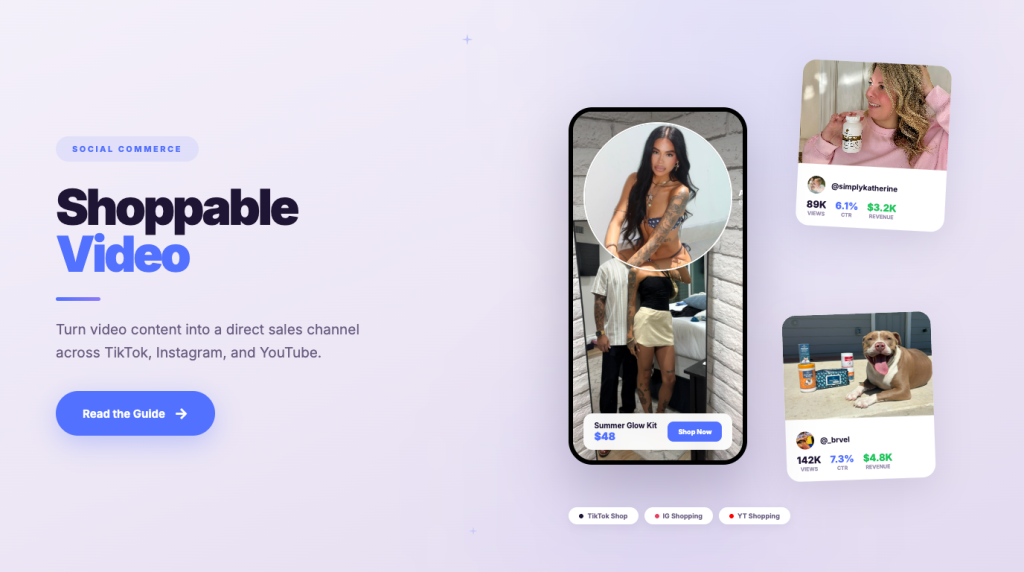
Shoppable video is collapsing the funnel. Where brands used to run awareness campaigns and hope buyers remembered them days later, shoppable video turns every creator post into a direct buying opportunity. A viewer watches a skincare creator apply a serum, taps the product tag, and checks out , all without leaving TikTok. Discovery and transaction happen in the same breath.
In 2026, this isn’t a novelty experiment. It’s table stakes for brands selling direct-to-consumer. TikTok Shop has processed tens of billions in GMV. Instagram Shopping is baked into Reels and Stories. YouTube Shopping integrates directly with Google Merchant Center. The infrastructure is mature, consumer behavior is trained, and the brands winning market share are the ones that figured out shoppable video first.
This guide covers everything: what shoppable video actually is, which platforms matter, how to build a strategy that converts, how to find the right creators, and how to scale a program from a handful of posts to hundreds of pieces of shoppable content working 24/7 for your brand. For the full ROI picture, check out our guide to influencer platform ROI and key influencer marketing statistics every brand should know.
What Is Shoppable Video?
Shoppable video is video content: live or recorded, short or long, with embedded or directly linked purchase capability. When a viewer watches the content, they can click, tap, or swipe to buy the featured product without navigating away to a separate site.
This is fundamentally different from traditional branded content. A brand awareness video on YouTube might spark interest, but the viewer still has to remember the brand, open a new tab, search for the product, find the right SKU, and complete a purchase , a chain with a hundred drop-off points. Shoppable video collapses that chain. Intent and action happen together.
If you’re already running influencer marketing for e-commerce, shoppable video is the natural evolution , turning your creator content from awareness into direct revenue.
Key Platforms for Shoppable Video in 2026
- TikTok Shop: The most aggressive shoppable ecosystem. Products appear as tagged overlays in videos, affiliate creators earn commissions on sales, and livestream shopping events drive real-time urgency.
- Instagram Shopping: Product tags in Reels, Stories, and feed posts. Collab posts let brands and creators co-own shoppable content. The Shop tab provides a discovery surface.
- YouTube Shopping: Product shelves appear below videos. Creators tag products that sync with Google Merchant Center. YouTube’s longer-form format works especially well for tutorials and demos. Learn more about YouTube as a shoppable channel for brands.
- Pinterest: Product Pins connect visual discovery to purchase. Less real-time than TikTok or Instagram, but strong for evergreen shoppable content in home, fashion, and food categories.
The “Zero-Click” Commerce Vision
The end state platforms are building toward is zero-click commerce: a consumer sees a product in a video, wants it, and completes the purchase without ever leaving the app. Native checkout on TikTok Shop already delivers this. Instagram Checkout (in markets where it’s enabled) does too. The friction between inspiration and transaction is approaching zero, which means brands that show up at the inspiration moment capture buyers that brands who aren’t present simply cannot reach.
The Social Commerce Landscape in 2026
Social commerce: buying products discovered on social media , crossed the $1 trillion global mark in 2025. The U.S. market is expanding at roughly 30% annually, with Gen Z and Millennials driving adoption. By 2026, social commerce isn’t a supplemental channel for forward-thinking brands. It’s the primary discovery engine.
TikTok Shop
TikTok Shop is the dominant force reshaping brand commerce strategies. Its affiliate creator program is one of the largest creator monetization ecosystems ever built , brands list products, creators apply to promote them, and sales are tracked to the creator automatically. For brands, this means an army of commission-based creators producing shoppable content at scale without upfront production costs.
TikTok Shop’s algorithm aggressively surfaces shoppable content to users who’ve shown purchase intent. A user who buys beauty products through TikTok will see more beauty creator content, with shoppable tags , in their For You Page. The platform is actively training consumer purchase behavior to happen natively.
Instagram and Facebook Shopping
Meta has doubled down on social commerce. Instagram Shopping now supports product tags across all content types: Reels, Stories, carousels, and standard posts. The collab post feature is particularly powerful: a brand and creator co-publish a single piece of content that appears on both accounts, with product tags intact. The creator’s audience sees native content from a face they trust; the brand gets shoppable reach it couldn’t buy through paid ads alone.
Facebook remains relevant for older demographics and marketplace-driven commerce, while Instagram dominates among 18–34 year olds in fashion, beauty, fitness, and lifestyle categories. If you want to see this in action, check out how UGC for paid social drove top-performing Meta ads for Lifeboost Coffee.
YouTube Shopping
YouTube Shopping has matured significantly. Product shelves , a row of shoppable product cards below or within a video , let creators tag the products they feature. When a viewer taps a product card, they’re taken to the product page (or in some markets, can complete checkout within YouTube). For tutorial-heavy categories like beauty, tech, and fitness, YouTube’s longer-form format creates high-intent shoppable touchpoints that Instagram’s 90-second Reels can’t replicate. Explore AI-powered YouTube creator discovery to find the right creators for your YouTube shopping strategy.
Live Shopping vs. Shoppable Short-Form
Two distinct shoppable formats have emerged with very different strengths:
Live shopping replicates the TV shopping network model on social platforms. A creator or brand host presents products in real time, viewers ask questions in the comments, and limited-time offers create urgency. Conversion rates on TikTok Live shopping events can run 2–3x higher than static content. The downside: it requires coordination, scheduling, and real-time audience building.
Shoppable short-form: tagged TikToks, Instagram Reels, YouTube Shorts: is the scalable workhorse. A single creator video can generate sales for weeks or months after posting. And as we explore in our guide to shoppable video automation, scaling this at volume requires systems , not spreadsheets.
Why Shoppable Video Outperforms Traditional Advertising
The performance gap between shoppable creator video and traditional digital advertising has widened in 2026. Here’s why it’s happening.
Intent at the Moment of Inspiration
Search advertising captures intent after it forms: a user already knows they want something and searches for it. Display advertising interrupts users who have no current intent. Shoppable video does something different: it creates intent at the moment of discovery, then immediately provides a path to purchase. A viewer who didn’t know this product existed thirty seconds ago is now one tap from buying it. That’s a different conversion dynamic than any other ad format.
Native Feel vs. Interruptive Ads
Creator-produced shoppable content doesn’t feel like an ad because it often isn’t framed as one. A fitness creator demonstrates a supplement in a workout video. A food creator uses a specific knife in a recipe tutorial. The product is present, but the context is genuine content that the creator’s audience chose to watch. The shoppable tag is a convenience, not an interruption.
Social Proof Built In
In traditional advertising, the brand makes claims about its own products. In creator-produced shoppable video, a trusted third party makes those claims, and their credibility transfers to the product. This is the compounding value that paid media can’t replicate. For a deeper look at this dynamic, see our analysis of ecommerce influencer strategies that drive ROI.
Conversion Benchmarks
Industry data consistently shows shoppable creator content outperforming traditional formats:
- TikTok Shop affiliate content converts at 1–4% (vs. 0.5–1% for display advertising)
- Instagram Shopping Reels generate 3x more engagement per impression than static product ads
- Creator-produced UGC content used in paid social achieves 4x better click-through rates than brand-produced creative
- Live shopping events routinely achieve 5–10% conversion rates: dramatically higher than any static format
Types of Shoppable Video Content
Not all shoppable video is created equal. Different content formats serve different purposes and convert differently depending on your product category.
1. Product Demos and Tutorials
Show the product working. A skincare demo, a kitchen gadget in use, a software walkthrough, a shoe unboxing followed by a styling session. Tutorial content has high intent: viewers who watch a full product tutorial are already far down the consideration funnel. The shoppable tag is the natural next step for a viewer who’s convinced.
2. Unboxing and Haul Videos
Unboxing and haul content blends entertainment with product discovery. A creator opens a package for the first time, reacting genuinely to what’s inside. These formats work because they mirror the experience of shopping with a friend , low-pressure, conversational, honest. For fashion, beauty, and consumer goods, haul content drives significant affiliate revenue.
3. Before/After Transformations
Before/after content is social proof in its most visceral form. A fitness creator showing 90-day results. A skincare creator showing 4-week texture improvements. The visual transformation creates emotional impact that product specs can’t match. These videos consistently drive high click-through rates because viewers want what they see.
4. GRWM and Lifestyle Integration
“Get Ready With Me” content, lifestyle vlogs, and day-in-the-life videos integrate products into authentic moments. The product isn’t the focus: the creator’s life is, but the product appears naturally in context. The challenge for brands is writing briefs loose enough to allow creative freedom while ensuring the product gets sufficient screen time and shoppable tags get placed.
5. Live Shopping Events
Live shopping brings urgency, community, and real-time social proof to shoppable video. Viewers ask questions in real time, the host answers, other buyers comment about their purchases, and limited-time pricing or bundle deals create immediate action. TikTok Live shopping has produced tens of thousands in brand revenue from a single two-hour session for consumer brands.
Building a Shoppable Video Strategy
A shoppable video strategy is not the same as a brand awareness strategy. The objectives are different, the creator selection criteria are different, and the measurement framework is different. Here’s how to build one that actually converts.
Start With Product-Creator Fit
The most important decision in shoppable video isn’t the platform: it’s whether the product and creator genuinely fit. A creator who uses your product category authentically will outsell a creator with ten times the following who doesn’t. Product-creator fit is especially critical in shoppable formats because viewers can feel inauthenticity immediately, and the product tags will go unclicked.
Learning to evaluate this fit is part of building strong creator partnerships. The brands that win at shoppable video invest real time in vetting product-creator alignment upfront.
Platform Selection
Choose platforms based on where your customer actually shops, not where your brand currently has the most followers. Some questions to guide you:
- What’s your customer’s primary social platform? (Age and category will tell you this.)
- Does your product category have an active shoppable community on this platform? (Beauty on TikTok: yes. B2B SaaS on TikTok: probably not.)
- Is your product ready for TikTok Shop : do you have inventory, fulfillment, and return capacity for potential volume spikes?
- Do you have product feeds set up for Google Merchant Center (required for YouTube Shopping)?
For most DTC consumer brands, TikTok Shop + Instagram Shopping is the right starting point. For higher-consideration purchases, YouTube Shopping can be layered in once the foundation is working. Keep up with ecommerce influencer trends for 2026 to stay ahead of platform shifts.
Writing a Brief for Shoppable Video
A shoppable video brief is different from a brand awareness brief. The goal isn’t reach or brand sentiment: it’s conversion. Key elements of an effective shoppable brief:
- Product showcase requirement: specify how long the product needs to be visible and how it should be shown
- Shoppable tag placement instructions: tell the creator where to place tags and whether to verbally direct viewers to click
- Key claims or proof points: the 2–3 things viewers most need to hear to consider purchasing
- Call to action: explicit instructions on what you want the creator to ask viewers to do
- Authenticity latitude: what they don’t need to include; give creators room to be themselves
Avoid the costly video creator mistakes brands commonly make: over-briefing is one of the biggest.
Measurement Framework
Traditional influencer metrics (reach, impressions, engagement rate) aren’t enough for shoppable video. Your measurement framework needs commerce-specific KPIs:
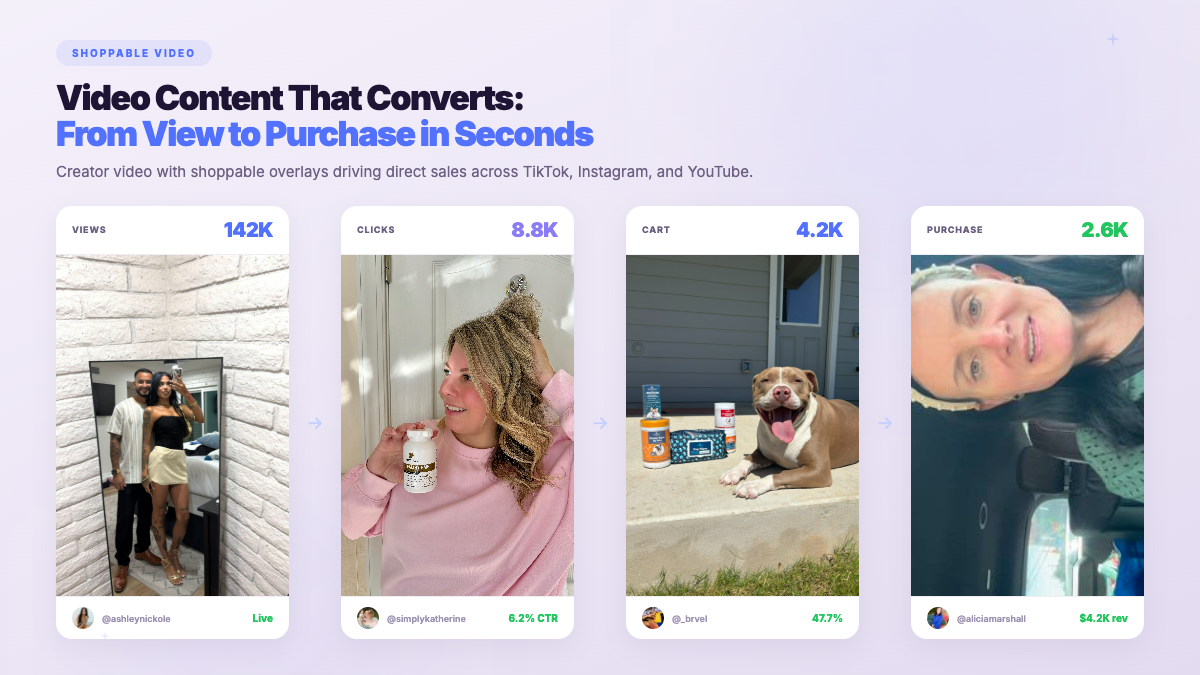
- View-to-click rate: what percentage of viewers clicked through to the product page
- View-to-cart rate: what percentage added to cart
- View-to-purchase rate: the ultimate conversion metric
- Revenue per video: total sales attributable to each piece of content
- Creator ROAS: revenue divided by creator cost (fees + commissions)
Finding Creators for Shoppable Video
Creator selection for shoppable video requires a different lens than creator selection for awareness campaigns. You’re not looking for the biggest megaphone: you’re looking for the most trusted voice in a specific product category.
Conversion-Optimized Creators vs. Awareness Creators
Some creators are exceptionally good at driving engagement and brand awareness. Others: often with smaller but more devoted audiences , drive purchases. The distinction shows up in their track record: has this creator promoted products before? Did those products sell? Do their followers ask questions about where to buy products the creator features?
Why Micro-Creators Often Convert Better
For shoppable video specifically, micro-creators (10K–100K followers) frequently outperform larger creators on conversion metrics. They have tighter, more specific audiences, higher engagement rates, and higher trust levels with their followers. A beauty micro-creator with 40K followers who posts exclusively about skincare has an audience of 40K people who are genuinely interested in skincare , not 40K general followers who happen to see a skincare post. That specificity drives purchases.
Macro-creators and celebrities make sense for brand awareness and cultural moments. For driving product sales from shoppable video, your budget usually goes further with a roster of micro-creators than a single macro placement.
AI-Powered Creator Matching for Commerce Programs
Manually vetting creators for shoppable performance potential is time-intensive at scale. AI-powered creator matching accelerates this by analyzing creator profiles, past content performance, audience demographics, and category alignment simultaneously. For shoppable video programs that need 20, 50, or 100 creators, AI matching is the difference between a scalable program and a permanent recruiting bottleneck.
TikTok Shop for Brands: Complete Setup Guide
TikTok Shop is the most important shoppable commerce platform for DTC brands in 2026. Here’s how to set it up and maximize it.
Setting Up TikTok Shop
TikTok Shop setup requires a TikTok Business Account, business registration verification, a product catalog upload (you can connect Shopify, WooCommerce, or upload manually), a bank account for payouts, and product compliance review. TikTok reviews all products for policy compliance before listing. Setup time is typically 3–7 business days for verification. Once live, your products appear in TikTok’s affiliate marketplace and can be tagged by any creator in the program.
TikTok Affiliate Creator Program
TikTok’s built-in affiliate program is one of the most powerful features of TikTok Shop. Brands set a commission rate for their products. Creators browse the affiliate marketplace, apply to promote products they like, and earn commissions on sales. This removes the upfront cost and coordination friction of traditional influencer campaigns: you pay only for performance.
To attract quality creators: set competitive commission rates (5–20% is typical; higher rates attract better creators), provide free product samples to high-potential creators, create a Targeted Creator list by inviting specific creators directly rather than waiting for them to find you, and optimize your product listing with strong images, compelling copy, and competitive pricing.
Livestream Shopping on TikTok
TikTok LIVE shopping is where the highest conversion rates happen. Keys to effective TikTok Live shopping: select hosts who are comfortable on camera in real time; schedule for 7–10pm local time, which drives the highest viewership for most consumer categories; feature 3–5 products per session with a hero product; use urgency mechanics like limited-time pricing or exclusive bonuses available only during the live; and have the host actively respond to comments. This is a conversation, not a broadcast.
Instagram Shopping for Brands
Instagram Shopping remains essential for visually-driven product categories and Millennial audiences.
Product Tagging Across Content Types
Instagram allows product tagging in Reels (1–3 product tags appear as overlays), Stories (product link sticker), feed posts (tap-to-reveal product tags), and Broadcasts/Lives (products pinned for purchase during live broadcasts).
Collab Posts With Creators
Instagram’s Collab Post feature is a standout tool for shoppable creator content. A brand and creator co-author a single post that appears on both accounts simultaneously. The post carries both account names, appears in both follower feeds, and combines engagement from both audiences. For shoppable content, this means product tags embedded in the creator’s authentic video reach both the creator’s audience and the brand’s followers: without the creator needing to repost or the brand needing to reshare.
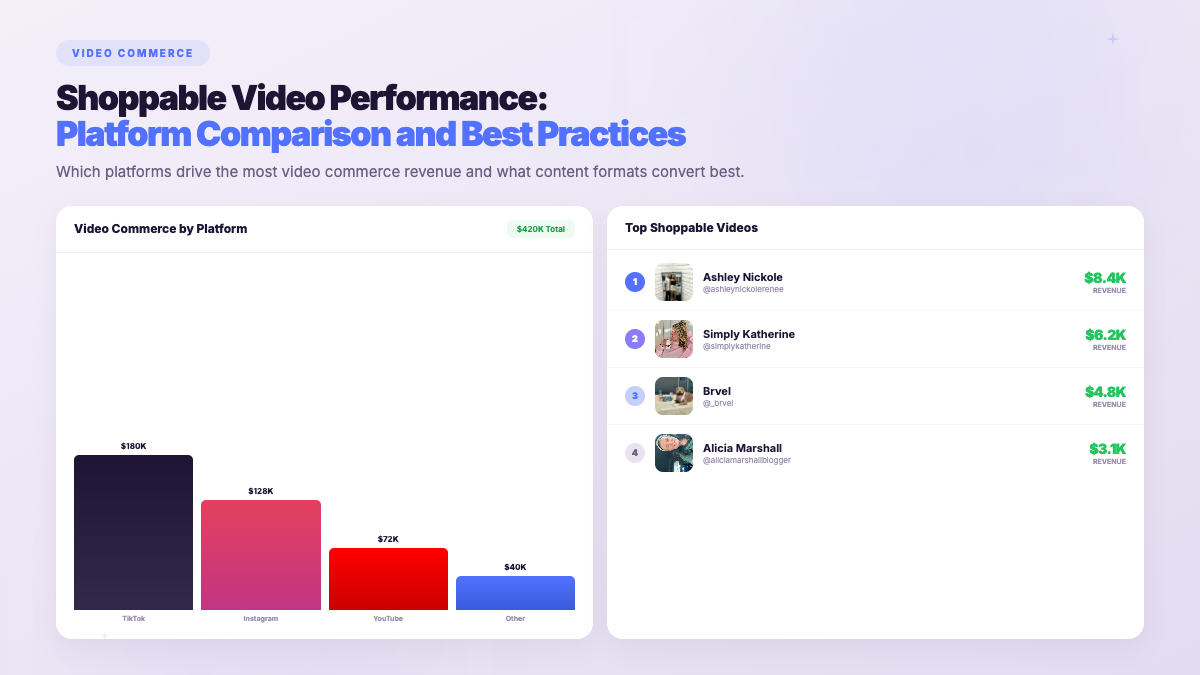
Measuring Shoppable Video Performance
Measurement in shoppable video is more complex than traditional influencer campaigns because you’re measuring a commerce funnel, not just a media funnel.
Platform-Native Analytics
Each platform provides native analytics for shoppable content. TikTok Shop Seller Center offers full GMV reporting by creator, video, and product: real-time and historical, with commission tracking included. Meta Commerce Manager provides product impressions, link clicks, add-to-cart, and purchases by product and content piece. YouTube Studio’s Shopping tab shows product impressions, clicks, and purchases from Shopping-tagged videos.
Attribution Models
Attribution is the thorniest challenge in social commerce measurement. A viewer might see a TikTok video featuring your product, not click immediately, then Google your brand later and buy on your website. The platform shows zero conversion; your website shows a direct visit. Solutions include post-purchase surveys asking “where did you first hear about this?”, multi-touch attribution models, and incrementality testing.
Long-Tail Content Performance
One of shoppable short-form video’s most underappreciated qualities is its evergreen revenue potential. A TikTok video posted 6 months ago can resurface in the algorithm and drive a new wave of sales. Tracking the lifetime revenue of individual shoppable videos often reveals that your top-performing content is generating 3–5x the revenue you attributed to it in your standard reporting window.
Scaling Your Shoppable Video Program
Getting from 5 pieces of shoppable content to 500 is an operational problem, not a creative one. The creative challenges are largely solved once you’ve found a brief format, a creator type, and a content style that converts. The scaling challenge is: how do you produce more of what works without losing the authenticity and quality that made it work?
Building a Creator Network vs. One-Off Campaigns
Brands that scale shoppable video successfully move from one-off campaigns to ongoing creator relationships. A creator who posts one shoppable video for your brand and converts well should be on a recurring content schedule: monthly posts, seasonal campaigns, live shopping events. Their audience learns to associate them with your brand; each post builds on the credibility of the last.
Building a tiered creator network, with a few anchor creators on retainers and a broader pool of affiliate creators producing content on performance terms , gives you both consistency and scale. This is exactly what brands learn when they study ecommerce influencer strategies that actually drive ROI.
Automation: The Non-Negotiable at Scale
Manual management of a shoppable creator program breaks down fast. When you have 50 creators posting content monthly, you’re managing 600 pieces of content per year , briefs, approvals, tracking links, payment processing, performance reporting. No spreadsheet handles this. No coordinator manages this alone.
The brands that scale shoppable creator programs are the ones built for this workflow: automated brief generation from product details, affiliate link tracking embedded in creator invitations, automatic commission calculations, and bulk payment processing. This is the infrastructure that shoppable video automation provides.
Repurposing Top-Performing Content
Your best shoppable creator content has a second life in paid media. Creator videos with proven organic conversion rates become your most effective paid social creative. Running top-performing TikTok creator videos as Spark Ads consistently outperforms brand-produced paid ads in conversion rate. The same logic applies to Meta: UGC in paid social ads dramatically outperforms traditional ad creative.
Frequently Asked Questions
What is the difference between shoppable video and UGC?
UGC (user-generated content) is content created by customers or creators, often repurposed by brands for ads. Shoppable video is any video content: UGC or brand-produced, that includes embedded purchase capability. They overlap significantly: creator UGC with TikTok Shop tags is both UGC and shoppable video. The distinction matters operationally: shoppable video requires platform setup (Shop accounts, product catalogs) that standard UGC collection doesn’t.
Do I need TikTok Shop to run shoppable video on TikTok?
For native in-app shoppable content, yes. Without TikTok Shop, creators can still mention your product and direct viewers to a link in bio, but the seamless in-app product tag experience requires TikTok Shop setup. The difference in conversion rates between native Shop tags and link-in-bio redirects is meaningful , native checkout removes significant friction.
How much do shoppable creator programs cost?
Costs vary dramatically by model. TikTok Shop affiliate programs can be run on a pure performance basis: you pay commissions only when sales happen. Paid shoppable creator partnerships typically range from $500–$5,000 per piece for micro-to-mid-tier creators. The most cost-efficient approach for most brands is starting with affiliate-only TikTok Shop, proving product-creator fit, and then layering in paid placements with top performers.
What products work best for shoppable video?
Products with visual demonstration value , beauty, fashion, food, home goods, fitness, tech gadgets , perform strongest. Products that answer a clear problem consumers recognize perform particularly well because the video can show the before-and-after transformation. High-consideration B2B products or complex software are harder to convert through shoppable short-form, though YouTube tutorials with Shopping tags can work for tech products.
How do I find creators willing to do affiliate shoppable content?
The TikTok Shop affiliate marketplace surfaces creators who are already set up for commerce content. For Instagram, you’ll need to identify creators manually or use a creator matching platform. Micro-creators in your product category are often very receptive to affiliate arrangements: they like earning passive income from content they’d create anyway. The key is reaching the right creators efficiently, which is where AI-powered creator matching tools deliver clear value.
What commission rate should I set for TikTok Shop affiliates?
Industry standard is 5–20%, with most competitive programs at 10–15%. Check what competitors in your category are offering in the TikTok Shop marketplace: creators see all affiliate opportunities and naturally gravitate toward higher commission rates when product quality is comparable. Starting at 10–12% and adjusting based on creator interest is a common approach.
Can shoppable video work for B2B brands?
Directly, rarely. B2B purchasing decisions involve multiple stakeholders, long timelines, and procurement processes that aren’t compatible with one-tap checkout. However, shoppable video can drive B2B awareness and lead generation — particularly for SaaS tools, software, or professional services that practitioners use themselves. YouTube tutorials with linked free trial offers function as “soft shoppable” content.
How do I measure ROI from shoppable video?
Start with platform-native metrics: TikTok Shop GMV by creator/video, Meta Commerce Manager conversion data, UTM-tracked revenue from non-native platforms. Layer in post-purchase surveys for last-touch attribution gaps. Calculate Creator ROAS as total revenue divided by total creator spend (fees + commissions). Most brands find shoppable creator content achieves 3–5x better ROAS than equivalent paid social spend.
What’s the best way to scale shoppable content production?
Build a creator network rather than running campaigns. Affiliate-first programs on TikTok Shop create a self-replenishing pool of creators producing content on performance terms. For programmatic scaling, use a creator marketing platform with brief automation, affiliate tracking, and payment processing built in: manual management breaks at any meaningful volume. Repurpose your top organic performers as paid Spark Ads to multiply their revenue impact.
How does partnrUP help with shoppable video programs?
partnrUP is an AI-native creator marketing platform built for brands running shoppable and performance-focused creator programs. It handles creator discovery and matching (finding creators by niche, audience demographics, and past commerce performance), brief generation, contract management, affiliate tracking, and payment processing — all in one place. For brands that need to scale from a handful of shoppable placements to a full creator commerce program, partnrUP removes the operational bottlenecks that make scaling hard.
Start Building Your Shoppable Video Program
Shoppable video is the most efficient direct-response channel available to consumer brands in 2026. The infrastructure is mature, consumer behavior is trained, and the brands building creator commerce programs now are compounding an advantage that will be very hard to replicate in two years.
The biggest obstacle isn’t strategy: it’s operations. Finding the right creators, managing briefs, tracking affiliate sales, and processing payments at scale requires systems, not spreadsheets.
partnrUP gives brands the AI-native infrastructure to build and scale shoppable creator programs, from creator discovery to payment, all in one platform.