3 Costly Mistakes Brands Make When Working with Video Creators (And How to Avoid Them)
73% of brand-creator partnerships fail to meet expectations.
Whether it’s missed deadlines, off-brand content, or campaigns that simply don’t convert, the challenges are real. But here’s the thing – most of these failures aren’t due to bad creators or unrealistic brand expectations. They stem from three critical mistakes that are completely avoidable.
At partnrUP, we’ve analyzed thousands of brand-creator collaborations through our platform and identified the patterns that separate successful campaigns from expensive failures. If you’re a brand looking to harness the power of video content without the headaches, this guide will save you time, money, and frustration.
In this guide, you’ll learn:
– The 3 most expensive mistakes brands make when partnering with creators
– Real-world examples of what goes wrong (and what goes right)
– Proven strategies to prevent each mistake
– How to build systematic processes that scale successful partnerships
Table of Contents
- Choosing Creators Based on Follower Count Alone
- Unclear Creative Guidelines and Expectations
- Poor Communication and Project Management
- Building Systematic Success
- Frequently Asked Questions
Mistake #1: Choosing Creators Based on Follower Count Alone
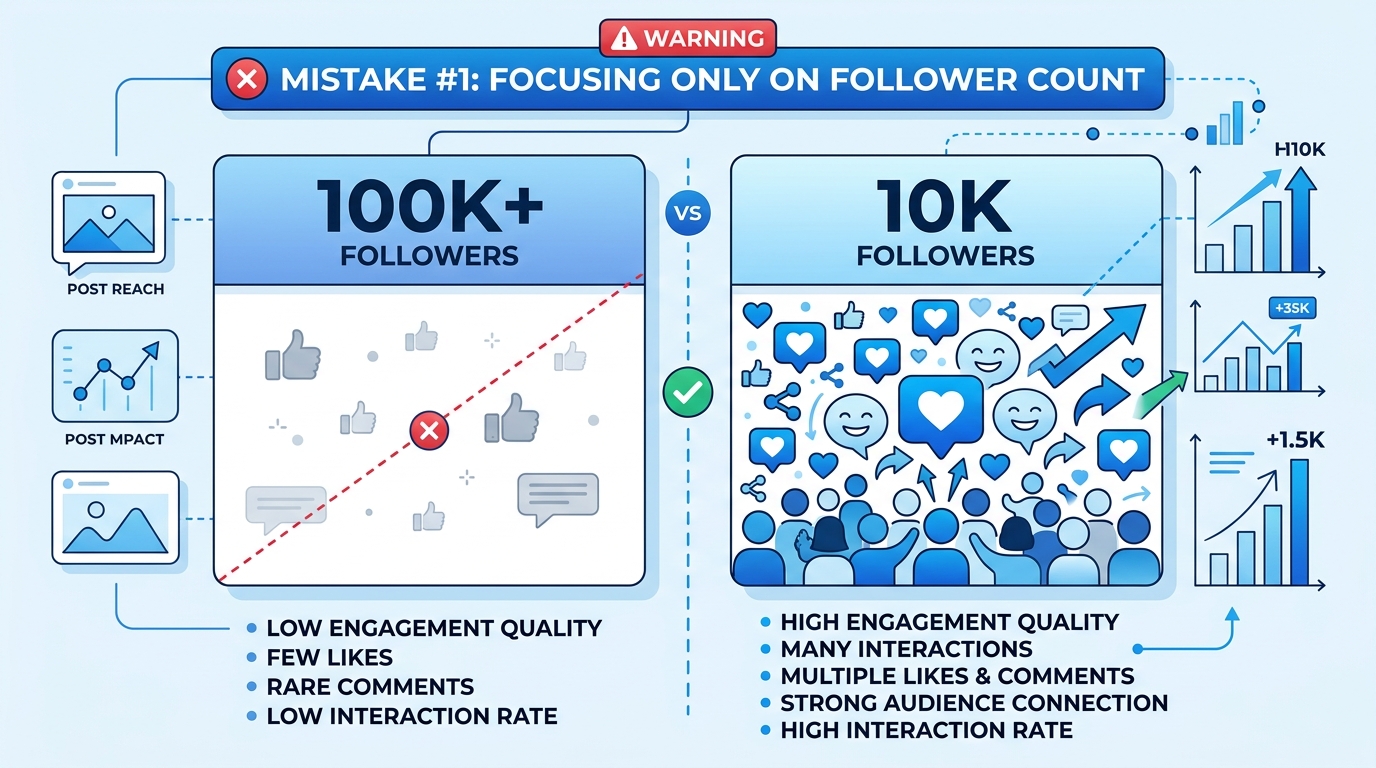
The Expensive Reality Behind Vanity Metrics
Too many brands get seduced by vanity metrics. They see a creator with 100K followers and assume that equals 100K engaged potential customers. This is expensive thinking that costs brands millions annually.
Real example from our platform: A beauty brand partnered with a creator who had 500K followers but only generated 12 sales from a $15,000 campaign. The issue? 60% fake followers, 0.8% engagement rate, and an audience primarily interested in lifestyle content, not beauty products.
Compare this to a micro-creator with 25K followers who generated 89 sales for the same brand with a $3,000 budget. The difference? 8.2% authentic engagement and an audience specifically passionate about clean beauty products.
Why Follower Count Misleads Brands
The Algorithm Reality:
– Instagram’s algorithm shows posts to only 5-15% of followers organically
– TikTok’s algorithm prioritizes engagement signals over follower count
– YouTube values watch time and click-through rates, not subscriber count
The Engagement Drop-Off:
– Macro-influencers average 1.7% engagement vs micro-influencers at 7.2%
– Large followings often indicate broad, unfocused audiences
– 20-30% of 100K+ follower accounts contain fake or inactive followers
The Solution: Quality-First Creator Selection
✅ Engagement Rate Analysis
Calculate true engagement using this formula:
(Likes + Comments + Saves + Shares) ÷ Followers × 100Benchmark targets:
– Nano-creators (1K-10K): 5-12%
– Micro-creators (10K-100K): 3-8%
– Mid-tier creators (100K-1M): 1.5-4%
– Macro-creators (1M+): 1-3%
✅ Audience Quality Verification
Key factors to assess:
– Comment quality: Look for genuine conversations, not just emojis
– Geographic alignment: Ensure creator’s audience matches your target markets
– Demographic fit: Verify age and interests align with your ideal customer profile
– Content relevance: Check if the audience engages with content similar to your brand
✅ The Micro-Creator Advantage
Why 10K-100K follower creators often outperform:
– Higher engagement rates: 3-8% vs 1-2% for larger accounts
– Lower costs: $100-$500 per post vs $1,000-$10,000 for macro-influencers
– Stronger community bonds: Followers feel personally connected
– Better conversion rates: Audiences more likely to take action
Case Study Results:
A fashion brand tested 5 macro-influencers vs 50 micro-influencers with the same $50,000 budget:
– Macro strategy: 2.1M impressions, 0.9% engagement, 28 conversions
– Micro strategy: 1.8M impressions, 5.2% engagement, 167 conversions
The micro-creator strategy delivered 6x the conversion rate.
How partnrUP Eliminates Guesswork
Our AI-powered creator discovery platform analyzes over 50 data points to identify creators who will actually drive results:
- Engagement authenticity scoring with fake follower detection
- Brand alignment intelligence matching content style and audience interests
- ROI prediction modeling based on historical performance data
- Automated quality verification of audience demographics and engagement patterns
Mistake #2: Unclear Creative Guidelines and Expectations
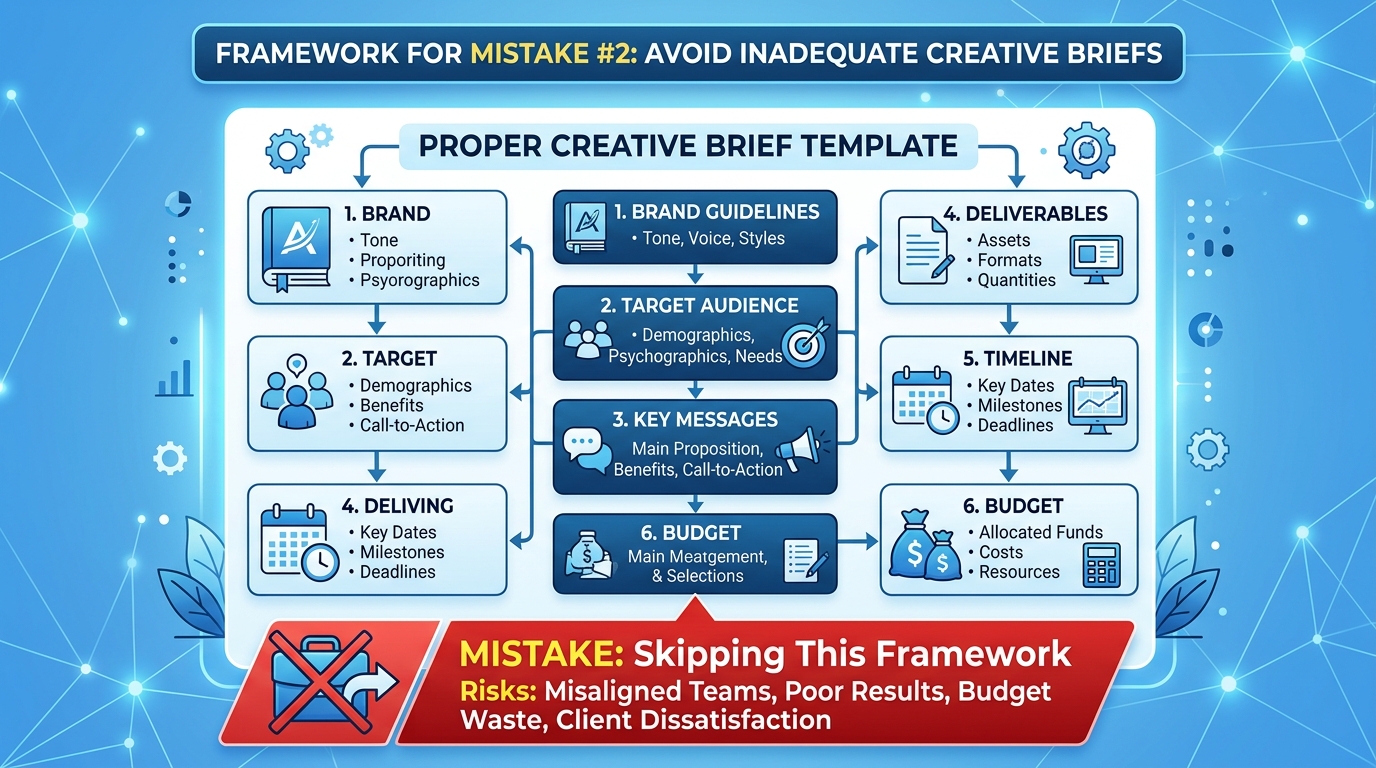
The $25,000 “Make It Feel Authentic” Disaster
“Just create something authentic that feels like you!” sounds collaborative and creator-friendly, but it’s responsible for more campaign failures than any other single factor.
Real disaster story: A B2B SaaS company gave a tech creator complete creative freedom for their $25,000 project management tool campaign. The brief was literally: “Show our tool in action, but make it feel natural and authentic to your audience.”
The result? A genuinely funny 90-second video about procrastination that garnered 500K views and thousands of positive comments. The problem? The product was mentioned for exactly 3 seconds, had zero explanation of features or benefits, included no clear call-to-action, and drove just 47 website visits.
The creator delivered exactly what was asked for – authentic content. But the brand lost $25,000 because “authentic” and “effective” aren’t the same thing.
Why Vague Guidelines Destroy Campaigns
The Creative Freedom Paradox:
– Creators want guidance to deliver what brands need
– Too much freedom leads to content that serves the creator’s audience but not brand objectives
– Lack of specificity creates misaligned expectations
– Revision cycles become endless negotiations rather than refinements
The Brand Message Dilution:
Without clear requirements, key messages get lost:
– Product benefits become secondary to entertainment value
– Call-to-actions become afterthoughts or disappear entirely
– Brand positioning gets interpreted through creator’s personal lens
– Conversion-focused elements feel forced during revisions
The Anatomy of High-Converting Creative Briefs
✅ Campaign Objective Clarity
Define specific goals:
– Awareness: Brand/product introduction to new audiences
– Consideration: Education about features, benefits, or use cases
– Conversion: Direct action (purchase, sign-up, download)
Specify success metrics:
– Quantitative: “Generate 500 website visits and 50 sign-ups”
– Qualitative: “Position our brand as the premium option”
– Timeline: “Content goes live Tuesday, campaign runs 2 weeks”
✅ Detailed Content Requirements
Format specifications:
– Video length: “60-90 seconds optimal, 2 minutes maximum”
– Aspect ratios: “Primary 9:16 for Stories/Reels, secondary 1:1 for feed”
– Visual style: “Bright, clean aesthetic with brand colors”
– Audio: “Upbeat music, clear voiceover, minimal background noise”
Mandatory content elements:
– Product demonstration: “Show 2-3 core features for minimum 20 seconds total”
– Problem/solution narrative: “Address specific pain point”
– Social proof: “Mention customer count or testimonials”
– Clear call-to-action: “Visit [specific URL] for free trial”
✅ Brand Voice Guidelines
Tone framework:
– Professional but approachable (not corporate)
– Confident but not arrogant
– Educational rather than purely promotional
– Solutions-focused and optimistic
Key messages (priority order):
1. Primary benefit: “Save 5+ hours per week”
2. Differentiation: “Built for small businesses, not enterprise”
3. Ease of use: “Complete setup in under 15 minutes”
Platform-Specific Optimization
Instagram Reels:
– Hook viewers in first 3 seconds
– Use trending audio when brand-appropriate
– Include 8-15 relevant hashtags
– Design first frame as effective thumbnail
TikTok:
– Start with pattern interrupt or unexpected element
– Use trending effects and filters when suitable
– Keep text overlays short and punchy
– Structure for comments and shares
YouTube Shorts:
– Optimize titles with keywords for search
– Include subscribe call-to-action
– Focus on watch time and retention
– Add to relevant playlists
Streamlined Approval Process
Three-checkpoint system:
1. Concept approval: Creator submits written concept/storyboard
2. First draft review: Complete content for consolidated feedback
3. Final approval: Refined content ready for publication
Revision best practices:
– Maximum 2 revision rounds to maintain timeline
– Single point of contact for final approval
– Specific timestamp references for video feedback
– 24-48 hour maximum turnaround time
Mistake #3: Poor Communication and Project Management
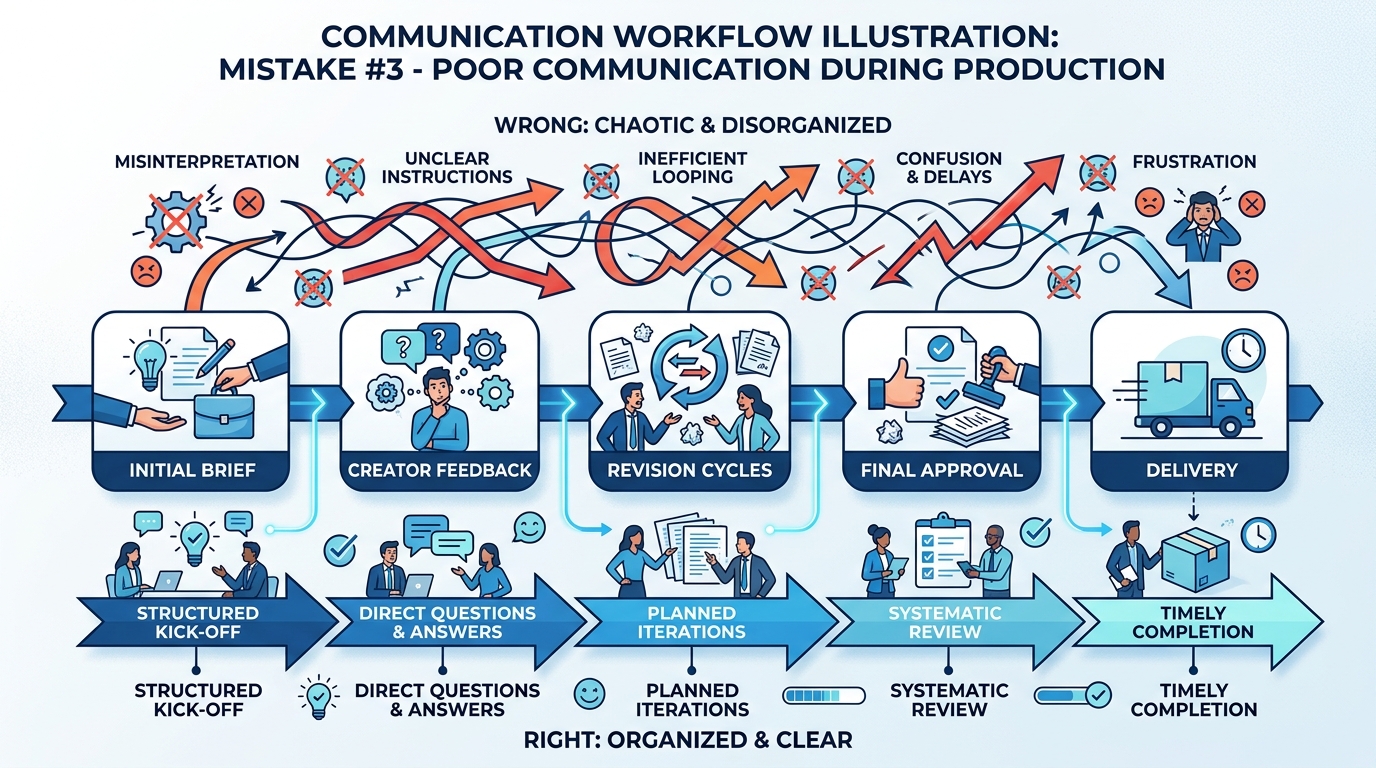
The Chaos That Kills Campaigns
Nothing destroys creator partnerships faster than communication breakdowns. Email chains with 47 messages, lost files, missed deadlines, and unclear responsibilities create expensive chaos that benefits no one.
Common breakdown scenario: A consumer electronics brand working with 12 creators for a product launch. No centralized communication system, files shared across email, Slack, Google Drive, and text messages. Result: 8 pieces of content delivered late, 4 creators used outdated logos, 3 missed key messaging points, and the entire campaign launched 2 weeks behind schedule during peak buying season.
Why Communication Chaos Is Expensive
Time and resource drain:
– Average of 6.2 hours per week spent tracking down project status
– 23% of creator partnerships require 3+ revision rounds due to miscommunication
– Late deliveries force rushed reviews, increasing approval mistakes
– Multiple communication channels create version control problems
Relationship damage:
– Frustrated creators are less likely to deliver their best work
– Unclear expectations lead to defensive rather than collaborative relationships
– Communication breakdowns damage long-term partnership potential
– Poor project management reflects badly on brand professionalism
The Solution: Systematic Communication Workflows
✅ Centralized Project Management
Single source of truth:
– All communications in one platform (not scattered across email/Slack/text)
– Shared project timeline with milestones and deadlines
– Centralized file storage with version control
– Real-time status updates for all stakeholders
Clear role definitions:
– Brand point person: Single contact for approvals and major decisions
– Creator responsibilities: Content creation, feedback implementation, timeline adherence
– Project manager: Timeline monitoring, communication facilitation, issue resolution
✅ Structured Communication Cadence
Weekly check-ins:
– Monday: Week ahead preview and priority confirmation
– Wednesday: Mid-week progress update and obstacle identification
– Friday: Week completion summary and next week preparation
Milestone communications:
– Kickoff call with expectations, timeline, and questions
– Concept approval checkpoint with documented feedback
– Draft review with consolidated comments from all stakeholders
– Final delivery confirmation with performance tracking setup
✅ Technology That Eliminates Friction
Essential platform features:
– Real-time notifications: Instant updates on project progress
– Mobile accessibility: Creators can update status on-the-go
– Integration capabilities: Connect with existing brand tools
– Automated reminders: System alerts for approaching deadlines
How partnrUP Streamlines Everything
Our integrated campaign management platform eliminates communication chaos:
Built-in project management:
– Automated timeline creation with milestone tracking
– Real-time collaboration tools with version control
– Mobile app for creators to update progress anywhere
– Integrated approval workflows with stakeholder notifications
Communication automation:
– Automatic reminder system for approaching deadlines
– Status update templates for consistent reporting
– Escalation protocols for potential delays
– Performance tracking with real-time campaign metrics
Unified dashboard:
– Complete campaign overview for brands and agencies
– Creator progress tracking across all partnerships
– File management with automatic backup and versioning
– Analytics integration for immediate performance insights
Building Systematic Success
The brands winning with creator partnerships aren’t just avoiding these three mistakes – they’re building systematic approaches that make success repeatable and scalable.
The Strategic Advantage of Systems
Consistent results: When you have proven processes, every campaign builds on previous learnings rather than starting from scratch.
Scalable growth: Systems allow you to manage 50 creators as easily as 5, without exponential increases in management overhead.
Measurable improvement: Data-driven processes reveal what works, enabling continuous optimization rather than guessing.
Your Next Steps
- Audit your current creator selection process: Are you prioritizing engagement quality over follower quantity?
- Review your creative brief template: Does it provide specific, actionable guidance while preserving creator authenticity?
- Evaluate your communication workflows: Is project information centralized and easily accessible to all stakeholders?
If you identified gaps in any of these areas, consider how a platform approach could streamline your processes. partnrUP’s integrated solution addresses all three mistakes with AI-powered creator discovery, automated brief generation, and centralized project management.
Ready to eliminate these costly mistakes? Book a demo to see how systematic creator partnerships can transform your results.
Frequently Asked Questions
Q: How do I calculate accurate engagement rates for potential creator partners?
A: Use this formula: (Likes + Comments + Saves + Shares) ÷ Followers × 100. Look at their last 10-15 posts for an average, and compare against industry benchmarks. Nano-creators (1K-10K followers) should hit 5-12%, while micro-creators (10K-100K) should achieve 3-8%.
Q: What’s the most important element to include in a creative brief?
A: Clear success metrics and specific call-to-action requirements. Creators need to understand exactly what action you want viewers to take and how success will be measured. Everything else in the brief should support these core objectives.
Q: How many revision rounds should I expect in a typical creator partnership?
A: With a well-structured brief and clear communication process, you should need no more than 2 revision rounds. If you’re consistently requiring 3+ rounds, the issue is likely unclear initial expectations rather than creator performance.
Q: Should I work with one large influencer or multiple smaller creators for my budget?
A: Multiple smaller creators typically deliver better ROI. A $50,000 budget performs better with 50 micro-creators ($1,000 each) than 5 macro-influencers ($10,000 each). You get higher engagement rates, broader reach, and reduced risk from any single partnership underperforming.
Q: How long should I give creators to complete content after brief approval?
A: Standard timeline is 1-2 weeks for simple content (single post/video) and 2-3 weeks for complex projects (multiple deliverables or elaborate concepts). Always build in 2-3 buffer days for unexpected revisions or technical issues.
Q: What’s the best way to handle creator partnerships that aren’t performing well mid-campaign?
A: Address issues immediately with specific, actionable feedback. If the creator is responsive and implements changes quickly, continue the partnership. If communication problems persist or quality doesn’t improve after clear guidance, it’s better to end early rather than compromise your brand’s reputation.
Ready to build systematic creator partnerships that actually drive results? partnrUP’s platform eliminates the guesswork with AI-powered creator discovery, automated brief generation, and integrated project management. Book a demo to see how leading brands are scaling their creator programs.