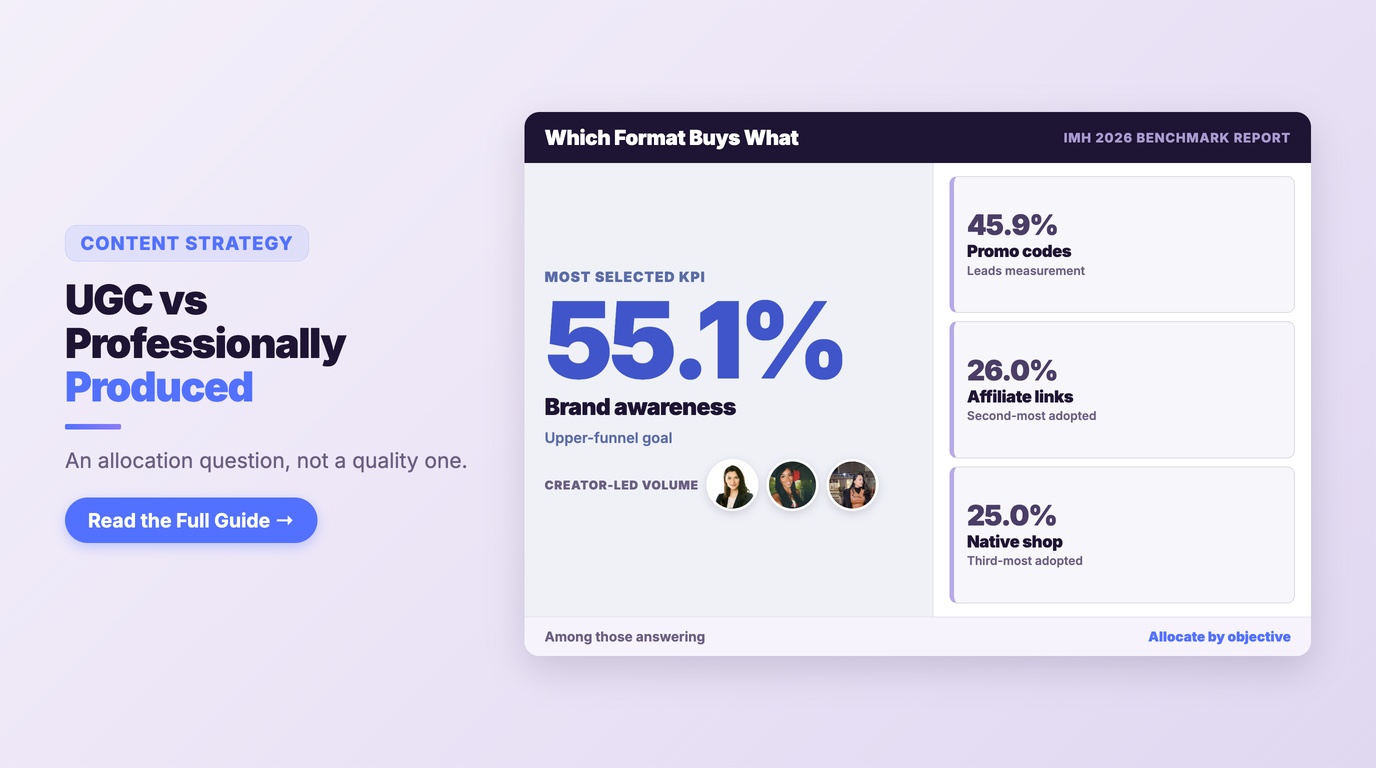
UGC vs Professionally Produced Content: When to Use Each and Why
A decision framework for allocating budget between creator-shot UGC and professionally produced content by objective, platform, and campaign type.
Learn MoreA decision framework for allocating budget between creator-shot UGC and professionally produced content by objective, platform, and campaign type.
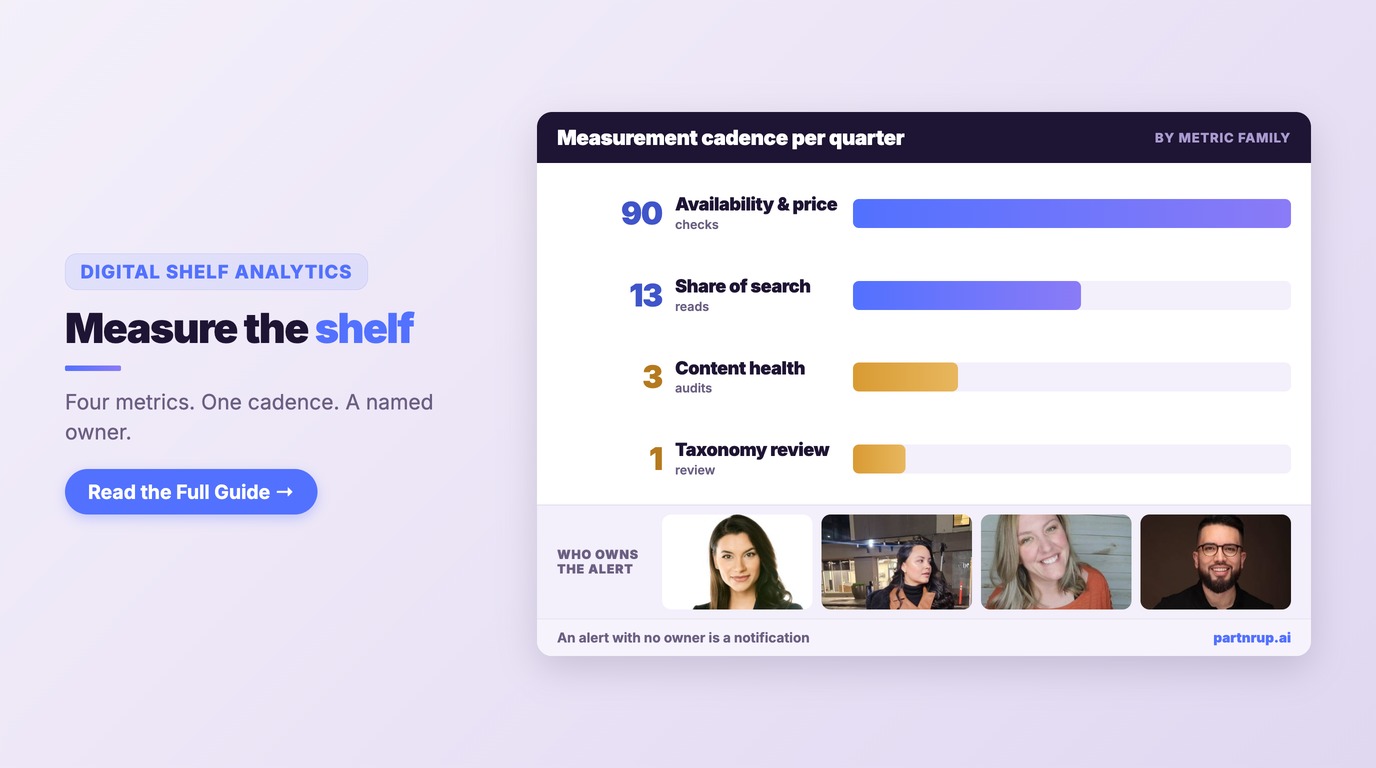
Learn MoreDigital shelf analytics means measuring product discovery on a defined cadence with defined action thresholds. What to track, how often, how to tell signal from noise, and where creator content fits as the response.
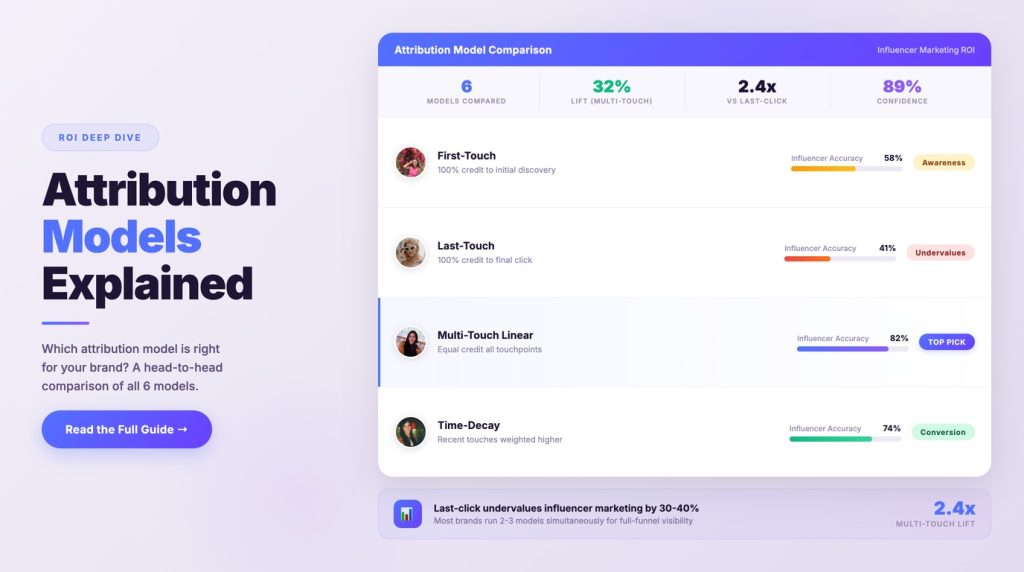
Learn MoreYou've decided to measure influencer marketing ROI — good. Now you face the next challenge: which attribution model do you use? First-touch? Last-touch? Multi-touch? Incrementality? Each model tells a different story about your campaigns, and choosing the wrong one can lead to decisions that hurt performance.
Learn MoreUS social commerce sales will surpass $100 billion in 2026 — a milestone that sounds enormous until you set it beside the $1.5 trillion Americans will spend on retail ecommerce overall. Social commerce is growing far faster, but it is still roughly one dollar in every fifteen spent online. That gap is the single most misunderstood fact in ecommerce strategy right now, and it explains why the “social is replacing your website” pitch keeps failing brands that believe it.
Learn More87.49% of marketers expect their influencer marketing budget to increase in 2026, and 72.22% plan increases of 50% or more (Influencer Marketing Hub 2026 Benchmark Report, 600+ respondents). At the same time, 66.3% run their programs entirely in-house. That combination is the whole story: dramatically more money flowing through influencer programs, managed by the same small teams using the same manual workflows they built when the channel was a pilot. Something has to give — and what is giving is the workflow itself.
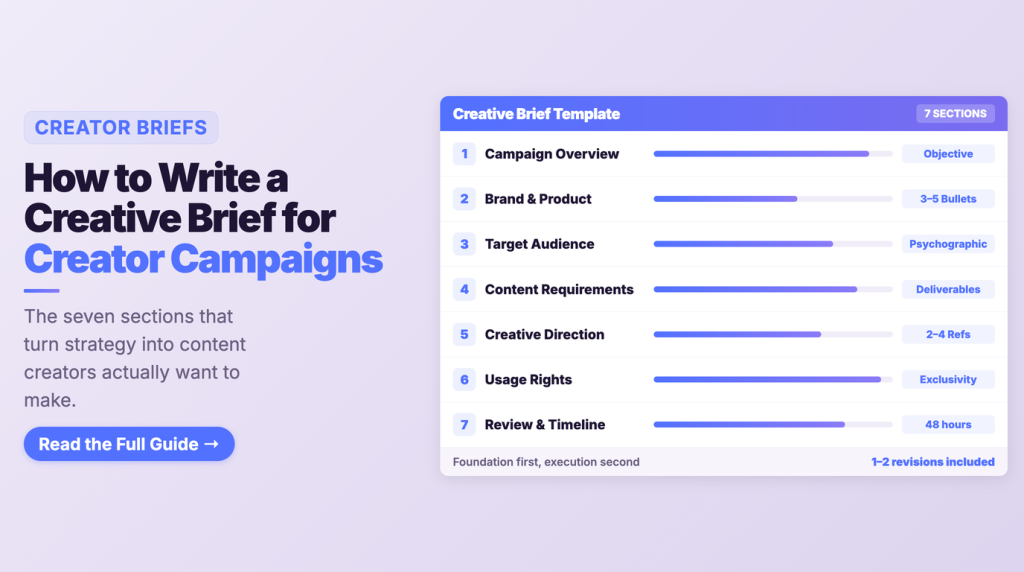
Learn More72% of creators say a poorly written brief is the number one reason campaign content misses the mark, according to a 2026 Creator Compensation & Workflow Report by IZEA. Yet most brand teams spend less than 15 minutes writing them — copying last quarter’s brief, swapping out product names, and hoping for the best.
Learn More72.2% of marketers who answered expect their influencer budgets to increase by 50% or more in 2026, according to the Influencer Marketing Hub Benchmark Report — yet fewer than one in five can confidently attribute upper-funnel brand impact to specific creator campaigns. The gap between spending and proving brand value is where brand lift studies enter the picture. But here’s the question most marketing teams avoid: do these studies actually work for influencer marketing, or are they an expensive vanity exercise?
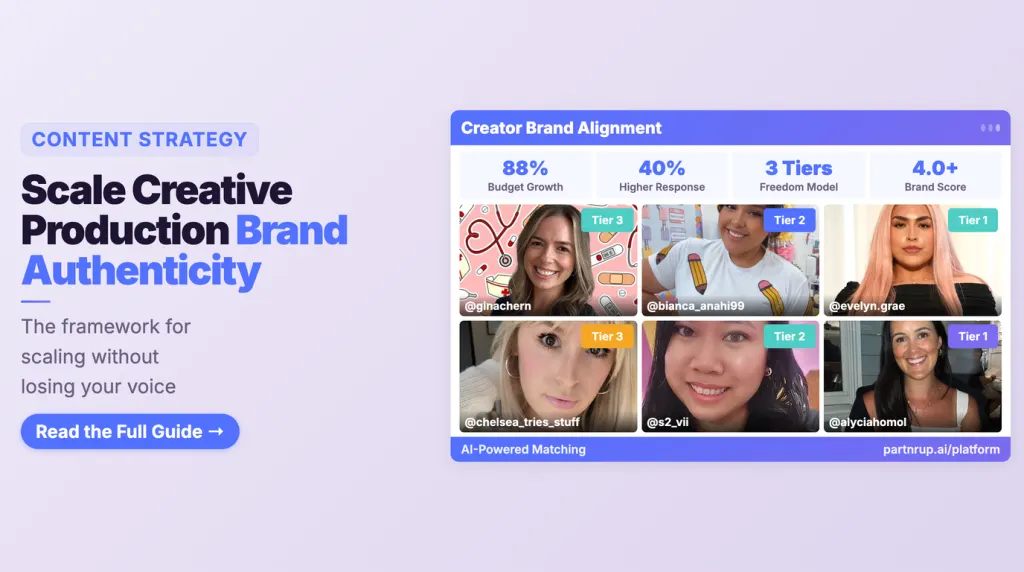
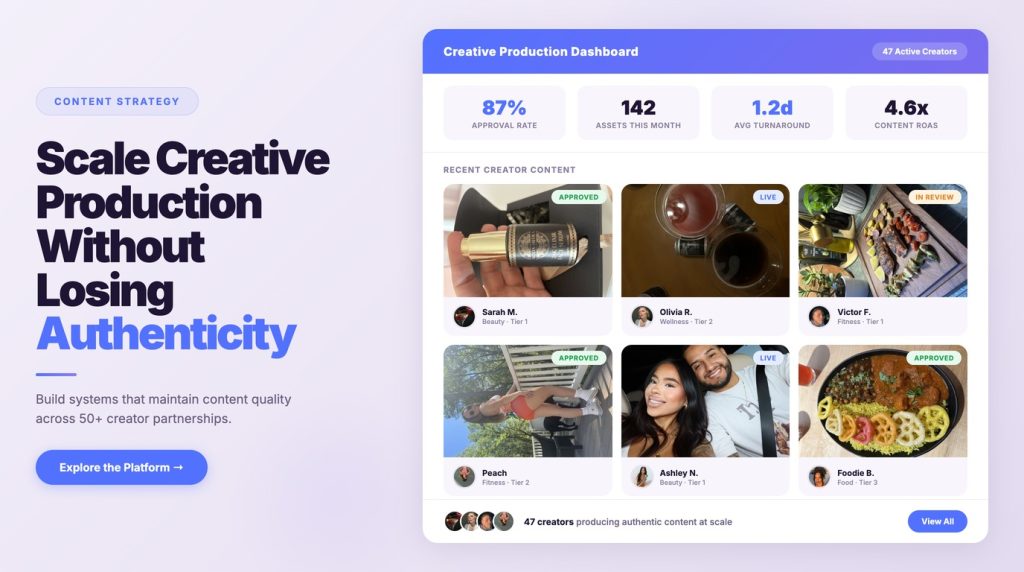
Learn More72.2% of marketers who answered expect their influencer budgets to increase by 50% or more in 2026, according to the Influencer Marketing Hub 2026 Benchmark Report — yet two-thirds of brands now run programs entirely in-house, according to the same report — meaning internal teams bear the full weight of scaling creative output while maintaining brand consistency. The gap between ambition and operational capacity is where most programs stall: more creators, more content, more channels, and brand voice slowly eroding with each new partnership.
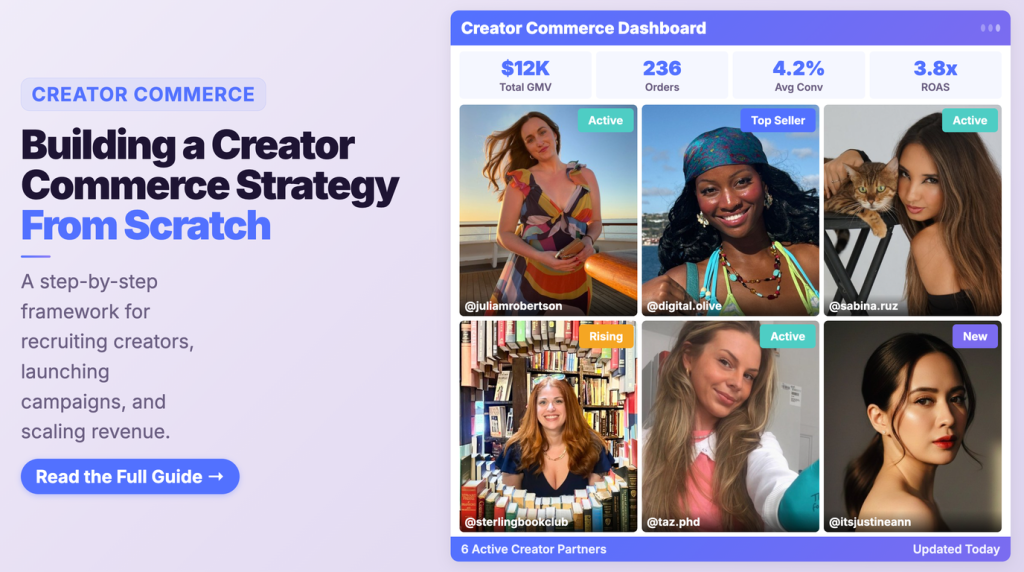
Learn More72.2% of marketers who answered expect their influencer budgets to increase by 50% or more in 2026, according to the Influencer Marketing Hub 2026 Benchmark Report — yet most brands still lack a repeatable framework for turning creator partnerships into actual revenue. The gap isn’t enthusiasm. It’s execution. Creator commerce sits at the intersection of influencer marketing, social commerce, and performance marketing, and building a strategy from scratch requires more than picking creators and hoping products sell.
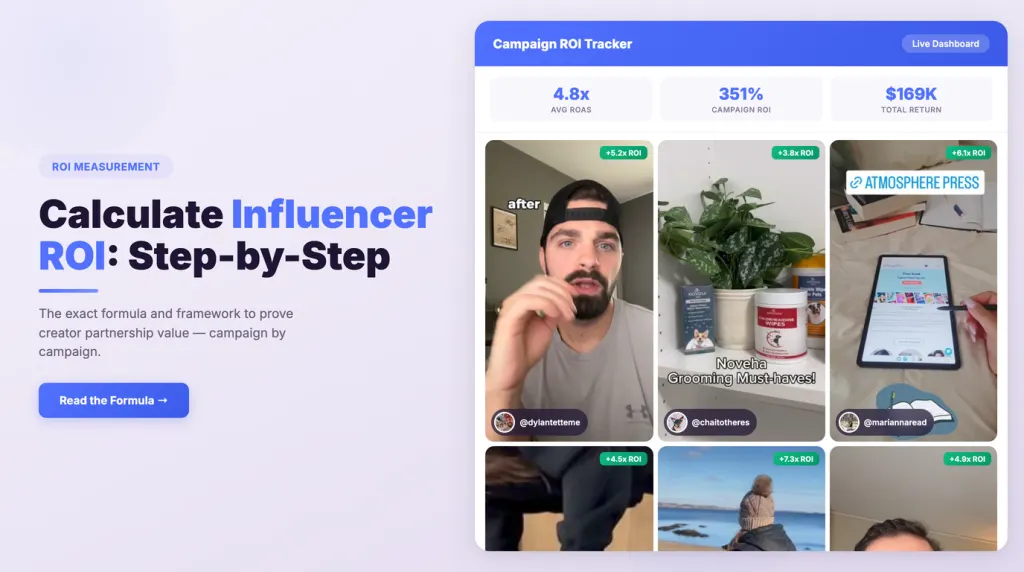
Learn More72.2% of marketers who answered expect their influencer budgets to increase by 50% or more in 2026, according to Influencer Marketing Hub’s 2026 Benchmark Report — yet most still can’t answer a simple question: what’s the actual return? The gap between spending and measuring isn’t a data problem. It’s a formula problem. Without a repeatable, step-by-step calculation framework, every campaign lives in a fog of vanity metrics and gut feelings.
Learn MoreThe creator economy surpassed $250 billion in total market value in 2025, and by every major industry forecast, 2026 is the year it reshapes how brands allocate marketing budgets entirely. Yet most marketing leaders still treat creator partnerships as a line item — not a growth channel. The gap between brands that understand the creator economy in 2026 and those still running one-off sponsorships is widening fast, and the data makes it impossible to ignore.
Learn MoreBrands running creator programs hit a wall around 15-20 active partnerships: content quality starts slipping, messaging drifts off-brand, and the team spends more time managing revisions than building relationships. A 2026 CreatorIQ benchmark report found that brands scaling beyond 25 creators per quarter saw a 34% increase in revision cycles — yet those that implemented structured creative systems maintained approval rates above 85% even at 100+ partnerships.
Learn More82% of marketers who switched from follower-based selection to AI-powered creator matching saw campaign ROI improve by 3x or more — yet most brands still choose influencers the same way they did in 2019: scrolling feeds, counting followers, and guessing. The gap between “good enough” creator selection and genuinely predictive matching is now the single biggest lever in influencer marketing performance.
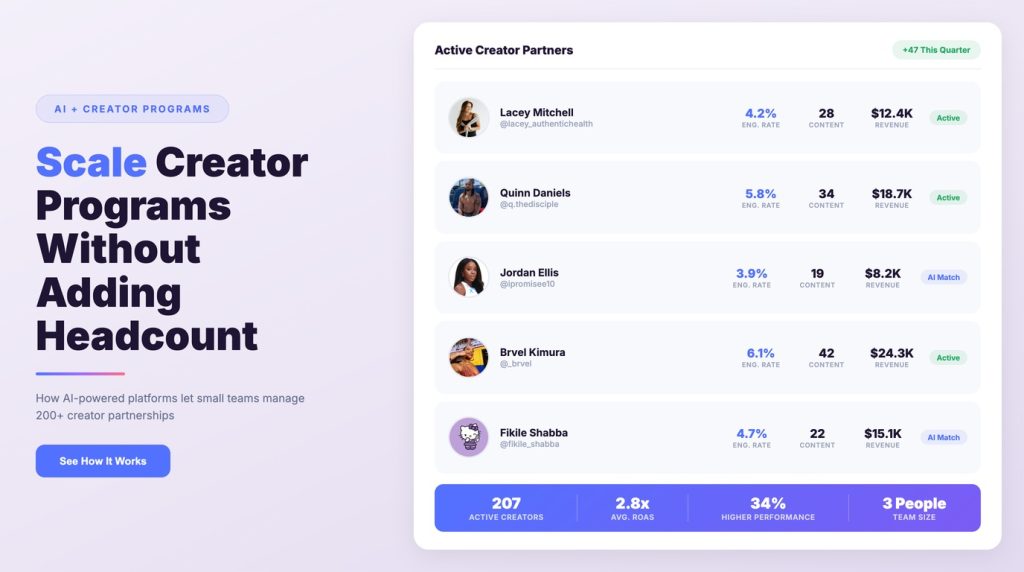
Learn More63% of marketing teams managing creator programs say they’ve hit a ceiling — not because of budget, but because of bandwidth. The average brand partnership manager juggles 47 creator relationships simultaneously, spending 11 hours per week on manual outreach alone. Meanwhile, the brands that are scaling to 200+ active creators without hiring additional staff share one thing in common: they’ve moved their workflow backbone to AI.
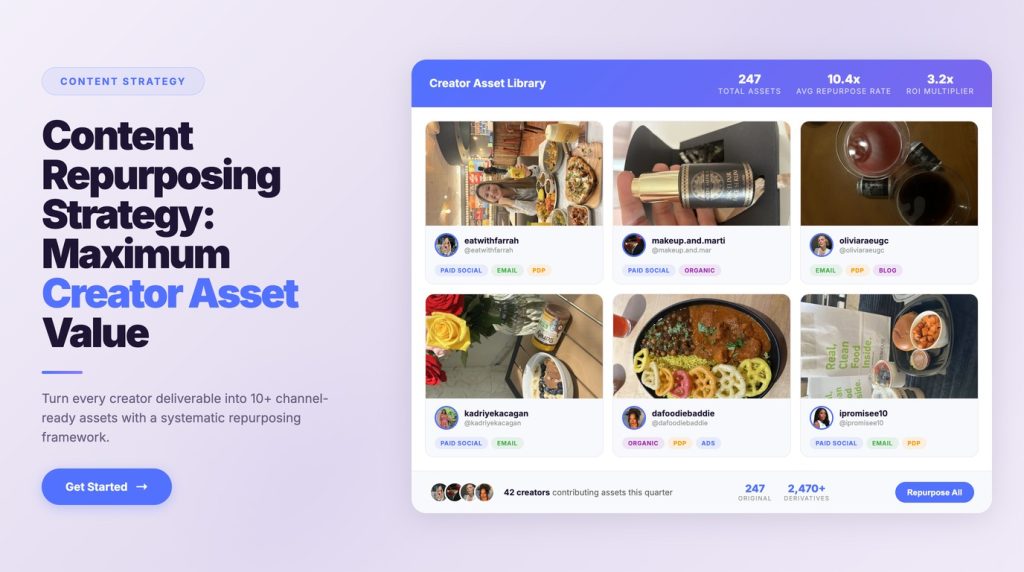
Learn MoreBrands that repurpose creator content across channels see 3x more engagement per dollar spent than those using assets once — yet 68% of marketing teams still treat every creator deliverable as a single-use asset. The result? Thousands of dollars in high-performing content sitting unused in shared drives, never reaching the audiences that would convert.
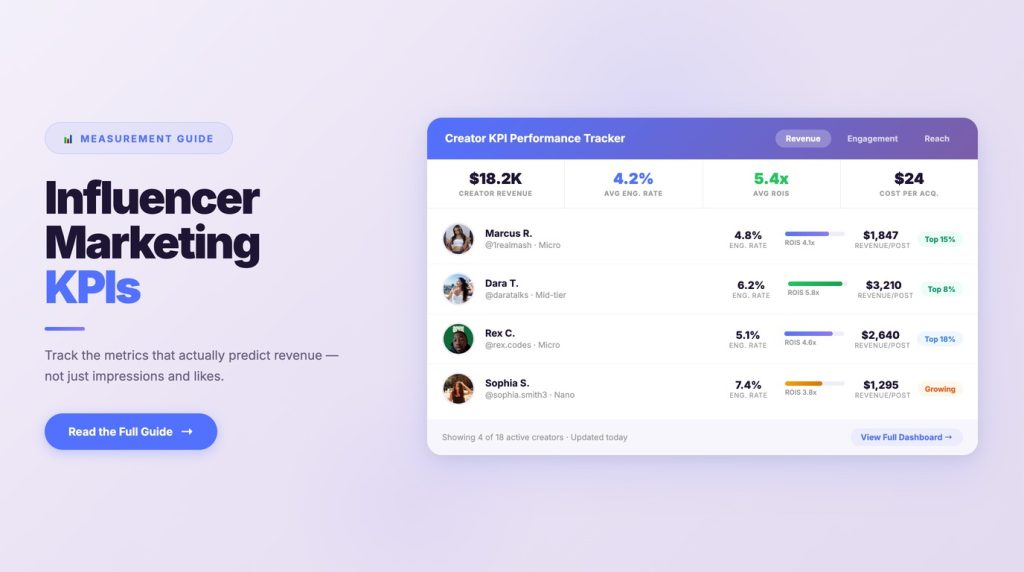
Learn More76% of marketing leaders say measuring influencer marketing performance is their biggest challenge, yet the problem isn’t a lack of data — it’s tracking the wrong metrics. Brands that still evaluate creators by follower count and likes are optimizing for vanity while their competitors optimize for revenue.
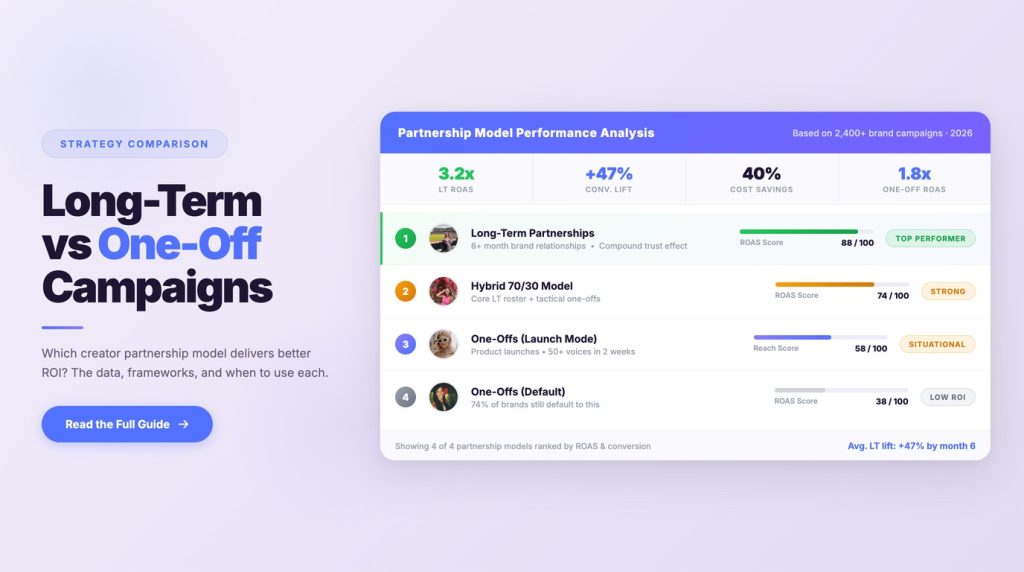
Learn MoreBrands that maintain creator partnerships for 6+ months see 47% higher ROI than those running one-off campaigns, according to recent industry data. Yet the majority of influencer marketing budgets still go toward transactional, campaign-by-campaign engagements — a structural inefficiency that leaves significant performance on the table.
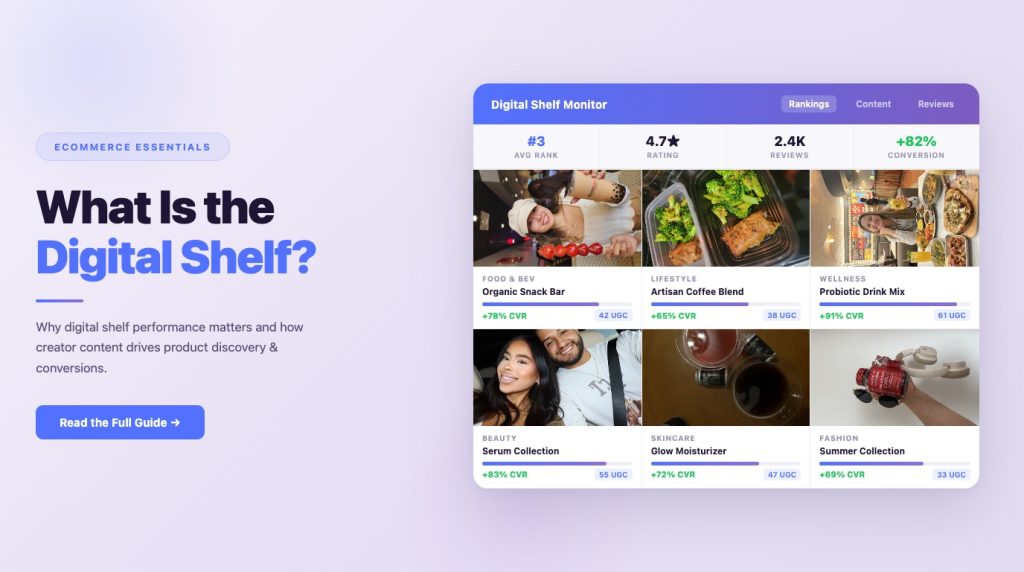
Learn More85% of consumers research products online before purchasing — even when they buy in-store, making the digital shelf the most important real estate in modern retail. Yet most brands still manage their digital shelf presence as an afterthought, treating product pages as static catalogs rather than dynamic, content-rich experiences that drive discovery and conversion.
Learn More72.2% of marketers who answered expect their influencer budgets to increase by 50% or more in 2026, according to Influencer Marketing Hub’s 2026 Benchmark Report — yet most still can’t answer a simple question: what’s the actual return? The gap between spending and measuring isn’t a data problem. It’s a formula problem. Without a repeatable, step-by-step calculation framework, every campaign lives in a fog of vanity metrics and gut feelings.
Learn More68% of creators say unclear briefs are the number one reason campaigns underperform, yet most brands still approach creative briefs as afterthoughts — vague one-pagers filled with brand guidelines but devoid of the strategic direction creators actually need to produce content that converts.
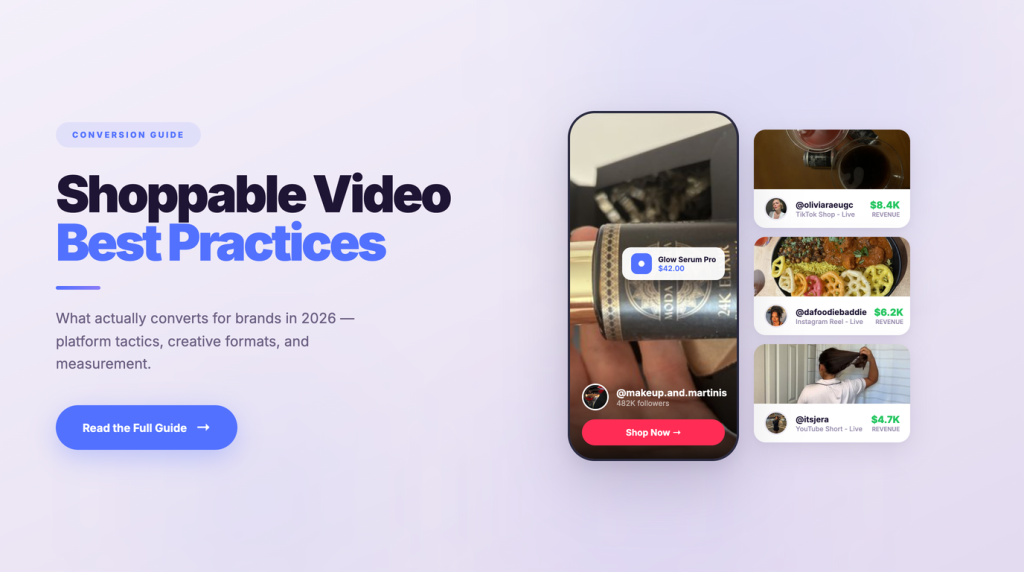
Learn MoreBrands using shoppable video report conversion rates 3-5x higher than traditional product pages, yet 72% of marketing teams say they’re still experimenting with the format rather than running optimized programs. The gap between early adopters and everyone else is widening — and the playbook for what actually converts has become clearer than ever.
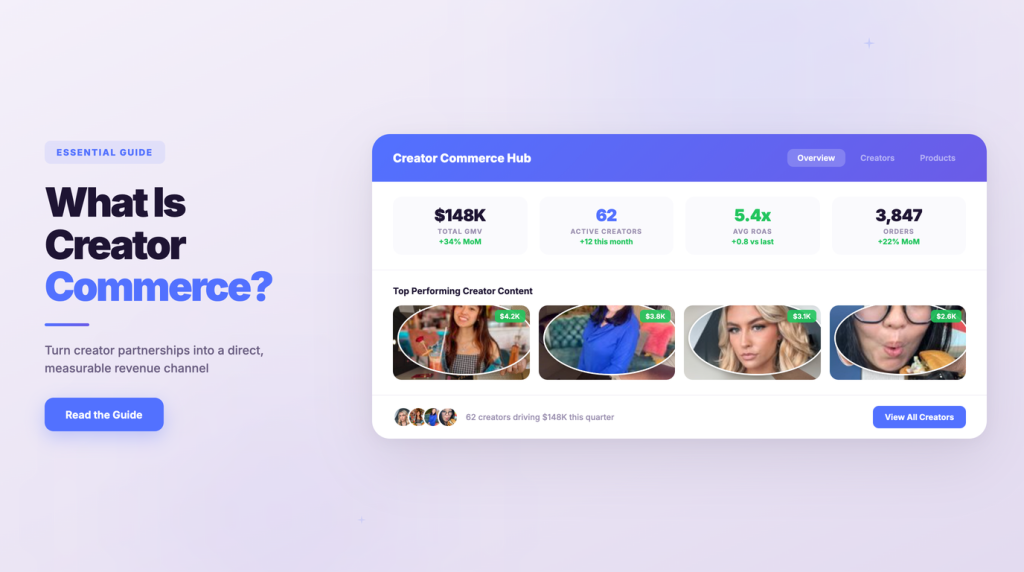
Learn MoreCreator commerce is projected to drive over $32 billion in U.S. retail sales by the end of 2026, yet most brands still treat creator partnerships as a top-of-funnel awareness play rather than a direct revenue channel. That disconnect is costing them market share — and fast.
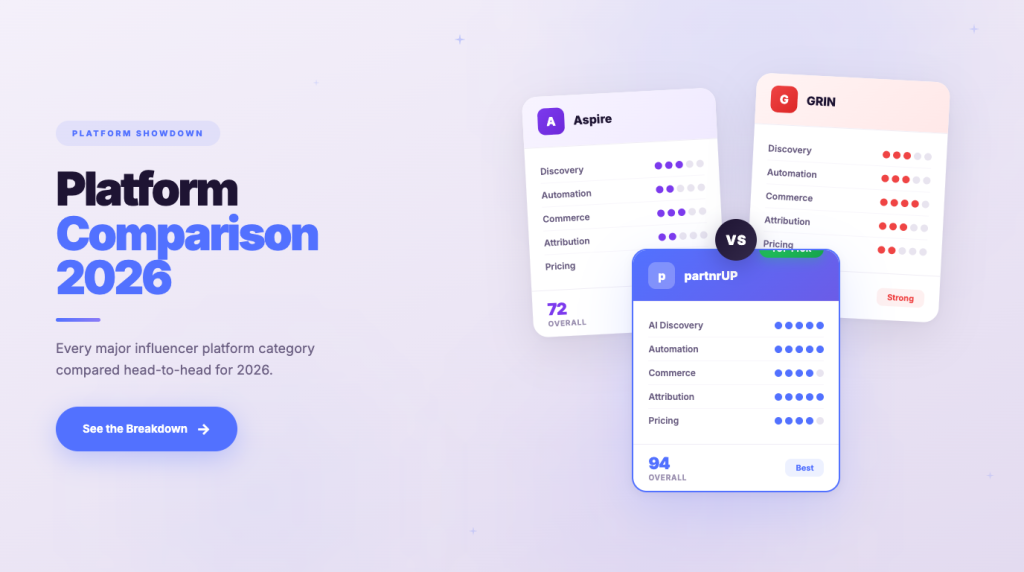
Learn More78% of brands say they’ve switched influencer marketing platforms at least once — and most cite the same reason: the platform promised discovery, but couldn’t deliver execution.
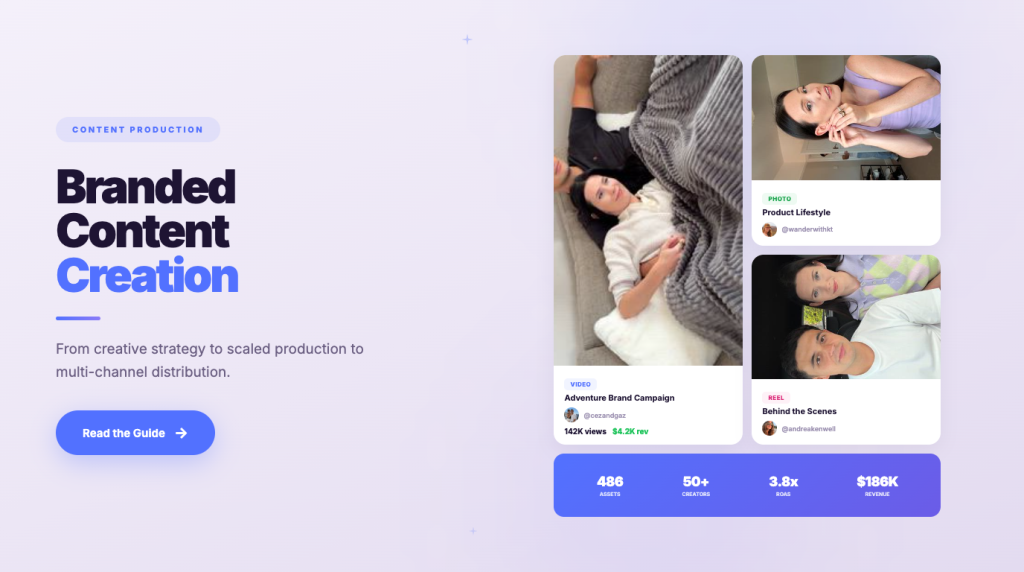
Learn MoreBranded content is the antidote to ad fatigue. While traditional advertising interrupts consumers mid-scroll, mid-show, or mid-article, branded content earns their attention. It delivers genuine value , entertainment, education, inspiration, with a brand’s fingerprints on it. The result? Audiences that choose to engage rather than skip.
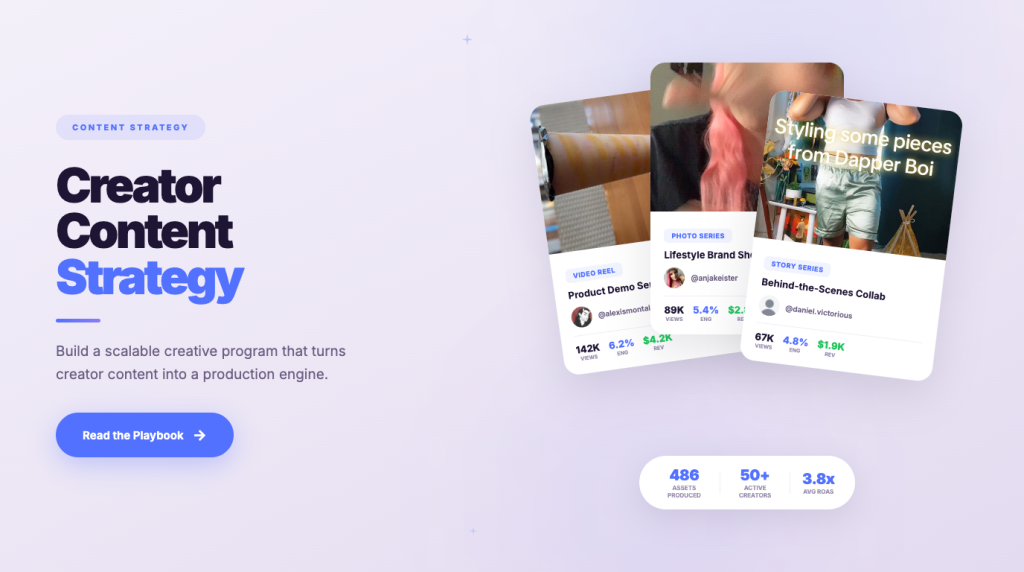
Learn MoreMost brands treat creator content as a tactic , a one-off campaign here, a reactive brief there, no system connecting any of it. They find a creator, approve some posts, watch the metrics for a week, and move on. Then they do it again from scratch next quarter.
Learn More
Whether it’s missed deadlines, off-brand content, or campaigns that simply don’t convert, the challenges are real. But here’s the thing – most of these failures aren’t due to bad creators or unrealistic brand expectations. They stem from three critical mistakes that are completely avoidable.
Learn MoreInfluencer Marketing in Fashion: Tactics, Trends, Tools & Opportunities for 2026
Learn MoreGaming Influencer Marketing in 2026: Tactics, Trends, Tools & Opportunities
Learn MoreInfluencer Marketing for SaaS & Technology: Tools, Mistakes, Opportunities & Forward-Looking Trends
Learn MoreThe Future of Influencer Marketing in Ecommerce: Tools, Trends, and Tactical Strategies for 2026
Learn MoreInfluencer Marketing for Real Estate Agents: The Complete 2026 Guide to Creator Partnerships and Property Marketing Success
Learn MoreInfluencer Marketing for Finance and Fintech: The Complete Guide to Tools, Mistakes, Opportunities, and Future Trends
Learn MoreInfluencer Marketing for Food and Beverage Brands: Tools, Mistakes, Opportunities & Trends for 2026
Learn MoreInfluencer Marketing for Fitness and Wellness Brands: 2026 Tactics, Trends, Tools & Opportunities
Learn MoreInfluencer Marketing for Beauty and Skincare Brands: 2026 Trends, Tools, Mistakes & Opportunities
Learn MoreFamily and Parenting Influencer Marketing 2026: Tactical Strategies, Essential Tools, and Forward-Looking Opportunities
Learn MorePet Influencer Marketing Trends 2026: Tactical Strategies, Essential Tools, and Forward-Looking Opportunities
Learn MoreThe fashion industry stands at a pivotal moment in influencer marketing. With creator marketing budgets experiencing a 171% increase in 2025 and continuing to grow in 2026, fashion brands face both unprecedented opportunities and complex challenges in this evolving landscape. While traditional advertising channels continue to decline in effectiveness, authentic creator partnerships have become the cornerstone of modern fashion marketing strategies.
Learn More© 2026 Expo Communications, Inc. All right reserved.