




Upfluence has established itself as a comprehensive influencer marketing platform, offering businesses an all-in-one solution for discovering creators, managing campaigns, and tracking ROI. With its vast database of influencers, robust e-commerce integrations, and suite of campaign management tools, it serves thousands of brands looking to scale their creator partnerships.
But as the influencer marketing landscape evolves, different businesses have different needs. Some require AI-powered automation to eliminate manual tasks entirely. Others need enterprise-grade governance for global operations. And some simply want to test influencer marketing without committing to annual contracts.
That’s where this guide comes in. Whether you’re looking to:
- Automate your entire influencer workflow with AI agents instead of manual tools
- Implement enterprise-level governance and integration for large-scale operations
- Find creators without the complexity of enterprise platforms
- Build lasting creator relationships for ecommerce success
- Unify influencer marketing with your broader social media strategy
- Detect fraud and verify creator authenticity before partnerships
- Test influencer marketing risk-free on Shopify
We’ll explore specialized alternatives that excel in these specific areas.
This isn’t about finding a “better” solution; it’s about finding the right fit for your unique needs, team size, and growth stage. Let’s dive into the platforms that can transform how you approach influencer marketing.
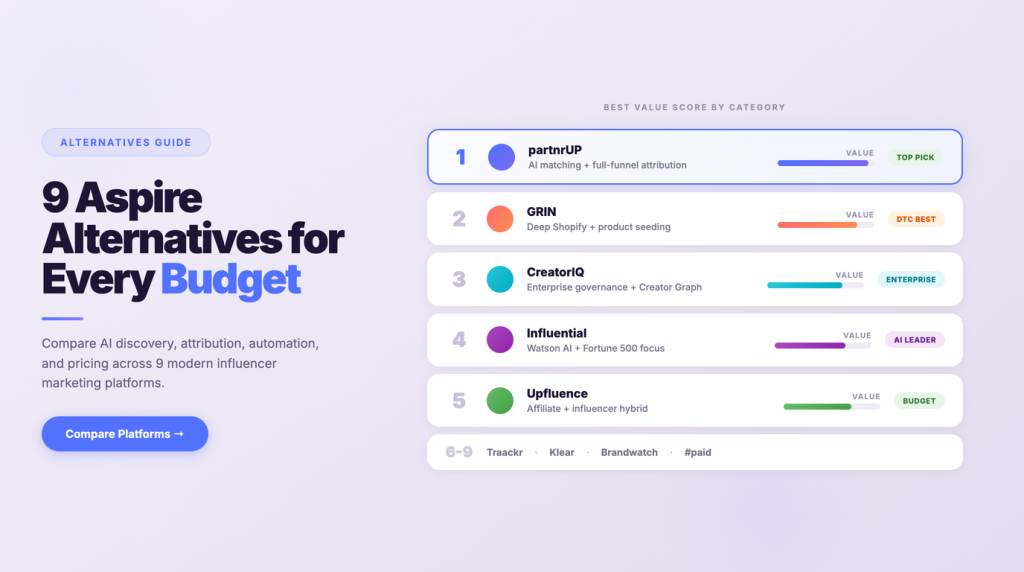
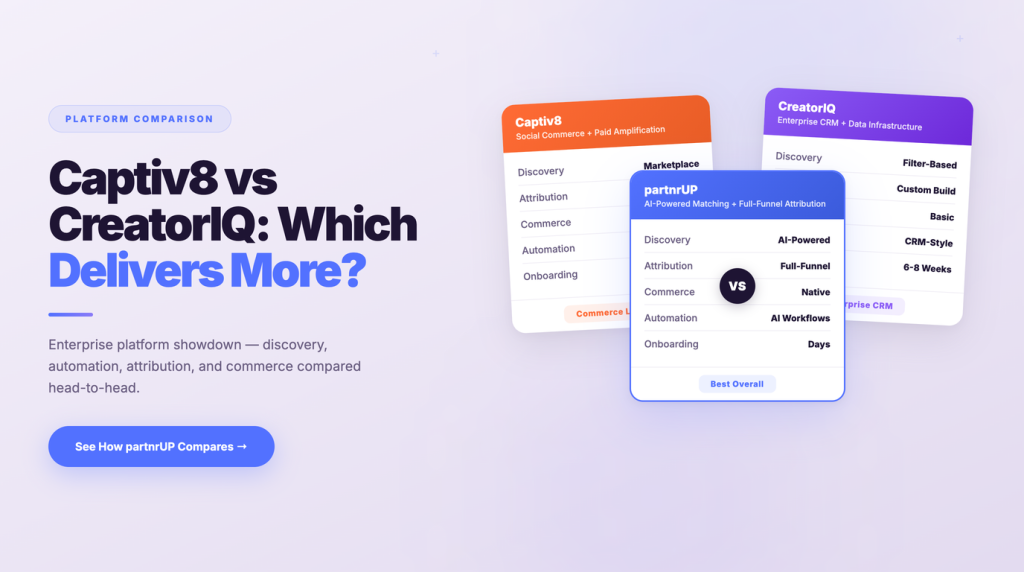
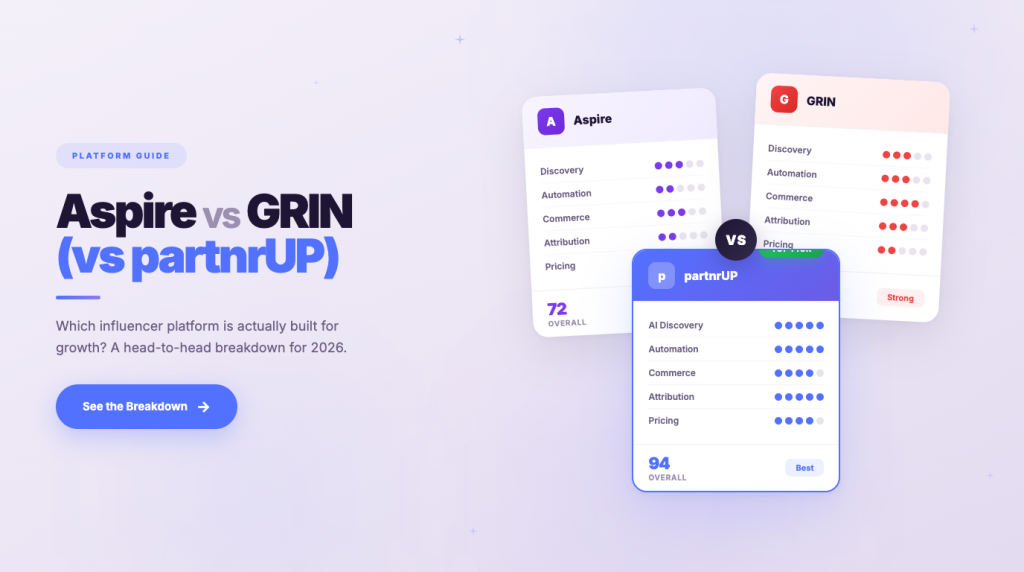
The Best Upfluence AlternativesStarts at: $0/moThen: $299/moCapterra Score: N/A PartnrUPBest Alternative for AI-Powered Campaign AutomationWe chose partnrUP because its AI agents eliminate manual work by automating the entire influencer marketing lifecycle, from discovery to payment, making it ideal for teams wanting to scale without adding headcount. Starts at: CustomG2 Score: 4.6Capterra Score: 4.5 CreatorIQBest Alternative for Enterprise-Grade Governance & IntegrationCreatorIQ provides institutional-grade controls, deep API integrations, and sophisticated measurement frameworks that Fortune 500 companies require for managing creator marketing at scale. Starts at: $199/moG2 Score: 4.9Capterra Score: 4.9 ModashBest Alternative for SMB-Friendly Discovery Without ComplexityModash offers access to 350M+ creator profiles with transparent pricing and intuitive workflows, perfect for small teams needing powerful discovery without enterprise bloat. Starts at: ~$2000/moG2 Score: 4.6Capterra Score: 3.2 AspireBest Alternative for Relationship-Driven Ecommerce CampaignsAspire combines proactive search with an inbound creator marketplace, enabling brands to build sustainable creator communities that drive measurable ecommerce revenue. Starts at: $199/seat/moG2 Score: 4.4Capterra Score: 4.4 Sprout Social Influencer MarketingBest Alternative for Unified Social Media ManagementSprout Social integrates influencer marketing into a comprehensive social suite, breaking down silos between creator campaigns and broader social strategy. Starts at: $299/moG2 Score: 4.6Capterra Score: 4.8 HypeAuditorBest Alternative for Analytics-First Vetting & Fraud DetectionHypeAuditor specializes in detecting fake followers and fraudulent engagement with 95.5% accuracy, protecting brands from wasting budget on inauthentic partnerships. Starts at: $0Then: 2.9% feesG2 Score: 4.4 Shopify CollabsBest Alternative for Risk-Free Shopify TestingShopify Collabs offers zero upfront costs with performance-based pricing, allowing Shopify merchants to test influencer marketing without platform fees or contracts.
What is Upfluence?
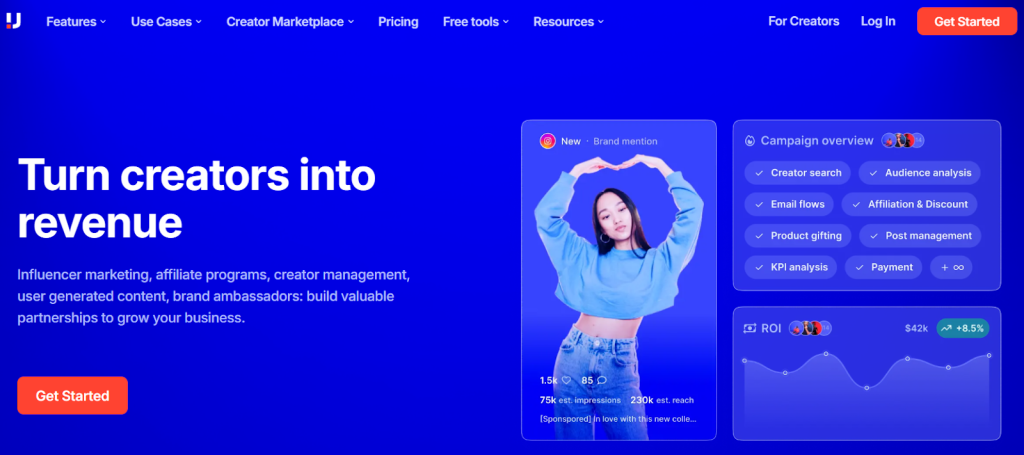
Upfluence is a comprehensive, data-driven influencer marketing platform designed to help brands of all sizes discover, connect with, and manage influencer partnerships. Founded in 2013, the platform serves over 1,600 clients worldwide as a full-suite solution. Its key features include:
- Vast influencer database with millions of profiles across Instagram, TikTok, YouTube, Facebook, Twitter, Twitch, and blogs
- AI-powered discovery with 20+ advanced search filters and audience analytics
- Campaign management tools for workflow automation and content approval
- Deep e-commerce integrations with Shopify, WooCommerce, and Magento
- Affiliate marketing capabilities with promo code generation and commission tracking
- Live Capture feature to identify influential customers
- Performance analytics and ROI measurement
When brands use Upfluence, they gain access to a unified platform where influencer discovery flows into campaign management, which connects to payment processing and detailed analytics. The platform’s strength lies in its comprehensive approach: everything from finding creators to measuring sales attribution happens within one integrated system.
However, as influencer marketing matures and businesses develop specific needs, you might find yourself requiring more specialized capabilities: deeper automation through AI, enterprise-grade governance, simplified workflows for small teams, or risk-free testing options. That’s why we’re exploring alternatives that excel in these particular areas.
How We Curated Our List of Upfluence Alternatives
After testing Upfluence ourselves and researching the influencer marketing landscape, we identified specific areas where businesses often need different approaches or deeper capabilities. While Upfluence excels as a comprehensive platform, we noticed organizations looking for:
- Full automation through AI agents rather than manual tool operation
- Enterprise-level governance and integration capabilities for global scale
- Simplified discovery without the complexity of large platforms
- Relationship-focused tools for building creator communities
- Unified social media management that includes influencer marketing
- Specialized fraud detection and authenticity verification
- Risk-free testing options without upfront commitments
Each platform on this list leads in one of these specific areas. You might use them to replace Upfluence entirely or to complement it with specialized capabilities your growing business needs.
| DISCLAIMER: We aren’t covering every influencer marketing platform in the market! Our focus is on highlighting the best alternatives that address specific limitations or use cases where Upfluence’s comprehensive approach might not be the ideal fit. |
|---|
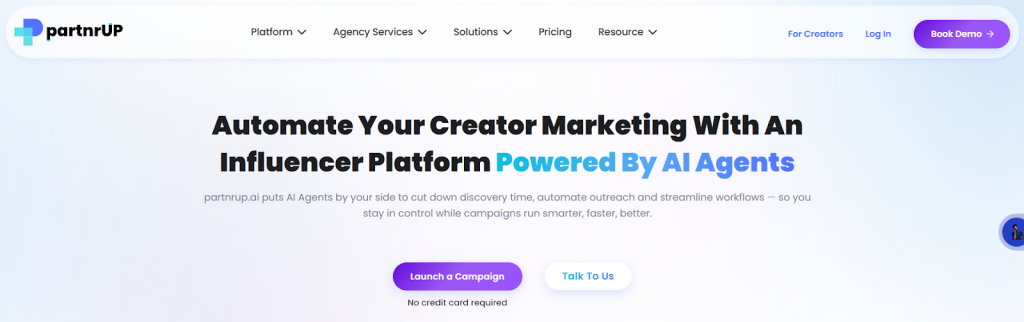
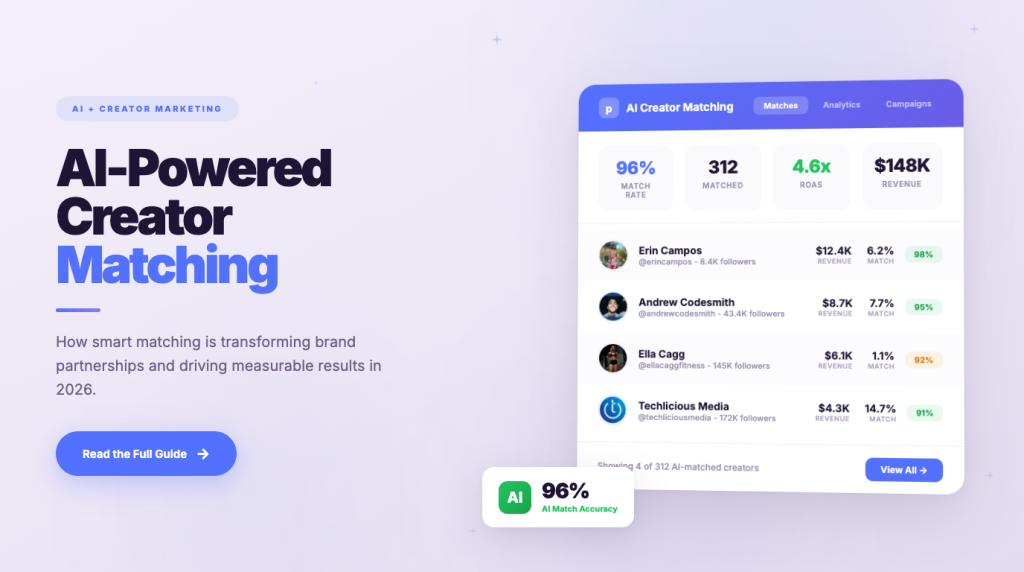
partnrUP isn’t a classic influencer marketing platform. Instead, it is an AI-powered system that deploys four specialized AI agents to automate your entire campaign lifecycle.Unlike traditional platforms that rely on static databases and require manual operation, partnrUP actively sources fresh, relevant influencers in real-time for each specific campaign. Its key features include:
- Three AI Agents: Kyle sources creators, Lilly recruits them, and Aaron handles administration
- Real-time creator sourcing: Actively scours Instagram, TikTok, LinkedIn, Google, and the web to find perfect candidates, even if they’re not in any existing database.
- 30-minute activation: Creators start applying within 30 minutes of campaign launch
- Automated workflows: From discovery through payment, reducing manual work by up to 70%
- White-label agency solution: Multi-brand workspaces with flexible billing and custom branding
- Retail syndication: Automatically pushes top-performing content to Amazon, Shopify, and other product pages
- $0 Free plan: No subscription required to begin – only pay based on actual campaign activity
For brands wanting to scale influencer marketing without adding headcount, partnrUP offers a fundamentally different approach from Upfluence’s database-driven platform.
Why Choose partnrUP Over Upfluence for AI-Powered Automation
While Upfluence provides comprehensive tools including its own Jace AI automation suite, partnrUP takes a revolutionary approach: AI agents that act as your virtual influencer marketing team, not just tools you operate. Here’s how partnrUP transforms influencer marketing:
AI Agents: Your Virtual Influencer Marketing Team
partnrUP deploys four specialized AI agents that work together autonomously to manage your entire influencer program:
Kyle actively sources creators by scouring Instagram, TikTok, LinkedIn, Google, and the broader web in real-time based on your campaign criteria. Unlike database-dependent platforms that force you to work within their existing creator network, Kyle finds fresh, relevant influencers for each campaign – whether they exist in any database or not. This ensures you’re always working with current, active creators perfectly matched to your specific needs.
Lilly personalizes outreach and handles all recruitment, sending tailored invitations and managing follow-ups automatically. The system learns from every acceptance and rejection, continuously improving targeting and messaging that resonates.
Aaron manages administrative tasks including communication threading, task management, and automated payments through the governor system that determines when creators have completed all requirements.
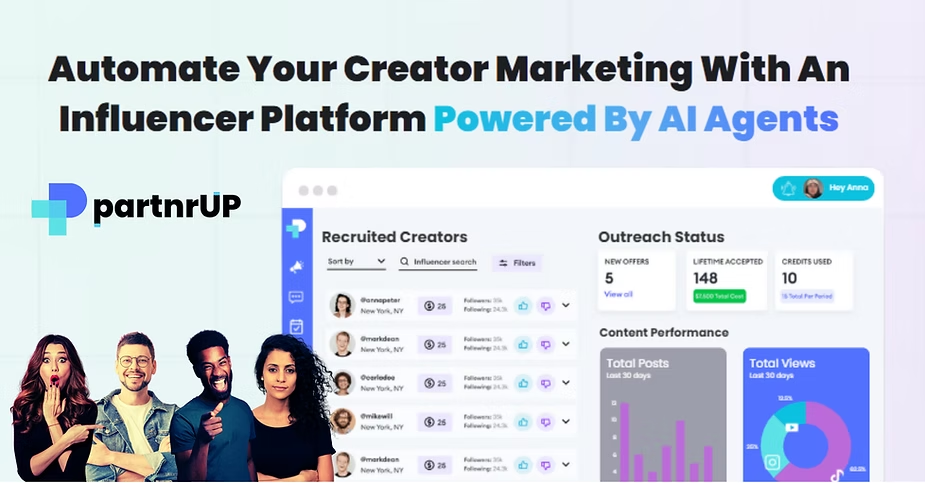
While Upfluence offers AI-powered features through Jace AI for discovery, outreach, and workflow automation, partnrUP’s approach centers on autonomous AI agents that function as team members rather than tools. With dedicated agents like Kyle (creator discovery), Lilly (recruitment & contracting), and Aaron (campaign management), brands can coordinate influencer campaigns through AI-driven workflows instead of manual execution.
⚡ partnrUP in Action: Launch a campaign by defining your goals, target audience, and budget. Kyle identifies and vets relevant creators based on your criteria, Lilly manages outreach and recruitment workflows, and Aaron coordinates deliverables, communication, and campaign timelines. Instead of managing multiple tools or manual workflows, campaigns are executed through coordinated AI agents that handle discovery, recruitment, and management within a single system.
Adaptive Learning: Campaigns That Get Smarter Over Time
partnrUP’s AI coordination layer continuously refines how campaigns are executed based on your inputs. As you approve creators, update briefs, and manage deliverables, the system adapts workflows and recommendations to better align with your brand, audience, and campaign requirements over time.
This learning happens across all agents: Kyle sources better-matched creators, Lilly refines outreach messaging that resonates, and Aaron optimizes support functions. Over time, your account becomes uniquely calibrated to your brand’s specific needs.
⚡ partnrUP in Action: After running three campaigns, partnrUP has learned that your brand performs best with micro-influencers in sustainable fashion who create video content. Kyle automatically prioritizes sourcing these creators in future searches, Lilly achieves higher acceptance rates with refined outreach, and Aaron predicts which content will drive the most conversions based on past performance.
Retail Syndication: From Social Content to Sales
partnrUP supports content distribution across key commerce and marketing channels, including integrations that allow brands to extend creator content beyond social platforms and into retail and product-focused environments.
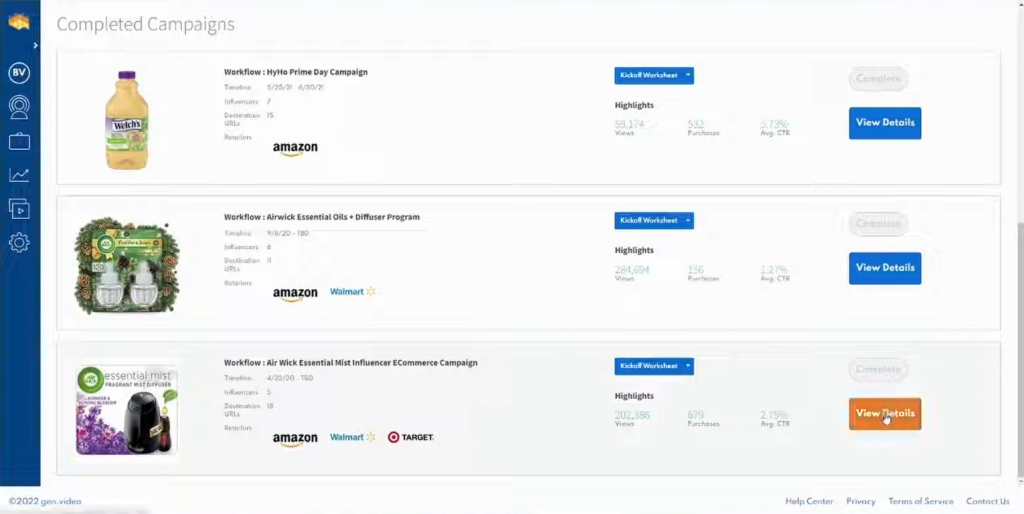
The platform tracks which content drives the highest engagement and conversions, then automatically syndicates these assets to your retail pages with rights management included in standard campaign terms. No developer involvement needed, no manual uploading required.
While Upfluence excels at e-commerce integration for tracking sales, it doesn’t offer this direct content-to-commerce syndication capability that turns social proof into sales conversions.
⚡ partnrUP in Action: An influencer creates an unboxing video that generates exceptional engagement. partnrUP automatically identifies this high-performing content, manages the necessary rights (included in standard campaign terms), and pushes it to your Amazon product page, where it immediately begins driving higher conversion rates.
partnrUP Pricing
partnrUP offers transparent, outcome-aligned pricing designed to scale with your needs – no subscription required to start:
Free: $0/month
Creator Marketplace + Management Tools
Ideal for teams getting started with free influencer marketing tools.
- 1 active monthly campaign
- 10 active monthly influencers
- No AI recruitment volume
- No audience reports
- Campaign analytics included
- 1 brand workspace
- AI chat support
- Access to creator marketplace
- AI campaign brief generation
- Campaign briefs & timelines
- Creator CRM via manual invite only
- AI campaign management
- AI creator profile vetting
- Contracts & agreements
- In-app & SMS messaging
- Campaign budgeting
- Payments & W9 issuing
- AI coordination fee: 20%
Pro: $299/month
AI-Powered Creator Acquisition
Ideal for teams looking to streamline influencer outreach.
- 3 active monthly campaigns
- Unlimited active monthly influencers
- Standard recruitment volume
- Advanced audience report access
- Campaign analytics included
- 1 brand workspace
- AI chat + email support
- Access to creator marketplace
- AI campaign brief generation
- Campaign briefs & timelines
- Creator CRM
- AI campaign management
- Automated outreach emailing
- AI creator profile vetting
- Contracts & agreements
- In-app & SMS messaging
- Campaign budgeting
- Amazon Related Video Syndication
- Payments & W9 issuing
- AI coordination fee: 10%
Growth: $699/month
Scale Recruitment Across Campaigns
Ideal for teams running ongoing campaigns and partnerships.
- 5 active monthly campaigns
- Unlimited active monthly influencers
- Double recruitment volume
- Advanced audience report access
- Campaign analytics included
- 1 brand workspace
- Priority support
- Gifting programs included
- Access to creator marketplace
- AI campaign brief generation
- Campaign briefs & timelines
- Creator CRM
- AI campaign management
- Automated outreach emailing
- AI creator profile vetting
- Contracts & agreements
- In-app & SMS messaging
- Campaign budgeting
- Amazon Related Video Syndication
- Payments & W9 issuing
- AI coordination fee: 10%
Enterprise: Custom pricing
Multi-Brand Support + Custom Workflows
Ideal for large organizations and agencies at scale.
- Unlimited active monthly campaigns
- Unlimited active monthly influencers
- Custom recruitment volume
- Advanced audience report access
- Campaign analytics included
- 3+ brand workspaces
- Dedicated team support
- Gifting programs included
- Access to creator marketplace
- AI campaign brief generation
- Campaign briefs & timelines
- Creator CRM
- AI campaign management
- Automated outreach emailing
- AI creator profile vetting
- Contracts & agreements
- In-app & SMS messaging
- Campaign budgeting
- Amazon Related Video Syndication
- Payments & W9 issuing
- AI coordination fee: 0–10%

Enterprise and agency plans are available with custom pricing, including white-label capabilities with multi-brand workspaces and flexible billing per workspace. All plans include access to all four AI agents. Managed services are available for brands wanting completely hands-off execution.
Who Should Use partnrUP?
Choose partnrUP if:
- You want to scale influencer marketing without adding headcount. The AI agents handle tasks that would typically require significant manual effort, allowing small teams to run enterprise-scale programs.
- You prefer AI agents working for you rather than tools you operate. If you’d rather set objectives and let Kyle source, Lilly recruit, and Aaron manage – instead of manually searching databases, crafting emails, and tracking campaigns – partnrUP’s approach will transform your workflow.
- You need fresh, campaign-specific creators, not the same recycled database. Kyle’s real-time sourcing finds relevant influencers actively creating content now, not pulling from static lists every brand uses.
- You’re an agency needing white-label solutions and flexible billing. The platform eliminates the burden of handling payment processing between brands and creators with workspace-level billing management.
Ready to let AI agents transform your influencer marketing? Start free with partnrUPand see how Kyle, Lilly, and Aaron can save you 50+ hours while delivering better results.
2. CreatorIQ – Best Alternative for Enterprise-Grade Governance & Integration
CreatorIQ is a cloud-based influencer marketing platform specifically engineered for large enterprises and global agencies managing creator marketing at institutional scale. The platform serves Fortune 500 companies with sophisticated requirements. Its key features include:
- Enterprise-grade creator discovery across vetted profiles
- Deep API integrations with various enterprise systems
- Proprietary fraud detection with “Integrity Quotient” scoring
- Advanced measurement frameworks with competitive benchmarking
- Global program management with multi-currency support
- ISO/IEC 27001:2022 certification with 99.9% uptime SLA
For organizations requiring institutional controls and deep tech stack integration, CreatorIQ provides infrastructure that Upfluence’s mid-market focus doesn’t fully address.
Why Choose CreatorIQ Over Upfluence for Enterprise Needs
CreatorIQ differentiates itself through its institutional focus on enterprise requirements:
- Enterprise Infrastructure & Governance
CreatorIQ offers sophisticated role-based access controls, SAML SSO for enterprise identity management, and comprehensive security features that procurement departments require. The platform’s ISO/IEC 27001:2022 certification demonstrates formal commitment to security that Fortune 500 companies mandate. While Upfluence has achieved SOC 2 compliance, CreatorIQ’s governance layer includes features essential for internal audit requirements that large enterprises need.
- Deep Technical Integration
Where Upfluence functions as a largely self-contained platform, CreatorIQ serves as a data hub connecting creator marketing to the entire enterprise stack. Its JSON-based public API enables custom solutions and data warehouse integration. The platform offers connections with various enterprise tools and Google Analytics integration answers how creator traffic performs versus other channels. This integration depth means creator marketing data can flow into your existing analytics infrastructure alongside every other marketing channel.
- Sophisticated Measurement & Benchmarking
CreatorIQ recently launched the industry’s first standardized benchmarking suite and Social Media Value (SMV) metric for ROI forecasting. The platform’s competitive benchmarking tracks performance against direct competitors, measuring “Share of Influence” in your market. This competitive intelligence provides the comprehensive view that enterprise CMOs demand when allocating eight-figure budgets.
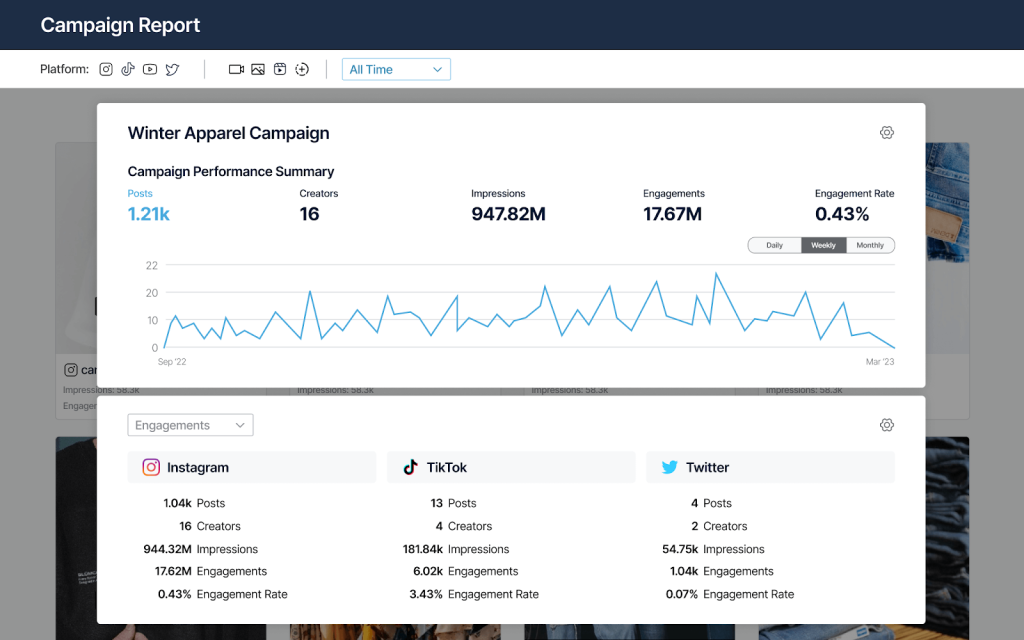
🏅 NOTE: We also evaluated Traackr and AspireIQ for enterprise needs. While Traackr excels at creator relationship intelligence and AspireIQ offers strong community features, CreatorIQ provides the most comprehensive enterprise infrastructure for institutional-grade governance, deep integration, and sophisticated measurement frameworks.
CreatorIQ Pricing
CreatorIQ operates on custom quote-based pricing determined by organization size, user volume, and required features. Annual contracts typically range from high five figures to low six figures. Implementation services and ongoing customer success management are commonly included in enterprise contracts.
Who Should Use CreatorIQ?
Choose CreatorIQ if:
- You manage creator marketing across multiple brands, regions, or business units with complex organizational structures
- You require deep integration with enterprise systems and need creator data in unified executive dashboards
- Your compliance teams mandate specific security certifications, audit capabilities, and formal approval workflows
3. Modash – Best Alternative for SMB-Friendly Discovery Without Complexity
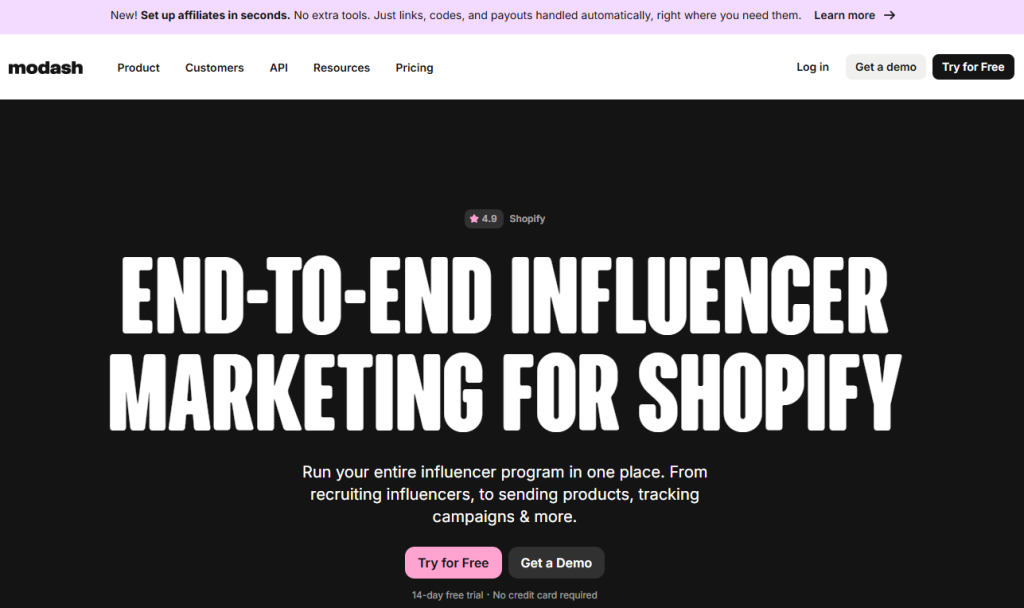
Modash delivers robust creator discovery and relationship management in a streamlined package designed for small-to-medium businesses. The platform provides powerful tools without enterprise complexity. Its key features include:
- Database of 350M+ creator profiles (every public profile with 1K+ followers)
- AI-powered content search with traditional demographic filters
- Built-in CRM for relationship management
- Automated campaign monitoring including Stories
- Transparent pricing starting at $199/month with 14-day free trial
For growing brands needing comprehensive discovery without lengthy onboarding or enterprise price tags, Modash offers capabilities that Upfluence’s more complex platform might overcomplicate.
Why Choose Modash Over Upfluence for SMB Simplicity
Modash stands out for small and mid-market teams in several ways:
- Accessible Database Without Limitations
Modash indexes every public social account with 1,000+ followers across Instagram, TikTok, and YouTube, providing 350M+ profiles. This comprehensive coverage is especially valuable for finding niche micro-influencers who may not be in Upfluence’s curated database. The database updates several times monthly, with basic data refreshed weekly and deeper analytics monthly.
- Transparent, Flexible Pricing
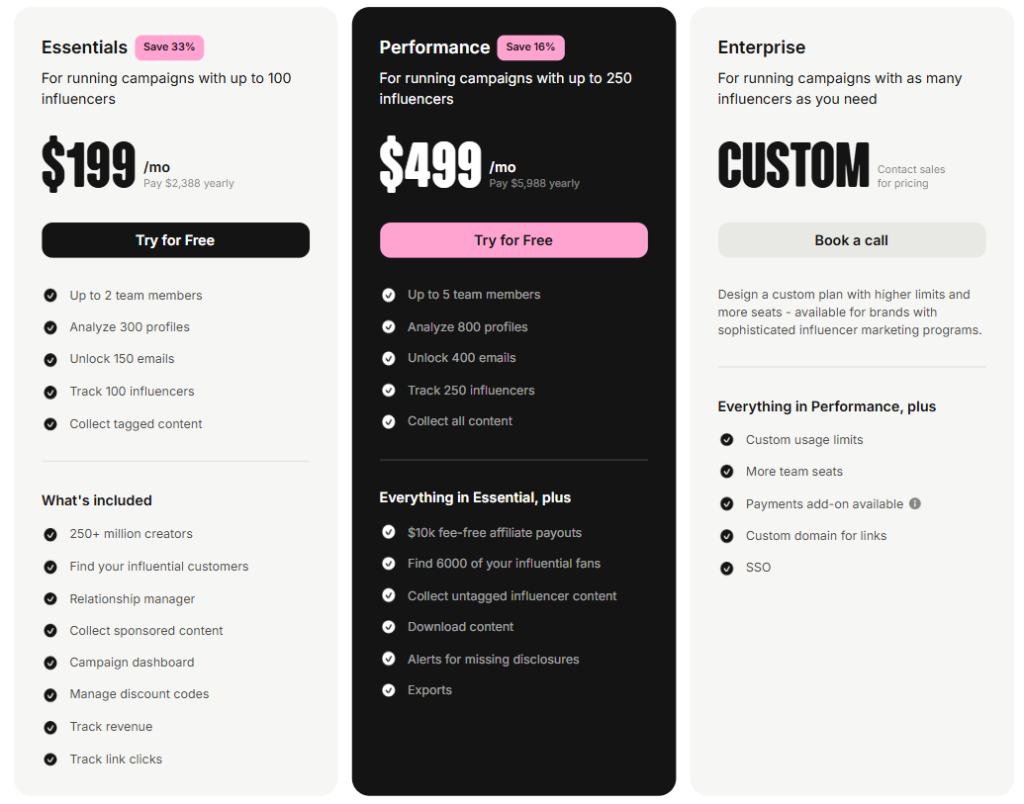
Modash offers clear pricing tiers: Essentials at $199/month (2 users, 300 analyses, 150 emails) and Performance at $499/month (5 users, 800 analyses, 400 emails). The 14-day free trial requires no credit card. This contrasts with Upfluence’s custom quotes and mandatory annual contracts that can be barriers for smaller businesses.
- Simplified Interface for Quick Value
Modash is consistently praised for its intuitive interface that allows teams to start campaigns within days, not weeks. The platform provides comprehensive help documentation and responsive support without requiring extensive training. While Upfluence users often report needing multiple onboarding sessions to master the platform, Modash focuses on removing friction for lean teams.
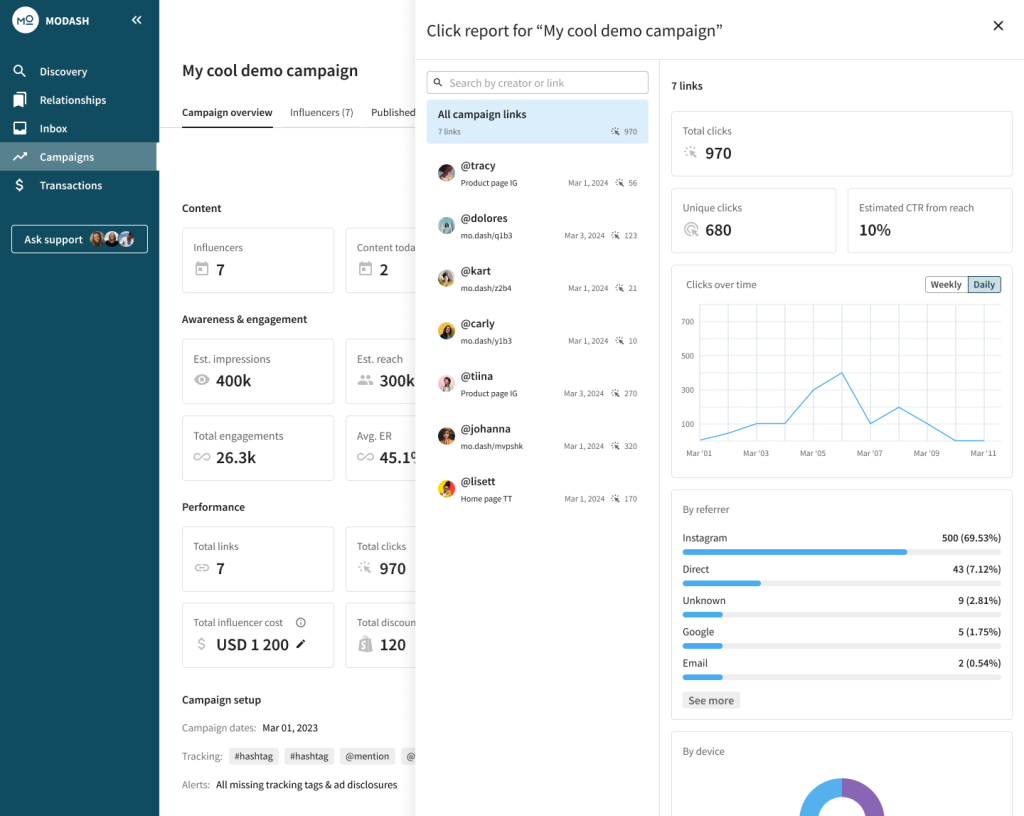
🏅 NOTE: We considered inBeat and SARAL as SMB alternatives. While inBeat offers a curated marketplace and SARAL excels at email automation, Modash provides comprehensive discovery depth with predictable pricing and straightforward workflows for SMB teams.
Modash Pricing
- Essentials: $199/month (annual) or $299/month (monthly) – 2 users, 300 analyses, 150 emails
- Performance: $499/month (annual) or $599/month (monthly) – 5 users, 800 analyses, 400 emails
- Enterprise: Custom pricing for additional seats and usage
Essentials and Performance plans include 14-day free trial without credit card requirement. Enterprise plans require contacting sales.
Who Should Use Modash?
Choose Modash if:
- You’re a small to mid-sized team needing powerful discovery without enterprise complexity
- You want access to the entire creator universe, including micro and nano-influencers
- You value pricing transparency and flexibility over custom enterprise contracts
4. Aspire – Best Alternative for Relationship-Driven Ecommerce Campaigns
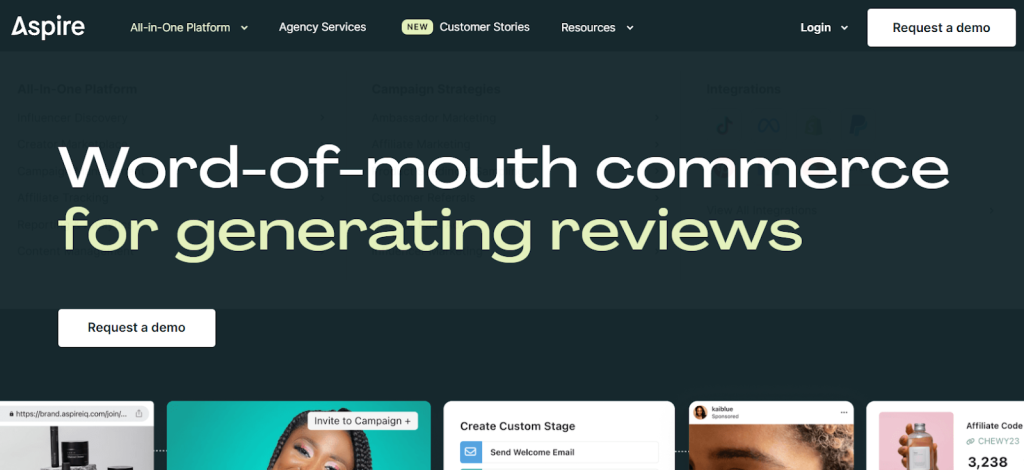
Aspire enables ecommerce brands to build and scale creator communities through relationship-focused tools. The platform emphasizes long-term partnerships over transactional campaigns. Its key features include:
- Dual discovery: proactive search plus inbound Creator Marketplace
- Customizable workflow automation reducing manual tasks significantly
- Purpose-built influencer CRM for nurturing ambassador programs
- Full-funnel ROI measurement with direct Shopify integration
- Content library with Meta and TikTok amplification
- Self-service or managed agency options
For ecommerce brands moving beyond one-off campaigns toward sustainable creator communities, Aspire offers specialized relationship tools to drive long-term value.
Why Choose Aspire Over Upfluence for Ecommerce Relationships
Aspire differentiates itself through relationship management and ecommerce integration:
- Dual Discovery Model
Aspire combines proactive search with an inbound Creator Marketplace where over a million creators browse and apply to campaigns. Like Upfluence’s marketplace feature, this creates opportunities for interested creators to come to you, potentially leading to higher engagement from creators who genuinely want to work with your brand.
- Workflow Customization for Complex Campaigns
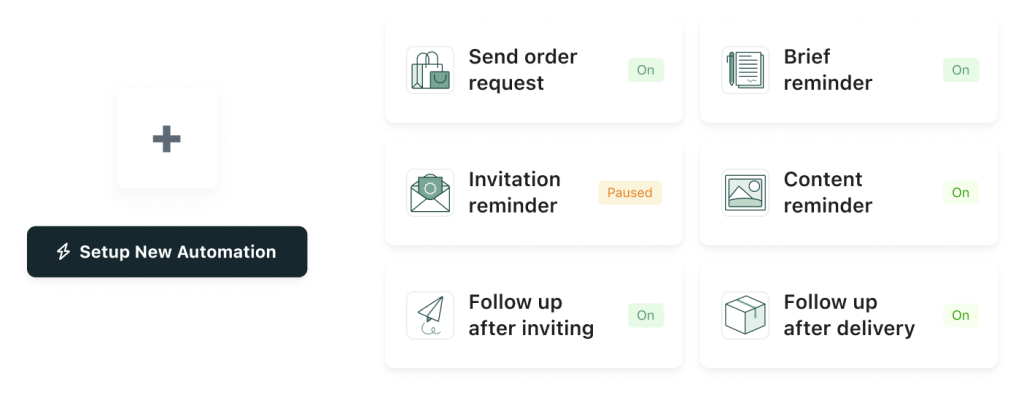
Aspire’s workflow builder allows custom processes for each campaign type, from simple seeding to multi-deliverable partnerships. The platform automates briefs, shipping, approvals, contracts, and payments while maintaining flexibility. Aspire promotes significant reduction in manual work, allowing teams to manage many creators efficiently. Both Aspire and Upfluence offer workflow customization, with different approaches to flexibility.
- Relationship-First CRM Architecture
Aspire is fundamentally built as an influencer CRM. It tracks every interaction and allows brands to work with “any creator,” including existing customers, without requiring platform sign-up. Custom tagging, grouping, and social listening help identify organic advocates. This relationship-centric approach supports long-term community building that drives sustained revenue.
🏅 NOTE: We evaluated Grin and Captiv8 for ecommerce. While Grin excels at gifting logistics and Captiv8 at enterprise management, Aspire offers comprehensive relationship infrastructure with ecommerce workflows for building creator communities that drive sales.
Aspire Pricing
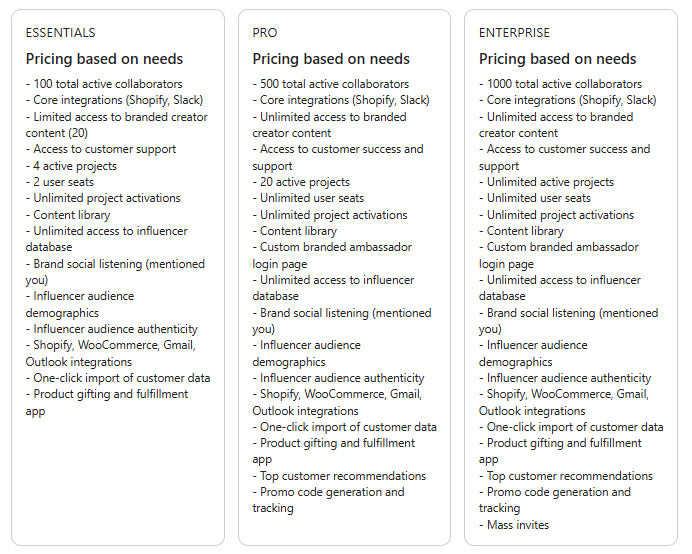
Aspire uses subscription-based pricing with custom quotes:
- Essentials: For emerging brands, up to 100 collaborators
- Pro: ~$2,000-2,300/month for growing brands, up to 500 collaborators
- Enterprise: Custom pricing for 1,000+ collaborators
Annual contracts typical, with potential $2,000 onboarding fee.
Source: F6S
Who Should Use Aspire?
Choose Aspire if:
- Your ecommerce brand needs to build scalable creator communities beyond one-off campaigns
- You want both inbound and outbound sourcing to fill campaigns faster
- You need highly customizable workflows matching your specific processes
5. Sprout Social Influencer Marketing – Best Alternative for Unified Social Management
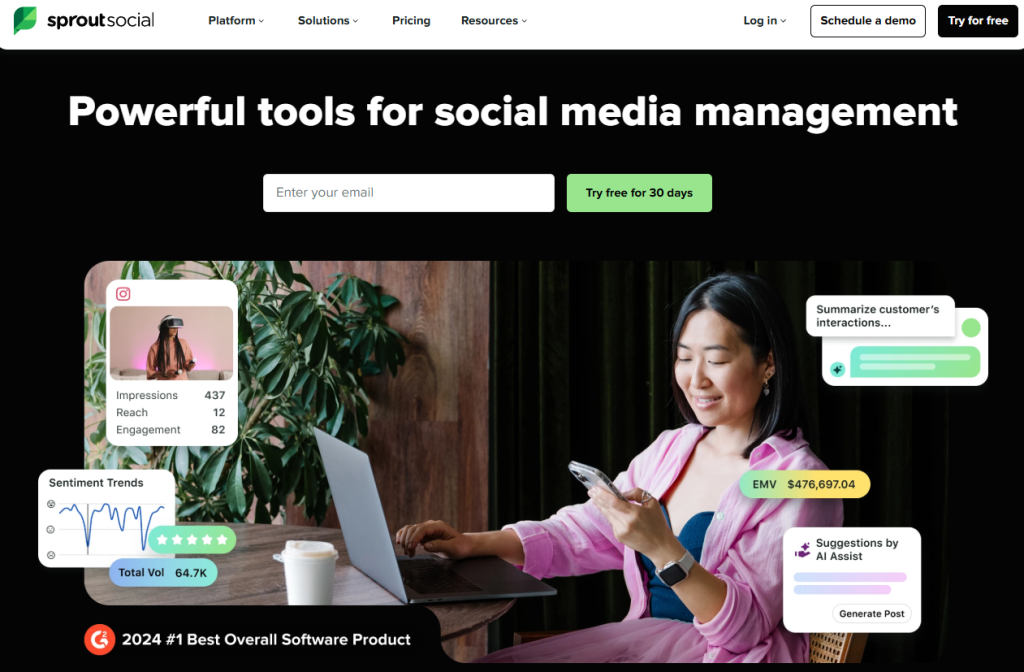
Sprout Social Influencer Marketing integrates creator partnerships into a comprehensive social media management suite, breaking down silos between functions. The platform serves 30,000+ brands. Its key features include:
- AI-powered topic-led discovery
- Integrated influencer and social media management capabilities
- Customizable brand safety reporting
- Native integration with publishing, community management, and listening
- Visual content calendar and Smart Inbox
- Add-on to core Sprout Social suite or standalone
For teams needing to unify influencer marketing with broader social operations, Sprout Social offers integration that specialized platforms cannot provide in the same way.
Why Choose Sprout Social Over Upfluence for Unified Management
Sprout Social stands out through organizational integration rather than isolated execution:
- Unified Social Ecosystem
Unlike Upfluence existing as a separate tool, Sprout Social’s influencer features operate within the same interface where teams manage organic publishing, customer service, and competitive intelligence. This reduces the need for multiple platforms and separate reporting. When creators post content, it can be tracked through social listening, republished through owned channels, and integrated into social performance reporting.
- Cross-Functional Reporting
Sprout Social’s reporting architecture serves leadership decision-making by providing opportunities to view creator performance alongside other social metrics. This integrated view can help justify continued investment and inform budget allocation decisions across social channels.
- Native Social Data Context
Sprout Social’s AI analyzes 600M+ messages daily, enabling topic-led discovery that finds creators based on actual conversations, not just keywords. The platform’s brand safety reporting lets organizations define custom parameters, automatically analyzing creator history for potential risks. Integration with social listening helps brands stay informed about creator activity and potential issues.
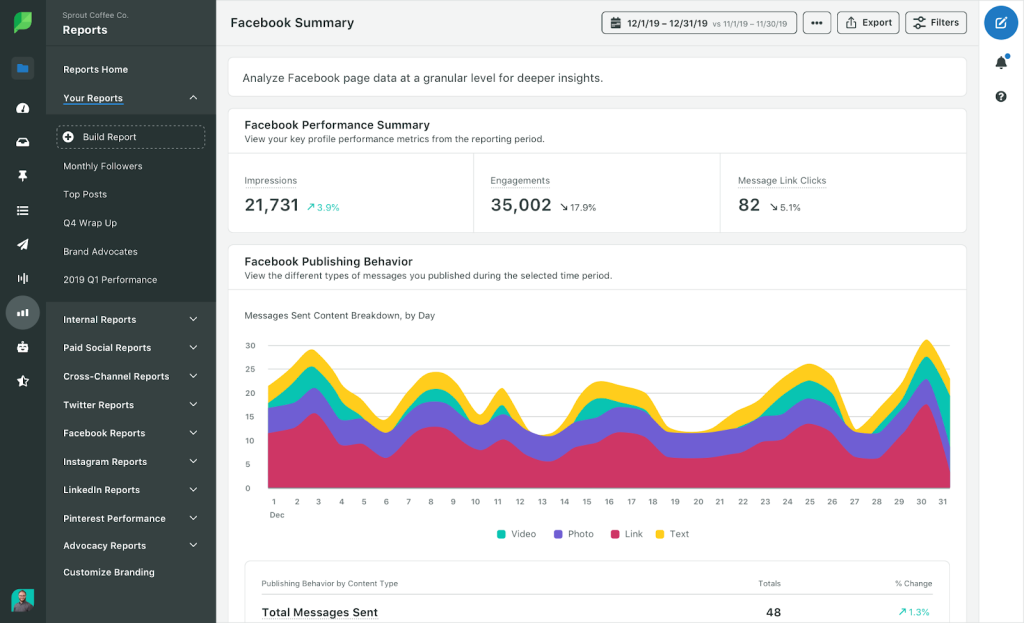
🏅 NOTE: We evaluated Brandwatch and Later Influence. While Brandwatch excels at social listening and Later at visual planning, Sprout Social offers a seamless unified experience for integrating influencer partnerships with broader social strategy without tool complexity.
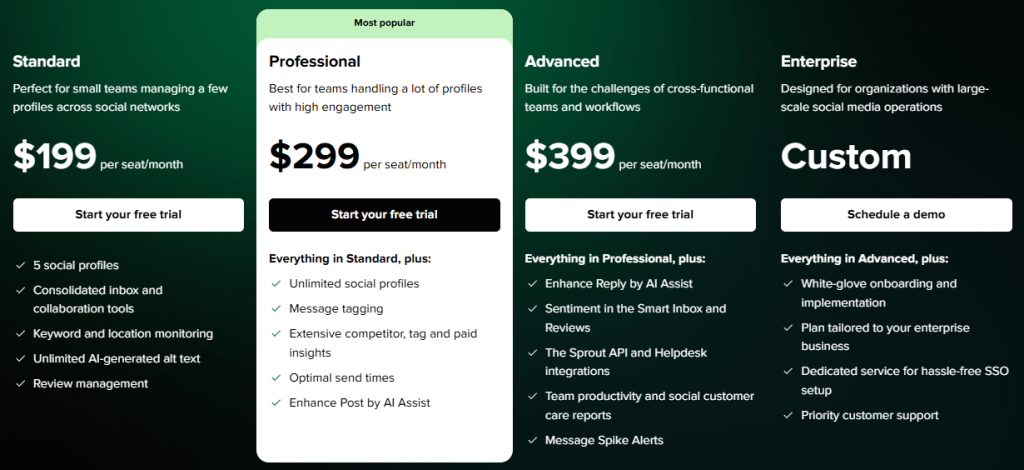
Sprout Social Pricing
Custom pricing based on organizational needs. Available as add-on to existing Sprout Social subscriptions or standalone solution. Pricing varies based on requirements.
Who Should Use Sprout Social?
Choose Sprout Social if:
- You already use Sprout Social and want to eliminate tool fragmentation
- You need influencer performance integrated into social dashboards
- Your teams (social, community, influencer) need cross-functional visibility
6. HypeAuditor – Best Alternative for Analytics-First Vetting & Fraud Detection
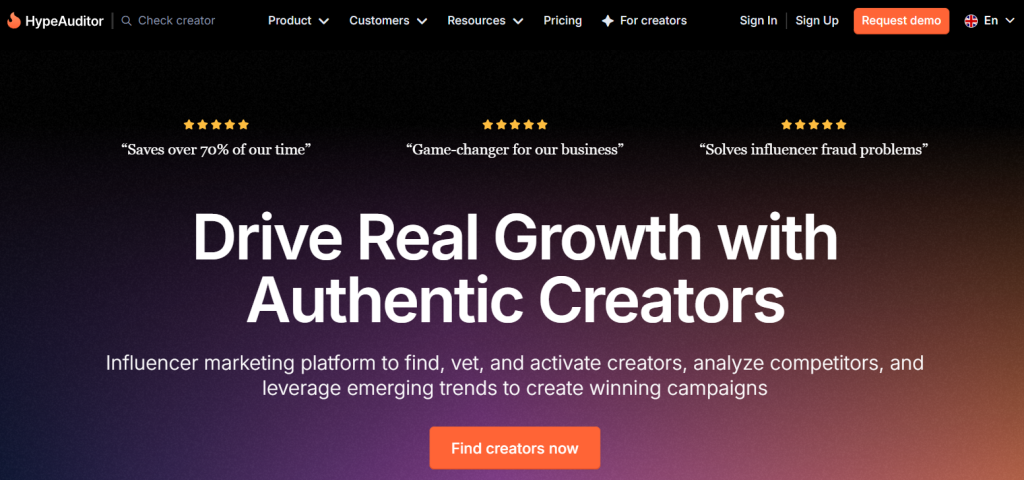
HypeAuditor specializes in deep analytical vetting and fraud detection to help brands avoid wasting budget on inauthentic influencers. Launched in 2018 as an analytics and fraud detection platform. Its key features include:
- AI-powered fraud detection identifying 95.5% of fraudulent activities
- Database of 207.7M+ profiles with regular updates
- 35+ analytical metrics for audience analysis
- Proprietary Audience Quality Score (1-100 benchmark)
- Competitive intelligence and market analysis tools
- Free plan available, paid plans from $299/month
For brands prioritizing authenticity verification over campaign execution, HypeAuditor offers analytical depth specialized for fraud detection.
Why Choose HypeAuditor Over Upfluence for Analytics & Fraud Detection
HypeAuditor excels through laser focus on verification and analysis:
- Industry-Leading Fraud Detection
HypeAuditor’s AI analyzes 53 behavioral patterns to identify fake followers, suspicious growth, bot comments, and engagement pods. The platform categorizes followers into “Real People,” “Influencers,” “Mass Followers,” and “Suspicious Accounts,” providing complete transparency. The Audience Quality Score (AQS) consolidates fraud indicators into one metric for rapid filtering. Upfluence offers authenticity checks but with different depth and focus than HypeAuditor’s specialized fraud analysis.
- Analytical Depth
With 35+ metrics covering demographics, psychographics, brand affinity, and content performance, HypeAuditor enables informed decisions. The platform provides audience sentiment analysis and shows which brands followers engage with. This granularity prevents partnerships with poor strategic fit that waste budget.
- Comprehensive Competitive Intelligence
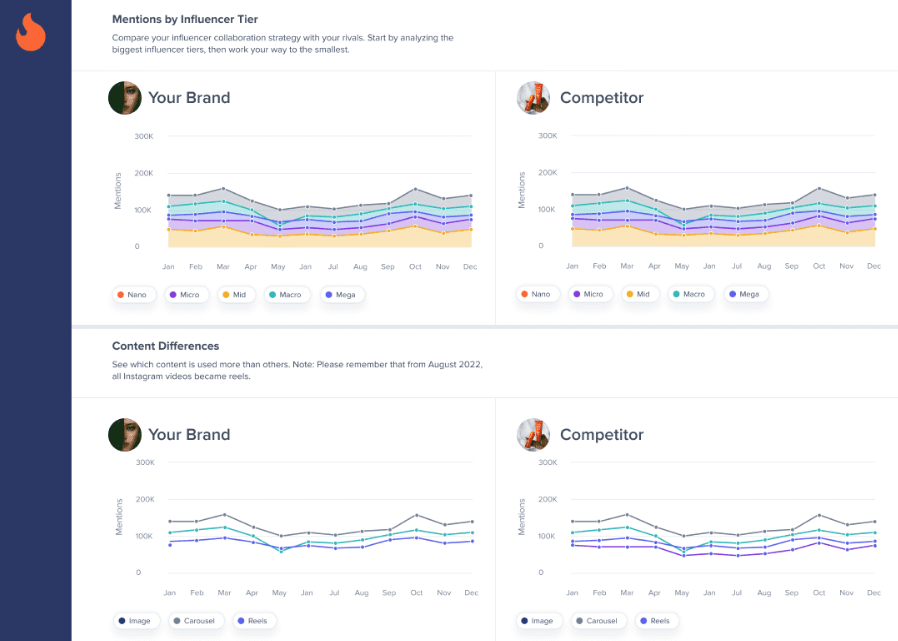
HypeAuditor uniquely provides competitor analysis showing which influencers competitors use, campaign performance estimates, and share of voice calculations. The “Lookalike Search” finds creators with similar audiences to successful partners. This strategic planning capability transforms discovery from tactical to strategic.
🏅 NOTE: We evaluated Traackr and Heepsy for analytics. While Traackr excels at relationship tracking and Heepsy offers affordable discovery, HypeAuditor provides robust fraud detection and analytical capabilities for ensuring authentic partnerships.
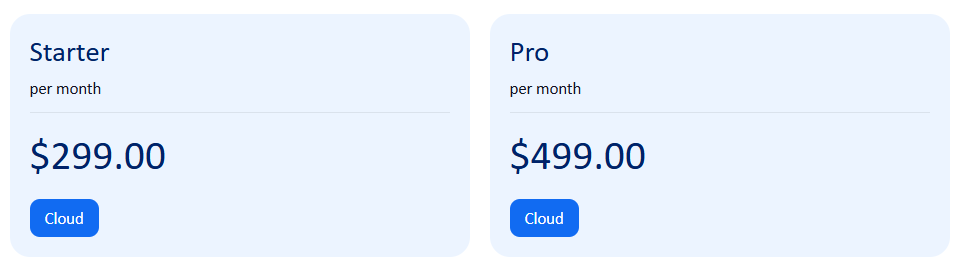
HypeAuditor Pricing
- Free: Basic features with limited analytics
- Starter: $299/month
- Pro: ~$499/month
- Enterprise: Custom pricing
Source: Trustradius
Who Should Use HypeAuditor?
Choose HypeAuditor if:
- You’ve experienced poor ROI from fake followers and need robust fraud detection
- You require 35+ metrics for analytical vetting before partnerships
- You need competitive intelligence on competitor influencer strategies
7. Shopify Collabs – Best Alternative for Risk-Free Shopify Testing
Shopify Collabs is a free native Shopify application enabling merchants to launch affiliate and influencer programs without platform fees. Built directly into Shopify’s ecosystem. Its key features include:
- Native Shopify integration with inventory management
- Creator marketplace with hundreds of thousands of creators
- Automated commission tracking via Shopify billing
- Customizable affiliate structures with tiered commissions
- Product gifting from Shopify inventory
- Free installation, only 2.9% processing on commissions paid
For Shopify merchants wanting to test influencer marketing without risk, Collabs offers native integration that external platforms provide differently.
Why Choose Shopify Collabs Over Upfluence for Risk-Free Testing
Shopify Collabs differentiates through zero-risk native integration:
- Zero Upfront Costs
While Upfluence requires significant subscription fees and annual contracts, Shopify Collabs is completely free to install. You only pay 2.9% on commissions actually paid to creators. This performance-based model means merchants only pay when generating revenue, removing financial risk during testing phases. No penalty for pausing campaigns during slow periods.
- Seamless Native Integration
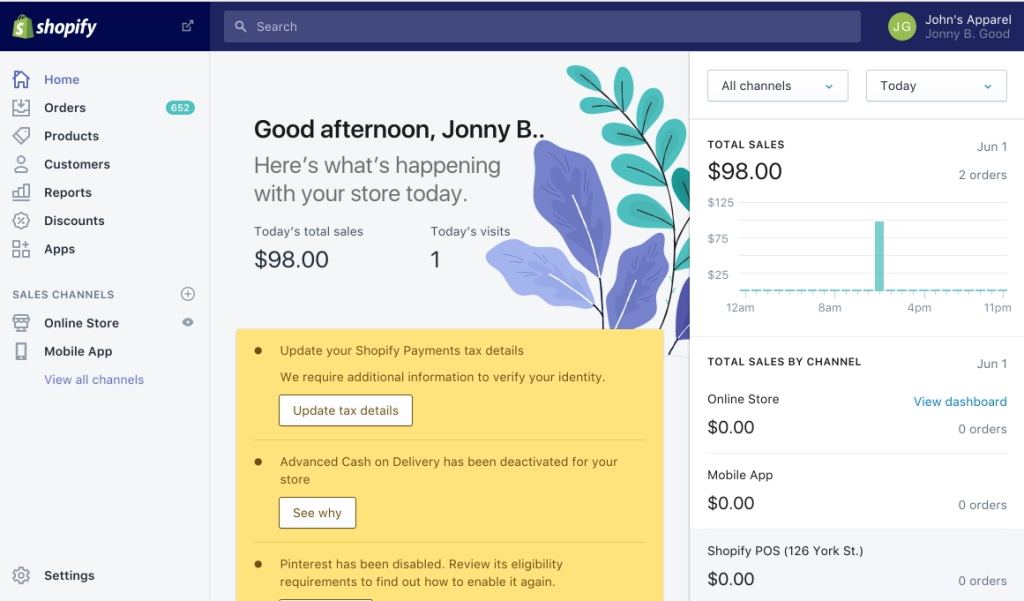
As a first-party Shopify app, Collabs operates within your familiar admin interface. Product gifting pulls directly from inventory, sales attribution flows through Shopify’s tracking, and commission payments appear on your regular Shopify bill. This eliminates the need for separate platform management that comes with external tools.
- Minimal Learning Curve
Setup is straightforward: install, create brand profile, launch. The customizable application page lets creators apply directly. Automated payment system handles commission calculations and payouts. While Upfluence offers sophisticated features requiring training, Collabs’ simplicity lets lean teams launch quickly without specialized expertise.
Source: Khaos Control
🏅 NOTE: We evaluated Dovetale and Collabstr for Shopify merchants. While Dovetale offers advanced relationship management and Collabstr provides diverse collaboration types, Shopify Collabs offers a seamless zero-cost entry point without external tool sprawl.
Shopify Collabs Pricing
- Installation: Free for Basic, Shopify, Advanced, and Plus merchants
- Transaction fees: 2.9% on creator commission payments only
- Example: $10 commission on $100 sale = $0.29 fee
- No fees on product gifting or organic partnerships
Who Should Use Shopify Collabs?
Choose Shopify Collabs if:
- You’re a Shopify merchant testing influencer marketing for the first time without upfront risk
- Your team lacks dedicated specialists and needs simple, integrated tools
- You run seasonal campaigns and don’t want monthly fees during inactive periods
The Final Verdict
While Upfluence provides a comprehensive influencer marketing platform with powerful discovery, campaign management, and analytics tools, the evolving landscape of creator marketing demands different approaches for different businesses. Based on our research, here are the best alternatives:
- partnrUP for AI-powered automation with four specialized agents that eliminate manual work
- CreatorIQ for enterprise-grade governance, deep integrations, and institutional controls
- Modash for SMB-friendly discovery with transparent pricing and simple workflows
- Aspire for relationship-driven ecommerce brands building creator communities
- Sprout Social for teams needing unified social media and influencer management
- HypeAuditor for analytics-first vetting and comprehensive fraud detection
- Shopify Collabs for risk-free testing with native Shopify integration
Remember, choosing an alternative doesn’t always mean replacing Upfluence entirely. Many brands successfully combine platforms to create their ideal tech stack: using HypeAuditor for vetting, then Upfluence for campaign execution, or incorporating partnrUP’s AI agents to manage discovery, recruitment, and campaign coordination workflows while maintaining other tools for analytics or reporting.
Consider your specific needs, team size, budget, and growth trajectory when evaluating these options. The right choice depends on whether you prioritize automation, enterprise features, simplicity, relationships, integration, analytics, or risk-free testing.
Ready to streamline how you manage influencer marketing? Use partnrUP’s AI agents Kyle, Lilly, and Aaron to coordinate creator discovery, recruitment, and campaign execution within a single platform. Start free today and explore how AI-driven workflows can simplify your influencer marketing operations.