




Most forecasts about the future of creator partnerships are guesses dressed up as analysis. This one does not have to be. The rules that will govern how brands work with creators in 2027 are already written, already published, and in several cases already enforceable — and the compliance dates land before your 2027 budget is approved.
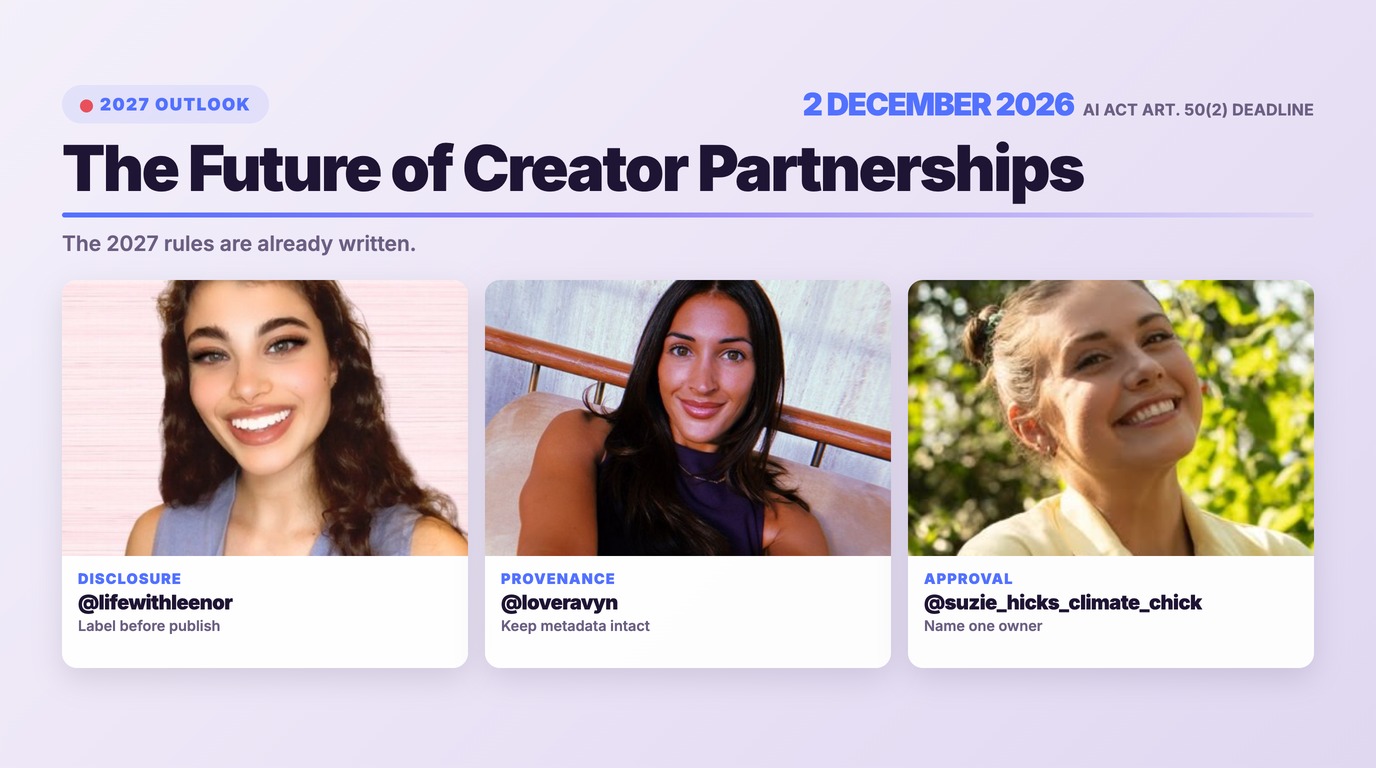
The single most consequential date is 2 December 2026. That is three weeks from now, and it is the deadline by which a large class of generative AI systems must be marking their output as machine-readable synthetic content. Most brand teams planning 2027 creator programs have not heard of it.
Here is what is actually coming, with the dates and the source text, and what each shift changes about how you brief, contract, and approve creator work.
1. AI-assisted creative becomes a labeled category, not a quiet one
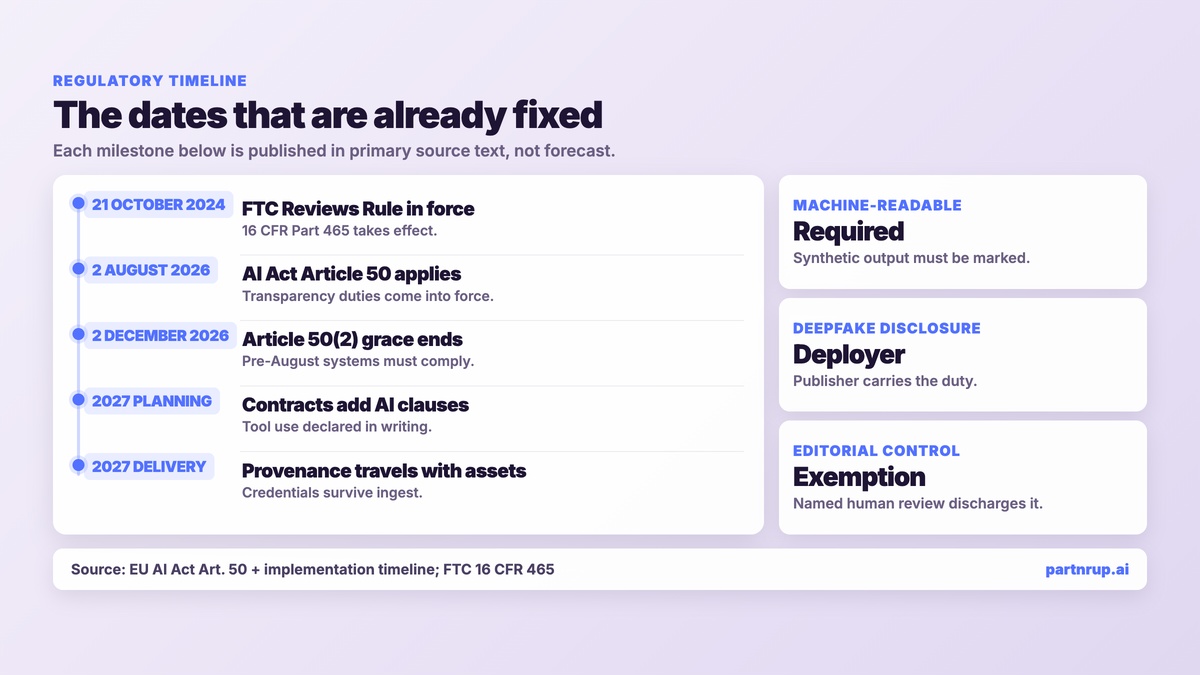
The EU AI Act's transparency article, Article 50, "comes into force 2 August 2026, according to Article 113." Article 50(2) is the clause that matters for creative production. It requires that providers of AI systems "generating synthetic audio, image, video or text content, shall ensure that the outputs of the AI system are marked in a machine-readable format and detectable as artificially generated or manipulated."
Systems that were already on the market before August 2026 get a grace period, and that grace period expires on 2 December 2026. The Act's own implementation timeline is explicit: providers of such systems "placed on the market before 2 August 2026 must have taken the necessary steps to comply with Article 50(2) by this date."
Read that as a practical change rather than a legal one. The tools your creators use to generate b-roll, extend a background, clean up audio, or script a hook are on the hook for stamping their own output. You will not have to guess whether a deliverable was AI-assisted. The file will say so.
There is a separate obligation on the brand side. Article 50(4) covers deployers — the people publishing the content — and says that anyone deploying a system that "generates or manipulates image, audio or video content constituting a deep fake, shall disclose that the content has been artificially generated or manipulated." For AI-generated text published to inform the public on matters of public interest, the same paragraph carves out an exemption worth knowing: the obligation does not apply "where the AI-generated content has undergone a process of human review or editorial control and where a natural or legal person holds editorial responsibility for the publication of the content."
That exemption is a design hint. Named human editorial ownership is treated as the thing that discharges the duty. If your creator program has no named approver, 2027 is a bad year to find that out.
2. Platform labels are now automatic, and often irreversible
Brands tend to assume AI disclosure is a judgment call the creator makes. On the major platforms, that stopped being true.
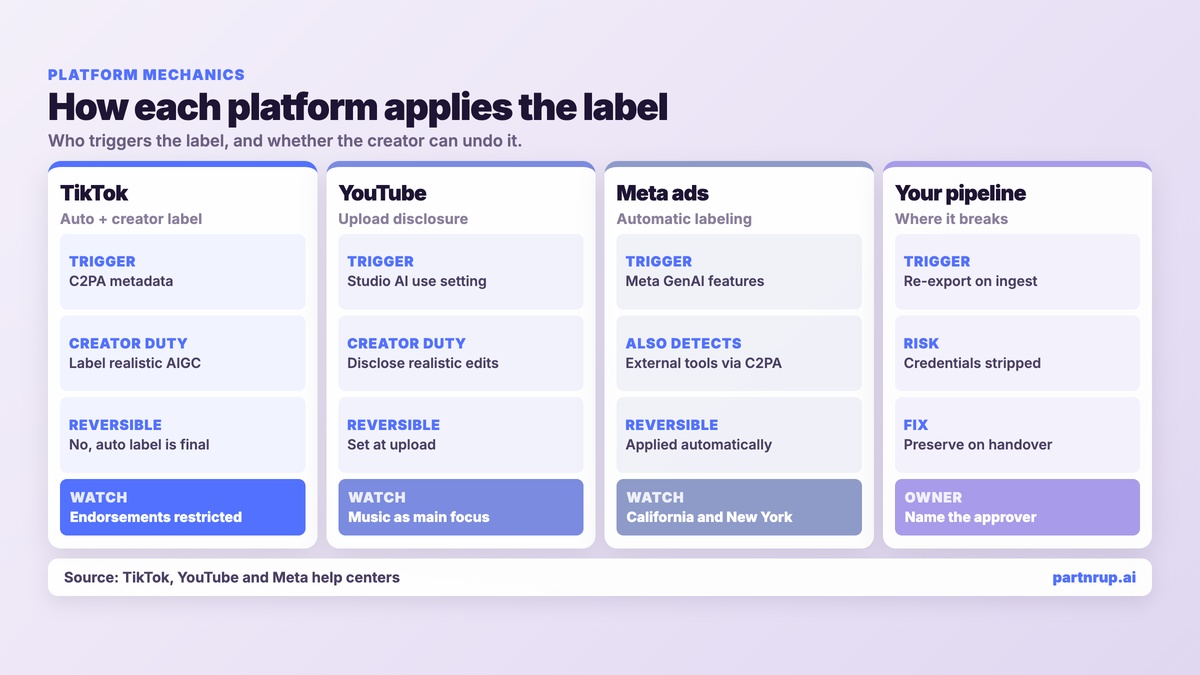
TikTok states that it "require[s] creators to label all AI-generated content that contains realistic images, audio, and video." It also applies labels without being asked. Per TikTok's own help center, an auto label "may happen when a creator uses TikTok AI effects or uploads AI-generated content that has Content Credentials attached, a technology from the Coalition for Content Provenance and Authenticity (C2PA)." TikTok describes the mechanism plainly: "Content Credentials attach metadata to content that we can use to recognize and label AIGC instantly."
And the label sticks. TikTok's documentation carries a flat warning: "Once your content is labeled as AI-generated with an auto label, you won't be able to remove the label from your post." There is no appeal workflow described. If a creator runs your product shot through a generative tool that writes Content Credentials, the resulting post carries a permanent AI label — whether or not that was in the brief.
YouTube handles it through an upload setting rather than detection. Its policy requires creators to disclose AI content that "makes a real person appear to say or do something they didn't do," "alters footage of a real event or place," "generates a realistic scene that didn't actually occur," or "creates music that's the main focus of the video." The disclosure happens in YouTube Studio: in the Attributes section, under "AI use," the creator selects Yes or No.
Meta's advertising side is further along than most brands realize. For ads, Meta says it "will automatically apply an AI info label when you use features such as Background Generation, Image Generation, or Add Animation to create or significantly edit an image or video." It detects third-party tools too, using the same provenance standard: "Meta uses industry-standard detection methods, such as C2PA to identify when ad content has been created or edited using third-party generative AI tools."
Meta also lists where advertisers may self-disclose generative AI use and have the label appear next to the Sponsored label. Those regions are "the European Region, California, New York, India and Taiwan." California and New York are the detail to carry into a US media plan.
Worth noting for anyone boosting creator content: Meta explicitly separates the two regimes, cautioning that "labeling and identifying AI-generated content is different for organic content." The same asset can behave differently depending on whether you ran it as an ad or the creator posted it organically.
3. Provenance metadata becomes part of asset handover
C2PA is the connective tissue under all of the above. The coalition describes Content Credentials as an "open technical standard for publishers, creators and consumers to establish the origin and edits of digital content" — in its own analogy, "like a nutrition label for digital content."
The practical consequence for creator programs is unglamorous and immediate: provenance metadata is now an asset property you should be collecting, not stripping. Plenty of existing workflows flatten, re-export, and recompress creator deliverables on the way into a DAM, which destroys exactly the metadata platforms are reading. A brand that strips credentials on ingest and then re-uploads is choosing detection-by-guesswork over detection-by-metadata.
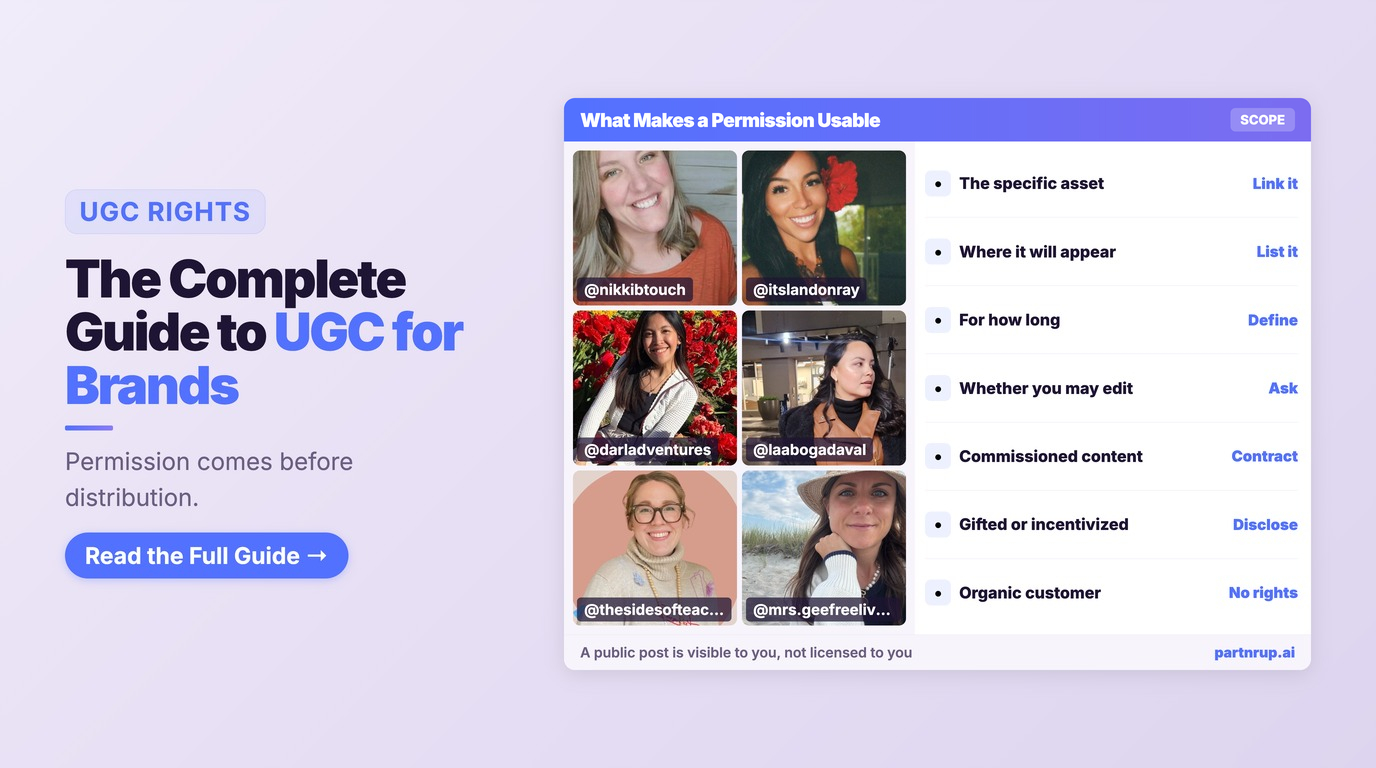
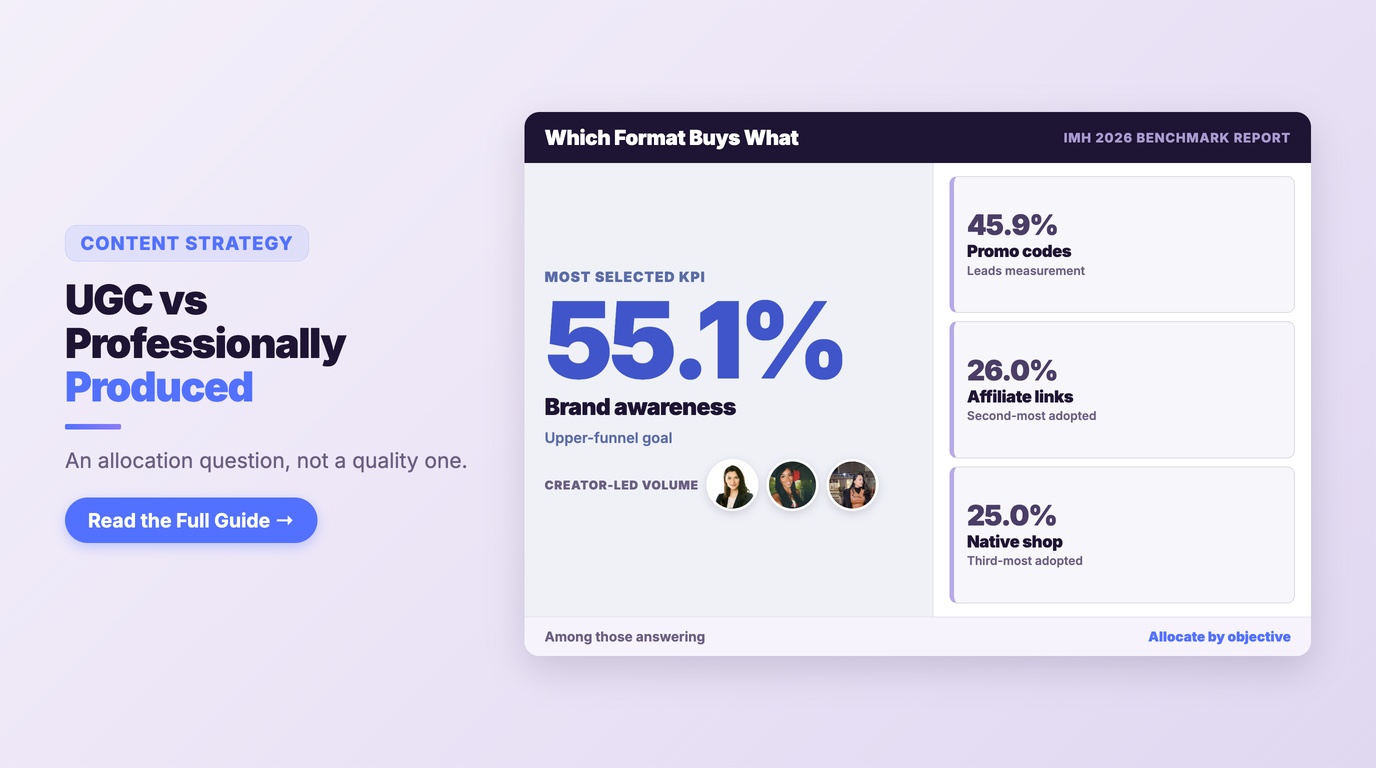
If you already have a rights and usage process for creator assets — and our guide to UGC strategy, rights, and distribution covers how to build one — provenance is a field to add to it, not a new system to buy.
4. Synthetic creators need a written policy, not an opinion
Fully synthetic creators have been a novelty segment for years. What changes in 2027 is that the platforms have built the enforcement scaffolding, so a brand's position has to be a documented policy rather than a vibe.
The constraint most likely to catch a campaign is TikTok's prohibition list. TikTok does not allow AI-generated content that shows "fake authoritative sources or crisis events, or falsely shows public figures in certain contexts," and it names the contexts: "this includes being bullied, making an endorsement, or being endorsed." A synthetic spokesperson delivering an endorsement is uncomfortably close to the center of that rule. Likeness is covered separately — TikTok also bars AI content using "the likeness of young people under the age of 18, or the likeness of adult private figures used without their permission."
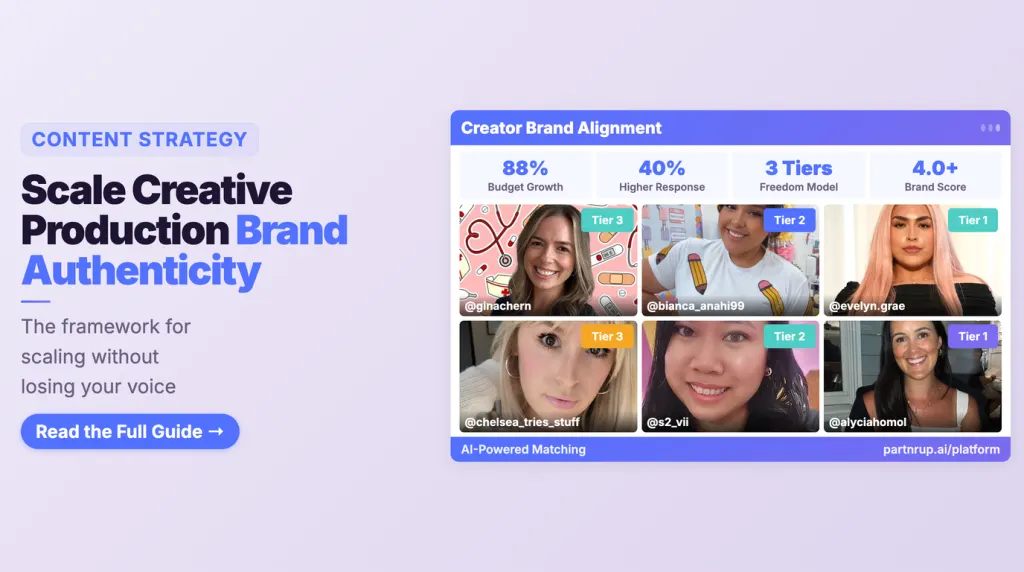
If you are weighing synthetic talent at all, the background is in our explainer on AI-generated influencers. The 2027 decision is narrower than "do we use them": it is whether your brand safety doc has a line for them, and who signs off.
5. The FTC rule that already changed who may post a testimonial
This one is not a forecast. It is in force and most creator briefs have not caught up.
The FTC's Rule on the Use of Consumer Reviews and Testimonials "went into effect on October 21, 2024," and the Commission notes it "authorizes courts to impose civil penalties for knowing violations." Codified at 16 CFR Part 465, it reaches further than fake-review farms.
Section 465.2(a) makes it a violation for a business to write, create, or sell a review or testimonial that materially misrepresents "that the reviewer or testimonialist exists," that they "used or otherwise had experience with the product," or "the reviewer's or testimonialist's experience with the product, service, or business." Read alongside synthetic talent, the first clause is the live wire: a testimonial from a person who does not exist is squarely described.
Section 465.5 handles insiders. It is a violation for a business to disseminate a testimonial "by one of its officers, managers, employees, or agents, which fails to have a clear and conspicuous disclosure of the testimonialist's material relationship to the business, when the relationship is not otherwise clear to the audience." The rule does carve out "generalized solicitations to purchasers for them to post testimonials about their experiences" and "merely engaging in consumer review hosting."
The word doing the work is agents. Employee-generated content programs and always-on ambassador tiers can sit inside that definition, and those are precisely the formats brands are scaling into 2027.
What to change before the 2027 planning cycle closes
Four edits, all cheap, all better done before a campaign is in flight:
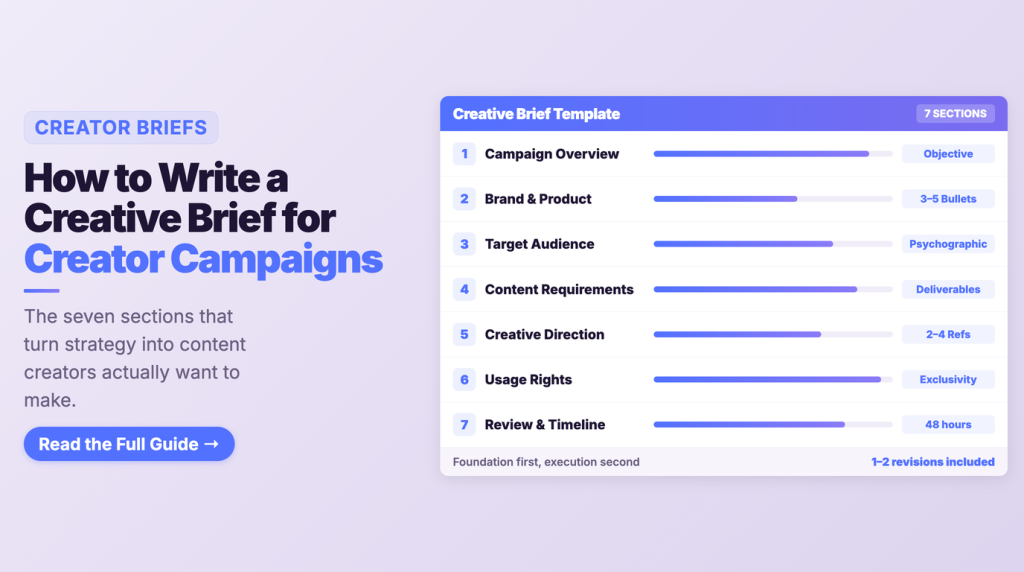
Add an AI-use clause to the creator agreement. Not a ban — a declaration. Ask what tools were used, require that provenance metadata is left intact, and state who carries editorial responsibility for the final asset. Article 50(4)'s human-review exemption rewards exactly this.
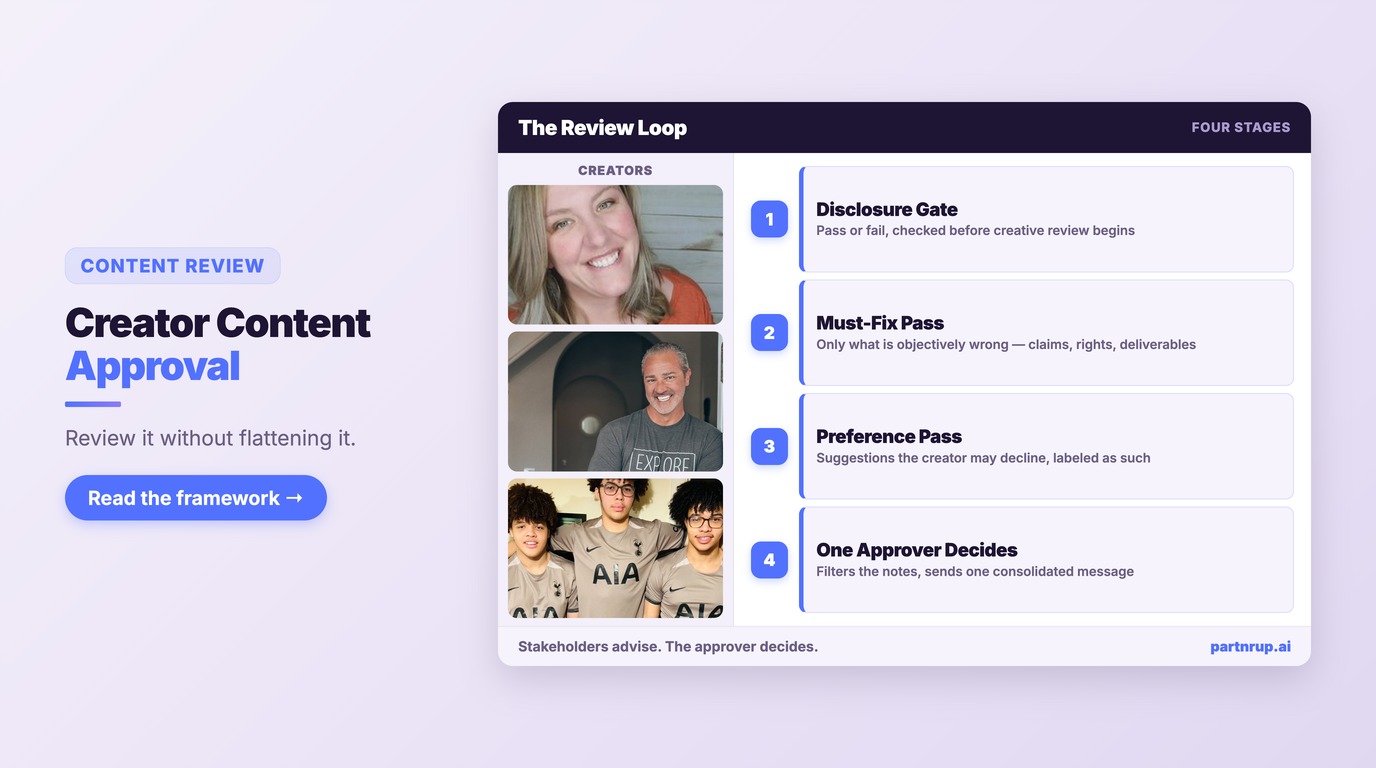
Name the approver. One person, per campaign, on the record. If you do not have an approval workflow yet, our creator content approval framework is the place to start.
Audit your asset pipeline for metadata destruction. Find out whether your ingest process preserves Content Credentials. Most do not, and nobody has checked.
Re-read your ambassador and employee programs against 16 CFR 465.5. Material-relationship disclosure is the requirement, and "the relationship is not otherwise clear to the audience" is the test you have to satisfy.
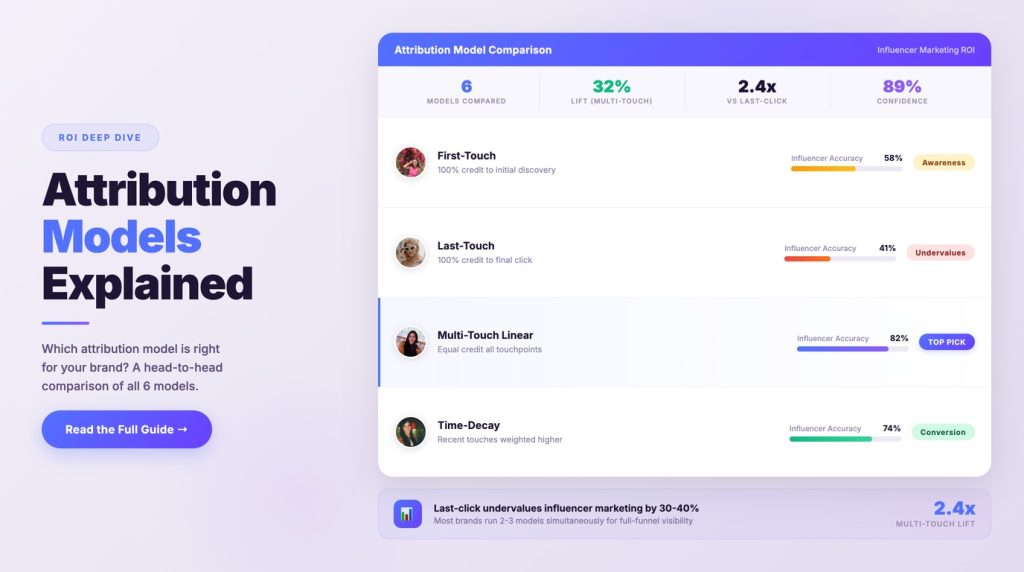
None of this changes how you measure the work. Attribution and lift stay the same problem they are today — see our guides to incrementality testing and attribution models for that side. What changes is the paperwork and the metadata that travel with every deliverable.
The brands that handle 2027 well will not be the ones that predicted it. They will be the ones that read the dates. For the wider picture of where the category stands going in, start with The State of Influencer Marketing in 2026, and for partnership structure fundamentals, the brand sponsorships and creator partnerships playbook and our guide to vetting creators.