




Back to blog

Anja
October 2, 2025

Aspire vs CreatorIQ (vs partnrUP): Which Influencer Marketing Platform Actually Scales with Your Business in 2026?

Influencer Marketing
creator marketing platforms
Share on:

Choosing between Aspire and CreatorIQ for your influencer marketing needs often feels like choosing between two extremes: accessibility versus enterprise power. One promises to make influencer marketing approachable for growing brands, while the other offers the industrial-strength tools that Fortune 500 companies demand.

But here’s the question most comparison articles miss: What if you’re caught in the middle? What if you need more than Aspire’s “getting started” features but can’t justify CreatorIQ’s enterprise complexity and cost? Or what if both platforms’ traditional database-dependent approaches to influencer marketing feel outdated in an AI-driven world?

The real questions you should be asking are:

  • Do you need a platform that forces you to search through the same overused database of creators that every other brand uses, or one that dynamically sources fresh, relevant influencers in real-time?
  • Are you looking to manually search and recruit creators yourself, or have AI agents handle everything from sourcing to payment in 30 minutes?
  • Would you rather pay $2,000+ per month before you’ve proven ROI, or start free and scale as you grow?
  • Do you want to manage every aspect of creator relationships manually, or have specialized AI agents handle each step automatically?
  • Is your priority having access to a static database, or having AI that actively finds the perfect creators for your specific campaigns?

In short, here’s what we recommend:

👉 Aspire serves as the accessible all-in-one platform for brands ready to professionalize their influencer marketing. With its user-friendly interface, Creator Marketplace, and comprehensive workflow automation, it helps teams move beyond spreadsheets to manage campaigns at scale. The platform excels at building long-term creator relationships and providing the tools needed for everything from discovery to ROI measurement. However, its premium pricing (reportedly starting around $2,000/month as of 2025), lack of transparent pricing, and absence of a free trial can be barriers for growing brands still testing influencer marketing’s impact.

👉 CreatorIQ stands as the enterprise powerhouse, built for global brands and agencies managing complex, multi-market creator programs. Its direct social media API integrations, AI-powered analytics, and robust brand safety features make it the go-to choice for organizations with dedicated influencer marketing teams and substantial budgets. The platform’s acquisition of Tribe Dynamics strengthened its position in beauty and fashion verticals. Yet its complexity and premium pricing make it challenging for most growing brands to justify.

Both platforms represent the traditional approach to influencer marketing: massive static databases, complex features, and pricing that assumes you’re already committed to influencer marketing as a channel. But what if there’s a fundamentally different approach?

👉 partnrUP isn’t just another influencer marketing platform; it’s a complete reimagination through AI. partnrUp’s specialized AI agents (Kyle for sourcing, Lilly for recruitment, and Aaron for administration) work together to source, recruit, manage, and report on your campaigns automatically. Unlike database-dependent platforms where brands compete for the same pool of creators, partnrUP’s AI actively sources fresh influencers across multiple social platforms in real-time, getting your first applicants within 30 minutes. The platform starts free and scales with transparent, usage-based pricing ($0-699/month), making it accessible for brands at any stage. Built specifically for agencies and growing businesses, partnrUP eliminates traditional pain points like payment processing burdens while offering white-label capabilities that don’t exist elsewhere in the market.

If you’re looking for a platform that represents the future of influencer marketing rather than its past, book a demo and see how partnrUP’s AI agents can transform your campaigns.

Table of contents:

  • Aspire vs CreatorIQ vs partnrUP at a glance
  • The pricing gap reveals different philosophies
  • Discovery approaches: Static databases vs dynamic AI sourcing
  • Campaign management complexity varies dramatically
  • Content rights and usage capabilities
  • ROI measurement and analytics depth
  • The learning curve impacts your time to value
  • Support models reflect target audiences
  • Aspire vs CreatorIQ vs partnrUP: Which should you choose?

Aspire vs CreatorIQ vs partnrUP at a glance

Here’s how these three platforms stack up across the metrics that matter most:

AspireCreatorIQpartnrUP
Starting price~$2,000/monthCustom (Enterprise)$0/month
Free trial❌ No❌ No✅ Yes (Free plan)
Target marketGrowing brands & agenciesEnterprise & large agenciesAgencies & growing businesses (all sizes)
Creator discoverySearchable database + marketplace20M+ creator databaseDynamic AI sourcing (no database)
Platform coverageInstagram, TikTok, YouTube, Pinterest, FacebookAll major platformsMultiple platforms
Learning curve⭐⭐⭐⭐ Moderate⭐⭐ Steep⭐⭐⭐⭐⭐ Minimal
AI capabilities⭐⭐⭐ Basic matching⭐⭐⭐⭐ Advanced analytics⭐⭐⭐⭐⭐ AI agents (full automation)
Campaign management⭐⭐⭐⭐ Comprehensive⭐⭐⭐⭐⭐ Enterprise-grade⭐⭐⭐⭐ AI-automated
Agency features⭐⭐⭐ Basic⭐⭐⭐⭐ Good⭐⭐⭐⭐⭐ Purpose-built with white-label
Support modelEmail + account managementDedicated supportOnline + managed services
Time to first creatorsDays to weeksDays to weeksAs soon as 30 minutes

The pricing gap reveals different philosophies

The pricing structures tell you everything about each platform’s worldview and target customer.

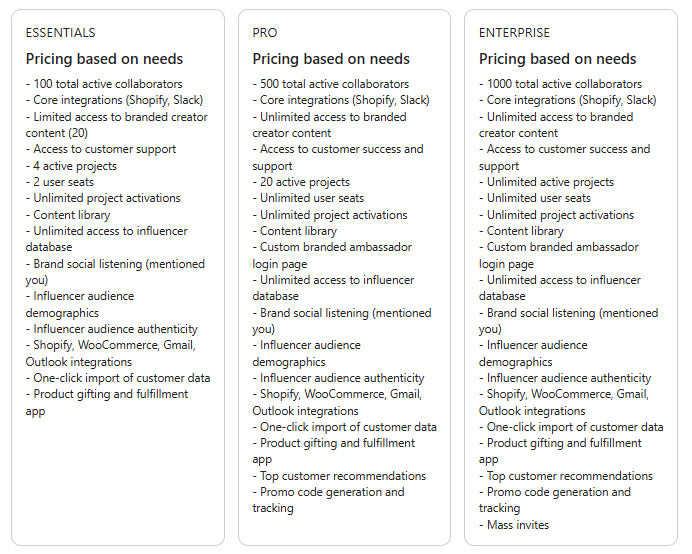
Aspire operates on the traditional SaaS model with three opaque tiers. Industry reports indicate pricing starts around $2,000-2,300 per month with annual commitments typically ranging from $18,000 to $30,000. The Essentials plan limits you to 100 collaborators, Pro expands to 500, and Enterprise goes to 1,000+. There’s also a reported $2,000 onboarding fee. This pricing assumes you’re already convinced influencer marketing will work and have budget allocated.
Source: F6S

CreatorIQ takes enterprise pricing to another level. They don’t even list prices publicly, requiring multiple sales calls to get a quote. This isn’t just premium pricing; it’s Fortune 500 pricing. The platform is built for organizations where influencer marketing is a line item in a multi-million dollar marketing budget. Small businesses need not apply.

partnrUP flips the model entirely with outcome-aligned pricing. Start free with the plan (up to 10 creators, 1 campaign), upgrade to Pro at $299/month for unlimited creators and three active campaigns, or go Growth at $699/month for 5 concurrent campaigns.

The twist? They charge processing fees on creator payments (20% for Free, 10% for Pro & Growth). This usage-based model means you only pay more when you’re actually running successful campaigns, aligning platform costs with actual outcomes. No subscription required for entry-level users.

The philosophical difference is clear: Aspire and CreatorIQ charge you upfront for access to their databases and tools, while partnrUP lets you start free and scale costs with actual usage and results.

Discovery approaches: Static databases vs dynamic AI sourcing

How each platform helps you find creators reveals their fundamental technology approach—and this is where the real disruption happens.

Aspire combines two discovery methods.

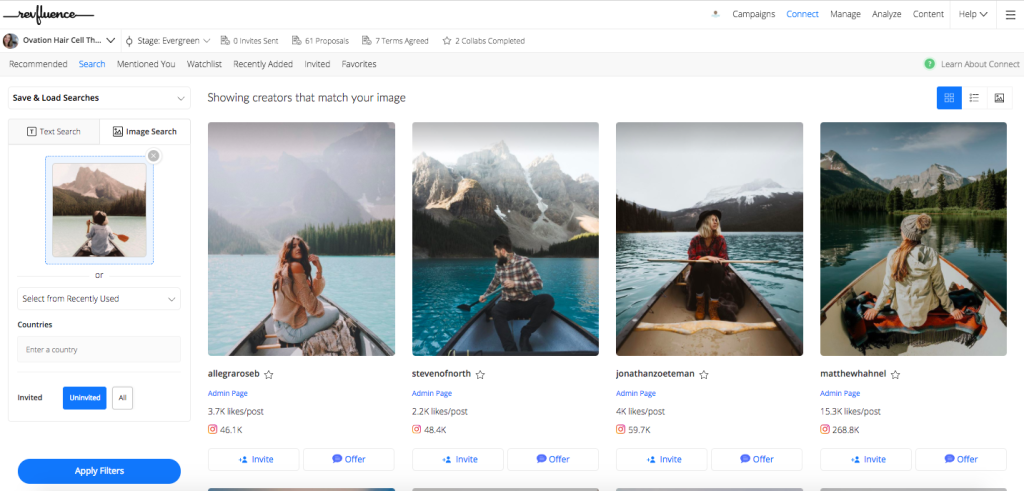
Their Influencer Search Engine lets you search through their vetted database using filters like keywords, hashtags, follower counts, and audience demographics. More interesting is their Creator Marketplace, where creators can apply to your campaigns. They also offer AI-powered image search to find creators with similar aesthetics to your best content. The dual approach is smart, but you’re still limited to whoever is already in their system. As a result, you’re drawing from the same pool of creators that every other Aspire customer is tapping into.
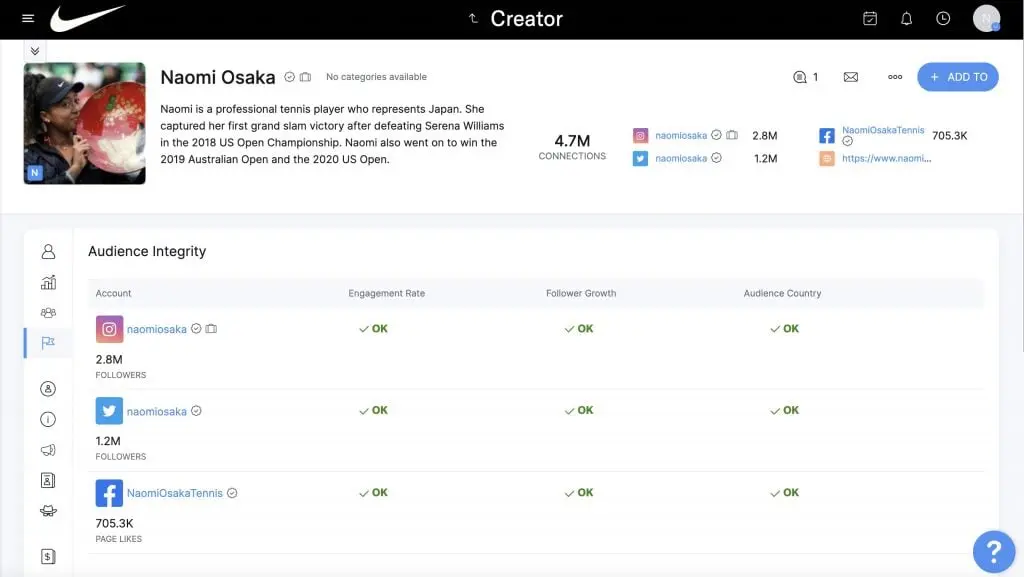
CreatorIQ boasts a massive database of 20 million creator profiles with deep social platform partnerships. Their AI-powered search goes beyond keywords to analyze actual content, including images and brand mentions. The “Integrity Quotient” helps identify fake followers and fraudulent accounts. It’s incredibly powerful but requires significant time investment to master all the filtering options. Again, you’re searching through a static database that, while large, is the same database every CreatorIQ customer uses.
Source: Influencer Marketing Hub

partnrUP takes a fundamentally different approach. Unlike classic influencer marketing platforms, this isn’t a database you search through.

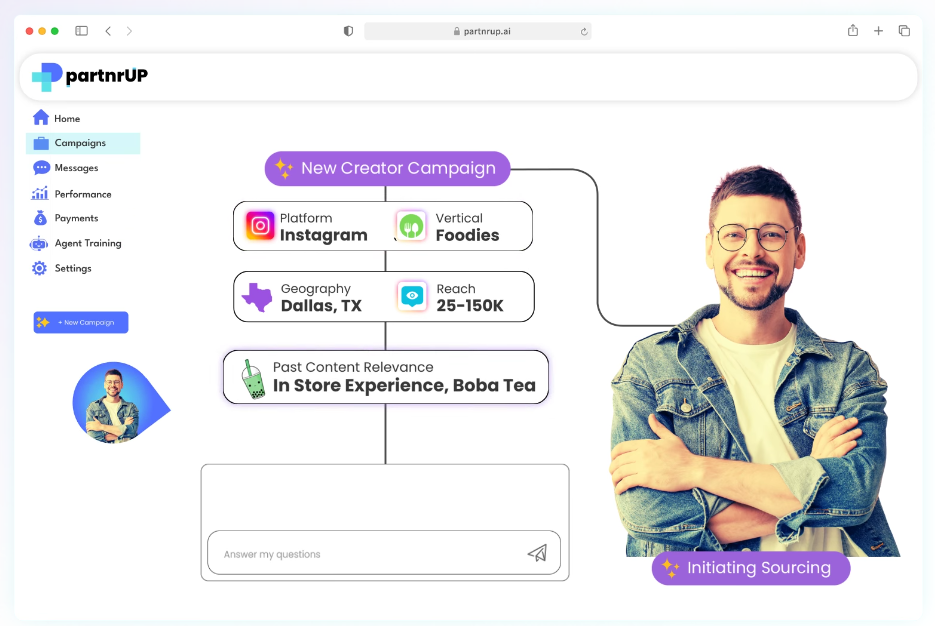
Kyle, the sourcing AI agent, actively scours the web, TikTok, Instagram, and Google to find and recruit influencers when a campaign is published. The system targets and sources the perfect candidates for each campaign, whether they’re already in the system or not. This dynamic AI sourcing means you’re not limited to a preset pool of creators. Instead, the AI finds fresh, relevant influencers in real time based on your specific campaign criteria, including:

  • Engagement rates
  • Keywords
  • Hashtags
  • Lookalike profiles
  • Follower ranges
  • Audience demographics
  • Location

Creators can start applying within 30 minutes of campaign launch. This is the biggest value add and core differentiator: while others make you search databases, partnrUP’s AI actively sources new creators for you.
The coverage varies across platforms. While Aspire and CreatorIQ cover YouTube, Pinterest, and Facebook alongside Instagram and TikTok, partnrUP has expanded beyond just Instagram and TikTok through strategic acquisitions, now supporting multiple platforms including major e-commerce integrations.

Campaign management complexity varies dramatically

The effort required to run a campaign differs significantly across platforms. In fact, it reveals whether you’ll be managing the platform or if it will be managing campaigns for you.

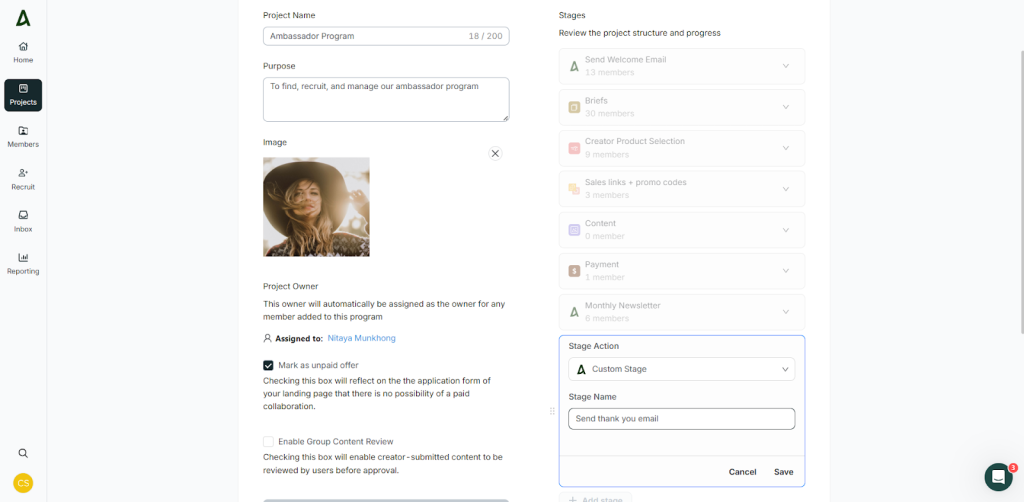
Aspire provides comprehensive campaign management tools, including customizable workflows, digital term sheets, product fulfillment, content approval processes, and payment processing. Users praise the platform for eliminating up to 90% of manual processes. The workflows are flexible enough to handle everything from simple product seeding to complex multi-stage collaborations. However, setting up these workflows initially requires time and expertise.
Source: Aspire

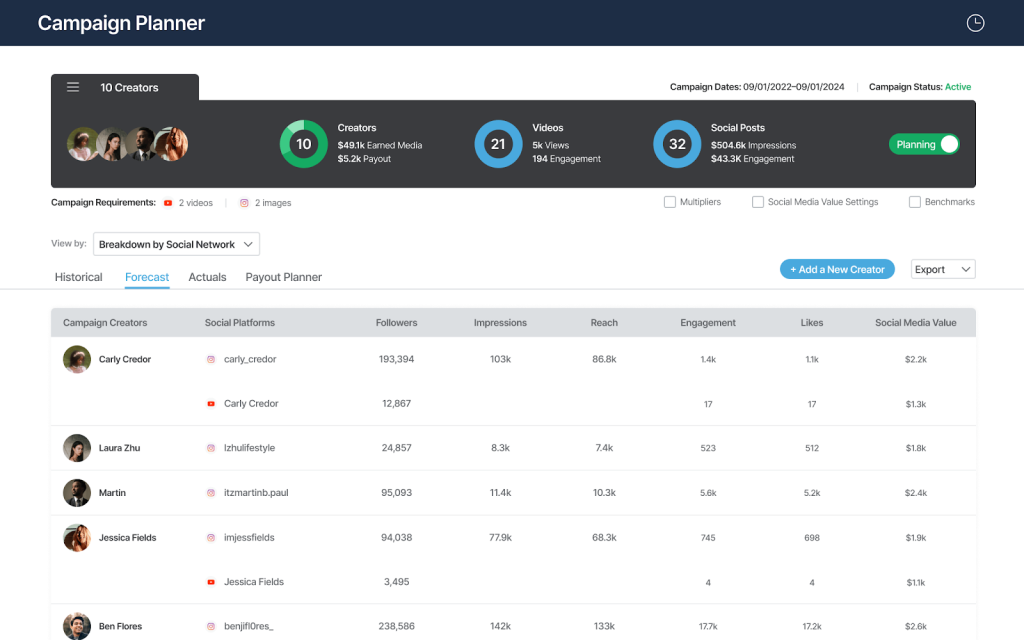
CreatorIQ offers enterprise-grade campaign management with features most brands will never use. You get predictive forecasting, multi-market campaign coordination, and the ability to handle hundreds of creators across dozens of simultaneous campaigns. The platform can manage complex workflows at scale. But this power comes with complexity that often requires dedicated training and ongoing support to utilize effectively.
Source: CreatorIQ

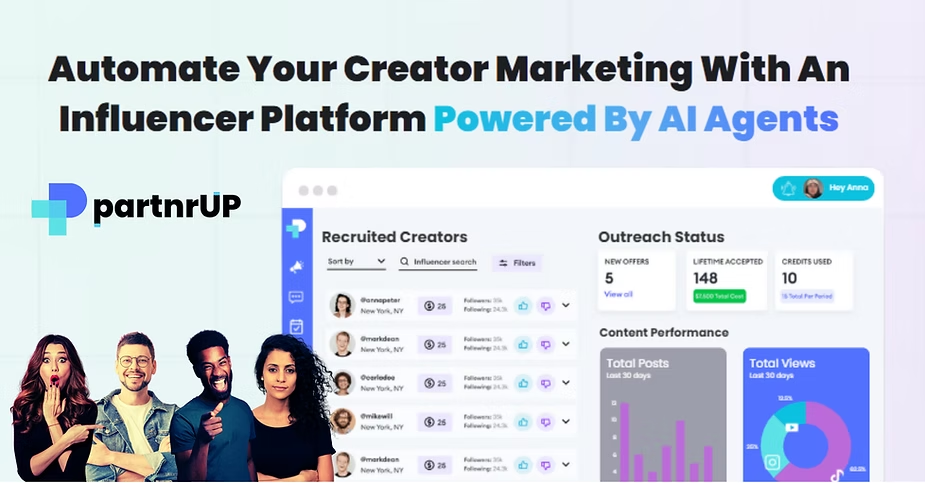
partnrUP uses specialized AI agents to handle the entire campaign lifecycle automatically.

This AI-powered approach means brands can launch campaigns and see their first influencers applying within 30 minutes, all without becoming influencer marketing experts.
Content rights and usage capabilities

How each platform handles content ownership and distribution shows its vision for influencer content’s value.

Aspire builds content rights negotiation into its digital term sheets, allowing brands to secure usage rights as part of the campaign setup. Their Content Library stores all approved content, making it easy to repurpose across channels. However, the actual rights you get depend on what you negotiate with each creator.
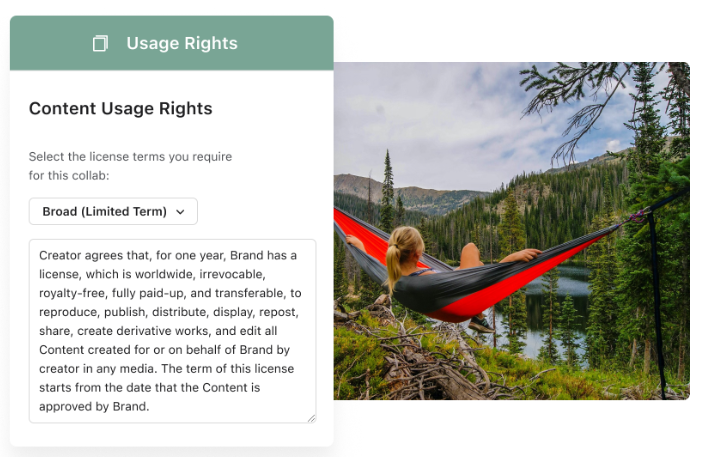
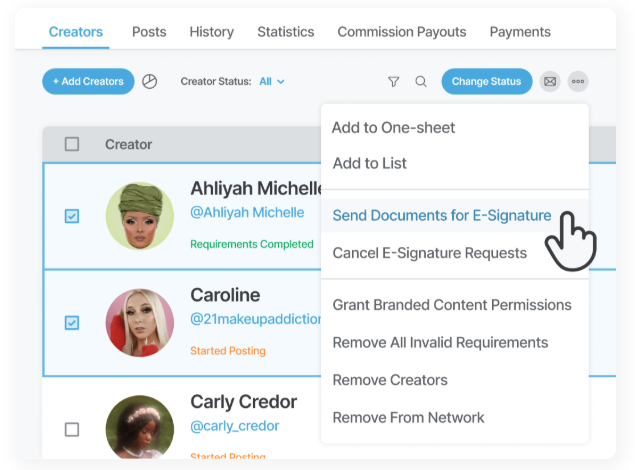
CreatorIQ similarly handles rights through its contract management system with DocuSign integration. Their Content Library is sophisticated, with extensive tagging and organization capabilities. The platform excels at helping enterprises manage vast libraries of creator content, but again, the specific rights depend on individual negotiations.
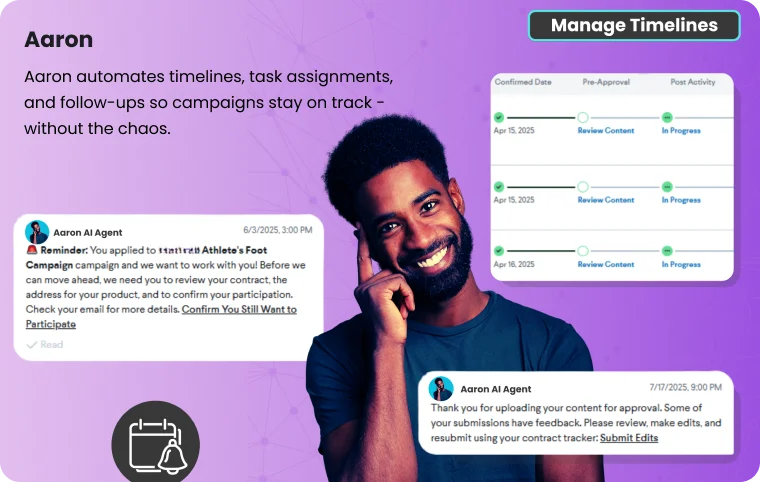
partnrUP standardizes the process with Aaron managing the entire approval and payment workflow automatically. All standard campaigns come with perpetual, royalty-free usage rights to repurpose creator content. The governor system determines when creators have completed all requirements before payment is released, with options to dispute if requirements weren’t fully met. All creator content is organized and accessible for repurposing across your marketing channels.
ROI measurement and analytics depth

Each platform’s approach to measurement reflects its target market’s sophistication.

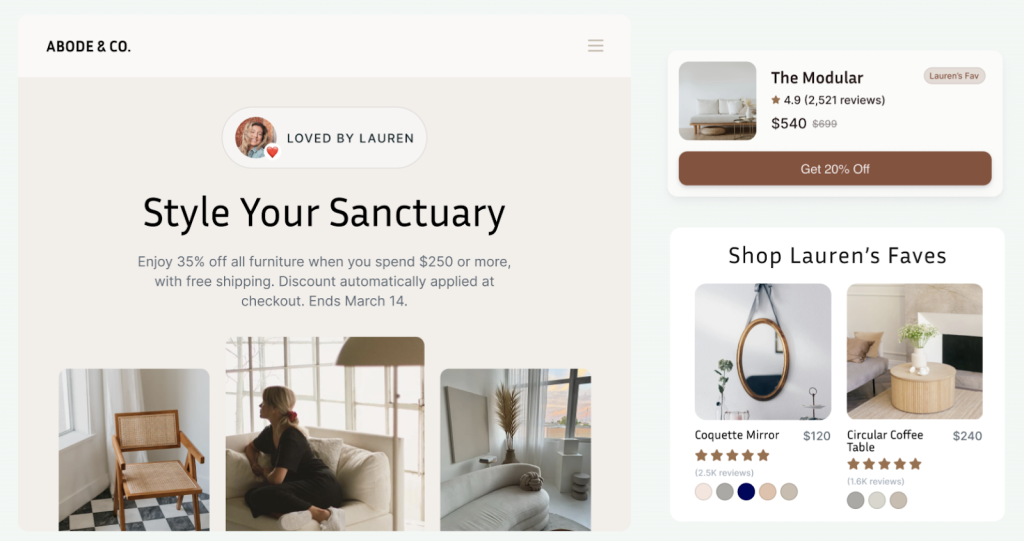
Aspire provides comprehensive analytics including social metrics, sales tracking through Shopify integration, and multi-touch attribution. Their Impact Dashboard offers snapshots of campaign performance. The platform can generate unique promo codes and track affiliate links to measure direct sales impact. For e-commerce brands using Shopify, the integration provides sales tracking capabilities for ROI calculation.
Source: Aspire

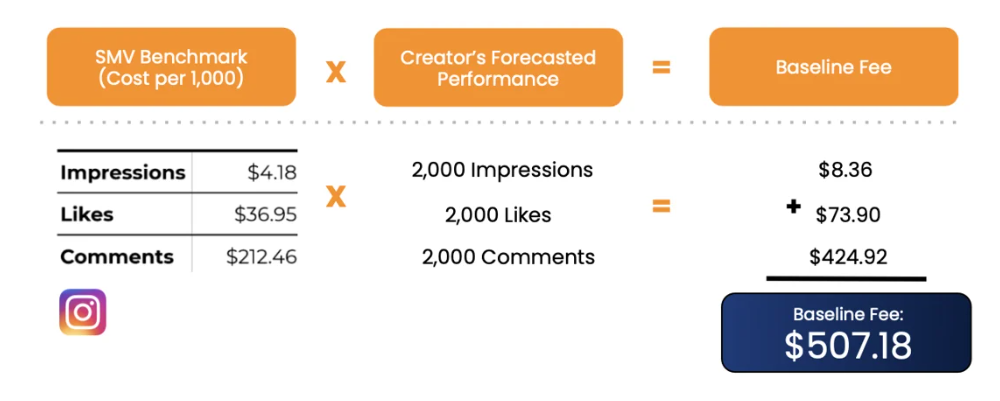
CreatorIQ delivers enterprise-level analytics with its proprietary Social Media Value metric, competitive benchmarking, and predictive analytics. They’re pushing for industry-standard metrics and recently launched a Share Of Metrics Suite. The platform provides deep analytical capabilities suited for organizations with dedicated analysts who can interpret complex data sets.
Source: CreatorIQ

partnrUP focuses on actionable metrics with real-time dashboards that track engagement, clicks, and conversions at the post, creator, and campaign level. The AI agents handle reporting automatically, providing clear insights into campaign performance without overwhelming users with unnecessary complexity. This makes data accessible for teams without dedicated analysts while still delivering the metrics that matter.

The learning curve impacts your time to value

How quickly your team can become productive matters more than the features you might use someday. Ultimately, it determines whether you’ll see results in days or months.

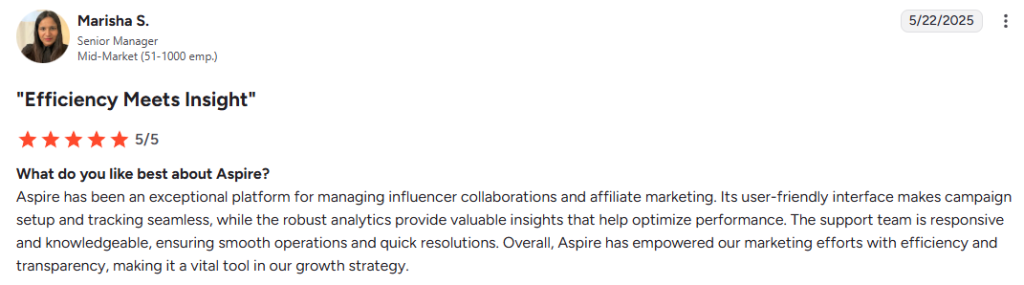
Aspire has a moderate learning curve. While users report that the interface is intuitive, getting fully set up and productive takes time. G2 data shows average implementation time of 3 months. The platform’s organization makes sense, though mastering all features takes time. The previously reported $2,000 onboarding fee suggests significant initial setup is required.
Source: g2

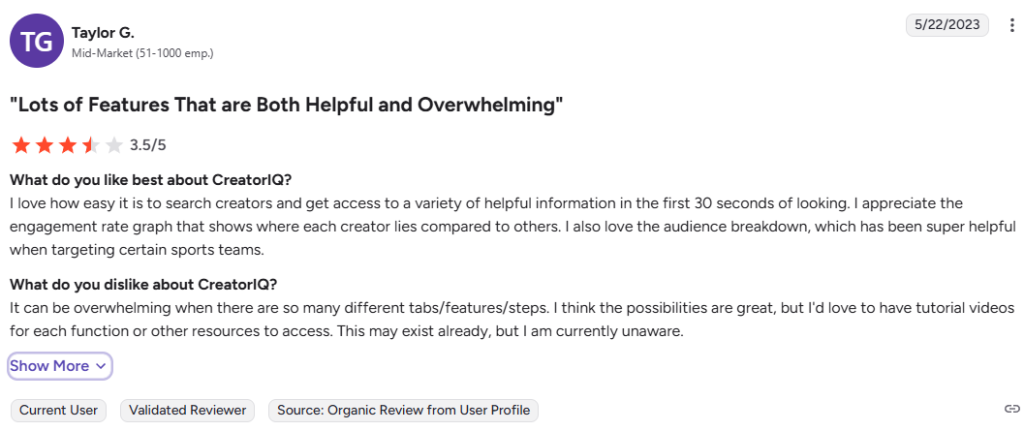
CreatorIQ has a steep learning curve. The platform’s complexity requires substantial time investment, with some users finding the interface challenging to navigate efficiently. While powerful, the extensive features and options can be overwhelming initially, requiring dedicated training to utilize effectively.
Source: g2

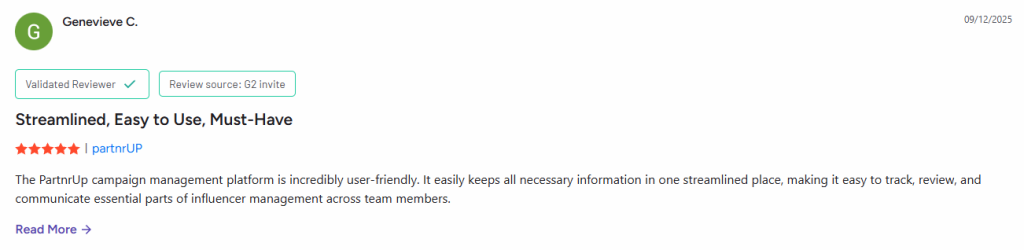
partnrUP is designed for immediate productivity. In fact, you can get your first influencers applying within 30 minutes of launching a campaign. The AI agents (Kyle, Lilly, and Aaron) guide you through each step, making influencer marketing accessible even if you’re new to the space. Kyle sources creators automatically, Lilly recruits them with personalized outreach, and Aaron manages the administrative work.

The platform can be set up quickly, with the free plan letting you learn without financial pressure. This AI-first approach opens the platform to users who aren’t experienced in influencer marketing or simply want a more efficient process.
Support models reflect target audiences

How each company supports its users reveals who they’re really built for. Moreover, it shows whether they understand the unique challenges agencies and growing businesses face.

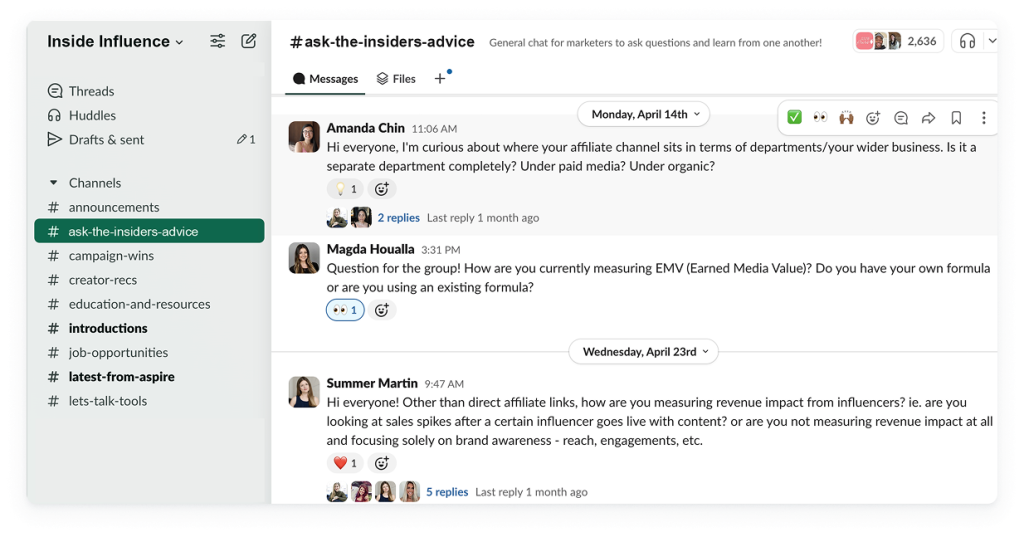
Aspire provides email support with dedicated account managers for higher tiers. Users generally praise the support team as responsive and knowledgeable. The platform includes a help center and the Creator Academy for education. They also foster a Coffee Shop community for peer learning.
Source: Aspire

CreatorIQ offers enterprise-level support with dedicated customer success managers. The quality is high, built on the assumption that you have a team dedicated to influencer marketing who can invest time in training and optimization sessions.

partnrUP provides online support across tiers, with priority support for higher plans. Additionally, the unique differentiator is their managed services option, where they can run your entire influencer program for you, acting as an extension of your team. This acknowledges that many brands want the benefits of influencer marketing without building internal expertise.

For agencies specifically, partnrUP offers capabilities that don’t exist elsewhere in the market: fully white-labeled platform experiences, multi-brand workspace management with customizable permissioning, flexible invoicing on a brand-by-brand basis, and crucially, the elimination of the payment processing burden between brands and creators. Agencies can apply different credit card or ACH information for each brand workspace, protecting them from invoice management risks while maintaining complete control within brand-specific environments.

Aspire vs CreatorIQ vs partnrUP: Which should you choose?

The best platform depends on whether you want to manage a traditional influencer marketing platform or have AI agents manage campaigns for you.

Choose Aspire if:

  • You have a dedicated marketing team ready to manually search databases and manage relationships
  • Your budget is $2,000-3,000/month for influencer marketing tools
  • You want comprehensive features and don’t mind a learning curve
  • You value having a Creator Marketplace for inbound interest
  • You’re comfortable working with the same pool of creators as other brands

Request an Aspire demo to see if it fits your needs

Choose CreatorIQ if:

  • You’re an enterprise with multiple brands or a large agency
  • You have a dedicated influencer marketing team
  • You need enterprise features like predictive analytics and competitive benchmarking
  • Budget is not a primary constraint
  • You require deep integrations with enterprise systems
  • You’re fine with searching through static databases

Contact CreatorIQ for enterprise pricing

Choose partnrUP if:

  • You want AI agents to source fresh creators dynamically, not from overused databases
  • You prefer getting your first influencers within 30 minutes instead of days or weeks
  • You want to test influencer marketing without upfront investment
  • You’re an agency needing white-label capabilities and elimination of payment processing burdens
  • You want transparent, usage-based pricing that aligns costs with outcomes
  • You prefer AI agents that handle everything automatically (Kyle sources, Lilly recruits, Aaron manages)
  • You want a fundamentally different approach to influencer marketing, not just another database to search

Start free with partnrUP and let the AI agents transform your influencer marketing

The influencer marketing platform landscape is evolving rapidly. While Aspire and CreatorIQ represent the traditional approach with static databases, complex features, and premium pricing, partnrUP points toward a future where AI not only assists but also actively sources, recruits, manages, and reports for you. The question isn’t which platform has the biggest database or most features, but which one will actually get you results quickly without overwhelming your team or budget.

Sometimes the best choice isn’t the most established one. It’s the one that reimagines the entire process. With partnrUP, you are not just choosing another platform. Instead, you are choosing to let AI agents handle influencer marketing while you focus on strategy and growth. From zero to first influencers in 30 minutes. That’s the difference between searching databases and having AI do the work for you.
‍

Read More On Our Blog
How to Build a Shoppable Video Strategy: From Content Brief to Conversion

The operational layer of shoppable video: brief fields, platform permissions, catalog checks, amplification rights, and the review loop that decides whether a good concept ever reaches a feed with a working product tag.
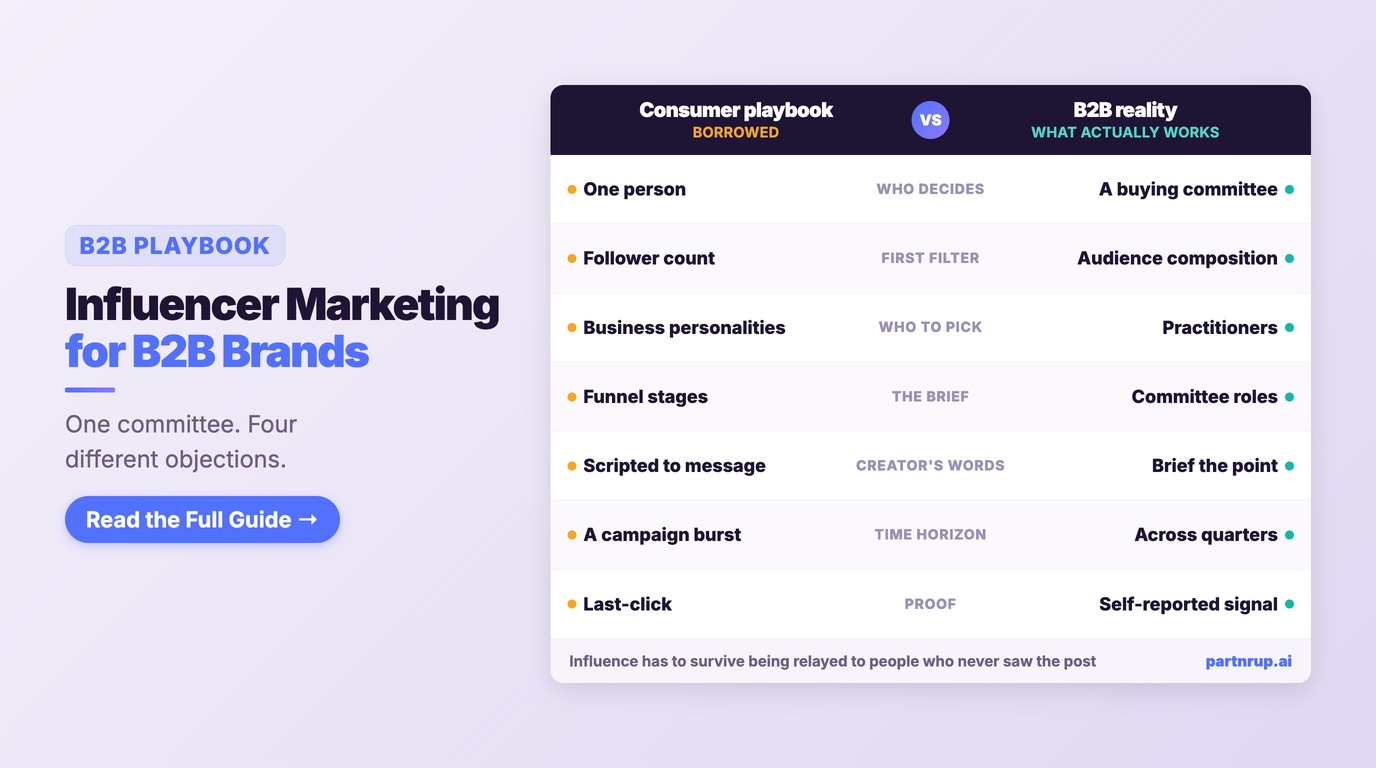
Influencer Marketing for B2B Brands: What Works and What Doesn't

B2B influencer marketing fails when it borrows a consumer playbook. What LinkedIn actually supports today, how to brief against a buying committee, and which measures survive a private relay.

Short-Form vs Long-Form Video: Which Drives Better Brand Results in 2026?

Short-form and long-form video are measured by different systems. What the platform ceilings actually are, why a view isn't one unit, and how to pick the format from the objective.

Turn creators into a revenue channel: the finance and payout layer most affiliate programs skip
The Affiliate Influencer Playbook: How to Turn Creators Into a Revenue Channel

A finance-side playbook for affiliate creator programs: forecasting revenue, deriving a commission ceiling from margin, running payouts at scale, and the 1099 and FTC obligations you inherit as the payer.

The Future of Creator Partnerships: What Brands Need to Prepare for in 2027

The 2027 rules for creator partnerships are already written. The AI Act's 2 December 2026 deadline, automatic platform AI labels, C2PA provenance, and the FTC Reviews Rule — with what to change in your contracts now.

Organic vs Paid Influencer Content: Which Drives Better ROI?

Organic and paid influencer content overlap where ROI is decided. A mechanics-level breakdown of Spark Ads, partnership ads, permission scopes and format limits — and the sequence that follows from them.

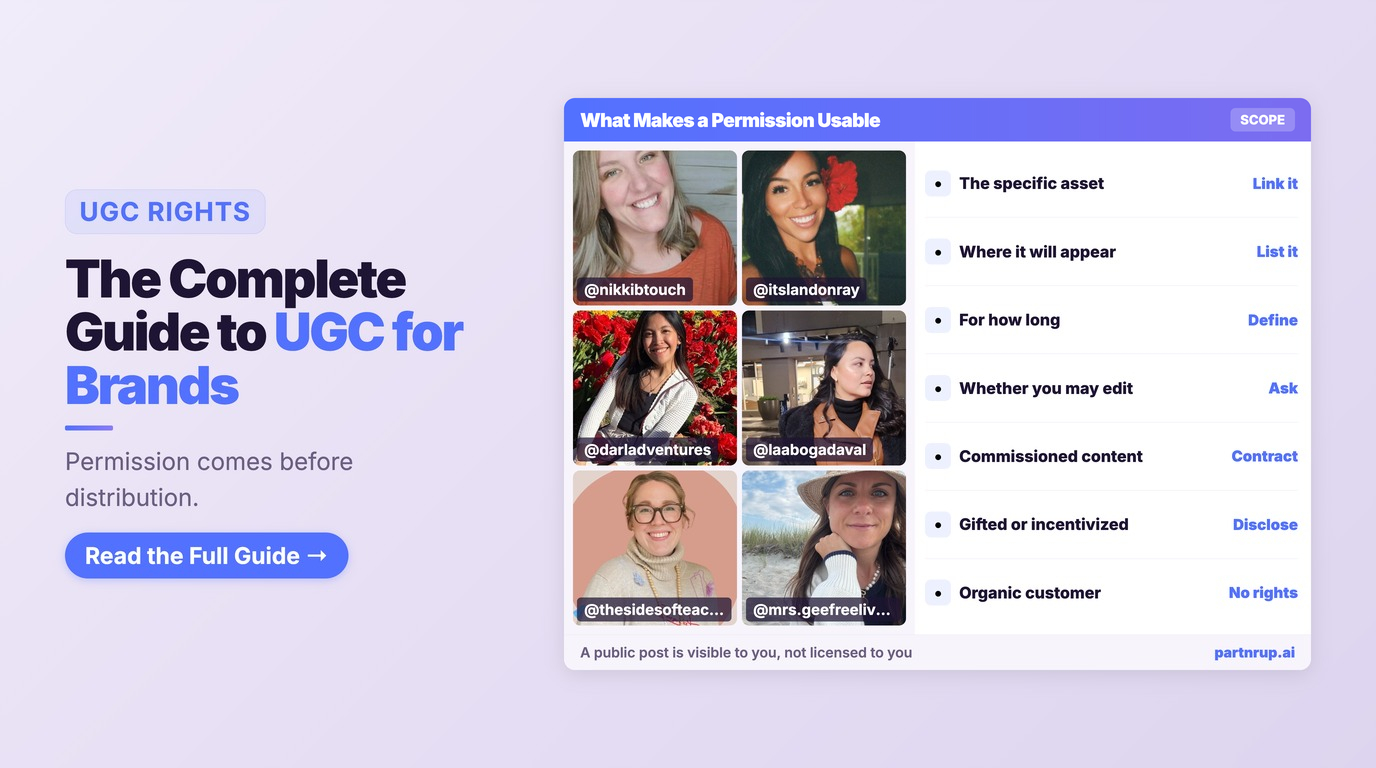
The Complete Guide to UGC for Brands: Strategy, Rights & Distribution

Most UGC guides assume the hard part is supply. It is not - it is that your best-performing content is often something you never commissioned and cannot legally use. Here is how to acquire, scope, and distribute it.

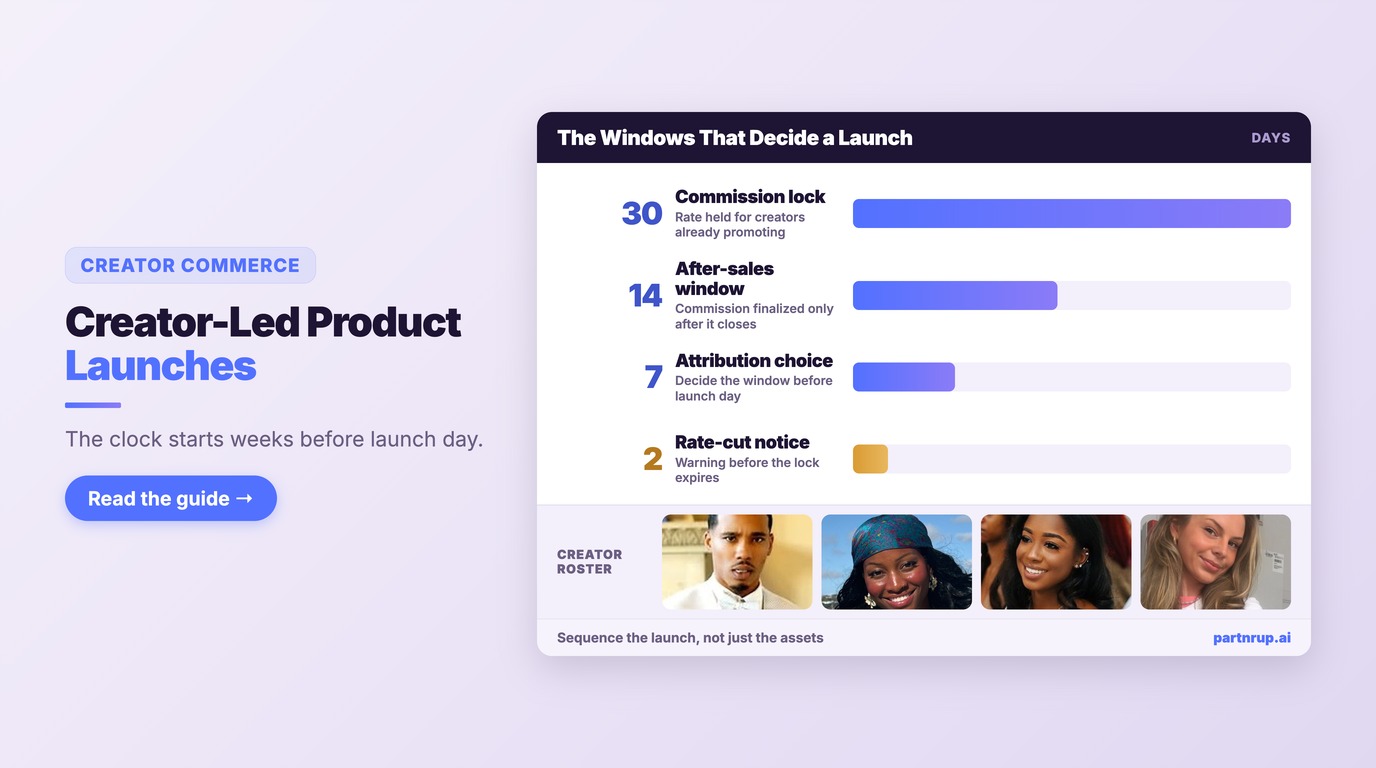
Creator-Led Product Launches: How Shoppable Content Drives Sales

A launch-sequencing guide to creator-led product launches: the three windows, TikTok's 30-day commission lock, the 14-day after-sales payout lag, and where the purchase now completes.

Insights on the Future of Creator Marketing

Explore strategies, trends, and thought leadership from the team building the next generation of influencer marketing.

View More

How to Build a Shoppable Video Strategy: From Content Brief to Conversion

The operational layer of shoppable video: brief fields, platform permissions, catalog checks, amplification rights, and the review loop that decides whether a good concept ever reaches a feed with a working product tag.

Learn More

Influencer Marketing for B2B Brands: What Works and What Doesn't

B2B influencer marketing fails when it borrows a consumer playbook. What LinkedIn actually supports today, how to brief against a buying committee, and which measures survive a private relay.

Learn More

Short-Form vs Long-Form Video: Which Drives Better Brand Results in 2026?

Short-form and long-form video are measured by different systems. What the platform ceilings actually are, why a view isn't one unit, and how to pick the format from the objective.

Learn More
Turn creators into a revenue channel: the finance and payout layer most affiliate programs skip

The Affiliate Influencer Playbook: How to Turn Creators Into a Revenue Channel

A finance-side playbook for affiliate creator programs: forecasting revenue, deriving a commission ceiling from margin, running payouts at scale, and the 1099 and FTC obligations you inherit as the payer.

Learn More

The Future of Creator Partnerships: What Brands Need to Prepare for in 2027

The 2027 rules for creator partnerships are already written. The AI Act's 2 December 2026 deadline, automatic platform AI labels, C2PA provenance, and the FTC Reviews Rule — with what to change in your contracts now.

Learn More

Organic vs Paid Influencer Content: Which Drives Better ROI?

Organic and paid influencer content overlap where ROI is decided. A mechanics-level breakdown of Spark Ads, partnership ads, permission scopes and format limits — and the sequence that follows from them.

Learn More

The Complete Guide to UGC for Brands: Strategy, Rights & Distribution

Most UGC guides assume the hard part is supply. It is not - it is that your best-performing content is often something you never commissioned and cannot legally use. Here is how to acquire, scope, and distribute it.

Learn More

Creator-Led Product Launches: How Shoppable Content Drives Sales

A launch-sequencing guide to creator-led product launches: the three windows, TikTok's 30-day commission lock, the 14-day after-sales payout lag, and where the purchase now completes.

Learn More

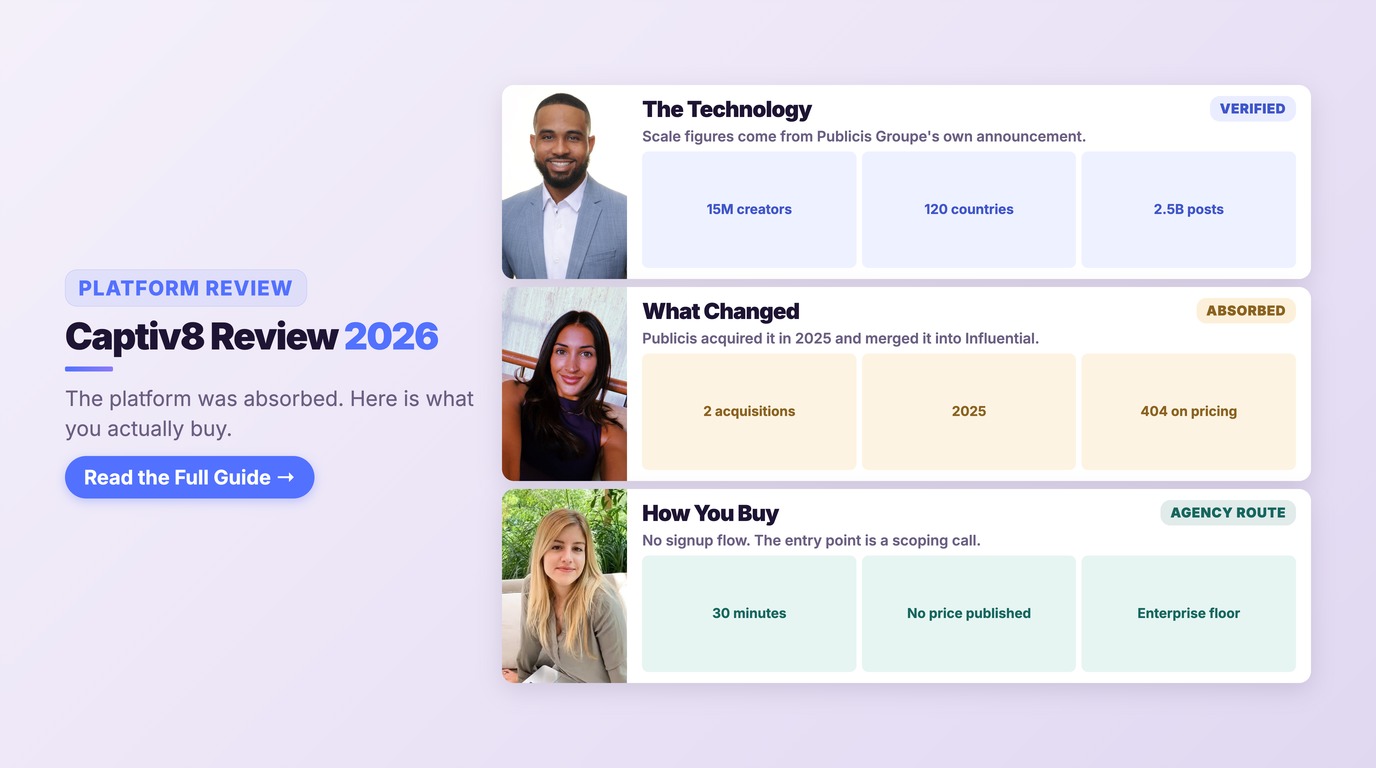
Captiv8 Review 2026: Is This Enterprise Influencer Platform Right for You?

Captiv8's homepage now says it has been integrated into Influential. Here is what that means for buyers in 2026 — what survived the merge, who the platform still fits, and when to look elsewhere.

Learn More

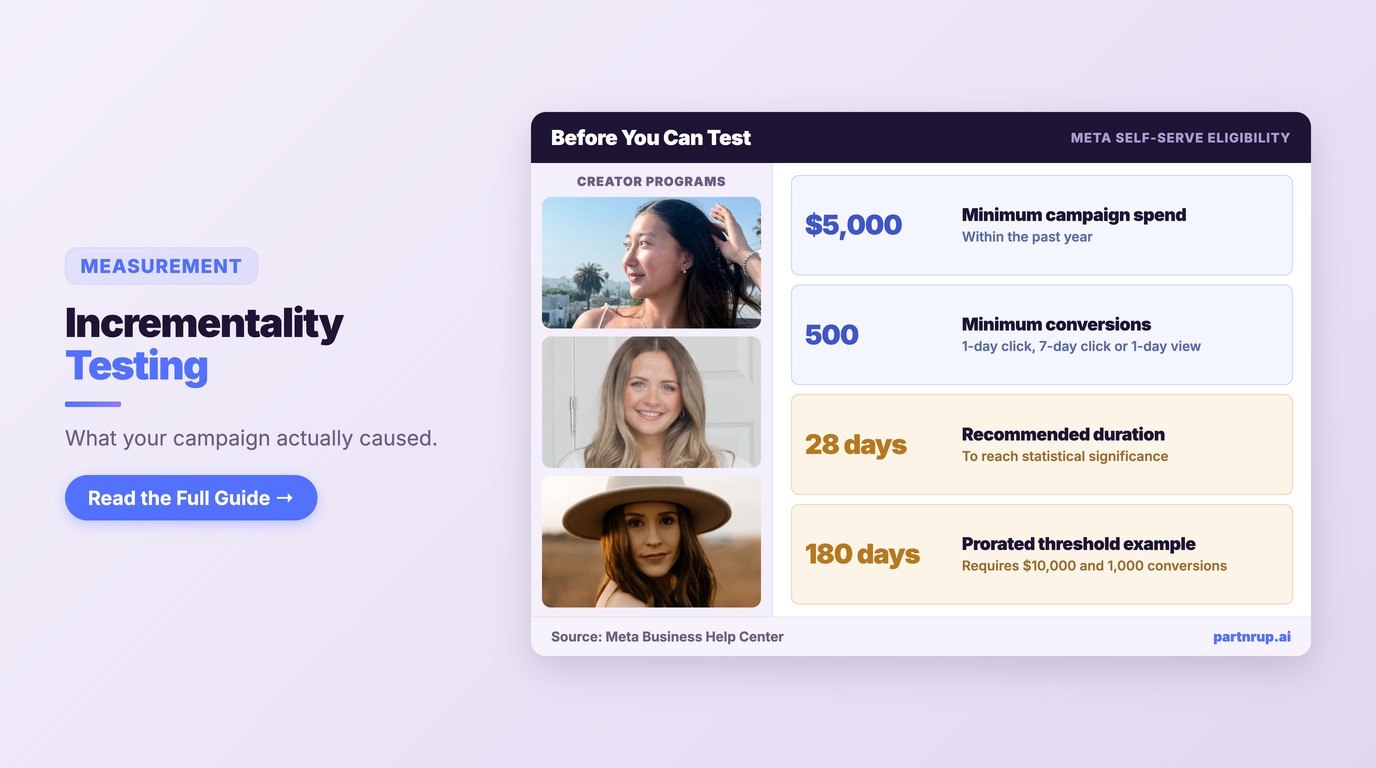
Incrementality Testing for Influencer Campaigns: A Brand Guide

Incrementality testing shows what a creator campaign actually caused, not what got credit. A practical guide to test design, Meta's published eligibility thresholds, holdout sizing, and the four ways creator campaigns break standard experimental design.

Learn More

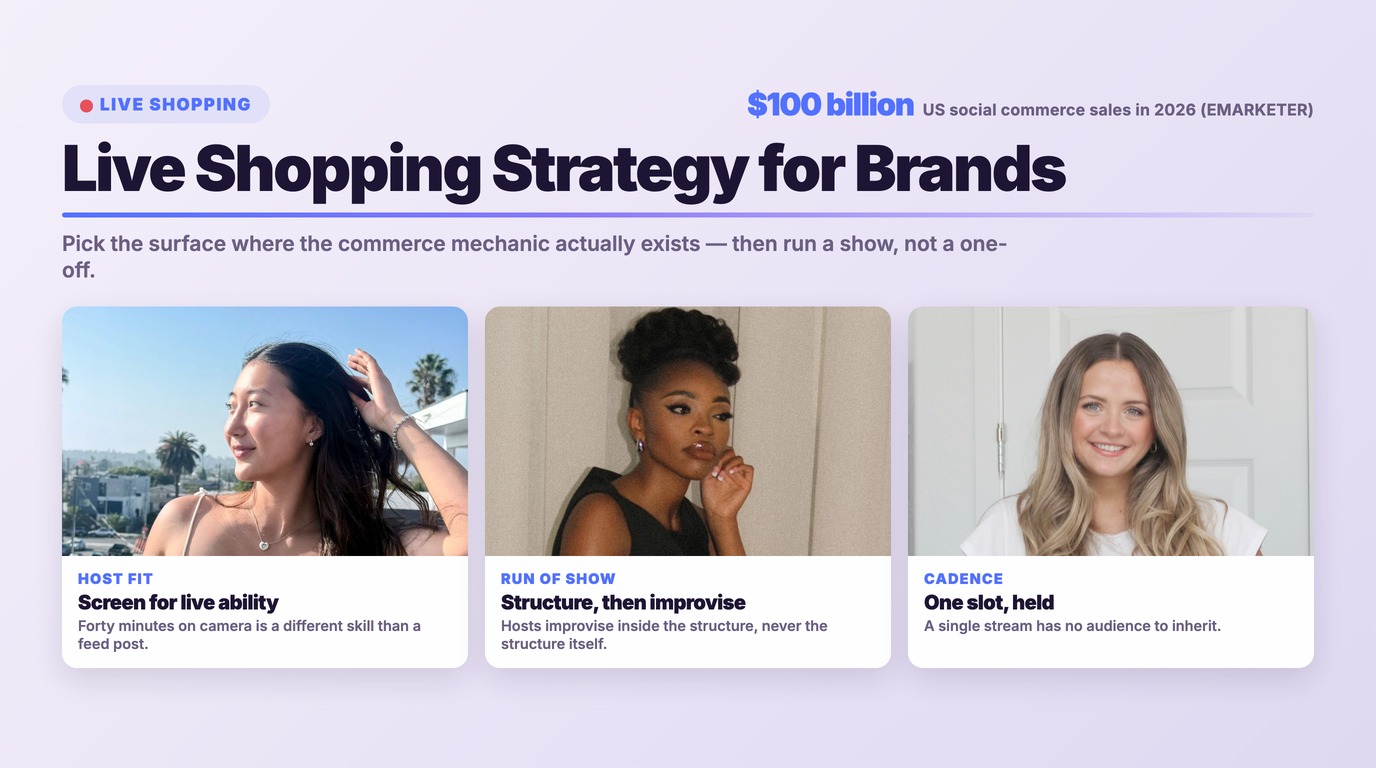
Live Shopping Strategy for Brands: From TikTok to Amazon Live

A practical live shopping guide for brands: where the commerce mechanic genuinely exists, the three show formats worth running, a forty-minute run of show, host selection, cadence, measurement, and what to do with the replay.

Learn More
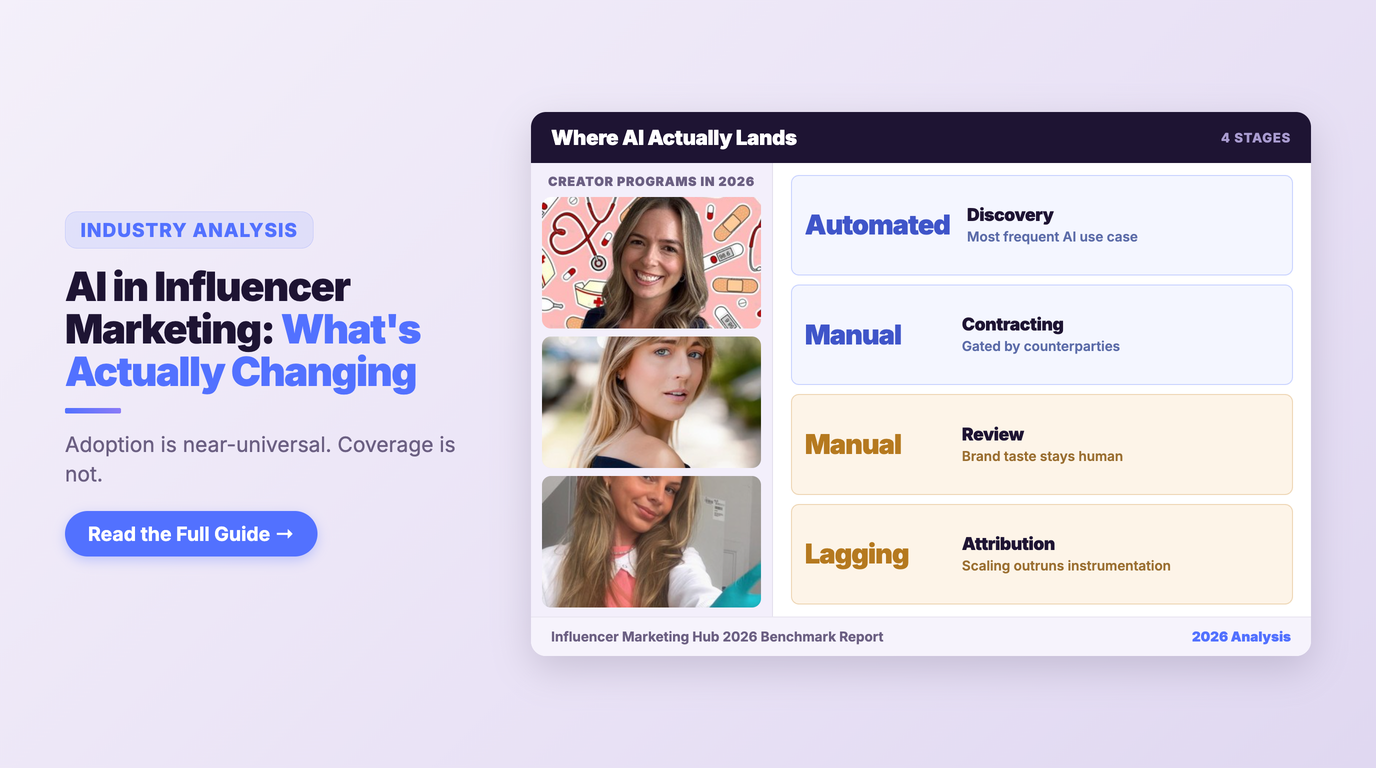
AI in influencer marketing 2026: where AI actually lands across the creator workflow

AI in Influencer Marketing: What's Actually Changing in 2026

Only 10.56% of influencer marketers report no AI use at all, yet AI adoption is concentrated almost entirely in creator discovery. This guide maps where AI has actually landed in the 2026 workflow, why contracting, content review and attribution stayed manual, and the order to fix them in.

Learn More

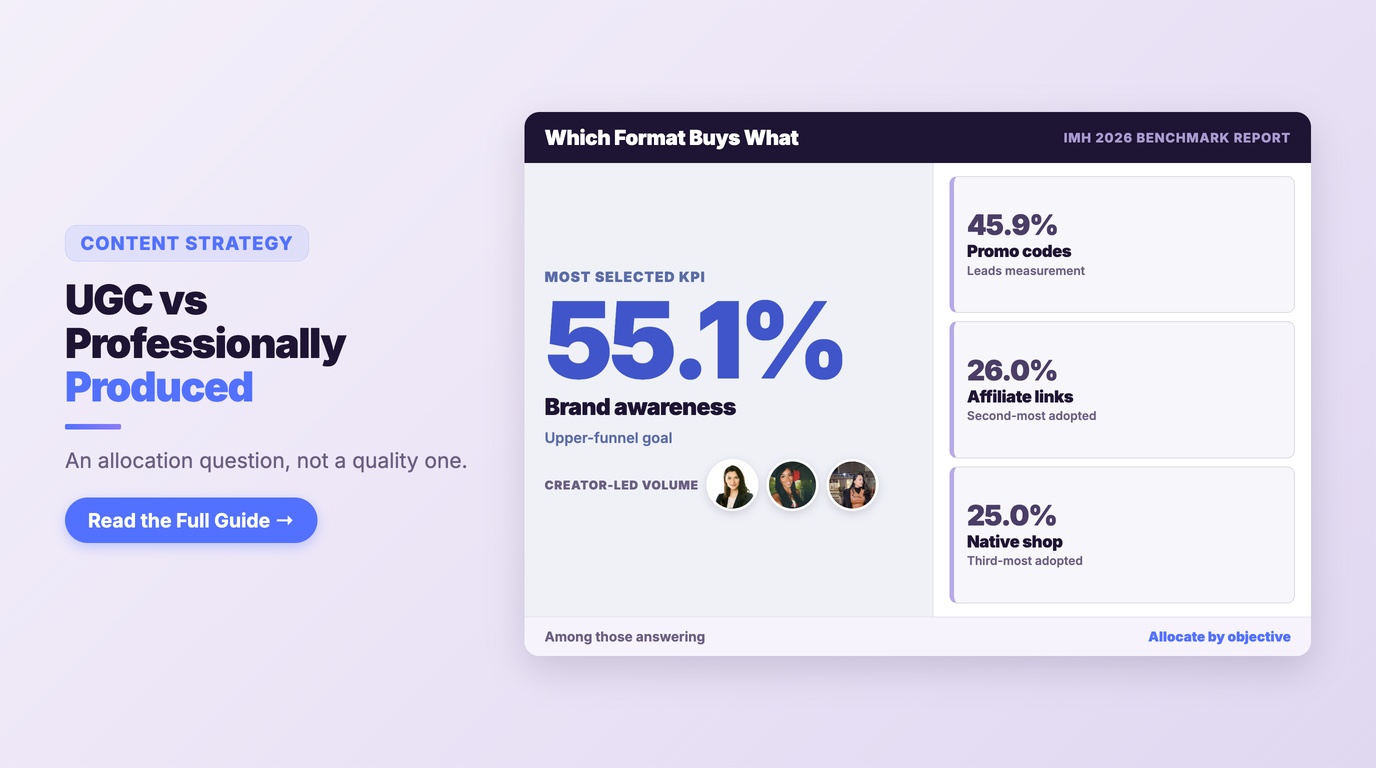
UGC vs Professionally Produced Content: When to Use Each and Why

A decision framework for allocating budget between creator-shot UGC and professionally produced content by objective, platform, and campaign type.

Learn More

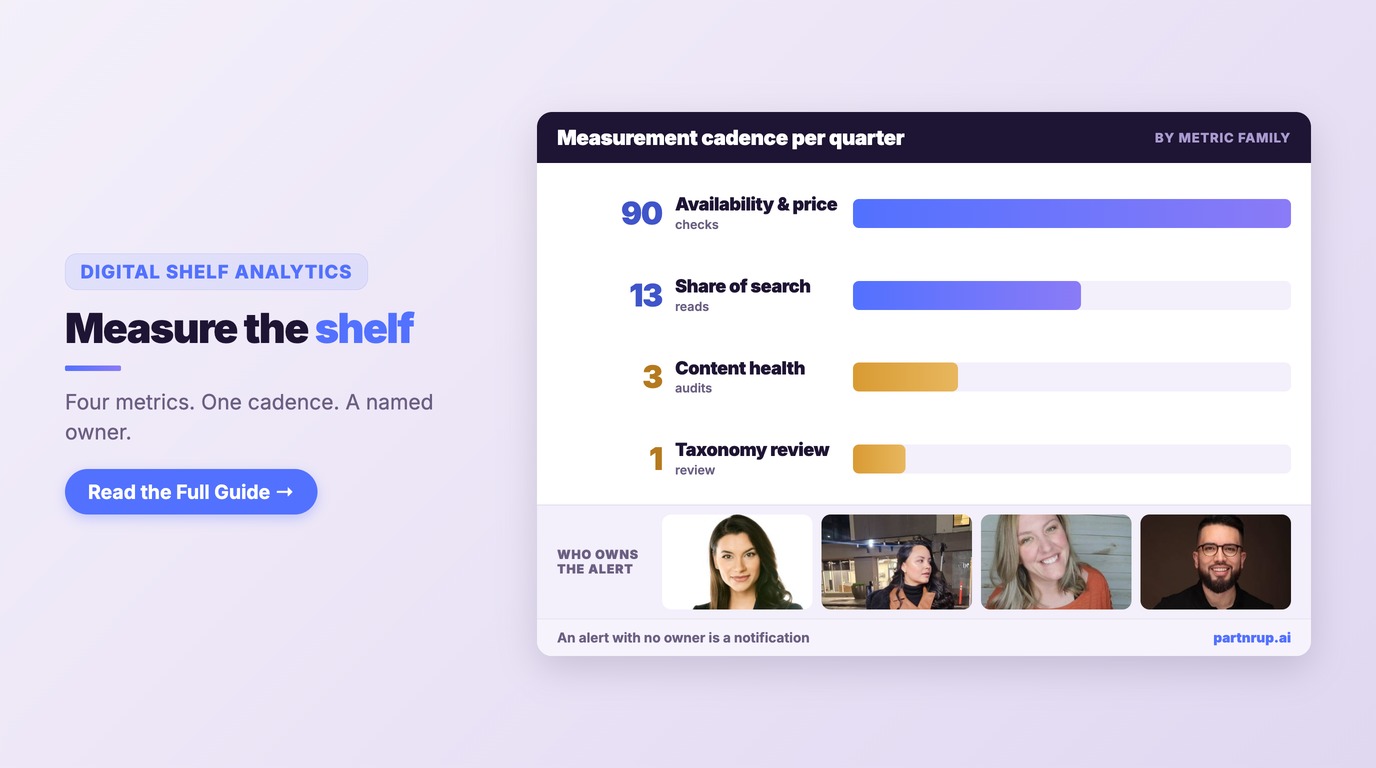
Digital Shelf Analytics: How Brands Use Creator Content to Win Product Search

Digital shelf analytics means measuring product discovery on a defined cadence with defined action thresholds. What to track, how often, how to tell signal from noise, and where creator content fits as the response.

Learn More

How to Set Influencer Marketing Budgets Based on Expected ROI

Marketing budgets are flat at 7.7% of revenue. Instead of incrementing last year's number, work backward from the return the business needs to the spend that implies — and source the efficiency number honestly.

Learn More
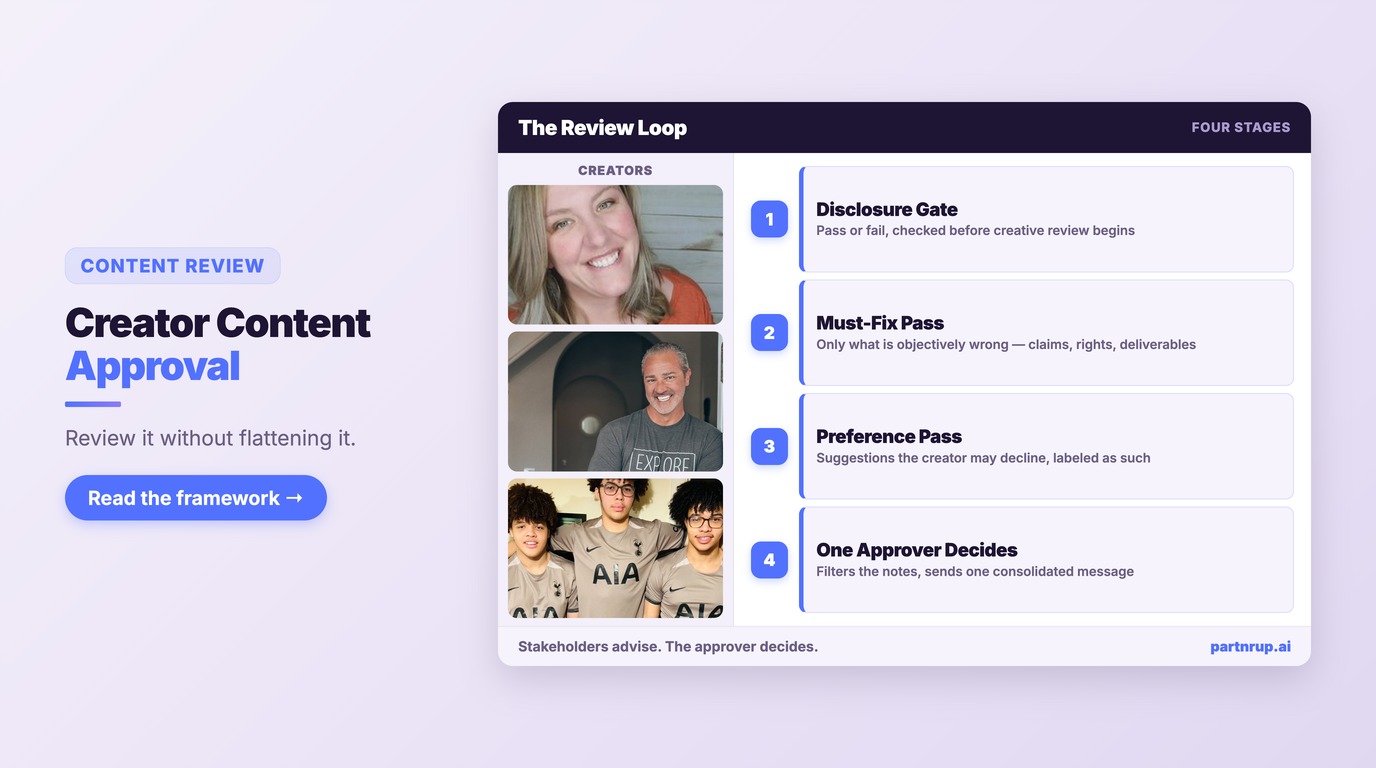
Four-stage creator content review loop: disclosure gate, must-fix pass, preference pass, one approver decides

Creator Content Approval Process: How to Review Without Killing Authenticity

Two-thirds of influencer programs run entirely in-house, which means approvals usually land on a marketer with no defined review process. This guide covers the review loop itself: separating must-fix from preference, naming one approver instead of a committee, the FTC disclosure floor the brand is accountable for, how to write revision requests that preserve voice, and the four process metrics worth tracking.

Learn More

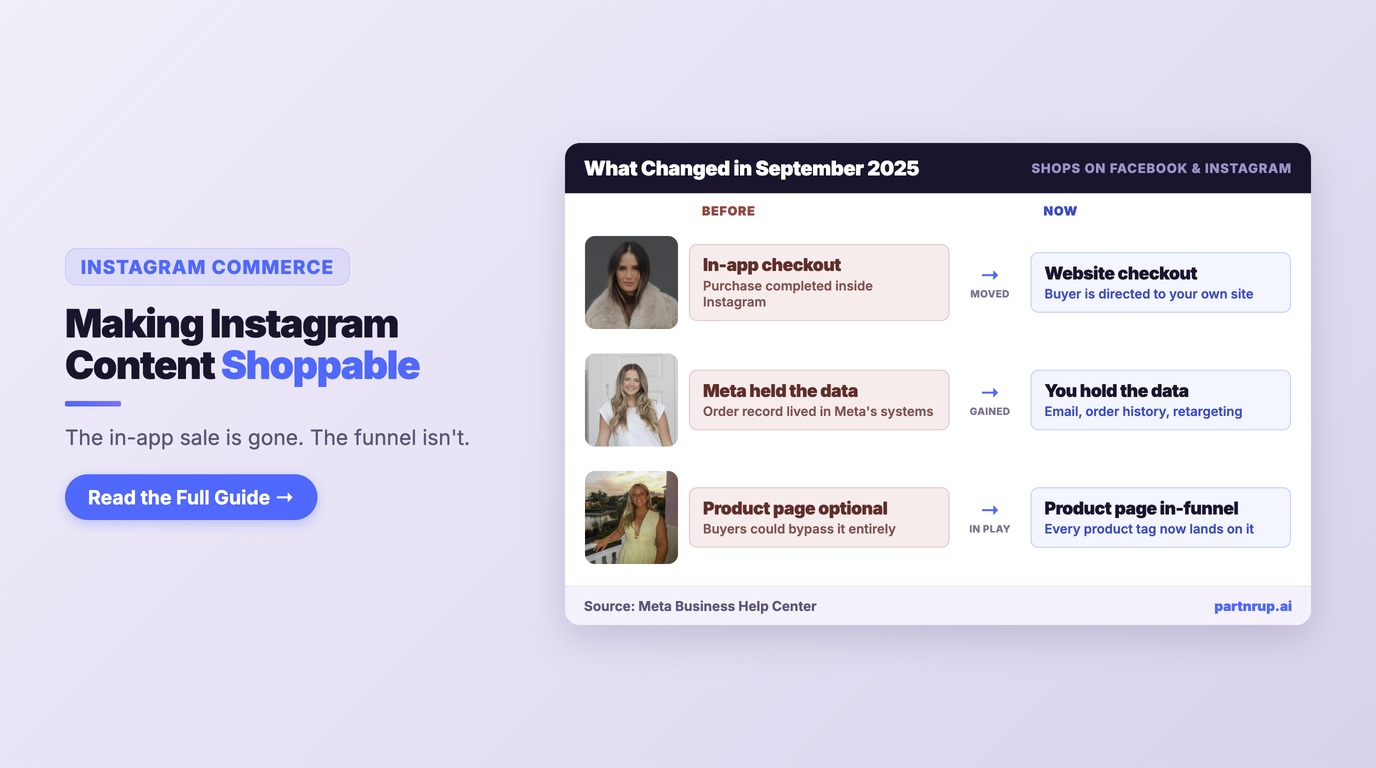
How to Make Instagram Content Shoppable: The Brand Strategy Guide

US social commerce will pass $100 billion in 2026, but Instagram moved Shops to website checkout in September 2025 - the in-app sale is gone. This guide covers what still works: eligibility, catalog and checkout URL setup, product tagging across Reels, Stories and feed posts, approving creators as branded content partners, and measuring a funnel that now splits across two systems.

Learn More

How To Do An Influencer Search?

When planning an influencer marketing campaign, one of the most challenging parts is often finding the right influencers. Partnering with the right influencers makes all the difference in your campaign, but many marketers don’t know how to find them in the sea of creators producing content on social media.

Learn More

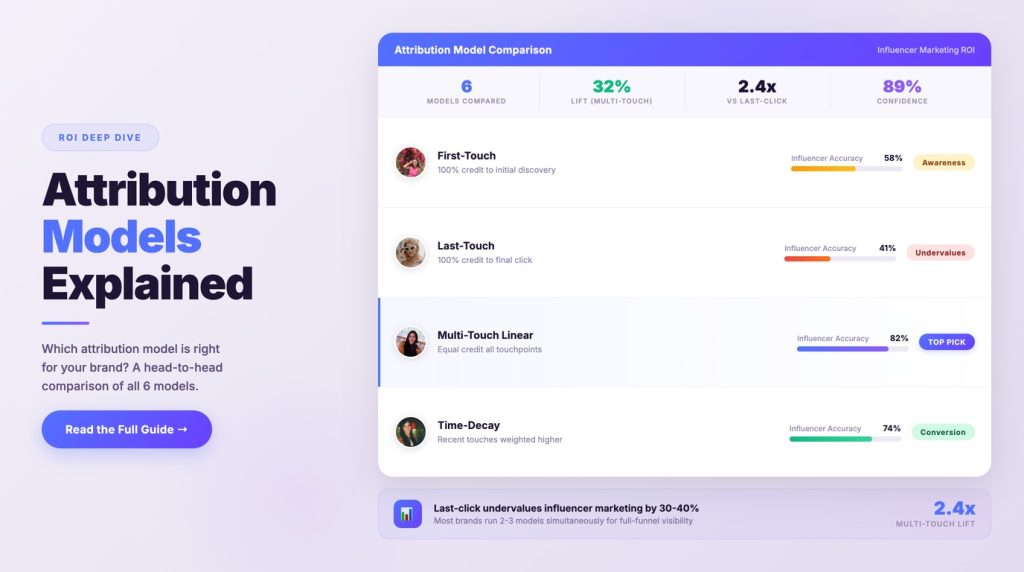
Influencer Marketing Attribution Models: Which One Is Right for Your Brand?

You've decided to measure influencer marketing ROI — good. Now you face the next challenge: which attribution model do you use? First-touch? Last-touch? Multi-touch? Incrementality? Each model tells a different story about your campaigns, and choosing the wrong one can lead to decisions that hurt performance.

Learn More

Creator Commerce Is Becoming the Operating Model for Influencer Marketing

Influencer marketing used to be easier to define. A brand hired a creator, the creator made content, the content was published, and the campaign was measured.

Learn More

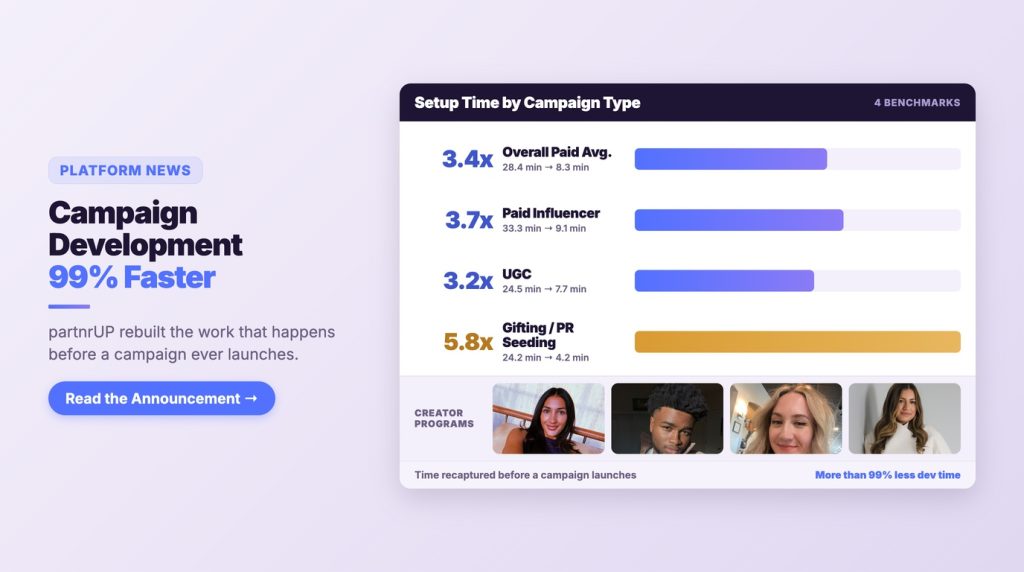
partnrUP’s Agentic Influencer Marketing Platform Cuts Campaign Development Time by More Than 99%

The rebuilt platform reduces more than 24 hours of manual campaign development work to minutes, while making paid creator campaign setup 3.4x as fast across influencer and UGC programs.

Learn More

Influencer Marketing Industry Report H2 2026: What’s Working Right Now

87.49% of marketers expect their influencer budgets to increase in 2026, and among those, 72.22% expect the increase to exceed 50%. But the same survey puts brand awareness as the most-selected KPI at 55.1% while 65.9% expect payback within a single month. Those two facts cannot drive the same progr

Learn More

Influencer Marketing Metrics That Actually Matter in 2026

Walk into any creator program review and you will find a dashboard assembled from whatever each platform happened to export. Every section is accurate and together they answer no question anyone asked. The fix is sorting metrics by how long each needs before it is stable enough to act on — 72 hours,

Learn More

Social Commerce vs Traditional E-commerce: What Brands Need to Know

US social commerce sales will surpass $100 billion in 2026 — a milestone that sounds enormous until you set it beside the $1.5 trillion Americans will spend on retail ecommerce overall. Social commerce is growing far faster, but it is still roughly one dollar in every fifteen spent online. That gap is the single most misunderstood fact in ecommerce strategy right now, and it explains why the “social is replacing your website” pitch keeps failing brands that believe it.

Learn More

How AI Agents Are Replacing Traditional Influencer Marketing Workflows

87.49% of marketers expect their influencer marketing budget to increase in 2026, and 72.22% plan increases of 50% or more (Influencer Marketing Hub 2026 Benchmark Report, 600+ respondents). At the same time, 66.3% run their programs entirely in-house. That combination is the whole story: dramatically more money flowing through influencer programs, managed by the same small teams using the same manual workflows they built when the channel was a pilot. Something has to give — and what is giving is the workflow itself.

Learn More

How to Vet Creators for Brand Sponsorships: The Complete Brand Guide

US creator ad spend is forecast to reach $44 billion in 2026, so the cost of a bad pick is rising with every budget increase. A creator with 500,000 followers and 0.3% engagement is almost always a worse investment than one with 25,000 followers and 8% — which is why follower count is the least reli

Learn More

How to Write a Creative Brief for Creator Campaigns

Most brand teams spend under 15 minutes on a creative brief, usually by copying last quarter's. That document is the bridge between brand intent and a creator's voice, and when it fails it fails in one of two directions: over-prescribing every detail until the creator is reading a script, or under-s

Learn More

Brand Lift Studies for Influencer Marketing: Do They Actually Work?

Brand awareness is the single most-selected KPI in influencer marketing, chosen by 55.1% of marketers in the IMH 2026 Benchmark Report — and it is also the hardest thing in the channel to prove. Brand lift studies are the instrument built for that gap, though they need 1,000 respondents per group an

Learn More

How to Scale Creative Production Without Losing Brand Authenticity

Manual quality control breaks at roughly 100 content assets per month. Past that, brand consistency does not erode gradually — it fails at a specific point, usually when approval becomes the bottleneck. Two-thirds of brands now run programs entirely in-house, which is where that ceiling gets hit fir

Learn More

Building a Creator Commerce Strategy From Scratch

48% of creator ad buyers now treat creators as a must-buy line item, but most brands still have no repeatable way to turn a partnership into attributable revenue. Creator commerce starts with picking a model your margins can support — affiliate programs want products under $100 and 40%-plus margins

Learn More

How AI Agents Are Transforming Influencer Marketing Operations

Two-thirds of brands now run creator programs entirely in-house, often with teams of three or fewer, and only 10.56% of marketers report using no AI at all. The work those small teams are drowning in is not strategy — it is discovery, outreach, deliverable chasing and reporting, which is exactly whe

Learn More

Creator Commerce Metrics: What to Track, What to Ignore

A single creator might publish ten pieces of content where two drive 80% of the revenue. If your reporting cannot see that split, it cannot tell you who to renew — and with 65.9% of marketers expecting payback inside a month, there is no room to track the wrong signals.

Learn More

9 Aspire Alternatives: Modern Influencer Marketing Platforms for Every Budget

67% of brands plan to increase their influencer marketing budgets in 2026 — yet many are stuck on platforms that charge enterprise pricing for mid-market features. If your team has outgrown Aspire (formerly AspireIQ) or simply needs a better fit for your workflow and budget, you’re not alone.

Learn More

The Creator Economy in 2026: Key Stats and Trends Every Brand Needs to Know

The creator economy surpassed $250 billion in total market value in 2025, and by every major industry forecast, 2026 is the year it reshapes how brands allocate marketing budgets entirely. Yet most marketing leaders still treat creator partnerships as a line item — not a growth channel. The gap between brands that understand the creator economy in 2026 and those still running one-off sponsorships is widening fast, and the data makes it impossible to ignore.

Learn More

How to Scale Creative Production Without Losing Authenticity

Brands running creator programs hit a wall around 15-20 active partnerships: content quality starts slipping, messaging drifts off-brand, and the team spends more time managing revisions than building relationships. A 2026 CreatorIQ benchmark report found that brands scaling beyond 25 creators per quarter saw a 34% increase in revision cycles — yet those that implemented structured creative systems maintained approval rates above 85% even at 100+ partnerships.

Learn More

How AI Matches Creators to Brands: Beyond Follower Count

82% of marketers who switched from follower-based selection to AI-powered creator matching saw campaign ROI improve by 3x or more — yet most brands still choose influencers the same way they did in 2019: scrolling feeds, counting followers, and guessing. The gap between “good enough” creator selection and genuinely predictive matching is now the single biggest lever in influencer marketing performance.

Learn More

Tracking Creator Affiliate Links: Tools, UTMs, and Attribution Best Practices

63% of brands running creator affiliate programs say their biggest challenge is tracking which creator actually drove a conversion. Not finding creators. Not negotiating rates. Tracking. The gap between “a creator posted about our product” and “that post generated $47,000 in revenue” is where most programs either scale or stall.

Learn More

Captiv8 vs CreatorIQ (vs partnrUP): Which Enterprise Platform Delivers More?

The influencer marketing industry surpassed $24 billion in 2024 according to Influencer Marketing Hub — and choosing the wrong one can lock your team into 12-month contracts with tools that don’t match your workflow. When you’re evaluating Captiv8 vs CreatorIQ, the differences aren’t obvious from feature pages alone. Both platforms target enterprise brands, both claim AI-powered discovery, and both come with price tags that demand executive approval.

Learn More

How Brands Are Using AI to Scale Creator Programs Without Adding Headcount

63% of marketing teams managing creator programs say they’ve hit a ceiling — not because of budget, but because of bandwidth. The average brand partnership manager juggles 47 creator relationships simultaneously, spending 11 hours per week on manual outreach alone. Meanwhile, the brands that are scaling to 200+ active creators without hiring additional staff share one thing in common: they’ve moved their workflow backbone to AI.

Learn More

AI Creator Matching vs. Manual Influencer Discovery: A Head-to-Head

Manual vetting for a single campaign runs 40 to 60 hours of total team effort — 15 to 20 hours browsing platforms, 8 to 12 pulling demographic data, 5 to 8 reviewing past content, and 10 to 15 on outreach. AI matching compresses that to under four hours, which raises the real question: does it retur

Learn More

Content Repurposing Strategy: Getting Maximum Value from Creator Assets

Brands that repurpose creator content across channels see 3x more engagement per dollar spent than those using assets once — yet 68% of marketing teams still treat every creator deliverable as a single-use asset. The result? Thousands of dollars in high-performing content sitting unused in shared drives, never reaching the audiences that would convert.

Learn More

How to Structure Creator Affiliate Programs That Actually Convert

Brands that structure their creator affiliate programs with clear commission tiers, performance tracking, and dedicated creator support generate 3.2x more affiliate revenue than those running ad-hoc partnerships. Yet the majority of ecommerce teams still launch affiliate programs with flat-rate commissions, generic tracking links, and zero onboarding — then wonder why creators stop posting after week two.

Learn More

GRIN Pricing 2026: What You’ll Actually Pay and a Smarter Alternative

Enterprise influencer software pricing is one of the least transparent topics in martech — and GRIN is no exception. A 2024 Forrester survey found that 67% of marketing technology buyers list “lack of transparent pricing” as their top frustration with SaaS vendors. When it comes to influencer marketing platforms, that problem is even more pronounced: almost every vendor hides their actual cost behind a “contact sales” wall.

Learn More

How Brands Are Winning on TikTok Shop in 2026

TikTok Shop’s U.S. GMV surpassed $20 billion in the first half of 2026, making it the fastest-growing social commerce channel in the market. Brands that cracked the code early are now generating 15-30% of their DTC revenue through the platform — while their competitors are still debating whether TikTok is “right for their brand.”

Learn More

7 Aspire Alternatives: Modern Influencer Marketing Platforms for Every Team

67% of brands plan to increase their influencer marketing budgets in 2026 — yet many are stuck on platforms that charge enterprise pricing for mid-market features. If your team has outgrown Aspire (formerly AspireIQ) or simply needs a better fit for your workflow and budget, you’re not alone.

Learn More

Creator Affiliate Tracking: Best Tools and Methods for Brands in 2026

Brands lose an estimated 20-30% of their creator-driven revenue to poor attribution — sales that actually happened but were never tracked back to the creator who drove them. In a channel where proving ROI is already the top challenge, leaky tracking infrastructure turns a winnable argument into an unwinnable one.

Learn More

Influencer Marketing KPIs Every Brand Should Track in 2026

76% of marketing leaders say measuring influencer marketing performance is their biggest challenge, yet the problem isn’t a lack of data — it’s tracking the wrong metrics. Brands that still evaluate creators by follower count and likes are optimizing for vanity while their competitors optimize for revenue.

Learn More

Long-Term Creator Partnerships vs One-Off Campaigns: Which Wins?

Brands that maintain creator partnerships for 6+ months see 47% higher ROI than those running one-off campaigns, according to recent industry data. Yet the majority of influencer marketing budgets still go toward transactional, campaign-by-campaign engagements — a structural inefficiency that leaves significant performance on the table.

Learn More

What Is the Digital Shelf and Why Should Brands Care?

85% of consumers research products online before purchasing — even when they buy in-store, making the digital shelf the most important real estate in modern retail. Yet most brands still manage their digital shelf presence as an afterthought, treating product pages as static catalogs rather than dynamic, content-rich experiences that drive discovery and conversion.

Learn More

How Affiliate Influencer Marketing Works: Performance-Based Models

Performance-based influencer partnerships now account for 43% of all influencer marketing spend, up from just 18% three years ago. The shift is unmistakable: brands are moving from paying for posts to paying for results, and affiliate influencer marketing is the model driving that transformation.

Learn More

How to Calculate Influencer Marketing ROI: A Step-by-Step Formula for Brands

65.9% of marketers expect creator campaigns to pay back within a month, and 48.4% expect it inside two weeks. Those expectations collapse when most brands undercount campaign investment by 30 to 40% — counting creator fees and nothing else. The formula below fixes the denominator first.

Learn More

How to Write a Creative Brief for Creator Campaigns That Gets Results

68% of creators say unclear briefs are the number one reason campaigns underperform, yet most brands still approach creative briefs as afterthoughts — vague one-pagers filled with brand guidelines but devoid of the strategic direction creators actually need to produce content that converts.

Learn More

Shoppable Video Best Practices: What Actually Converts in 2026

Video commerce in China already accounts for over $500 billion in annual GMV, and US social commerce is projected to pass $80 billion in 2026. Yet most teams are still experimenting with the format rather than running optimized programs, and the difference between a shoppable video that converts and

Learn More

What Is Creator Commerce? The Brand’s Essential Guide for 2026

Creator commerce is projected to drive over $32 billion in U.S. retail sales by the end of 2026, yet most brands still treat creator partnerships as a top-of-funnel awareness play rather than a direct revenue channel. That disconnect is costing them market share — and fast.

Learn More

How to Build a Creator Affiliate Program: From Zero to Scale

Creator affiliate programs now drive 3-5x higher conversion rates than traditional affiliate networks — yet most brands still haven’t built one. They’re stuck between expensive influencer platforms that charge flat fees regardless of performance, generic affiliate networks designed for coupon sites, and manual outreach that doesn’t scale past a handful of creators.

Learn More

GRIN Review 2026: Is This Creator Management Platform Right for Your Brand?

Considering GRIN for your influencer marketing program? This review covers everything you need to make an informed decision — features, pricing, G2 scores, real user feedback, and an honest take on who GRIN is (and isn’t) built for.

Learn More

Influencer Marketing ROI: The Complete Attribution Guide for Brands in 2026

Influencer marketing ROI is real — but proving it requires more than checking likes and follower counts. If you’re running influencer campaigns without a clear attribution strategy, you’re flying blind on one of your most significant marketing investments.

Learn More

7 GRIN Alternatives: AI-Powered Influencer Marketing Solutions for 2026

GRIN has built a solid reputation in the creator management space — but it’s not the right fit for every brand. Whether it’s the pricing, the complexity, the enterprise-only focus, or the support experience, brands increasingly find themselves searching for GRIN alternatives that deliver more for their specific needs.

Learn More

Influencer Marketing Platform Comparison 2026: Which One Is Right for Your Brand?

78% of brands say they’ve switched influencer marketing platforms at least once — and most cite the same reason: the platform promised discovery, but couldn’t deliver execution.

Learn More

15 Best Influencer Marketing Platforms for Brands in 2026

From AI-powered discovery to full-funnel creator commerce — here are the platforms brands are using to run smarter influencer programs in 2026.

Learn More

partnrUP is the Easiest to Use Creator Marketing Platform and Easiest to Do Business With Influencer Agency Based on G2 Summer 2026 Reports

Validation Meets Velocity: When agentic workflows assist influencer marketing managers to do high-quality work at scale

Learn More

Branded Content Creation: From Strategy to Production to Distribution

Branded content is the antidote to ad fatigue. While traditional advertising interrupts consumers mid-scroll, mid-show, or mid-article, branded content earns their attention. It delivers genuine value , entertainment, education, inspiration, with a brand’s fingerprints on it. The result? Audiences that choose to engage rather than skip.

Learn More

The State of Influencer Marketing in 2026: Trends, Data & Industry Insights

Influencer marketing isn’t a nice-to-have anymore: it’s a core budget line for brands across every category. What started as gifting products to bloggers has evolved into a sophisticated, performance-driven channel with its own metrics, technology stack, and organizational function. In 2026, the industry hasn’t just matured , it has fundamentally transformed.

Learn More

Brand Sponsorships & Creator Partnerships: The Definitive Playbook

Brand sponsorships and creator partnerships sit at the heart of modern influencer marketing, but most brands approach them the wrong way. They fire off one-off deals, chase follower counts, and wonder why the results don’t stick. The brands winning in 2026 are doing something different: they’re building systems for creator partnerships, not just buying placements.

Learn More

Creator Content Strategy: Building a Scalable Creative Program for Your Brand

Most brands treat creator content as a tactic , a one-off campaign here, a reactive brief there, no system connecting any of it. They find a creator, approve some posts, watch the metrics for a week, and move on. Then they do it again from scratch next quarter.

Learn More

Shoppable Video & Social Commerce: The Complete Guide for Brands in 2026

Shoppable video is collapsing the funnel. Where brands used to run awareness campaigns and hope buyers remembered them days later, shoppable video turns every creator post into a direct buying opportunity. A viewer watches a skincare creator apply a serum, taps the product tag, and checks out , all without leaving TikTok. Discovery and transaction happen in the same breath.

Learn More

Digital Shelf Optimization: How Creator Content Drives Product Discovery & Conversions

The digital shelf is the new physical shelf , except it’s infinite, always on, and increasingly driven by creator content. Walk into any retail store and prime shelf placement determines what gets noticed, picked up, and purchased. Online, that same dynamic plays out across TikTok search results, Amazon product listings, Google Shopping carousels, and Instagram Explore feeds.

Learn More

Creator Commerce: How Brands Win in the New Social Shopping Era

Creator commerce isn’t just influencer marketing with a new name — it’s a fundamental shift in how products get discovered, evaluated, and purchased. And if your brand hasn’t started paying attention, you’re already playing catch-up.

Learn More

Affiliate Influencer Marketing: The Complete Brand Playbook for 2026

Affiliate influencer marketing is one of the highest-ROI creator strategies available to brands right now, and it’s still widely underutilized. Instead of paying creators a flat fee upfront and hoping for results, you tie compensation to actual sales. Creators earn when they drive conversions. You only pay when the program delivers.

Learn More

Influencer Marketing ROI: The Complete Guide to Measuring, Tracking & Proving Results

Every marketing leader faces the same question at budget time: “What did we actually get from our influencer spend?” It’s the question that’s launched a thousand spreadsheets and ended more than a few campaigns prematurely. And according to influencer marketing statistics, more than 70% of brands say proving influencer ROI is their single biggest measurement challenge.

Learn More

Influencer Marketing Platform Comparison Guide: How to Choose the Right Tool in 2026

Picking the wrong influencer marketing platform is an expensive mistake—and not just in the obvious way. We’re not just talking about buyer’s remorse. We’re talking about six-figure contracts, locked-in data, months of onboarding, and a team that just learned a tool you now need to rip out and replace.

Learn More

How AI-Powered Creator Matching Is Transforming Brand Partnerships in 2026

78% of brands say finding the right creator is their #1 challenge in influencer marketing: yet most are still sorting through spreadsheets, scrolling Instagram, and trusting their gut to make decisions that cost five to six figures per campaign.

Learn More

The Complete Guide to Influencer Platform ROI: Where Your Brand Should Invest in 2026

With TikTok, Instagram, YouTube, LinkedIn, and dozens of emerging platforms all competing for your media spend, the decision of where to invest isn’t just a channel preference: it’s a make-or-break budget call. Yet most brands make platform decisions based on gut feel or whatever channel their competitors are on, not actual ROI data.

Learn More

3 Costly Mistakes Brands Make When Working with Video Creators (And How to Avoid Them)

Whether it’s missed deadlines, off-brand content, or campaigns that simply don’t convert, the challenges are real. But here’s the thing – most of these failures aren’t due to bad creators or unrealistic brand expectations. They stem from three critical mistakes that are completely avoidable.

Learn More

Fashion Influencer Marketing Trends and Tactics for 2026

Influencer Marketing in Fashion: Tactics, Trends, Tools & Opportunities for 2026

Learn More

PayPal to Stripe Connect: What the Upgrade Means for Influencer Marketing Payments

Today, we’re excited to roll out an important upgrade in Creator payment flexibility with Stripe Connect.

Learn More

Fashion Influencer Marketing Strategies That Drive ROI

Influencer Marketing for Fashion Brands: ROI, Funnels & Execution Best Practices

Learn More

Influencer Marketing for Fashion Brands

Influencer Marketing for Fashion Brands: The Complete Strategy Guide (2026)

Learn More

Gaming Influencer Marketing Trends and Tactics for 2026

Gaming Influencer Marketing in 2026: Tactics, Trends, Tools & Opportunities

Learn More

Gaming Influencer Marketing Strategies That Drive ROI

Influencer Marketing for Gaming Brands: ROI Funnels, Measurement & Execution Best Practices

Learn More

Influencer Marketing for Gaming Brands

Influencer Marketing for Gaming Brands: The Ultimate Guide (2026)

Learn More

SaaS and Technology Influencer Marketing Trends and Tactics for 2026

Influencer Marketing for SaaS & Technology: Tools, Mistakes, Opportunities & Forward-Looking Trends

Learn More

SaaS and Technology Influencer Marketing Strategies That Drive ROI

Influencer Marketing for SaaS & Technology Brands: ROI, Funnels, and Execution Best Practices

Learn More

Influencer Marketing for SaaS and Technology Brands

Influencer Marketing for SaaS and Technology Brands: The Complete Strategy Guide

Learn More

Travel and Hospitality Influencer Marketing Trends and Tactics for 2026

Influencer Marketing in Travel & Hospitality: 2026 Trends, Tools, Mistakes & Opportunities

Learn More

Travel and Hospitality Influencer Marketing Strategies That Drive ROI

Influencer Marketing for Travel & Hospitality Brands: ROI Funnels, Measurement & Execution Best Practices

Learn More

From Support to Simplicity: The Shift Redefining Influencer Marketing Platforms

There’s a shift happening in influencer marketing, and the Spring 2026 G2 reports make it clear.

Learn More

We Just Launched a Massive Upgrade to partnrUP: Improved Influencer Marketing & Creator Workflow Management

We’ve been hard at work behind the scenes, and today, we’re excited to roll out one of the biggest updates to partnrUP yet.

Learn More

Influencer Marketing for Travel and Hospitality Brands

Influencer Marketing for Travel and Hospitality Brands: The Complete 2026 Strategy Guide

Learn More

Ecommerce Influencer Marketing Trends and Tactics for 2026

The Future of Influencer Marketing in Ecommerce: Tools, Trends, and Tactical Strategies for 2026

Learn More

Ecommerce Influencer Marketing Strategies That Drive ROI

The Complete Guide to Influencer Marketing ROI for Ecommerce Brands: Measurement, Funnels & Execution Best Practices

Learn More

Influencer Marketing for Ecommerce Brands

Influencer Marketing for Ecommerce Brands: The Complete Guide to Scaling Sales with Creator Partnerships

Learn More

Real Estate Influencer Marketing Trends and Tactics for 2026

Influencer Marketing for Real Estate Agents: The Complete 2026 Guide to Creator Partnerships and Property Marketing Success

Learn More

Influencer Marketing for Real Estate Brands

Real estate marketing is evolving. Traditional methods like open houses, yard signs, and MLS listings still matter, but today’s home buyers and sellers are spending more time scrolling through Instagram and TikTok than reading newspaper ads. This shift presents a massive opportunity for real estate brands willing to meet their audience where they already are, through influencer marketing for real estate.

Learn More

Real Estate Influencer Marketing Strategies That Drive ROI

How to Measure Influencer Marketing ROI for Real Estate Brands: Complete Guide to Funnels, Metrics & Best Practices

Learn More

Finance and Fintech Influencer Marketing Trends and Tactics for 2026

Influencer Marketing for Finance and Fintech: The Complete Guide to Tools, Mistakes, Opportunities, and Future Trends

Learn More

Finance and Fintech Influencer Marketing Strategies That Drive ROI

The Complete Guide to Influencer Marketing ROI for Finance and Fintech Brands: Measurement, Funnels, and Execution Best Practices

Learn More

Influencer Marketing for Finance and Fintech Brands

Influencer Marketing for Finance and Fintech Brands: The Complete Guide to Compliant, High-ROI Campaigns

Learn More

Food and Beverage Influencer Marketing Trends and Tactics for 2026

Influencer Marketing for Food and Beverage Brands: Tools, Mistakes, Opportunities & Trends for 2026

Learn More

Food and Beverage Influencer Marketing Strategies That Drive ROI

The Complete Guide to Food & Beverage Influencer Marketing ROI: Measurement Funnels and Execution Best Practices

Learn More