Affiliate influencer marketing is one of the highest-ROI creator strategies available to brands right now, and it’s still widely underutilized. Instead of paying creators a flat fee upfront and hoping for results, you tie compensation to actual sales. Creators earn when they drive conversions. You only pay when the program delivers.
If you’ve been exploring influencer marketing in e-commerce or looking for ways to scale creator programs without blowing your budget, affiliate influencer marketing is the framework you need. This guide covers everything, from how to structure the program and find the right creators, to tracking, measuring, and scaling results.
What Is Affiliate Influencer Marketing?
Affiliate influencer marketing is a performance-based model where brands partner with social media creators to promote their products or services, and those creators earn a commission on every sale they drive. It combines the reach and authenticity of influencer marketing with the accountability and economics of affiliate marketing.
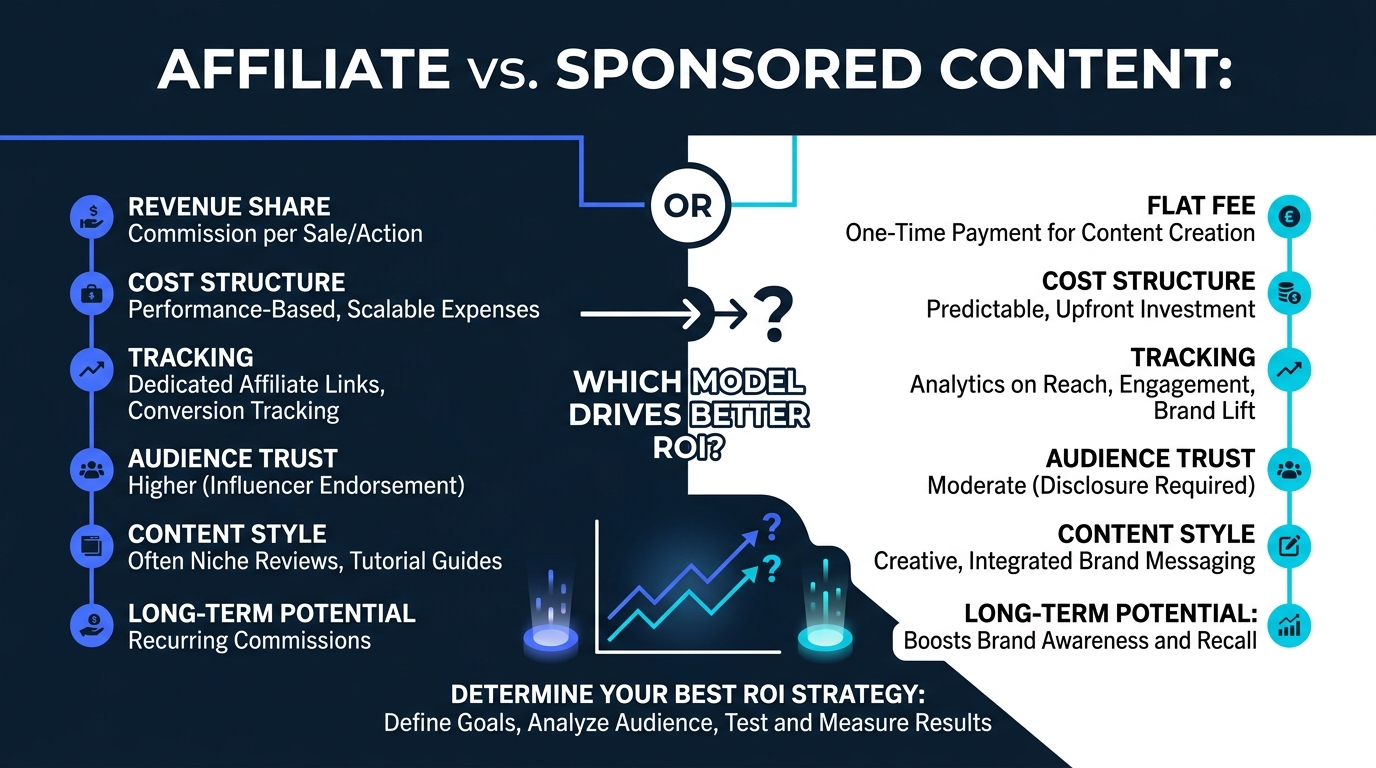
Unlike a flat-fee sponsored post, where you pay regardless of how many purchases happen, affiliate deals are outcome-based. The creator gets a unique tracking link or discount code. Every time their audience buys using that link or code, the creator earns a cut: typically 5% to 25% of the sale, depending on vertical and deal structure.
How It Differs from Traditional Influencer Sponsorships
Traditional influencer sponsorships are awareness plays. You pay upfront for reach, exposure, and creative content. Sometimes that converts well. Sometimes it doesn’t, and you’ve already paid the bill. Affiliate influencer deals flip that model: compensation is tied to revenue, not impressions.
That said, the best affiliate programs aren’t purely transactional. Creators who genuinely use and believe in the product become long-term partners. They mention it organically, answer questions from their audience about it, and keep the link in their bio for months. That’s the version of affiliate influencer marketing that compounds over time. Check out our influencer marketing statistics to see just how powerful authentic creator recommendations can be.
How It Differs from Traditional Affiliate Marketing
Classic affiliate marketing: coupon sites, review blogs, SEO arbitrage , shares the same payment structure but a very different execution. Traditional affiliates drive traffic through search rankings. Affiliate influencer marketing is driven by personal trust. The audience buys because they follow the creator for their personality and expertise, not because they Googled “best running shoes.”
That trust difference matters for your business: influencer-driven affiliate programs consistently outperform traditional affiliate channels on average order value and customer retention. Buyers who come in through a creator recommendation tend to be more loyal: they feel like they were introduced to the brand by someone they respect.
Why Brands Are Shifting to Affiliate-Based Creator Programs
Several converging forces are making affiliate influencer programs the default choice for growth-focused brands in 2026. Here’s what’s driving the shift.
Risk Reduction: Pay for Performance, Not Potential
In a flat-fee sponsorship, you’re betting on the creator’s audience being real, engaged, and aligned with your product. You might pay $20,000 for 40,000 impressions and $3,200 in tracked revenue. Affiliate structures eliminate that gamble. If the creator doesn’t convert, you don’t pay beyond the cost of product seeding or a nominal base fee. Your cost of acquisition is locked in as a percentage of revenue, which means the program scales profitably by design.
This is one of the most common common creator partnership mistakes brands make: committing to large flat fees before understanding which creators actually convert for their specific product.
Creator Alignment: Invested Partners, Not Hired Guns
When a creator earns commission on their affiliate link, they become invested in your brand’s success. They’ll post more consistently, respond to audience questions about the product, create follow-up content, and organically mention it: because every mention is a potential earning event. This creates a fundamentally different quality of partnership than a one-and-done paid post.
The best affiliate influencer relationships don’t feel transactional. They feel like brand ambassadors who actually use the product and genuinely want their audience to benefit from it. Building these relationships well starts with creator partnerships built on mutual value, not just a contract.
Longer Creator Relationships with Compounding Returns
Traditional sponsorships end when the campaign ends. Affiliate programs are ongoing. A creator with your tracking link in their bio generates revenue for months or years. The relationship compounds as their audience grows and as more of their existing followers convert over time.
This is especially powerful with micro and nano creators who are consistently growing. The creator you onboard at 8,000 followers might have 80,000 by the end of year two, and you’ve maintained that relationship through a continuous revenue-share structure, not a series of renegotiated flat-fee deals.
The 3 Models of Affiliate Influencer Marketing
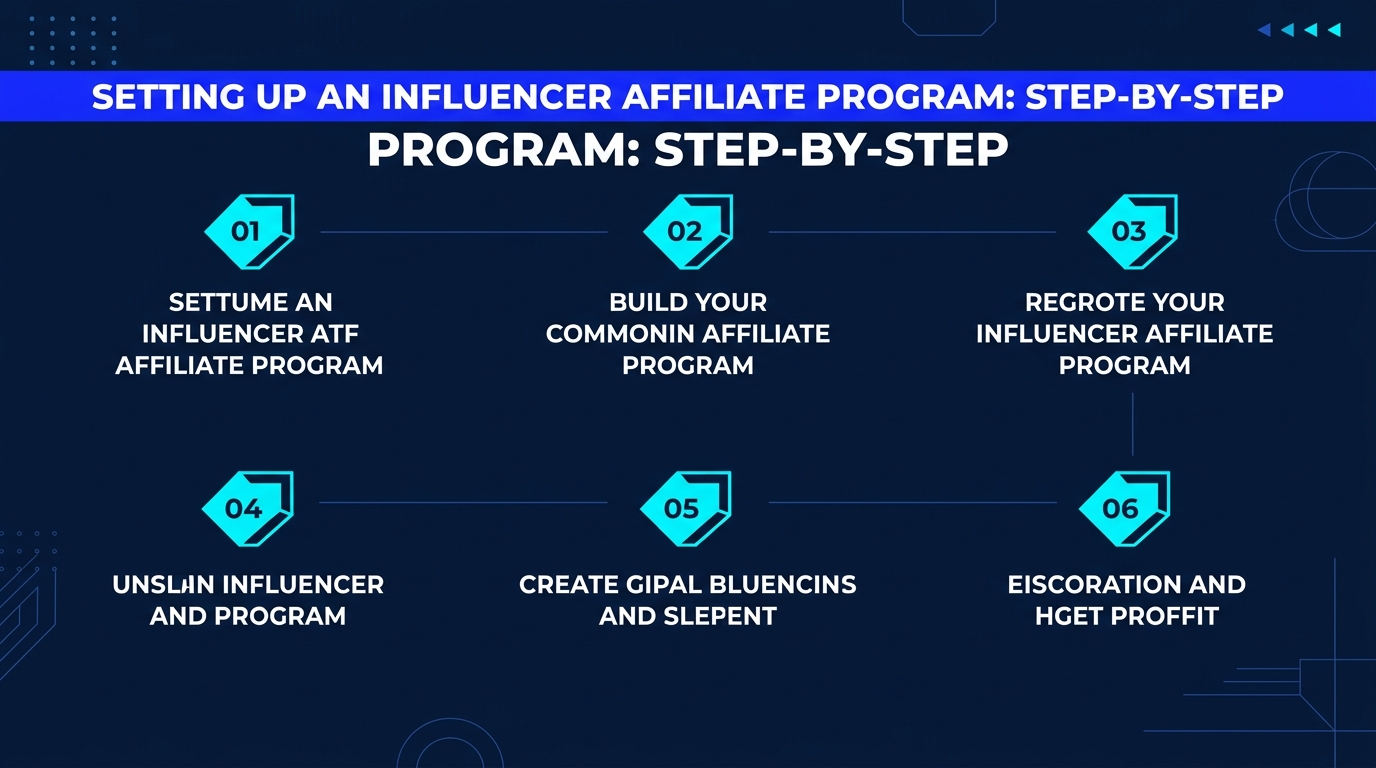
There’s no single structure for affiliate influencer deals. The right model depends on your margins, your goals, and the type of creators you’re working with. Here are the three most common frameworks.
Model 1: Pure Commission
The creator earns a percentage of every sale generated through their unique tracking link or discount code. No base fee, no guaranteed payment. This is the cleanest structure from a brand risk perspective: you pay nothing if the creator drives nothing. Best for: creators who already use and love your product, established affiliate publishers, and brand ambassadors who are deeply aligned.
Model 2: Base Fee + Commission
A modest base fee (covering creative time and platform reach) combined with commission on conversions. This is the most common structure for mid-tier influencers. The base fee de-risks the creator’s effort, while the commission keeps them motivated to actually sell. Example: $500 base + 12% commission on all sales in the first 30 days. See our ecommerce influencer ROI guide for benchmarks by vertical.
Model 3: Product Seeding + Commission
You send the creator free product and offer commission on any sales they generate: no cash upfront. This works best for products with strong visual or experiential appeal (beauty, food, fitness gear, home goods) where the content creation process IS the value proposition for the creator. It’s low-risk for brands and low-pressure for creators, but it only works if the product is genuinely compelling enough that creators want to share it.
How to Structure Your Affiliate Influencer Program
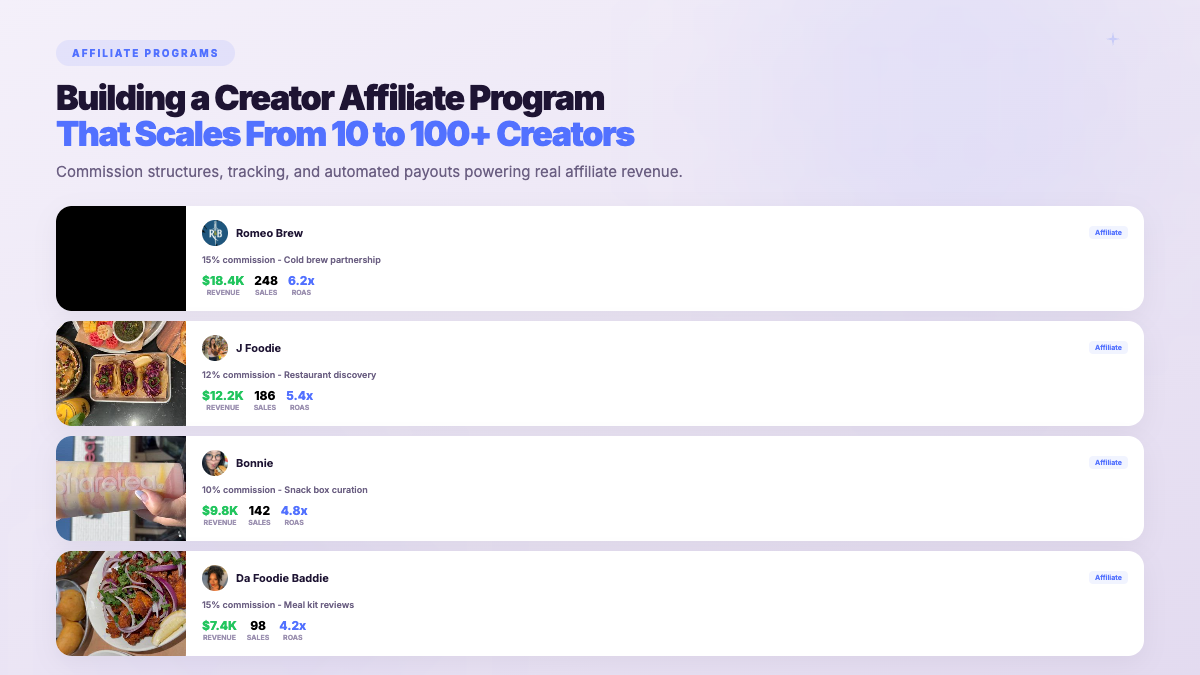
The mechanics of your program matter almost as much as the creators you choose. A poorly structured program , wrong commission rates, broken tracking, unclear contracts , will kill creator motivation and make attribution a nightmare. Here’s how to build it right from the start.
Setting Commission Rates by Vertical
Commission rates vary significantly by industry and margin profile. Typical 2026 starting points:
- Beauty & skincare: 10-20% (high repeat purchase rate justifies higher commissions)
- Fashion & apparel: 8-15% (watch for return rates)
- Health & supplements: 15-25% (strong margins support higher payouts)
- Home goods & decor: 8-12%
- Software & SaaS: 20-30% recurring
- Food & beverage: 10-15%
Start at the high end of your range for initial creator recruitment, then renegotiate for your top performers once you’ve established mutual trust and proven conversion data.
Choosing Tracking Infrastructure
Your tracking solution determines how accurately you can attribute sales to specific creators. Three main options: dedicated affiliate platforms (ShareASale, Impact), creator platforms with affiliate features (partnrUP), or DIY with UTM parameters and discount codes. The AI creator matching technology in platforms like partnrUP also helps you identify which creators are most likely to convert for your specific product: before you even run the first campaign.
Contract Essentials for Affiliate Creator Deals
Even performance-based programs need written agreements covering: commission rate and payment terms, attribution window, content exclusivity, FTC disclosure requirements, content approval rights, and termination provisions. The influencer affiliate marketing agency guide covers what to look for in program management partners if you’re scaling beyond what you can handle in-house.
Finding the Right Creators for Affiliate Programs
The biggest predictor of affiliate program success isn’t commission rate or platform choice: it’s creator-product fit. A creator whose audience is perfectly aligned with your product will outperform a 10x-larger creator whose audience has no natural connection to what you sell. Start by reading our guide to finding brand partnerships to understand the creator perspective on these relationships.
Why Micro and Nano Creators Often Outperform for Affiliate
Micro influencers (10K-100K followers) and nano influencers (1K-10K) typically outperform larger creators on affiliate conversion rates. They have higher engagement, stronger trust, and tighter niche audiences. When they say “I use this every morning,” their 8,000 followers believe it in a way that a mega-influencer’s 2 million followers simply don’t. Working with 50 micro creators almost always beats working with 5 macro creators at the same total cost: both on total sales volume and customer quality downstream.
Red Flags: Creators to Avoid for Affiliate Programs
- Low story/video engagement vs. post engagement (likes don’t convert; stories and video do)
- Audience demographics that don’t match your buyer profile
- Promoting too many brands simultaneously (8+ affiliate links = yours won’t get real attention)
- Fake or bought engagement (sudden follower spikes, low comment quality)
- No content related to your vertical or adjacent categories
Measuring Performance in Affiliate Influencer Programs
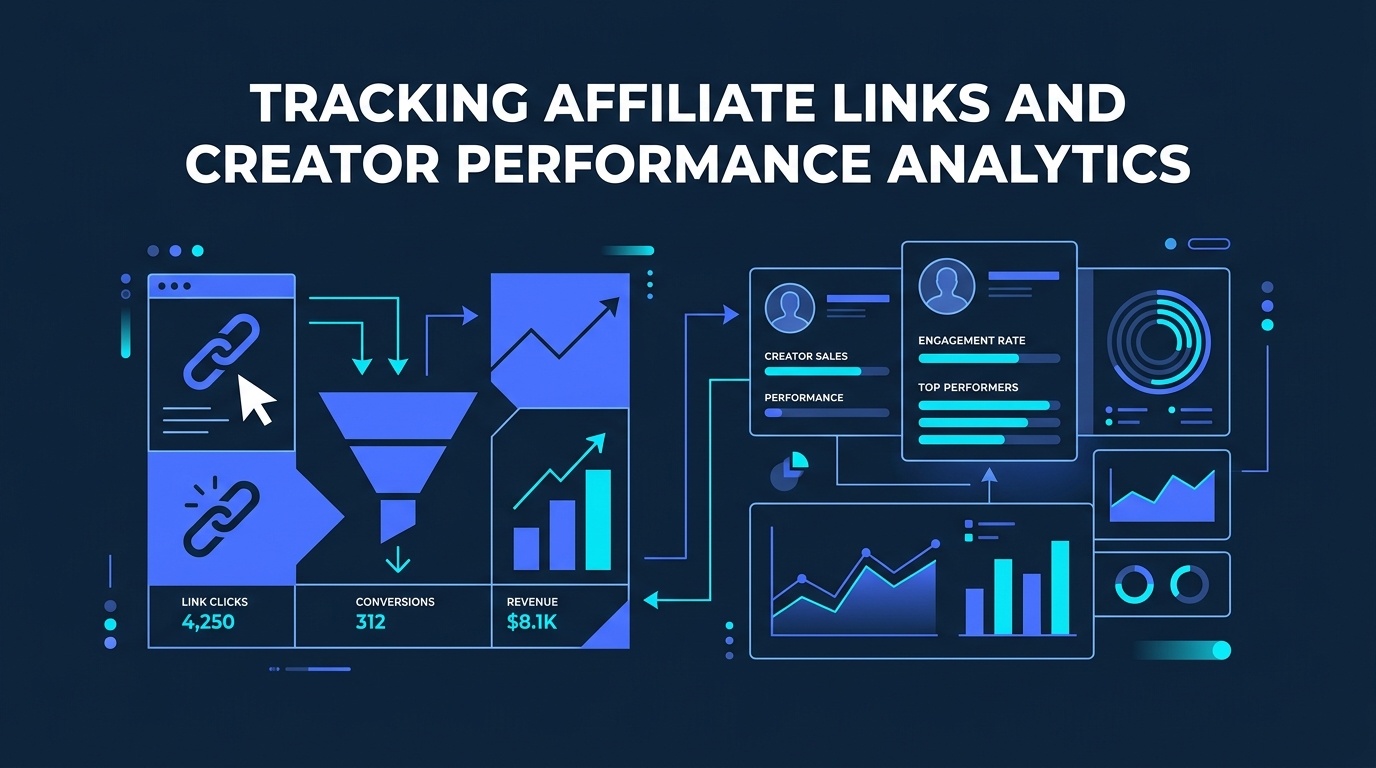
Tracking performance accurately is what separates affiliate programs that scale from ones that stagnate. The platform ROI guide covers measurement frameworks in depth. Key metrics for affiliate programs specifically:
- Conversion rate per creator: Clicks to purchases: the core measure of audience-product fit
- Average order value (AOV) per creator: Are their buyers spending more or less than average?
- Customer acquisition cost (CAC): Total commission paid divided by new customers acquired
- Return rate: Important for fashion and DTC: some creators drive high volume but also high returns
- LTV of affiliate-acquired customers: Often higher than other channels due to trust-based acquisition
- Creator retention rate: What % of creators are still active at 90 and 180 days?
Handling Dark Social Attribution
A significant chunk of purchase volume won’t click through a tracked link , someone sees a TikTok, saves it, then searches the brand name directly two days later. Solutions: use creator-specific discount codes alongside link tracking (codes capture dark social), run lift studies comparing sales velocity before/during activations, and survey new customers about discovery. Our UGC in Meta Ads case study shows how Lifeboost Coffee used creator content to dramatically improve attribution across channels.
Common Mistakes in Affiliate Influencer Programs
Mistake 1: Choosing Creators by Reach Instead of Relevance
Follower count is a vanity metric for affiliate programs. A creator with 500,000 followers and zero overlap with your buyer will generate fewer sales than a creator with 12,000 highly engaged followers in your niche. AI creator matching tools now make it dramatically easier to identify creators whose audience profiles closely match your ideal customer.
Mistake 2: Commission Rates Too Low to Motivate Real Effort
A 3% commission on a $40 product means the creator earns $1.20 per sale. Even 50 sales = $60. No creator with a meaningful audience invests real effort for $60. Model what realistic earnings look like for the creator at your commission rate before finalizing the structure.
Mistake 3: No Content Guidance Leads to Off-Brand Posts
Affiliate programs aren’t a license to post whatever. Give creators key messages, product benefits to highlight, what NOT to say, and a brand style overview. Brands that succeed with modern influencer platform management have learned: more guidance equals better content equals higher conversion rates.
Mistake 4: Slow Payment Schedules Create Creator Churn
Creators talk to each other. If your payments take 60+ days or require a $500 threshold, creators will move to programs that pay faster. Net-30 is the minimum. Best programs pay net-15 or semi-monthly. Fast payments build loyalty and reputation.
Mistake 5: Ignoring FTC Disclosure Requirements
Creators must clearly disclose affiliate relationships using #ad, #sponsored, or #affiliate: prominently, not buried in a caption. Brands are responsible for ensuring creator compliance. Make FTC requirements explicit in your agreements. Non-compliance can result in FTC action against both parties.
Scaling Your Affiliate Creator Program
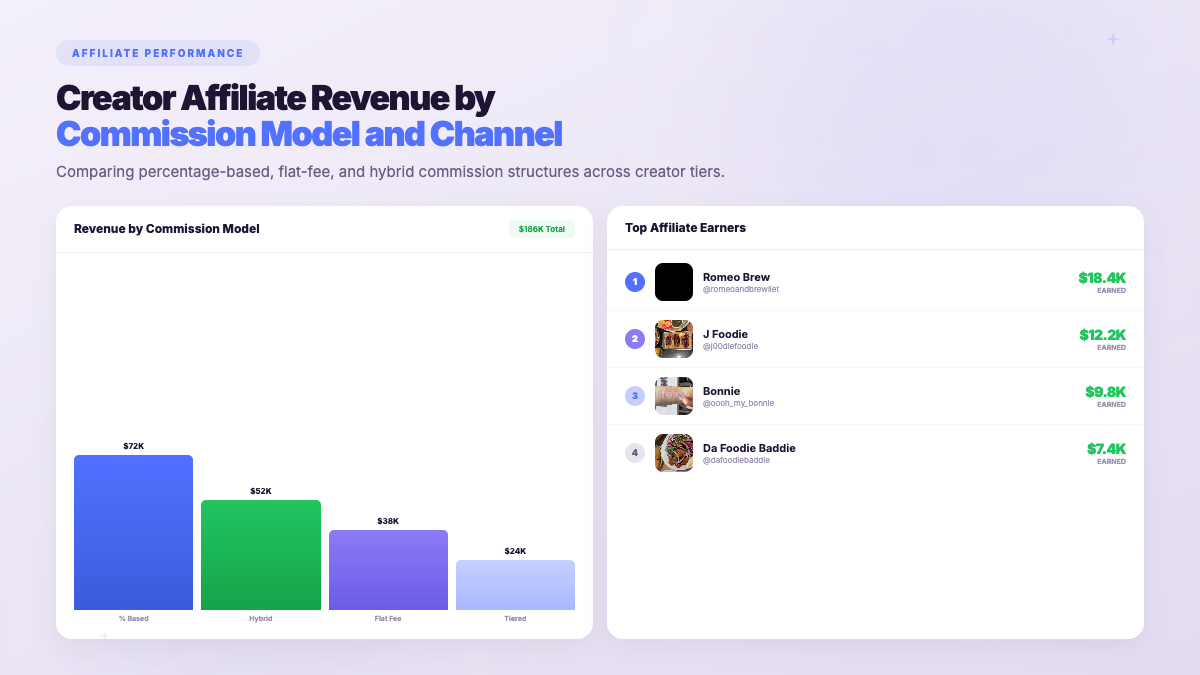
Going from 5 affiliate creators to 50+ requires different infrastructure and a different mindset. At 10 creators, you can manage in a spreadsheet. At 50, that breaks. At 100+, manual management becomes a full-time job that still fails. Build the infrastructure early: automated onboarding, performance tiering (bronze/silver/gold), automated payments, and templated communication sequences.
The Recruit, Activate, Retain Framework
- Recruit: Targeted outreach to creators whose audience matches your ideal customer. Use AI creator matching to identify candidates efficiently rather than manually reviewing hundreds of profiles.
- Activate: Onboard new creators with a strong first-30-days experience: product seeding, content guidance, a personal welcome, and clear expectations. Creators who have a great first experience create content immediately. Those with friction go dormant.
- Retain: Invest in top performers with exclusive product previews, higher commission tiers, co-marketing opportunities, and regular performance feedback. Turn short-term affiliates into long-term brand champions.
Affiliate vs. Sponsored Content: Which Model Is Right for You?
Choose affiliate when: you need measurable ROI, you’re working at scale with multiple creators, your product has a direct purchase path, and you want ongoing relationships. Our ecommerce influencer ROI data consistently shows affiliate structures outperforming flat-fee campaigns for DTC brands over a full program lifecycle.
Choose sponsored when: you’re launching something new and need awareness first, you’re working with a specific creator whose content you want to own rights to, or you’re running a time-limited campaign.
Best answer: hybrid. Many mature programs combine both — a base sponsorship fee guarantees creator effort, plus commission upside aligns incentives. This is especially effective for influencer marketing in e-commerce, where creators need upfront compensation to invest in product content but brands want performance accountability.
Frequently Asked Questions
What is the difference between affiliate marketing and influencer marketing?
Traditional affiliate marketing is traffic-driven (SEO, review sites, coupon platforms). Influencer marketing is relationship-driven: it’s about creator-audience trust and brand reach. Affiliate influencer marketing combines both: creators drive sales through personal endorsement and earn commission on conversions.
How much should you pay influencers for affiliate programs?
Commission rates typically range from 8-25% depending on vertical and margins. Start at the high end of your range to attract quality creators. Always model what realistic earnings per post looks like for the creator before settling on a rate: if the math doesn’t work for them, they won’t put in real effort.
Do micro-influencers work better for affiliate marketing?
Usually yes, for conversion-focused programs. Micro and nano creators have higher engagement rates, stronger audience trust, and more relevant niche audiences. Build a diversified portfolio of micro creators rather than concentrating budget in a few macro names for maximum affiliate ROI.
What platforms are best for managing affiliate influencer programs?
Purpose-built creator platforms like partnrUP offer the best experience for influencer-specific affiliate programs. Dedicated affiliate networks (Impact, ShareASale) work well if you’re adding influencers to an existing affiliate program. The platform ROI guide breaks down the full landscape and helps you choose the right tool for your scale and goals.
How do you track affiliate sales from influencers accurately?
Use unique tracking links PLUS unique discount codes for each creator. The codes capture dark social conversions that don’t click through a tracked link. Both together give you the most complete picture of creator-driven revenue. Survey new customers about discovery to fill remaining attribution gaps.
Do influencers need to disclose affiliate relationships?
Yes: under FTC guidelines, any material connection between a creator and brand (including affiliate commissions) must be clearly and prominently disclosed using #ad, #sponsored, or #affiliate. This applies to all platforms and content types. Make disclosure requirements explicit in your creator agreements.
Ready to Build Your Affiliate Creator Program?
Affiliate influencer marketing isn’t complicated, but it requires the right infrastructure, the right creators, and a commission structure that genuinely motivates performance. Brands that get those three things right build programs that compound over time: more creators, more content, more conversions, lower CAC.
partnrUP gives you AI creator matching to find the right affiliate partners, built-in tracking and performance analytics, and automated workflows that handle onboarding, link generation, and payment — so you can run a 100-creator affiliate program without it becoming a full-time administrative job. See how the modern influencer platform is changing how brands run creator programs, and discover why brands choose partnrUP to power their affiliate influencer growth.