The digital shelf is the new physical shelf , except it’s infinite, always on, and increasingly driven by creator content. Walk into any retail store and prime shelf placement determines what gets noticed, picked up, and purchased. Online, that same dynamic plays out across TikTok search results, Amazon product listings, Google Shopping carousels, and Instagram Explore feeds.
The difference? Any brand , regardless of budget , can win shelf space online. But it takes a different strategy than the traditional digital playbook.
Brands winning the digital shelf in 2026 aren’t just running ads. They’re flooding the discovery zone with authentic creator content that educates, entertains, and converts browsers into buyers. A TikTok tutorial from a trusted micro-creator carries more purchase intent than a polished brand video. A YouTube review ranks for product searches long after a campaign ends. An Instagram reel showing “before and after” results drives conversions on Amazon listings it never even linked to.
This guide is your complete playbook for digital shelf optimization. We’ll cover what the digital shelf actually is (it’s bigger than most brands think), why creator content has become its most valuable asset, and exactly how to build a program that shows up where your customers are looking, and converts when they arrive.
Whether you’re a DTC brand trying to break through on TikTok, an ecommerce company looking to dominate Amazon search, or a CPG brand navigating the shift from retail to social discovery. This is the framework you need. You’ll also want to bookmark our guide on influencer marketing in e-commerce, which pairs perfectly with everything we cover here.
What Is the Digital Shelf?
The digital shelf is every online touchpoint where a consumer can discover, evaluate, and decide to buy a product. The term comes from retail, that physical shelf where placement, packaging, and positioning drive sales: applied to the online world.
The traditional digital shelf looked like this:
- Amazon product listings and search results
- Google Shopping ads and organic product results
- Brand website product pages
- Retailer websites (Target.com, Walmart.com, etc.)
But the digital shelf has expanded dramatically. Today it also includes:
- TikTok search results: where millions of users search for product reviews, tutorials, and “best [product category]” recommendations
- Instagram Explore and Reels: where algorithm-driven discovery surfaces products to users who never searched for them
- YouTube recommendations: where long-form reviews rank in search and drive purchase decisions weeks or months after publication
- Pinterest product pins: still a major driver for home, fashion, and beauty discovery
- Reddit and community forums: organic word-of-mouth that shapes high-consideration purchases
What ties all of these together? Creator content.
On every modern digital shelf surface, creator-generated content , reviews, tutorials, unboxings, before/afters , outperforms brand-generated content. Consumers trust real people over brand messaging. Algorithms favor authentic engagement. And creator content has the unique ability to show up in search results, feeds, and recommendation engines simultaneously.
Understanding your full digital shelf means mapping every platform where your potential customers search for and discover products like yours, and then asking: what content exists there, and is it ours?
How the Digital Shelf Has Evolved in 2026
Three years ago, “digital shelf optimization” mostly meant Amazon SEO. Get your title right, optimize your bullets, run Sponsored Products ads. That was the game.
In 2026, that’s table stakes. The real shelf battle is happening on social. And if you want a sense of how fast the landscape is shifting, the influencer marketing stats tell a pretty clear story.
Social Search Is Overtaking Google for Product Discovery
A 2024 Adobe study found that 64% of Gen Z users prefer searching TikTok over Google for product recommendations. By 2026, that preference has deepened, and it’s no longer just Gen Z. Millennials are using Instagram and YouTube search as primary discovery tools for beauty, fitness, food, and home categories.
The implication is significant: if your brand isn’t appearing in TikTok and Instagram search results, you’re invisible to a growing portion of your addressable market, even if you rank #1 on Google.
TikTok as a Search Engine
TikTok’s search functionality has evolved from a novelty to a full product discovery engine. Users are typing queries like “best protein powder for beginners,” “clean skincare routine under $50,” and “honest [product] review” directly into TikTok search. They expect video results, and they trust creator voices over brand accounts.
This shift has created a new category of digital shelf real estate: TikTok search results pages. Brands that seed creator content optimized for these queries are capturing purchase intent at the exact moment it forms.
The Creator Review Economy
Consumers increasingly expect video proof before purchasing. Not product photos: video. Not brand claims , creator testimonials. The rise of TikTok Shop, Instagram Shopping, and Amazon’s Inspire feature has made the path from “creator video” to “purchase” shorter than ever.
A consumer in 2026 might discover a product via a TikTok creator, watch a YouTube long-form review for validation, check Amazon ratings, and convert , all within a single shopping session. This is why shoppable video has become such a critical piece of the modern brand’s discovery strategy.
UGC as Purchase-Decision Content
User-generated and creator-generated content has moved from “nice to have” to essential purchase-decision infrastructure. It’s not just about social proof anymore: it’s about answering the specific questions consumers have at the moment of evaluation. Does this foundation cover hyperpigmentation? Is this protein powder gritty? Does this air fryer fit a whole chicken?
Brands that flood their digital shelf with creator content answering these questions win the conversion. Brands that don’t lose it to competitors who do. This dynamic is especially pronounced in categories like beauty , if you want a concrete example of how creator content functions as digital shelf infrastructure, check out how we think about beauty brand digital shelf strategy.
Creator Content as a Digital Shelf Asset
Not all creator content is equal as a digital shelf asset. Understanding which content types drive discovery and conversion, and why: is the foundation of any effective strategy.
Content Types That Work on the Digital Shelf
Product reviews are the cornerstone of digital shelf content. Authentic, specific, opinionated reviews rank in search, build trust, and address purchase objections. The best reviews don’t just describe: they answer “is this right for me?” for specific use cases.
Demos and tutorials show the product in action. For anything with a learning curve , tech products, cooking tools, beauty devices , demos dramatically reduce purchase hesitation. They also rank well for “how to use [product]” searches.
Unboxings capture the anticipation and first-impression phases of the purchase experience. They’re particularly effective for premium products where packaging and presentation matter.
Comparison content (“X vs Y”) captures high-intent searchers who are already in the consideration phase. A creator comparison video for your product vs. the category leader can steal shelf position at the most valuable moment in the buying journey.
Before/after transformations provide visual proof of results. Essential in beauty, fitness, home improvement, and similar categories.
Routine integrations (“what’s in my skincare routine”) create aspirational context and associate your product with trusted lifestyles and habits.
How Creator Content Appears in Platform Search Results
Creator content earns shelf placement through a combination of engagement signals, keyword optimization, and algorithm relevance scoring. On TikTok, content that uses relevant keywords in captions, on-screen text, and spoken audio gets indexed for those search terms. On YouTube, titles, descriptions, and transcripts drive search ranking. On Instagram, hashtags and caption keywords influence Explore placement.
The key insight: creator content occupies search result positions that brand content rarely achieves, because algorithms favor authentic engagement: real saves, shares, comments , over polished brand content that users scroll past.
Shelf Life of Creator Content
Different content types have dramatically different shelf lives. Understanding this shapes how you invest:
- Trending content (challenges, sounds, viral formats) , peak lifespan of days to weeks, high impression volume while trending, then drops off sharply
- Review content: medium shelf life of 3–12 months, consistent traffic, degrades as product updates or competitors respond
- Tutorial/educational content: long shelf life of 1–2+ years if the information stays relevant, compounds over time as it accumulates engagement
- Comparison content: long shelf life until a better alternative emerges
Smart digital shelf strategy balances trending content for reach with evergreen content for sustained discovery.
Content Rights and the Digital Shelf
Here’s a critical point most brands miss: creator content you don’t have rights to is a liability, not an asset. If a creator posts an amazing review of your product, you can’t run it as an ad, embed it on your product page, or use it in email campaigns without usage rights.
Building a digital shelf content library requires acquiring clear usage rights at the time of content creation. This means working with creators through structured programs, not just hoping for organic mentions, and securing digital, paid, and white-label rights that let you deploy content across every shelf surface. For a real-world look at how brands do this effectively, see our breakdown of UGC for paid social.
Digital Shelf Strategy for Brands
Winning the digital shelf requires strategy, not just content volume. Here’s the framework, and the good news is, you don’t need a massive budget to execute it.
Step 1: Map Your Digital Shelf Presence
Start with an audit. Search for your product category on every major platform:
- TikTok: “[product category] review,” “best [product],” “honest [product] review”
- YouTube: “[product] review 2026,” “[product] vs [competitor],” “how to use [product]”
- Instagram: explore and hashtag search for your category
- Google Shopping: your product name and category keywords
- Amazon: your product listing and category search
Document: Who’s showing up? Is it your brand, your competitors, or unaffiliated creators? What’s missing? Where are the gaps?
Step 2: Content Gap Analysis
Once you’ve mapped your presence, identify the gaps. Common ones include:
- No creator content for your highest-converting search queries
- Competitor-owned comparison content (“X vs [your brand]” where the competitor wins)
- Unanswered consumer questions that appear in search suggestions
- Missing visual proof for key product benefits
- Platform gaps (strong on YouTube, invisible on TikTok)
Prioritize gaps by search volume and purchase intent. A gap in “honest [product] review” queries is worth more than a gap in a trend that peaks and fades.
Step 3: Build a Creator Content Calendar Aligned to Product Launches
The most effective digital shelf programs are built around product launch windows. Creator content that goes live 2–4 weeks before a launch seeds the shelf before customers arrive. Content published during launch captures peak purchase intent. Post-launch content sustains momentum and handles the long tail of consideration.
For each launch, plan:
- Pre-launch: early reviews, unboxings, teaser content from select creators
- Launch week: tutorial, demo, and “is it worth it?” review content in volume
- Post-launch: comparison content, routine integration, before/after results
For more on building out a structured creator program around launches, our guide to creator partnerships covers the full relationship-building process from outreach to ongoing management.
Step 4: Integrate Creator Content with Product Pages
Creator content shouldn’t live only on social. Deploy it across every purchase-proximity surface:
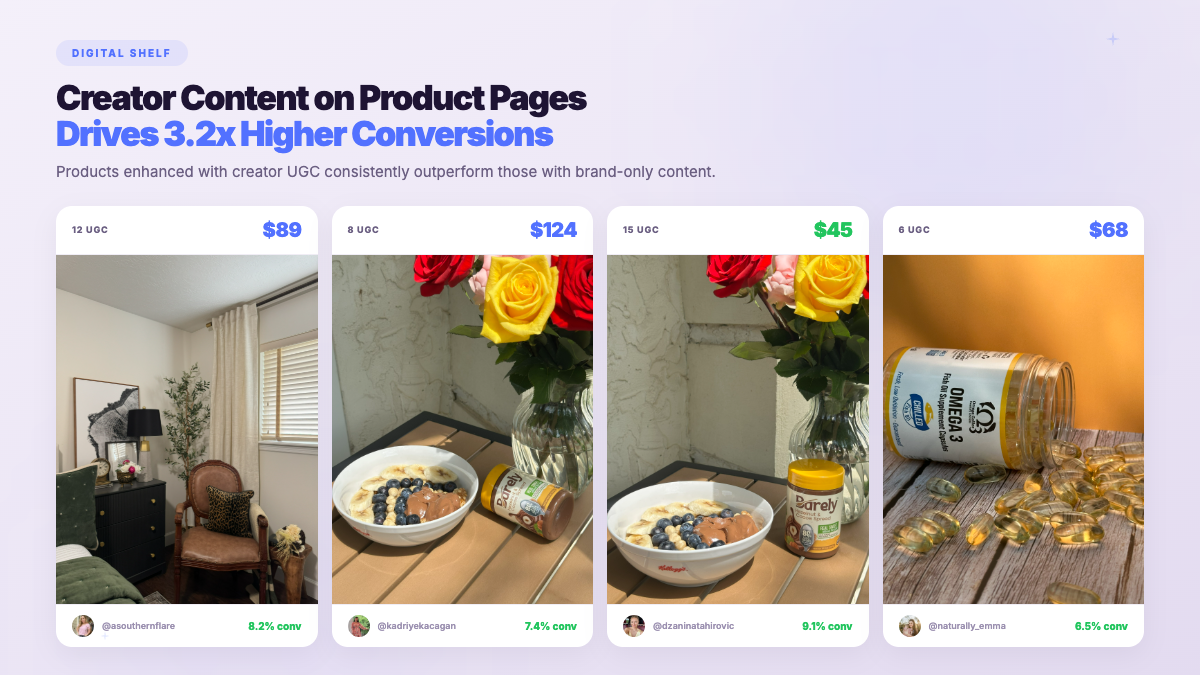
- Amazon A+ content: embed creator videos and UGC imagery in your listing
- Brand website product pages: add creator reviews, video demos, and social proof modules
- Email campaigns: creator social proof in cart abandonment and nurture flows
- Paid social ads: creator content typically outperforms brand creative 2–3x on ROAS
Step 5: Syndicate Creator Content Across Channels
One piece of creator content can work on multiple shelves simultaneously. A TikTok review can be repurposed as a YouTube Short, embedded in an email, used as a paid social ad, and displayed on your product page. This “one content, many shelves” approach multiplies your shelf presence without proportionally increasing production costs.
This syndication strategy is only possible if you have usage rights, which brings us back to the importance of structured creator programs. And before you scale up, make sure you’re not falling into any of the common creator content mistakes that derail otherwise solid digital shelf programs.
TikTok Search Optimization for Product Discovery
TikTok has become the product discovery engine for an entire generation of consumers. If you’re serious about digital shelf optimization, TikTok search is a core piece of the puzzle: not a bonus.
How TikTok Search Works for Products
TikTok’s search algorithm indexes content based on:
- Keywords in captions and hashtags
- On-screen text and graphics
- Spoken words in the audio (processed by automatic speech recognition)
- Engagement signals: completion rate, saves, shares, comments
- Profile and content history relevance
When a user searches “best SPF for oily skin,” TikTok surfaces videos that match those keywords and have strong engagement signals. Creator content from trusted voices in the beauty space consistently outranks brand content in these results.
Creator Content + TikTok SEO
To optimize creator content for TikTok search, brief your creators on these tactics:
- Front-load keywords in captions: the first 15 words matter most for search indexing
- Use on-screen text: the algorithm reads it; viewers expect it
- Speak the keywords: audio is indexed; creators should say the product name and category explicitly
- Use specific hashtags: #skincarereview, #proteinpowdertiktok, not just #fyp
- Structure for completion: high completion rates signal relevance and push content up in search
TikTok Shop Product Discovery
TikTok Shop has integrated shopping directly into the search and discovery experience. Creator content linked to TikTok Shop product pages appears in search results with a “Shop Now” tap. For brands on TikTok Shop, seeding creator content is direct revenue generation, not just brand building. This is one of the key ecommerce trends for 2026 you don’t want to miss.
Seeding Content to Appear in TikTok Search
The most reliable way to occupy TikTok search results for your product is to systematically seed creator content optimized for your target queries. This means:
- Identifying your top 10–20 product search queries on TikTok
- Briefing creators to create content that naturally addresses those queries
- Publishing a volume of content (5–15 pieces per keyword cluster) to establish shelf presence
- Monitoring search results and refreshing content as engagement decays
Volume matters. One creator video might rank briefly; 10–15 pieces of optimized creator content across multiple creators creates a durable shelf presence that’s hard for competitors to displace.
Amazon + Creator Content
Amazon remains the largest product discovery platform by purchase intent. Creator content strategy for Amazon is distinct from social, but the two are deeply interconnected. Your ecommerce influencer strategies should treat Amazon and social as one connected ecosystem, not separate channels.
UGC in Amazon Listings
Amazon’s algorithm rewards listings with strong engagement signals: clicks, time on listing, and conversion rate. Creator content embedded in listings: particularly video , dramatically improves all three metrics.
For Amazon listings, prioritize:
- Video demonstrations: the “top video” placement on product pages drives significant conversion lift
- Creator review imagery: real-life usage photos outperform studio shots in the image carousel
- Q&A seeding: have creators address common purchase questions in the Amazon Q&A section
Amazon Creator Connections and Amazon Inspire
Amazon’s creator programs give brands direct tools to connect with creators for content and affiliate distribution. Amazon Creator Connections allows brands to set commission rates and content briefs for Amazon-native creators. Amazon Inspire: the TikTok-like feed within the Amazon app , surfaces creator content to in-app shoppers with immediate purchase intent.
Both programs represent digital shelf real estate that most brands aren’t fully utilizing.
How Off-Platform Creator Content Drives Amazon Conversions
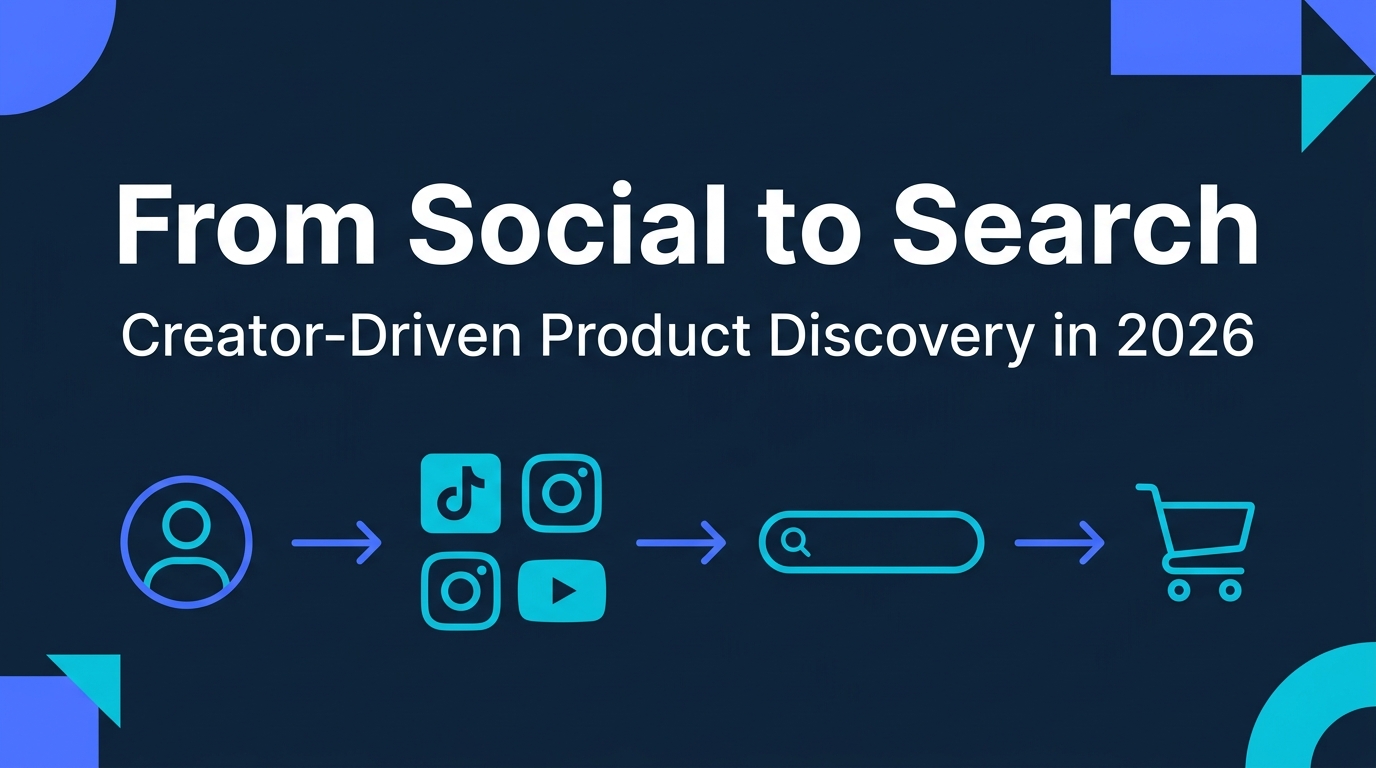
One of the most powerful digital shelf dynamics is the “social-to-Amazon” conversion path. A consumer discovers a product via a TikTok creator, searches for it on Amazon, and converts: attributing the sale to organic Amazon search rather than the creator who created the intent.
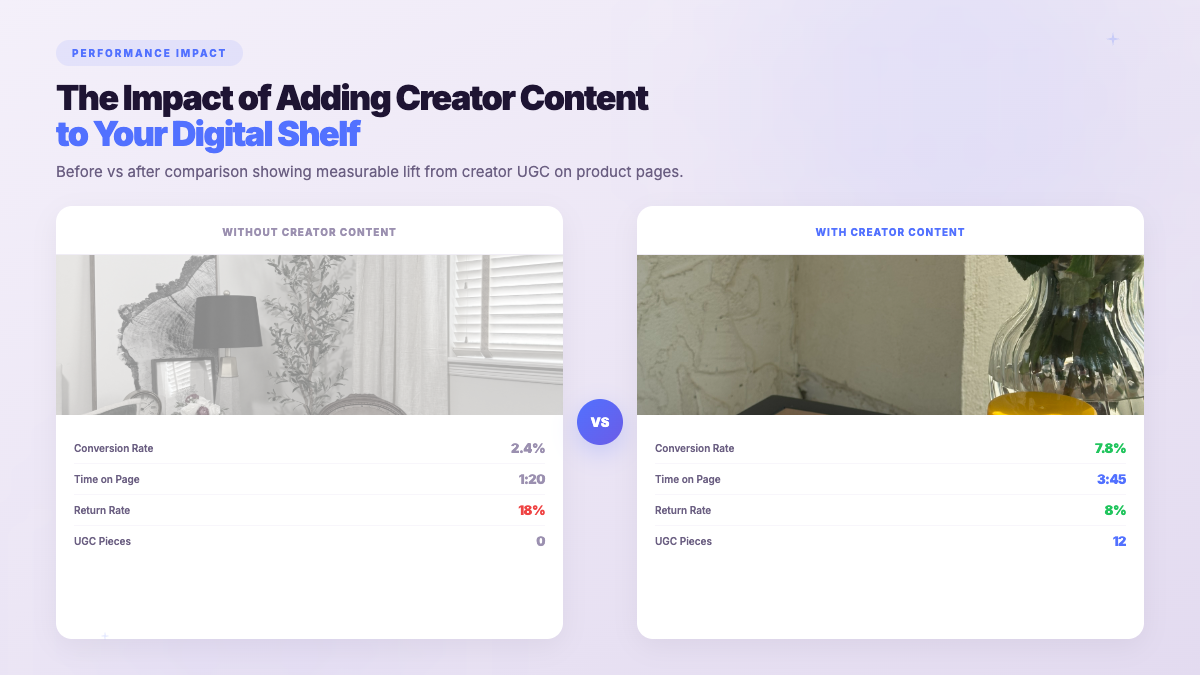
This “dark attribution” makes creator content’s impact on Amazon conversions systematically underreported. Brands that measure it through incrementality testing consistently find that creator content seeding campaigns drive measurable Amazon sales lifts, even with no direct link between the content and the Amazon listing.
The Social Proof Transfer
Even when consumers convert on Amazon rather than directly through a creator link, the creator’s social proof transfers. A consumer who watched three TikTok reviews before going to Amazon arrives with high purchase confidence , driving higher conversion rates, fewer returns, and better reviews, which in turn improve Amazon shelf placement. The flywheel compounds.
Finding Creators for Digital Shelf Programs
Not every creator is a good digital shelf asset. The criteria for selecting creators for shelf-optimization programs differ significantly from awareness or brand-building programs.
Content Creators Who Rank in Search
For digital shelf programs, prioritize creators whose content actually appears in search results. You can test this manually: search your target queries on TikTok and YouTube, and see whose content appears. Creators who consistently rank in search for your category are more valuable for shelf programs than creators with large followings who don’t generate searchable content.
Tutorial and Review Creators vs. Lifestyle Creators
Lifestyle creators: aspirational, trend-focused, broad appeal , are excellent for brand awareness but often weaker for digital shelf optimization. Tutorial and review creators , educational, specific, search-optimized , generate content with longer shelf life and stronger purchase intent signals. Both have a place; the mix depends on your goals.
Micro-Creators Dominate Niche Product Searches
A micro-creator with 15,000 followers who is the go-to voice for “sensitive skin skincare” will generate more digital shelf value in that niche than a macro-creator with 500,000 followers and a broad beauty audience. Niche authority drives niche search placement. For digital shelf programs, think about category authority, not just audience size. This is a key principle behind strong fashion digital shelf strategy as well , niche creators consistently outperform mega-influencers on conversion-driving metrics.
How AI Matching Identifies Discovery-Optimized Creators
Traditional creator discovery looks at follower count, engagement rate, and demographic overlap. AI creator matching adds a layer of content analysis: which creators’ content actually drives discovery behavior? Which generates saves and shares (intent signals) rather than just likes? Which content ranks in relevant searches?
AI-powered discovery surfaces creators who are genuinely discovery-optimized for specific product categories: reducing the manual research burden and dramatically improving the quality of digital shelf programs.
Measuring Digital Shelf Performance
Digital shelf measurement requires a broader framework than standard influencer campaign metrics. You’re measuring shelf presence, not just campaign performance. If you haven’t already built out your measurement infrastructure, our guide to influencer platform ROI is the right place to start.
Share of Search
Share of search measures what percentage of creator content appearing in relevant search results is associated with your brand. Search “[your category] review” on TikTok, YouTube, and Google. Count how many results in the top 20 feature your product. That’s your share of shelf. Track it monthly against competitors.
Organic Creator Content Impressions
Beyond paid or seeded content, track how much organic creator content mentions your brand, and what search terms that content appears for. Tools like Brandwatch, Sprout Social, and platform-native analytics can surface this data.
Attribution from Social Discovery to Purchase
The hardest and most important measurement challenge. Approaches include:
- UTM parameters: trackable links in creator content that trace directly to conversion
- Unique promo codes: creator-specific codes that attribute revenue directly
- Incrementality testing: geographic or audience holdout groups to measure the lift from creator content programs
- Amazon attribution links: for products selling on Amazon, these trace off-platform creator traffic to Amazon conversions
- Survey attribution: “how did you hear about us?” data consistently reveals more creator influence than click-based attribution
Content Volume vs. Content Quality Metrics
A common mistake: optimizing for volume at the expense of quality. Ten pieces of high-quality, search-optimized creator content will outperform 100 pieces of low-quality content on every digital shelf metric. Quality signals: saves, shares, comments, completion rate , determine algorithmic shelf placement. Track both, but don’t sacrifice quality for volume.
Building a Creator Content Library for Digital Shelf
A sustainable digital shelf strategy requires building a creator content library , an owned, licensable asset base of creator content deployable across every shelf surface. Think of it like inventory: you want a deep, well-organized stockpile that you can pull from on demand.
Program Structure: Seeding + Paid + Affiliate
Most effective digital shelf programs use three creator tiers:
Product seeding: sending product to creators in exchange for honest content, with clear expectations but no payment. Best for volume and discovery of new creator voices. Content rights are typically limited.
Paid partnerships: structured agreements with specific creators for deliverables, timelines, and usage rights. Higher cost, higher quality, full rights. The core of your content library.
Affiliate programs: performance-based partnerships where creators earn commission on sales they drive. Aligns incentives, generates ongoing content, and provides direct attribution. Excellent for long-tail shelf coverage.
Most brands need all three tiers working in parallel to build meaningful shelf coverage.
Content Brief Framework for Discovery-Optimized Content
Briefs for digital shelf programs should specify:
- Target search query: what query should this content appear for?
- Key product claims to cover: what should the creator address about the product?
- Preferred format: review, tutorial, comparison, before/after?
- Platform optimization requirements: caption keywords, on-screen text, specific hashtags
- Authenticity parameters: what honest limitations can the creator acknowledge?
- Usage rights required: specify paid, digital, white-label rights upfront
Avoid overly prescriptive briefs that produce inauthentic content. Creator authenticity is the asset: the brief should direct without constraining.
Usage Rights and Content Library Management
Every piece of content in your library needs a rights record: what’s licensed, for how long, on which platforms, and for what uses. This is operational work that brands consistently underinvest in: until a creator demands takedown of their content being used in ads without permission.
Best practice: build a rights management process at program launch, not after the content is already deployed. License terms should be negotiated before content is created, not after.
Refreshing Content: When to Retire, When to Repurpose
Digital shelf content has a natural lifecycle. Refresh triggers include:
- Engagement rates declining below category benchmarks
- Product updates that make existing content inaccurate
- Competitor content overtaking your search positions
- Trend shifts that make existing formats feel dated
Before retiring content, evaluate repurposing potential. A long-form YouTube review can be cut into YouTube Shorts. A TikTok tutorial can be reformatted for Instagram Reels. Good creator content has more shelf life than most brands extract from it.
Frequently Asked Questions About Digital Shelf Optimization
What exactly is the digital shelf?
The digital shelf is every digital touchpoint where consumers can discover, evaluate, and purchase a product. It includes traditional surfaces like Amazon, Google Shopping, and brand websites, and newer surfaces like TikTok search, Instagram Explore, YouTube recommendations, and social commerce features. Creator content is increasingly the primary currency on these surfaces.
How is digital shelf optimization different from SEO?
Traditional SEO optimizes content to rank on Google search. Digital shelf optimization is broader: it covers visibility across all discovery platforms, including social search (TikTok, YouTube), algorithmic feeds (Instagram, TikTok Explore), and commerce platforms (Amazon, TikTok Shop). Creator content is the primary lever for social shelf optimization, while written content and technical SEO drive traditional search shelf presence.
Why is creator content more valuable than brand content for the digital shelf?
Algorithms on social platforms favor content that generates authentic engagement — saves, shares, genuine comments, high completion rates. Creator content consistently outperforms brand content on these signals because audiences trust and engage with real people over brand voices. Additionally, creators have established audiences and content formats optimized for their platforms, reducing the discoverability gap that brand accounts face.
How many creators do I need for effective digital shelf coverage?
It depends on your product category breadth and the number of search queries you’re targeting. For a single product line, a program of 10–20 active creators generating 3–5 pieces of content each per quarter can meaningfully move your shelf presence. For broad product portfolios, programs of 50–100+ creators are more common. Start with your highest-intent search queries and expand from there.
Should I focus on TikTok or YouTube for digital shelf optimization?
Both, ideally, but prioritize based on your category and audience. TikTok dominates for Gen Z and Millennial discovery in beauty, fashion, food, and fitness. YouTube is stronger for high-consideration, research-heavy purchases (tech, appliances, health). For most consumer brands, TikTok delivers faster shelf presence; YouTube builds more durable long-term shelf equity.
How do I measure if my digital shelf strategy is working?
Key metrics include: share of search (what percentage of relevant search results feature your brand), organic creator content volume, platform-specific engagement on creator content, and attributed conversions via UTMs, promo codes, or incrementality tests. Track these monthly against a pre-program baseline to measure shelf presence growth.
How do usage rights work for digital shelf content?
Usage rights define what you can do with creator content beyond their original post. For digital shelf optimization, you typically need: digital rights (display on your website, Amazon listing, email), paid amplification rights (use as paid social ads), and a defined term length. These rights must be negotiated and agreed before or at the time of content creation: not after. Usage rights significantly affect creator compensation, so factor this into your budget planning.
What’s the difference between UGC and creator content for the digital shelf?
UGC (user-generated content) is organic content created spontaneously by real customers — typically lower production quality but highly authentic. Creator content is produced by individuals with established audiences and content creation skills, often through structured brand programs. Both are valuable for the digital shelf: UGC provides authentic social proof, while structured creator content provides optimized, rights-cleared, consistent shelf coverage. Most effective programs leverage both.
How does TikTok Shop change digital shelf strategy?
TikTok Shop integrates the shopping experience directly into TikTok’s discovery surface. Creator content linked to TikTok Shop listings appears in search results with direct purchase capabilities. This collapses the traditional “discovery → consideration → purchase” funnel into a single surface. For brands on TikTok Shop, digital shelf optimization directly drives in-app conversions, making it one of the highest-ROI creator content use cases.
Can small brands win on the digital shelf against larger competitors?
Yes. This is one of digital shelf optimization’s most significant opportunities. Large brands often have legacy content strategies built for traditional digital shelf (Google SEO, Amazon ads) and are slower to adapt to creator-driven social shelf optimization. A small brand with a smart micro-creator seeding program can own TikTok search results for its category even against much larger competitors. Agility and authentic creator relationships are the advantage: not budget.
Build Your Digital Shelf Now
The brands winning the digital shelf in 2026 aren’t waiting for a perfect strategy. They’re out there seeding creator content, testing what ranks, and building content libraries that compound over time.
Creator-driven digital shelf optimization is no longer optional for brands competing in social commerce. It’s the difference between showing up where your customers are looking, and being invisible.
partnrUP helps brands build and scale creator content programs purpose-built for digital shelf performance. From AI creator matching to usage rights management to content syndication, it’s the infrastructure behind some of the fastest-growing creator-driven brands online.
Ready to build your digital shelf? See how partnrUP works →
Related guides: Shoppable Video & Social Commerce | Creator Commerce for Brands | AI-Powered Creator Matching | Influencer Marketing in E-Commerce | 3 Costly Brand Mistakes